Introduction
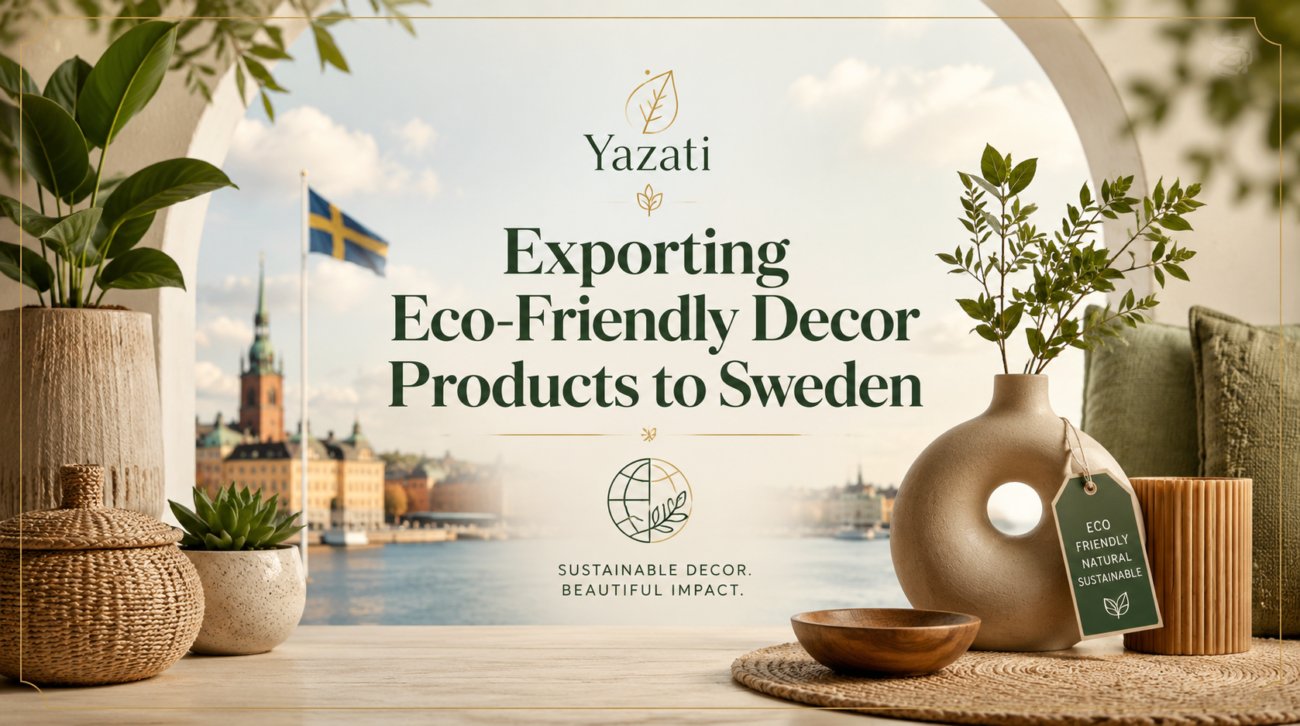
The global demand for sustainable products has transformed international trade, creating exciting opportunities for businesses specializing in environmentally responsible goods. Among the most promising destinations for green exports, Sweden stands out as a leader in sustainability, ethical consumption, and eco-conscious living. As environmental awareness continues to grow, Exporting Eco-Friendly Decor Products to Sweden has become an increasingly attractive opportunity for manufacturers, artisans, and exporters worldwide.
Swedish consumers are known for valuing quality over quantity. Instead of purchasing inexpensive decorative items with short lifespans, they prefer products that are durable, responsibly sourced, and produced with minimal environmental impact. This preference aligns perfectly with businesses that manufacture eco-friendly décor products using recycled materials, renewable resources, handcrafted techniques, and sustainable production methods.
Whether your business specializes in bamboo home accessories, recycled wood furniture, organic cotton cushions, handmade ceramics, natural fiber baskets, cork décor, or biodegradable decorative items, Sweden offers a market where sustainability is not just appreciated—it is expected.
However, successfully entering the Swedish market requires more than simply offering eco-friendly products. Exporters must understand local consumer preferences, European Union regulations, sustainability certifications, logistics, pricing strategies, and effective marketing techniques. Businesses that invest time in understanding these factors significantly increase their chances of long-term success.
This comprehensive guide explores every aspect of Exporting Eco-Friendly Decor Products to Sweden, helping businesses navigate the market confidently while building a profitable and sustainable export strategy.
Why Sweden Is an Attractive Market
Sweden consistently ranks among the world’s most environmentally conscious countries. Sustainability is deeply integrated into daily life, government policy, corporate responsibility, and consumer purchasing behavior.
Several factors make Sweden an ideal export destination.
High Environmental Awareness
Swedish consumers actively seek products that reduce environmental impact. Many buyers carefully evaluate:
- Raw materials
- Manufacturing process
- Carbon footprint
- Packaging materials
- Ethical labor practices
- Product durability
This creates strong demand for companies committed to sustainable production.
High Purchasing Power
Sweden has one of Europe’s highest standards of living.
Consumers are willing to pay premium prices for:
- Handmade products
- Organic materials
- Designer home décor
- Fair-trade products
- Recycled products
- Carbon-neutral goods
Rather than focusing only on low prices, Swedish buyers prioritize value, craftsmanship, and sustainability.
Growing Home Décor Industry
Minimalist Scandinavian interiors continue influencing global design trends.
Popular decorating styles include:
- Scandinavian Minimalism
- Nordic Modern
- Natural Living
- Slow Living
- Hygge-inspired spaces
- Japandi interiors
Eco-friendly decorative accessories naturally complement these styles.
Strong E-commerce Market
Sweden has one of Europe’s most developed online retail sectors.
Consumers frequently purchase home décor through:
- Online marketplaces
- Sustainable lifestyle websites
- Designer furniture stores
- Independent boutiques
- Brand websites
This creates opportunities for exporters without establishing physical stores.
Understanding Swedish Consumer Preferences
Understanding customer expectations is essential when Exporting Eco-Friendly Decor Products to Sweden.
Unlike many international markets, Swedish consumers often research products extensively before making purchasing decisions.
They appreciate transparency and authenticity.
Sustainability Comes First
Eco-friendly claims must be genuine.
Customers increasingly expect businesses to disclose:
- Material origins
- Factory conditions
- Environmental certifications
- Carbon emissions
- Packaging methods
- Recycling information
Greenwashing is viewed negatively and can seriously damage a company’s reputation.
Minimalist Design
Swedish homes generally emphasize:
- Neutral colors
- Clean lines
- Functional design
- Natural textures
- Light wood finishes
- Simple elegance
Products that combine beauty with functionality often perform exceptionally well.
Examples include:
- Bamboo storage boxes
- Linen cushion covers
- Recycled glass vases
- Wooden wall décor
- Handmade ceramic planters
- Woven baskets
Quality Over Quantity
Consumers typically purchase fewer decorative products but invest in higher-quality items.
They prefer products that:
- Last many years
- Can be repaired
- Use renewable materials
- Have timeless designs
- Avoid unnecessary plastic
Durability becomes a strong selling point.
Market Opportunities
Several eco-friendly décor categories continue experiencing rapid growth.
| Product Category | Market Demand |
|---|---|
| Bamboo décor | High |
| Organic cotton textiles | Very High |
| Handmade ceramics | High |
| Recycled glass décor | High |
| Wooden home accessories | Very High |
| Cork décor | Medium |
| Natural fiber baskets | High |
| Eco-friendly candles | High |
| Indoor plant accessories | Very High |
| Sustainable wall art | Growing |
Seasonal Opportunities
Demand increases during:
- Christmas
- Easter
- Summer decorating
- Autumn interior refreshes
- New home purchases
- Wedding seasons
Seasonal product collections can significantly increase annual sales.
Export Regulations
Before Exporting Eco-Friendly Decor Products to Sweden, exporters should understand European Union import requirements.
Since Sweden is an EU member, products generally follow EU regulations rather than country-specific import rules.
Key compliance areas include:
- Product safety
- Chemical restrictions
- Labeling requirements
- Packaging regulations
- Customs documentation
- VAT obligations
Proper preparation helps avoid shipment delays and customs issues.
Product Safety Standards
Certain décor products may need to comply with safety rules depending on their materials and intended use.
Examples include:
- Electrical decorative lighting
- Wooden children’s décor
- Textile products
- Candles
- Furniture
- Decorative accessories containing chemicals
Manufacturers should ensure that products meet applicable European standards before exporting.
Documentation Required
Typical export documentation includes:
- Commercial Invoice
- Packing List
- Bill of Lading
- Certificate of Origin (if applicable)
- Product specifications
- Sustainability documentation
- Customs declarations
Accurate documentation ensures smoother customs clearance.
Sustainability Certifications
Certification can strengthen buyer confidence and improve competitiveness in Sweden.
Common certifications include:
| Certification | Purpose |
|---|---|
| FSC | Responsible forestry |
| PEFC | Sustainable forest management |
| GOTS | Organic textiles |
| OEKO-TEX | Textile safety |
| Fairtrade | Ethical sourcing |
| Global Recycled Standard (GRS) | Recycled materials |
| EU Ecolabel | Environmental performance |
Although not every product requires certification, verified sustainability claims can provide a significant competitive advantage.
Eco-Friendly Packaging Requirements
Packaging plays a significant role in the Swedish market. Consumers expect not only sustainable products but also environmentally responsible packaging. Excessive plastic, non-recyclable materials, or unnecessary layers of packaging can negatively influence purchasing decisions.
Best Practices for Sustainable Packaging
Consider the following approaches:
- Use recyclable cardboard and paper.
- Replace plastic bubble wrap with recycled paper or biodegradable alternatives.
- Print with soy-based or water-based inks.
- Minimize unnecessary packaging materials.
- Clearly label packaging with recycling instructions.
Benefits of Sustainable Packaging
| Benefit | Impact |
|---|---|
| Reduced environmental footprint | Enhances brand reputation |
| Lower packaging waste | Appeals to eco-conscious consumers |
| Easier recycling | Supports Sweden’s circular economy goals |
| Improved customer perception | Encourages repeat purchases |
Packaging should also protect products during international transport while maintaining an attractive presentation.
Pricing Strategy
Pricing eco-friendly décor products requires balancing profitability with market expectations.
Swedish consumers are often willing to pay more for products that demonstrate genuine sustainability, craftsmanship, and long-term value.
Factors to Include in Pricing
- Manufacturing costs
- Sustainable raw materials
- Packaging expenses
- Shipping and freight
- Customs duties (where applicable)
- Marketing costs
- Retail margins
- Currency exchange fluctuations
Value-Based Pricing
Instead of competing solely on price, emphasize:
- Product quality
- Handmade craftsmanship
- Sustainable sourcing
- Ethical production
- Durability
- Unique design
Customers are generally more interested in the overall value than simply choosing the lowest-priced option.
Logistics and Shipping
Efficient logistics are essential for maintaining product quality and meeting customer expectations.
Shipping Options
Common methods include:
Sea Freight
Ideal for:
- Large shipments
- Furniture
- Bulk décor items
- Lower transportation costs
Pros:
- Cost-effective
- Suitable for heavy products
Cons:
- Longer delivery times
Air Freight
Suitable for:
- Premium products
- Urgent orders
- Small shipments
- Product samples
Pros:
- Fast delivery
- Reliable scheduling
Cons:
- Higher shipping costs
Warehousing Options
Businesses may choose to:
- Ship directly from the country of origin.
- Use third-party logistics (3PL) providers.
- Store inventory within the European Union for faster regional distribution.
A localized inventory strategy can reduce delivery times and improve customer satisfaction.
Finding Swedish Buyers
Building relationships with the right buyers is crucial for long-term export success.
Potential Buyer Categories
- Home décor retailers
- Furniture chains
- Interior design studios
- Lifestyle boutiques
- Sustainable product stores
- Garden centers
- Hotel suppliers
- Online retailers
Business-to-Business (B2B) Approaches
Effective methods include:
- Attending international trade fairs.
- Participating in virtual exhibitions.
- Contacting importers directly.
- Joining export promotion programs.
- Listing products on B2B marketplaces.
- Networking through chambers of commerce.
Business-to-Consumer (B2C) Channels
Many exporters successfully sell directly through:
- Their own e-commerce websites
- Online marketplaces
- Social media shops
- Sustainable lifestyle platforms
Providing excellent customer service and clear product information helps build trust with Swedish consumers.
Digital Marketing Strategy
A strong online presence is essential when entering Sweden’s competitive home décor market.
Search Engine Optimization (SEO)
Optimize your website using relevant keywords such as:
- Eco-friendly home décor
- Sustainable home accessories
- Handmade décor
- Recycled home products
- Scandinavian-inspired décor
- Natural home decorations
Create informative blog posts, buying guides, and sustainability-focused content to improve search visibility.
Content Marketing
Share stories about:
- Your artisans and craftspeople
- Sustainable sourcing practices
- Production methods
- Community impact
- Product care tips
Authentic storytelling strengthens brand credibility.
Social Media Marketing
Platforms such as Instagram, Pinterest, Facebook, and LinkedIn are valuable for showcasing visually appealing home décor products.
Content ideas include:
- Room styling inspiration
- Behind-the-scenes production
- Customer testimonials
- Sustainability tips
- Seasonal décor collections
Email Marketing
Build long-term customer relationships by sharing:
- New product launches
- Exclusive promotions
- Sustainability news
- Interior design ideas
- Educational content
Challenges and Solutions
While Exporting Eco-Friendly Decor Products to Sweden presents significant opportunities, exporters may face several challenges.
| Challenge | Practical Solution |
|---|---|
| Strong competition | Differentiate through design, quality, and storytelling |
| Shipping costs | Consolidate shipments and optimize packaging |
| Regulatory compliance | Stay updated with EU regulations and documentation |
| Currency fluctuations | Use appropriate pricing strategies and hedging where feasible |
| Consumer trust | Provide certifications and transparent sustainability information |
| Market awareness | Invest in digital marketing and partnerships |
Preparation and adaptability are key to overcoming these obstacles.
Future Trends
The Swedish home décor market continues to evolve alongside consumer preferences and sustainability goals.
Emerging Trends
- Circular economy products
- Upcycled furniture and décor
- Carbon-neutral manufacturing
- Plastic-free packaging
- Locally inspired craftsmanship
- Smart sustainable homes
- Natural textures and earthy color palettes
- Transparent supply chains
Businesses that innovate while maintaining strong sustainability credentials are likely to remain competitive.
Frequently Asked Questions (FAQs)
1. Why is Sweden a good market for eco-friendly décor products?
Sweden has environmentally conscious consumers, high purchasing power, and a strong preference for sustainable, high-quality home décor, making it an attractive export destination.
2. Do eco-friendly décor products require sustainability certifications?
Not always. However, certifications such as FSC, GOTS, OEKO-TEX, Fairtrade, or the Global Recycled Standard can enhance credibility and improve buyer confidence.
3. Which eco-friendly décor products are most popular in Sweden?
Popular products include bamboo accessories, wooden home décor, organic cotton textiles, recycled glass items, handmade ceramics, woven baskets, and indoor plant accessories.
4. What packaging is preferred by Swedish consumers?
Consumers generally prefer recyclable, biodegradable, or compostable packaging made from responsibly sourced materials with minimal plastic use.
5. How can exporters find buyers in Sweden?
Potential buyers can be reached through international trade fairs, export promotion agencies, B2B marketplaces, direct outreach to retailers, and digital marketing initiatives.
6. What is the biggest challenge when exporting to Sweden?
Maintaining compliance with European Union regulations while differentiating products in a competitive market is often one of the primary challenges. Transparent sustainability practices and strong branding can help address this.
Conclusion
Exporting Eco-Friendly Decor Products to Sweden offers a compelling opportunity for businesses committed to sustainability, quality, and thoughtful design. Sweden’s environmentally aware consumers, mature retail landscape, and appreciation for durable, ethically produced products create favorable conditions for exporters who understand the market’s expectations.
Success depends on more than simply offering eco-friendly products. Businesses should invest in regulatory compliance, sustainable packaging, transparent supply chains, competitive pricing, efficient logistics, and authentic marketing. Building trust through certifications, consistent product quality, and engaging storytelling can strengthen relationships with both retailers and consumers.
As global demand for sustainable living continues to grow, companies that innovate responsibly and adapt to evolving consumer preferences will be well positioned to establish a lasting presence in Sweden and other environmentally conscious markets.
For additional guidance on exporting to the European Union, consult the Access2Markets portal provided by the European Commission: https://trade.ec.europa.eu/access-to-markets/
✨ Discover Global Sourcing Excellence with Netyex ✨
Netyex is your trusted B2B sourcing partner, connecting international buyers with India’s finest manufacturers and curated product lines—from handicrafts and home décor to kitchenware, textiles, hospitality essentials, and more. With verified suppliers and end-to-end support, we make global procurement seamless, reliable, and efficient.
👉 Elevate your sourcing experience—explore Netyex today.
📦 Bulk orders & customisation | 🌍 Worldwide delivery | 🤝 Trusted by global buyers
Visit Netyex to source premium Indian products with confidence.