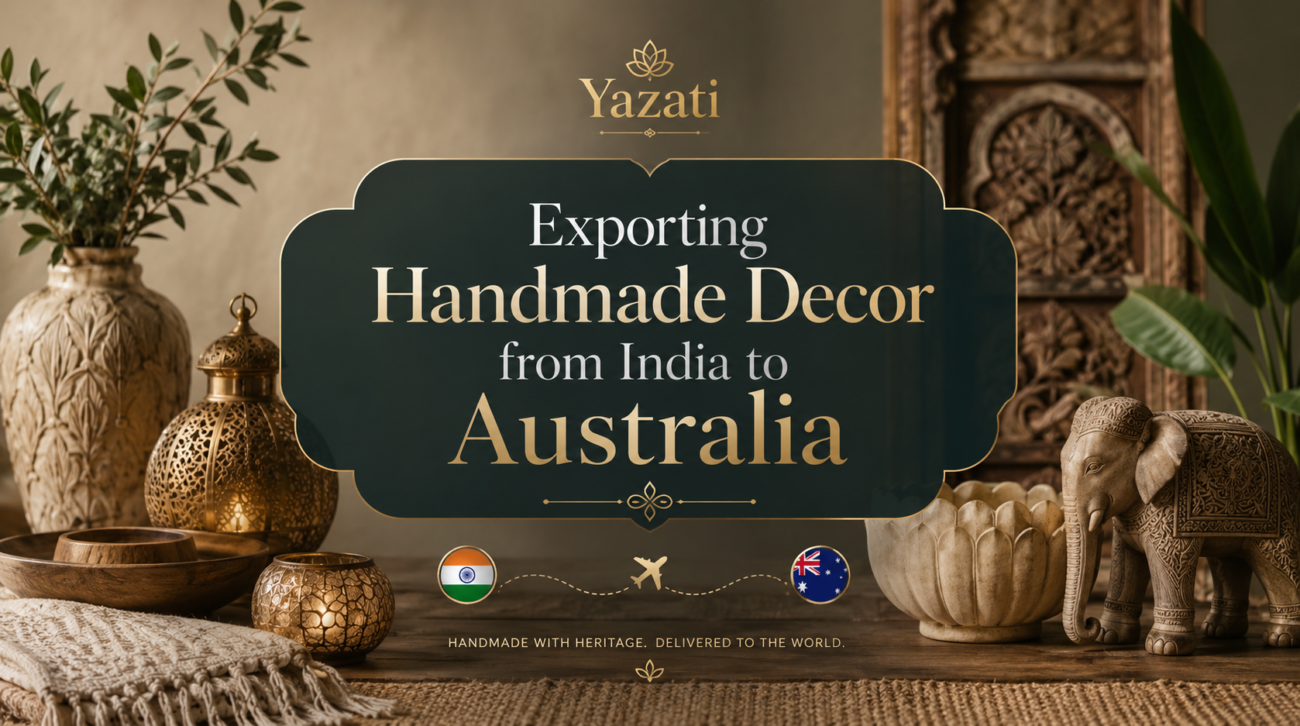
India has long been famous for its rich culture, artistic traditions, and handcrafted products. From colorful textiles to intricately carved wooden pieces, Indian handmade decor has a strong global appeal. Today, Exporting Handmade Decor from India to Australia is becoming an exciting business opportunity because Australian consumers increasingly prefer sustainable, artistic, and culturally unique home decor products.
Australia’s growing interest in eco-friendly lifestyles and handmade products creates excellent opportunities for Indian exporters. Whether you are a small artisan, startup entrepreneur, or established exporter, entering the Australian market can help you build a profitable international business.
In this detailed guide, you will learn everything about exporting handmade decor successfully, including legal requirements, logistics, marketing strategies, pricing, and expert tips.
Introduction to the Handmade Decor Export Market
The global handmade decor market is expanding rapidly. Consumers now value products that reflect authenticity, craftsmanship, and sustainability. Handmade decor products stand out because they carry emotional and cultural value that factory-made products often lack.
Indian handicrafts have a competitive advantage because of:
- Skilled artisan communities
- Affordable production costs
- Traditional craftsmanship
- Wide product variety
- Eco-friendly materials
Popular categories include:
| Product Type | Examples |
|---|---|
| Wooden Decor | Wall hangings, carved furniture |
| Textile Decor | Cushion covers, rugs, tapestries |
| Metal Crafts | Brass lamps, candle holders |
| Ceramic Items | Pottery, handmade vases |
| Recycled Decor | Upcycled home accessories |
Australian buyers appreciate these products for both home decoration and gifting purposes.
Why Australia is a Great Market for Indian Handmade Decor
Growing Demand for Sustainable Home Decor
Australians are increasingly choosing eco-conscious products. Handmade decor items made from natural wood, bamboo, cotton, jute, and recycled materials align perfectly with this trend.
Consumers in cities like Sydney, Melbourne, Brisbane, and Perth are especially interested in ethical and handmade products.
Popular Indian Handmade Products in Australia
Several Indian products already perform well in the Australian market:
- Macrame wall art
- Handwoven rugs
- Brass lanterns
- Wooden carvings
- Block-printed textiles
- Handmade candles
- Terracotta decor
Products with cultural stories and artisan backgrounds often attract premium buyers.
Understanding the Australian Import Market
Consumer Preferences in Australia
Australian consumers prefer:
- Minimalistic designs
- Eco-friendly materials
- High-quality finishing
- Durable packaging
- Authentic handcrafted stories
Neutral colors and modern-bohemian styles are currently trending.
Australian Quality and Safety Standards
Australia maintains strict import regulations for wooden items, textiles, and natural materials. Exporters should ensure products comply with quarantine and biosecurity standards.
You can review Australian import guidelines through the official Australian Border Force website:
Choosing the Right Handmade Decor Products
Selecting the right products is essential for export success.
Wooden Handicrafts
Indian wooden decor products are highly popular due to their intricate carving and durability.
Examples include:
- Wall panels
- Decorative trays
- Handmade furniture
- Photo frames
Use treated wood to meet Australian quarantine rules.
Textile-Based Decor
Textile products remain one of the easiest export categories because they are lightweight and trendy.
Popular options:
- Cushion covers
- Throws
- Curtains
- Table runners
- Handmade quilts
Metal and Brass Artifacts
Indian brass decor is admired for its artistic elegance.
Common products include:
- Lamps
- Candle stands
- Decorative bowls
- Sculptures
Eco-Friendly and Recycled Decor
Sustainability is a major selling point in Australia. Recycled decor products can command higher profit margins.
Examples:
- Reclaimed wood decor
- Recycled glass items
- Bamboo decor
- Coconut shell crafts
Legal Requirements for Exporting Handmade Decor from India to Australia
Understanding legal procedures is crucial for smooth international trade.
Import Export Code (IEC)
An Import Export Code is mandatory for exporters in India. It is issued by the Directorate General of Foreign Trade (DGFT).
Without IEC registration, international exports are not allowed.
GST Registration
GST registration helps businesses claim tax benefits and process export invoices smoothly.
Export Promotion Councils
Joining export councils like the Export Promotion Council for Handicrafts can provide market guidance, trade fair access, and export support.
Required Export Documentation
Essential documents include:
| Document | Purpose |
|---|---|
| Commercial Invoice | Product and payment details |
| Packing List | Shipment details |
| Bill of Lading | Shipping confirmation |
| Certificate of Origin | Product origin verification |
| Insurance Certificate | Shipment protection |
Product Packaging and Labeling Standards
Eco-Friendly Packaging Trends
Sustainable packaging appeals strongly to Australian buyers.
Recommended materials:
- Recycled cardboard
- Biodegradable wraps
- Paper fillers
- Reusable packaging
Labeling Requirements for Australia
Labels should clearly mention:
- Country of origin
- Material composition
- Care instructions
- Importer details
Clear labeling helps avoid customs issues.
Shipping and Logistics Process
Efficient logistics are critical when Exporting Handmade Decor from India to Australia.
Air Freight vs Sea Freight
| Shipping Method | Advantages | Disadvantages |
|---|---|---|
| Air Freight | Faster delivery | Higher cost |
| Sea Freight | Cost-effective for bulk | Slower transit |
Small businesses often begin with air freight before shifting to sea freight for larger orders.
Choosing Freight Forwarders
Reliable freight forwarders simplify:
- Customs documentation
- Cargo tracking
- Insurance
- Delivery coordination
Choose experienced logistics partners specializing in handicraft exports.
Customs Clearance Process
Customs procedures involve:
- Product inspection
- Duty assessment
- Documentation verification
- Quarantine approval
Wood and natural products may undergo additional inspection.
Pricing Strategy for Handmade Decor Export
Calculating Export Costs
Export pricing should include:
- Product manufacturing
- Packaging
- Shipping
- Customs duty
- Insurance
- Marketing costs
Avoid underpricing because handmade products have premium value.
Profit Margin Planning
A healthy export margin generally ranges between 20% and 40%, depending on product uniqueness and shipping costs.
Premium branding can justify higher pricing.
Finding Buyers in Australia
B2B Marketplaces
Online B2B platforms help exporters connect with international buyers.
Popular platforms include:
- Alibaba
- IndiaMART
- TradeIndia
- Faire
Professional product photography improves buyer interest significantly.
Trade Shows and Exhibitions
Trade fairs provide direct networking opportunities with wholesalers and retailers.
Important events include:
- Australian gift expos
- Home decor exhibitions
- Lifestyle trade fairs
Social Media and Digital Marketing
Platforms like Instagram and Pinterest work extremely well for handmade decor promotion.
Effective strategies include:
- Artisan storytelling
- Behind-the-scenes videos
- Styling inspiration
- Customer testimonials
Building an Export Brand
Storytelling and Indian Craft Heritage
Buyers love authentic stories behind handmade products.
Share:
- Artisan backgrounds
- Traditional crafting methods
- Regional heritage
- Sustainable sourcing practices
Storytelling increases emotional connection and brand loyalty.
Sustainable Branding Strategies
Eco-conscious branding attracts premium customers.
Use branding elements like:
- Plastic-free packaging
- Ethical sourcing
- Carbon-conscious shipping
- Fair trade messaging
Payment Methods and Risk Management
Secure International Payment Options
Common international payment methods include:
| Method | Safety Level |
|---|---|
| Letter of Credit | Very High |
| PayPal | Medium |
| Bank Transfer | High |
| Wise | High |
For new buyers, secure payment methods are strongly recommended.
Managing Currency Risks
Exchange rate fluctuations can affect profits. Exporters often use:
- Forward contracts
- Multi-currency accounts
- Payment hedging strategies
Common Challenges in Exporting Handmade Decor from India to Australia
Shipping Delays
Weather conditions and customs inspections may cause delays. Always maintain buffer timelines.
Product Damage Risks
Fragile decor items require:
- Protective cushioning
- Waterproof packaging
- Shock-resistant materials
Market Competition
Competition is increasing from countries like Vietnam, Indonesia, and China. Indian exporters must focus on uniqueness and craftsmanship.
Government Support and Export Incentives
Indian Government Export Schemes
The Indian government offers several export benefits, including:
- Duty drawback schemes
- Export subsidies
- MSME support
- Trade promotion assistance
Assistance from Export Councils
Organizations such as Federation of Indian Export Organisations provide exporter training and market development programs.
Future Trends in Handmade Decor Exports
Rise of Eco-Conscious Consumers
Sustainable living trends will continue driving demand for handmade decor globally.
Personalized Handmade Products
Customized decor products are becoming highly profitable. Buyers increasingly want personalized wall art, monogram decor, and bespoke gifts.
FAQs
Is Australia a profitable market for Indian handmade decor?
Yes, Australia has strong demand for sustainable and artistic home decor products, making it a profitable export destination.
What documents are required for exporting handmade decor from India to Australia?
You need an IEC, commercial invoice, packing list, bill of lading, and certificate of origin.
Which handmade products sell best in Australia?
Wooden decor, textile products, brass artifacts, and eco-friendly decor perform especially well.
How can I find buyers in Australia?
You can use B2B marketplaces, attend trade fairs, and market products through social media platforms.
Do Australian imports require quarantine inspections?
Yes, products made from wood, bamboo, and natural materials may undergo quarantine inspection.
What is the best shipping method for handmade decor exports?
Sea freight is economical for bulk shipments, while air freight is suitable for smaller urgent orders.
Conclusion
Exporting Handmade Decor from India to Australia offers tremendous opportunities for artisans and entrepreneurs. Australia’s demand for sustainable, authentic, and culturally rich products aligns perfectly with India’s handcrafted heritage.
Success in this industry depends on choosing the right products, maintaining quality standards, building strong branding, and understanding export logistics. Businesses that focus on eco-friendly packaging, storytelling, and premium craftsmanship can build long-term success in the Australian market.
With proper planning, legal compliance, and effective marketing, Indian handmade decor exporters can establish profitable international businesses and showcase India’s artistic excellence globally.
✨ Discover Global Sourcing Excellence with Netyex ✨
Netyex is your trusted B2B sourcing partner, connecting international buyers with India’s finest manufacturers and curated product lines—from handicrafts and home décor to kitchenware, textiles, hospitality essentials, and more. With verified suppliers and end-to-end support, we make global procurement seamless, reliable, and efficient.
👉 Elevate your sourcing experience—explore Netyex today.
📦 Bulk orders & customisation | 🌍 Worldwide delivery | 🤝 Trusted by global buyers
Visit Netyex to source premium Indian products with confidence.