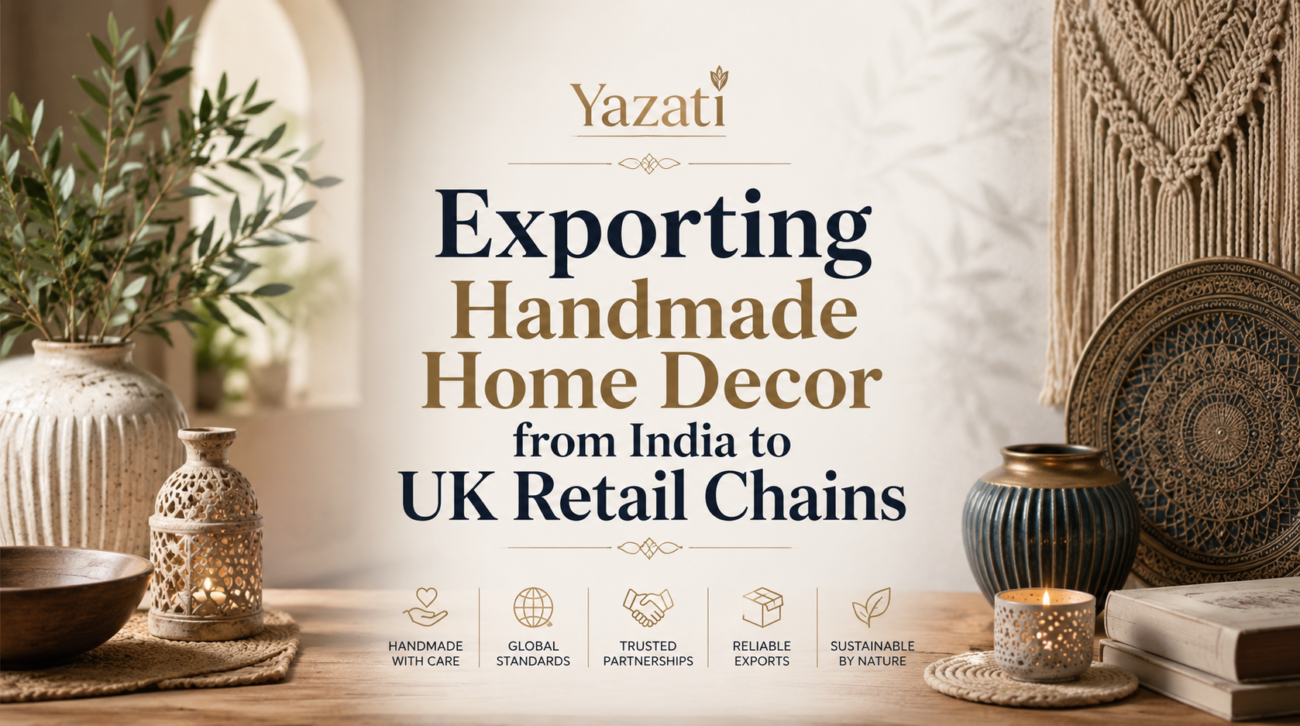
Exporting Handmade Home Decor from India to UK Retail Chains has become one of the fastest-growing opportunities for Indian manufacturers, artisans, and exporters. The global demand for handcrafted, sustainable, and culturally rich products continues to rise, especially in the United Kingdom. UK consumers are increasingly moving toward eco-friendly home styling, unique handmade décor, and artisan-crafted products that carry authenticity and storytelling.
India has a strong advantage in this market because of its centuries-old handicraft traditions, skilled artisans, affordable production costs, and access to raw materials. From Rajasthan’s wooden carvings to Kashmir’s handwoven textiles and Moradabad’s metal crafts, Indian handmade décor products are highly valued across global retail markets.
Today, major UK retail chains, boutique stores, and online marketplaces actively source handmade products from India. Businesses that understand export regulations, buyer expectations, pricing, logistics, and branding can build a profitable international trade business.
Understanding the UK Handmade Home Decor Market
The UK home décor market is experiencing steady growth due to changing consumer lifestyles and rising interest in interior design. Handmade products have become especially popular because buyers want unique items instead of mass-produced décor.
Why UK Retail Chains Prefer Indian Handmade Products
UK retailers value Indian handmade décor because it combines affordability with craftsmanship. Indian artisans produce products with detailed handwork that cannot easily be replicated by machines.
Some major reasons UK buyers prefer Indian products include:
- Competitive pricing
- Wide product variety
- Sustainable production methods
- Cultural authenticity
- Flexible customization options
Retailers also appreciate India’s ability to supply both small boutique orders and large commercial shipments.
Popular Handmade Home Decor Categories in the UK
Several handmade categories perform exceptionally well in the UK market:
| Product Category | Demand Level |
| Wooden wall décor | High |
| Handwoven cushions | High |
| Brass decorative items | Medium-High |
| Bamboo décor | Growing |
| Ceramic handmade décor | High |
| Macramé products | Growing |
Minimalist, Scandinavian-inspired, rustic, and bohemian styles are especially popular among UK consumers.
Benefits of Exporting Handmade Home Decor from India
Competitive Manufacturing Costs
India offers lower labor and production costs compared to many Western countries. This enables exporters to maintain healthy profit margins while offering competitive wholesale pricing.
Even after adding shipping, customs, and retailer margins, Indian products often remain cost-effective for UK chains.
Rich Craftsmanship and Artisan Heritage
India’s handmade industry is deeply rooted in traditional art forms. Retailers often market these products by highlighting artisan stories and ethical sourcing practices.
This storytelling aspect increases product value and emotional connection with buyers.
Eco-Friendly and Sustainable Appeal
Sustainability is a major retail trend in the UK. Handmade Indian décor products made from bamboo, jute, reclaimed wood, and recycled materials attract environmentally conscious consumers.
Products marketed as:
- Handmade
- Sustainable
- Ethically sourced
- Eco-friendly
- Fair trade
often perform better in premium retail markets.
Market Research Before Exporting
Successful exporters never skip market research.
Identifying UK Retail Buyers
Potential buyers include:
- Large retail chains
- Boutique interior stores
- Online décor platforms
- Garden and lifestyle stores
- Hotel procurement companies
Researching each buyer’s product style, pricing range, and sourcing preferences helps create targeted proposals.
Studying Consumer Trends and Preferences
UK consumers frequently follow trends influenced by:
- Social media
- Interior design influencers
- Home renovation shows
- Seasonal collections
Neutral tones, earthy textures, and handmade aesthetics remain highly popular.
Understanding Seasonal Buying Patterns
Retailers often place orders months before major seasons:
| Season | Buying Cycle |
| Christmas | June–August |
| Spring Collection | November–January |
| Summer Décor | February–March |
Planning production around these cycles is critical.
Legal Requirements for Exporting Handmade Home Decor from India to UK Retail Chains
Import-Export Code (IEC) Registration
An Import Export Code issued by the Directorate General of Foreign Trade is mandatory for exports from India.
Without an IEC, international shipments cannot proceed legally.
GST and Export Documentation
Essential export documents include:
- Commercial invoice
- Packing list
- Bill of lading
- Certificate of origin
- Shipping bill
- GST documentation
Accurate paperwork prevents customs delays.
UK Product Safety Standards
Some décor products must comply with UK regulations, especially:
- Electrical décor items
- Treated wooden products
- Chemical finishes and paints
Review UK import standards carefully before shipping products.
For official trade guidance, exporters can consult:
Product Categories with High Export Demand
Wooden Handcrafted Decor
Wooden trays, wall panels, candle holders, and carved furniture pieces remain top-selling export items.
Mango wood and reclaimed wood products are especially trendy.
Handwoven Textile Decor
Handmade cushion covers, rugs, throws, and table runners are highly demanded in UK home décor stores.
Natural fibers such as cotton, linen, and jute are preferred.
Metal and Brass Decorative Items
Indian brass craftsmanship has strong international recognition. Decorative bowls, lanterns, mirrors, and sculptures perform well in luxury retail.
Sustainable Bamboo and Cane Products
Eco-conscious UK consumers increasingly prefer renewable material products.
Popular categories include:
- Cane baskets
- Bamboo lamps
- Woven storage décor
- Sustainable furniture accents
Pricing Strategies for UK Retail Chains
FOB vs CIF Pricing Models
Two common export pricing methods include:
| Pricing Method | Meaning |
| FOB | Buyer pays shipping |
| CIF | Seller covers shipping and insurance |
FOB pricing is often simpler for beginners.
Calculating Shipping and Customs Costs
Exporters must calculate:
- Packaging costs
- Freight charges
- Customs duties
- Insurance
- Port handling charges
Incorrect pricing calculations can eliminate profits quickly.
Profit Margin Planning
A healthy export business typically targets:
- 20–40% wholesale margin
- Long-term buyer relationships
- Repeat seasonal orders
Avoid underpricing simply to win initial contracts.
Packaging and Branding for International Retail
Eco-Friendly Packaging Trends
Sustainable packaging is becoming a major selling point.
Popular options include:
- Recycled cardboard
- Paper fillers
- Plastic-free wrapping
- Biodegradable packaging
Retailers increasingly reject excessive plastic packaging.
Labeling Requirements in the UK
Labels should clearly include:
- Country of origin
- Material composition
- Care instructions
- Importer details
Professional packaging improves retailer confidence.
Creating Premium Brand Identity
Strong branding helps products stand out.
Important branding elements include:
- Logo design
- Product storytelling
- Artisan background
- Sustainable mission
- Professional catalogs
A premium presentation often justifies higher pricing.
Finding UK Retail Chains and Buyers
Trade Fairs and International Exhibitions
Trade fairs remain one of the best methods for finding buyers.
Popular trade events include:
- Spring Fair
- Top Drawer
- Maison&Objet
These events connect exporters directly with procurement teams.
B2B Online Marketplaces
Useful platforms include:
- Alibaba
- IndiaMART
- Faire
Professional listings and high-quality photos improve buyer inquiries.
Direct Outreach to Retail Procurement Teams
Cold emailing buyers can also work effectively.
A professional outreach package should include:
- Product catalog
- Pricing sheet
- MOQ details
- Certifications
- Factory photos
Persistence matters in international B2B sales.
Logistics and Shipping Process
Choosing Freight Forwarders
Reliable freight partners help avoid:
- Shipment delays
- Documentation errors
- Customs complications
Experienced export logistics companies simplify the process significantly.
Air Freight vs Sea Freight
| Shipping Method | Best For |
| Air Freight | Small urgent shipments |
| Sea Freight | Large bulk orders |
Sea freight is more economical for most home décor exports.
Managing Delivery Timelines
UK retail chains often operate on strict seasonal schedules. Late shipments may result in canceled orders or penalties.
Careful production planning is essential.
Marketing Handmade Home Decor Internationally
Building an Export Website
A professional export website should include:
- Product catalogs
- Wholesale inquiry forms
- Factory information
- Certifications
- High-quality images
SEO optimization improves international visibility.
Using Social Media for Buyer Acquisition
Platforms like:
help attract both retailers and interior designers.
SEO and Digital Marketing Strategies
Target keywords such as:
- Handmade décor exporter India
- Indian home décor wholesale
- Sustainable décor supplier
can generate international leads organically.
Common Challenges in Exporting
Currency Fluctuation Risks
Exchange rate changes can affect profits significantly. Many exporters use forward contracts to reduce risk.
Quality Control Issues
Inconsistent craftsmanship may damage retailer relationships.
Strong quality inspection systems are critical.
Delayed Shipping and Customs Problems
Documentation mistakes are among the most common export problems.
Working with experienced customs brokers helps reduce risks.
Future Trends in Handmade Home Decor Exports
Sustainable and Ethical Retail Demand
Ethical sourcing is no longer optional in many UK retail chains.
Retailers increasingly demand:
- Fair trade sourcing
- Carbon-conscious packaging
- Sustainable materials
Smart Retail and E-commerce Growth
Online retail growth allows smaller exporters to access global buyers without relying only on traditional distributors.
Demand for Personalized Decor Products
Customized handmade products are gaining popularity because consumers want unique home styling items.
FAQs
Is exporting handmade home décor from India profitable?
Yes, exporting handmade home décor from India can be highly profitable due to low production costs, strong artisan skills, and growing global demand for sustainable products.
Which handmade products sell best in the UK?
Wooden décor, handwoven textiles, brass items, bamboo products, and eco-friendly decorative accessories are among the top-selling categories.
Do I need an IEC license to export from India?
Yes, an Import Export Code (IEC) is mandatory for legal exports from India.
How can I find UK retail buyers?
You can find buyers through trade fairs, B2B marketplaces, LinkedIn outreach, export councils, and direct retailer contact.
What shipping method is best for home décor exports?
Sea freight is usually the most economical method for bulk shipments, while air freight is suitable for urgent small orders.
How important is sustainable packaging in the UK market?
Sustainable packaging is extremely important because UK consumers and retailers increasingly prioritize environmentally responsible products.
Conclusion
Exporting Handmade Home Decor from India to UK Retail Chains offers enormous growth potential for Indian manufacturers, artisans, and export businesses. Rising global demand for sustainable, handmade, and ethically sourced home décor products creates strong opportunities for businesses willing to invest in quality, branding, logistics, and buyer relationships.
Success in this industry depends on understanding international retail expectations, maintaining consistent product quality, complying with regulations, and building strong marketing systems. Exporters who combine traditional Indian craftsmanship with modern business strategies can create a highly scalable and profitable global trade business.
As UK retailers continue searching for authentic handmade décor products, Indian exporters are uniquely positioned to lead the market with creativity, sustainability, and artisan excellence.
✨ Discover Global Sourcing Excellence with Netyex ✨
Netyex is your trusted B2B sourcing partner, connecting international buyers with India’s finest manufacturers and curated product lines—from handicrafts and home décor to kitchenware, textiles, hospitality essentials, and more. With verified suppliers and end-to-end support, we make global procurement seamless, reliable, and efficient.
👉 Elevate your sourcing experience—explore Netyex today.
📦 Bulk orders & customisation | 🌍 Worldwide delivery | 🤝 Trusted by global buyers
Visit Netyex to source premium Indian products with confidence.