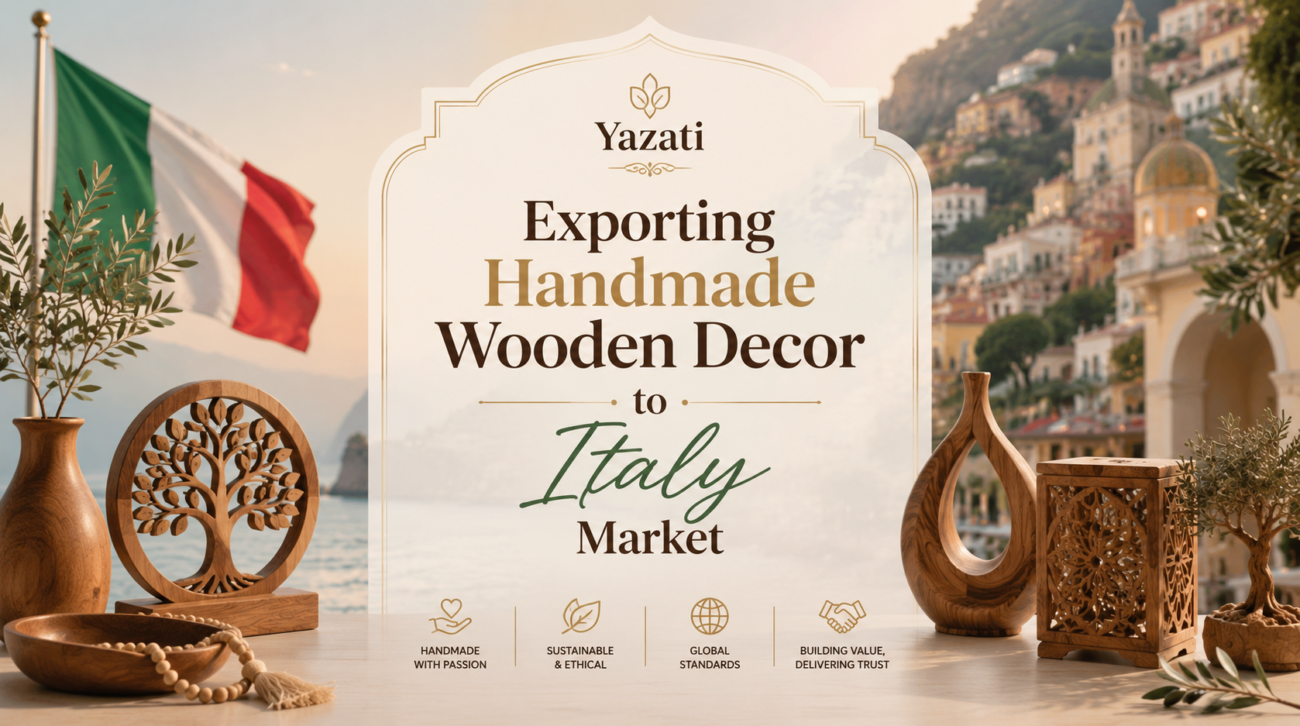
Italy is globally recognized for its appreciation of art, craftsmanship, design, and premium home décor products. For manufacturers and artisans seeking international expansion, Exporting Handmade Wooden Decor to Italy Market presents a promising opportunity. Italian consumers value authenticity, sustainability, and high-quality craftsmanship, making handmade wooden products an attractive offering.
Whether you are a small artisan workshop or a large-scale exporter, understanding the Italian market can significantly improve your chances of success.
Introduction to the Italian Handmade Decor Industry
Italy has one of Europe’s strongest home décor sectors. Italian households invest heavily in interior design, decorative accessories, and artisanal products. Handmade wooden décor aligns perfectly with Italy’s culture of craftsmanship and appreciation for unique products.
The growing popularity of eco-conscious living has further increased demand for natural materials such as wood. Handmade wooden décor products are increasingly being featured in homes, hotels, restaurants, and boutique commercial spaces.
Why Italy Is an Attractive Market for Wooden Decor Exporters
Consumer Preferences in Italy
Italian consumers often prefer products that combine functionality with aesthetics. Handmade wooden décor appeals to buyers because it offers:
- Unique artistic value
- Natural beauty
- Long-lasting durability
- Sustainable production methods
- Personalized designs
Unlike mass-produced decorative items, handcrafted products create emotional connections with customers.
Growth of Sustainable Home Decor
Environmental awareness is rising throughout Europe. Italian consumers actively seek products manufactured using responsible sourcing and eco-friendly processes.
Products made from reclaimed wood, responsibly harvested timber, or recycled materials often gain competitive advantages in the market.
Understanding the Italian Wooden Decor Market
Market Size and Opportunities
The Italian furniture and home décor sector remains one of Europe’s largest. Growing online retail channels and increasing interest in artisan products have created significant opportunities for foreign exporters.
Demand exists across:
- Residential homes
- Boutique hotels
- Restaurants
- Interior designers
- Gift stores
- Lifestyle retailers
Key Product Categories
Popular imported wooden décor categories include:
| Product Category | Demand Level |
|---|---|
| Wooden Wall Art | High |
| Decorative Shelves | High |
| Wooden Figurines | Medium |
| Rustic Decor Items | High |
| Personalized Gifts | High |
| Wooden Candle Holders | Medium |
| Decorative Trays | High |
Handmade Wooden Decor Products in Demand
Wall Art and Decorative Panels
Wooden wall decorations continue to gain popularity due to their ability to create warm and inviting interiors. Italian buyers appreciate:
- Carved panels
- Geometric wall art
- Nature-inspired designs
- Personalized name plaques
Wooden Sculptures and Figurines
Artistic wooden sculptures attract premium buyers, especially in luxury décor stores and galleries.
Popular themes include:
- Abstract art
- Nature motifs
- Religious figures
- Traditional cultural designs
Rustic Home Accessories
Rustic styles remain fashionable across many Italian regions.
Examples include:
- Wooden trays
- Candle holders
- Decorative bowls
- Wooden clocks
- Storage boxes
Customized Wooden Gifts
Personalization is a growing trend. Products featuring names, messages, dates, or custom engravings often command higher prices and customer loyalty.
Italy’s Import Regulations and Compliance Requirements
Product Safety Standards
Before exporting wooden décor products, ensure compliance with European Union regulations concerning:
- Chemical treatments
- Wood preservatives
- Product safety
- Environmental standards
Exporters should verify that materials used meet applicable EU requirements.
Documentation Requirements
Common export documentation includes:
- Commercial Invoice
- Packing List
- Certificate of Origin
- Bill of Lading or Airway Bill
- Customs Declaration
- Phytosanitary Certificates (when applicable)
Consult official EU trade resources such as the European Commission’s trade portal: https://trade.ec.europa.eu
Sustainable and Eco-Friendly Expectations
FSC Certification
Forest Stewardship Council (FSC) certification can significantly improve buyer confidence.
Benefits include:
- Proof of responsible sourcing
- Easier market acceptance
- Enhanced brand reputation
- Access to premium retail channels
Sustainable Packaging
Italian buyers increasingly prefer:
- Recyclable packaging
- Plastic-free materials
- Biodegradable fillers
- Environmentally responsible shipping solutions
Pricing Strategy for Italian Buyers
Cost Calculation
Your pricing should include:
- Raw materials
- Labor costs
- Packaging expenses
- Freight charges
- Insurance
- Import duties
- Distributor margins
Competitive Pricing Models
Common approaches include:
- Cost-plus pricing
- Value-based pricing
- Wholesale pricing
- Premium artisan pricing
Premium handmade products often compete on quality rather than price alone.
Finding Buyers and Distributors in Italy
Trade Shows
Participating in trade fairs can generate valuable business contacts.
Relevant events include:
- Salone del Mobile
- HOMI Milano
These events attract retailers, importers, and interior designers from across Europe.
Online B2B Platforms
Popular sourcing channels include:
- Alibaba
- Europages
- Faire
- Global Sources
Professional product catalogs and clear communication are essential.
Retail Partnerships
Potential buyers include:
- Home décor chains
- Boutique gift stores
- Interior design studios
- Hospitality suppliers
Building long-term partnerships often leads to recurring orders.
Marketing Handmade Wooden Decor in Italy
Branding and Storytelling
Italian consumers appreciate authentic stories behind products.
Highlight:
- Artisan craftsmanship
- Traditional techniques
- Sustainable sourcing
- Cultural heritage
- Handmade production process
A compelling story often differentiates your products from competitors.
Digital Marketing Strategies
Effective approaches include:
- Instagram marketing
- Pinterest promotion
- Influencer collaborations
- Email campaigns
- Search engine optimization
- Italian-language product listings
High-quality photography is particularly important for décor products.
Packaging and Logistics Considerations
Shipping Methods
Depending on order size, exporters can use:
| Method | Best For |
|---|---|
| Air Freight | Small urgent shipments |
| Sea Freight LCL | Small bulk orders |
| Sea Freight FCL | Large volume shipments |
| Courier Services | Samples and prototypes |
Customs Clearance
Working with experienced freight forwarders can reduce delays and simplify documentation procedures.
Consider partnering with customs brokers familiar with Italian import regulations.
Common Challenges and Solutions
| Challenge | Solution |
|---|---|
| Strong Competition | Focus on unique craftsmanship |
| Price Pressure | Emphasize quality and sustainability |
| Shipping Costs | Consolidate shipments |
| Language Barriers | Use Italian-speaking representatives |
| Regulatory Compliance | Work with export consultants |
Proper planning minimizes risks and improves profitability.
Future Trends in the Italian Wooden Decor Market
Several trends are expected to shape demand through 2026 and beyond:
- Sustainable sourcing
- Minimalist design
- Personalized products
- Natural finishes
- Handmade luxury décor
- Eco-conscious packaging
- Smart integration with interior design
Exporters who align with these trends will likely enjoy stronger market growth.
FAQs
1. Is Italy a good market for handmade wooden décor exports?
Yes. Italy has strong demand for artisan, sustainable, and premium home décor products, making it an attractive destination for exporters.
2. Do I need certification to export wooden décor to Italy?
Certification may not always be mandatory, but FSC certification and compliance with EU regulations can improve buyer confidence and market access.
3. Which handmade wooden products sell best in Italy?
Wall art, rustic décor accessories, decorative trays, personalized gifts, and handcrafted sculptures are among the most popular categories.
4. How can I find Italian buyers?
Trade shows, B2B marketplaces, distributors, retailers, and direct outreach to interior designers are effective methods.
5. What packaging is preferred by Italian buyers?
Environmentally friendly, recyclable, and plastic-free packaging is increasingly preferred.
6. What is the biggest challenge when exporting to Italy?
Competition and compliance requirements are common challenges, but strong branding and product differentiation can help overcome them.
Conclusion
Exporting Handmade Wooden Decor to Italy Market offers substantial opportunities for artisans, manufacturers, and exporters willing to invest in quality, sustainability, and strong branding. Italian consumers appreciate craftsmanship, authenticity, and environmentally responsible products, making handmade wooden décor a natural fit for the market.
Success depends on understanding buyer preferences, complying with EU regulations, developing competitive pricing strategies, and building long-term relationships with distributors and retailers. By focusing on quality and storytelling, exporters can establish a strong presence and achieve sustainable growth in Italy’s thriving home décor sector.
✨ Discover Global Sourcing Excellence with Netyex ✨
Netyex is your trusted B2B sourcing partner, connecting international buyers with India’s finest manufacturers and curated product lines—from handicrafts and home décor to kitchenware, textiles, hospitality essentials, and more. With verified suppliers and end-to-end support, we make global procurement seamless, reliable, and efficient.
👉 Elevate your sourcing experience—explore Netyex today.
📦 Bulk orders & customisation | 🌍 Worldwide delivery | 🤝 Trusted by global buyers
Visit Netyex to source premium Indian products with confidence.