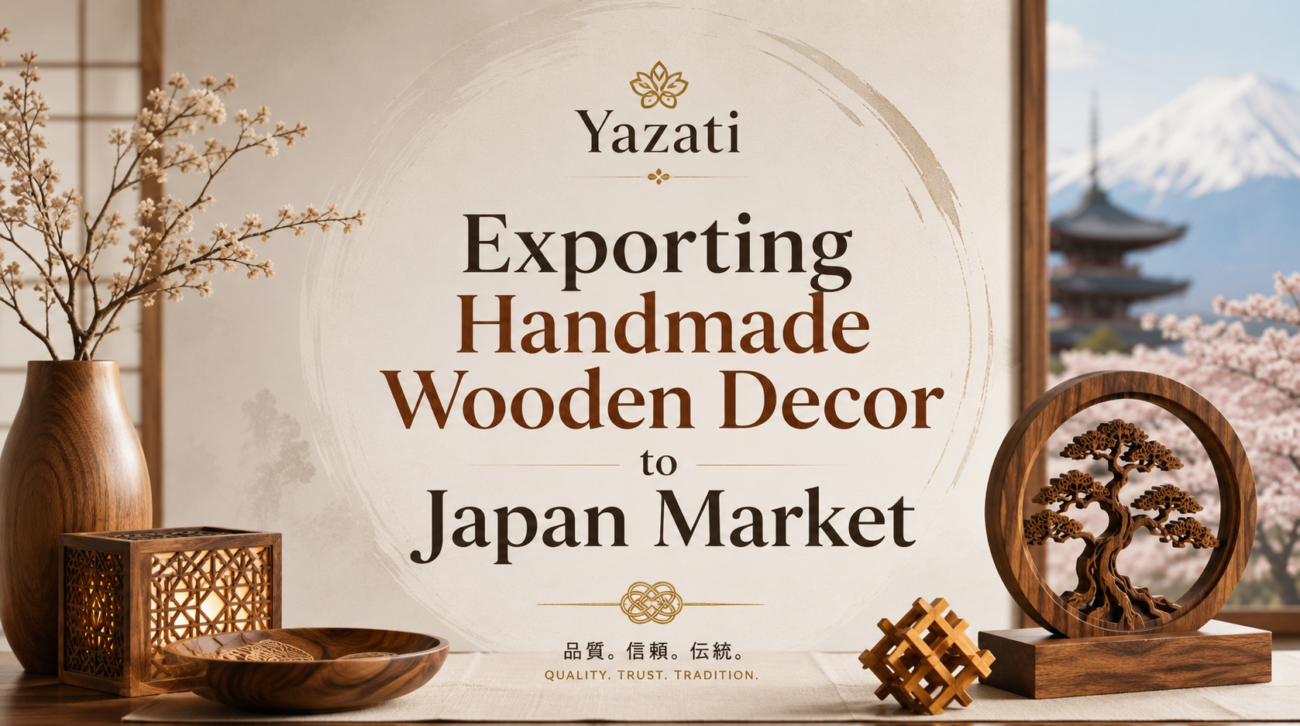
Introduction to the Japanese Handmade Decor Industry
Japan is one of the world’s most sophisticated consumer markets, known for its appreciation of craftsmanship, quality, and aesthetics. For businesses involved in Exporting Handmade Wooden Decor to Japan Market, the country offers significant opportunities due to its strong interest in artisanal products and sustainable living.
Japanese consumers often value products that combine functionality, beauty, and cultural authenticity. Handmade wooden decor items can fit perfectly into this demand when designed and marketed appropriately.
Why Japan Is an Attractive Market for Handmade Wooden Decor
The Japanese home decor sector continues to evolve as consumers seek unique and meaningful products that enhance their living spaces.
Growing Demand for Sustainable Products
Environmental awareness has increased across Japan. Many consumers actively look for products made from renewable materials and ethical production methods. Handmade wooden decor naturally aligns with these values.
Benefits include:
- Eco-friendly appeal
- Long-lasting durability
- Reduced environmental impact
- Natural aesthetic qualities
Appreciation for Craftsmanship
Japan has a long tradition of valuing artisanship. Concepts such as attention to detail and mastery of craft resonate strongly with Japanese buyers.
Handmade products often attract consumers because they offer:
- Unique character
- Authentic stories
- Superior craftsmanship
- Cultural significance
Understanding Japanese Consumer Preferences
Before Exporting Handmade Wooden Decor to Japan Market, understanding consumer expectations is essential.
Minimalist Design Trends
Japanese interiors frequently embrace simplicity. Clean lines, uncluttered spaces, and subtle elegance are common design preferences.
Popular characteristics include:
- Neutral colors
- Functional design
- Compact dimensions
- Natural textures
Natural Materials and Aesthetics
Wood is deeply appreciated in Japanese architecture and interior design. Products that highlight the natural grain and texture of wood often perform well.
Consumers typically favor:
| Preference | Description |
|---|---|
| Natural Finish | Minimal chemical treatment |
| Authenticity | Genuine handmade production |
| Simplicity | Elegant, understated designs |
| Quality | Precision craftsmanship |
Market Research Before Exporting
Conducting thorough market research minimizes risks and improves the likelihood of success.
Identifying Target Customers
Potential customer groups include:
- Homeowners
- Interior designers
- Boutique retailers
- Hospitality businesses
- Gift shops
Understanding purchasing behavior helps tailor products and marketing messages effectively.
Studying Competitors
Analyze existing brands selling wooden decor in Japan.
Key areas to examine:
- Product designs
- Pricing strategies
- Distribution channels
- Customer reviews
- Marketing approaches
Product Adaptation for the Japanese Market
Adapting products to local tastes can significantly improve market acceptance.
Design Modifications
Consider:
- Smaller product sizes suitable for compact homes
- Minimalist styles
- Functional decorative items
- Seasonal collections
Packaging Expectations
Packaging quality is extremely important in Japan.
Effective packaging should be:
- Elegant
- Protective
- Environmentally friendly
- Gift-ready
Japanese consumers often view packaging as part of the overall product experience.
Quality Standards and Compliance Requirements
Maintaining high standards is crucial when entering Japan.
Product Safety Regulations
Wooden products may require compliance with import regulations concerning:
- Material sourcing
- Chemical treatments
- Pest control measures
- Product labeling
Consult official guidance from organizations such as the Japan External Trade Organization for updated requirements.
Documentation Requirements
Common export documents include:
- Commercial invoice
- Packing list
- Certificate of origin
- Bill of lading
- Import declarations
Accurate documentation helps avoid customs delays.
Pricing Strategy for Handmade Wooden Decor
Pricing should reflect both costs and perceived value.
Cost Calculation
Include:
- Manufacturing costs
- Packaging expenses
- Shipping charges
- Customs duties
- Marketing costs
Premium Positioning
Japanese consumers often accept premium pricing when products demonstrate:
- Exceptional quality
- Authentic craftsmanship
- Unique design
- Strong brand story
Choosing the Right Distribution Channels
Selecting effective sales channels is essential.
Importers and Distributors
Working with experienced local partners can provide:
- Market knowledge
- Established retail networks
- Regulatory support
- Customer insights
E-commerce Platforms
Online channels continue to grow.
Potential options include:
- Amazon Japan
- Rakuten
- Brand-owned websites
- Specialty decor marketplaces
Branding and Storytelling
Highlighting Artisan Heritage
Japanese buyers often connect emotionally with authentic stories.
Share details about:
- Craft traditions
- Artisan techniques
- Sustainable sourcing
- Cultural influences
Building Brand Trust
Trust can be strengthened through:
- Consistent quality
- Professional communication
- Customer testimonials
- Clear product information
Marketing Strategies for Japan
Successful marketing requires localization.
Digital Marketing
Effective tactics include:
- Japanese-language websites
- Search engine optimization
- Social media engagement
- Influencer collaborations
For additional market-entry resources, visit the official JETRO website: https://www.jetro.go.jp/
Trade Shows and Exhibitions
Participating in industry events allows businesses to:
- Meet buyers
- Gather feedback
- Build partnerships
- Showcase craftsmanship
Relevant events can often be found through organizations such as Japan External Trade Organization.
Logistics and Shipping Considerations
Freight Options
Common methods include:
| Method | Advantages | Considerations |
|---|---|---|
| Air Freight | Faster delivery | Higher cost |
| Sea Freight | Lower cost | Longer transit |
| Courier Services | Convenience | Limited volume |
Customs Procedures
Work closely with customs brokers to ensure:
- Proper classification
- Accurate documentation
- Regulatory compliance
- Timely clearance
Cultural Etiquette in Japanese Business
Understanding business culture is critical.
Communication Practices
Important practices include:
- Professional communication
- Timely responses
- Respectful language
- Detailed presentations
Building Long-Term Relationships
Japanese business culture values trust and consistency.
Focus on:
- Reliability
- Product quality
- Follow-through
- Relationship development
Long-term partnerships often yield better results than short-term transactions.
Common Challenges and Solutions
| Challenge | Solution |
|---|---|
| Language barriers | Hire translators or local agents |
| Regulatory complexity | Work with trade consultants |
| Market competition | Differentiate through craftsmanship |
| Shipping costs | Optimize packaging and logistics |
| Consumer trust | Build strong brand credibility |
Future Opportunities in the Japanese Wooden Decor Market
Several trends suggest continued opportunities:
- Sustainable living
- Eco-conscious purchasing
- Home improvement spending
- Appreciation for artisan-made goods
- Growing online shopping adoption
Businesses that combine traditional craftsmanship with modern design are particularly well-positioned for success.
FAQs
1. Is Japan a good market for handmade wooden decor?
Yes. Japanese consumers appreciate quality craftsmanship, sustainable materials, and aesthetically pleasing home decor products.
2. What type of wooden decor sells best in Japan?
Minimalist designs, functional decor items, natural wood finishes, and products with authentic artisan stories tend to perform well.
3. Do I need special certifications to export wooden products to Japan?
Requirements vary depending on product type and materials. Always verify current import regulations before shipping.
4. What is the best way to find Japanese buyers?
Trade shows, distributors, online marketplaces, and export promotion organizations can help identify potential buyers.
5. How important is packaging in Japan?
Packaging is extremely important and often influences purchasing decisions. High-quality, attractive packaging is recommended.
6. Should product descriptions be translated into Japanese?
Yes. Localized product descriptions significantly improve customer understanding and trust.
Conclusion
Exporting Handmade Wooden Decor to Japan Market offers exciting opportunities for artisans and manufacturers who understand Japanese consumer expectations. Success depends on delivering exceptional craftsmanship, adapting products to local preferences, maintaining high quality standards, and building long-term business relationships.
By combining thoughtful market research, strong branding, effective distribution channels, and cultural awareness, businesses can establish a sustainable presence in one of the world’s most respected and quality-conscious markets.
✨ Discover Global Sourcing Excellence with Netyex ✨
Netyex is your trusted B2B sourcing partner, connecting international buyers with India’s finest manufacturers and curated product lines—from handicrafts and home décor to kitchenware, textiles, hospitality essentials, and more. With verified suppliers and end-to-end support, we make global procurement seamless, reliable, and efficient.
👉 Elevate your sourcing experience—explore Netyex today.
📦 Bulk orders & customisation | 🌍 Worldwide delivery | 🤝 Trusted by global buyers
Visit Netyex to source premium Indian products with confidence.