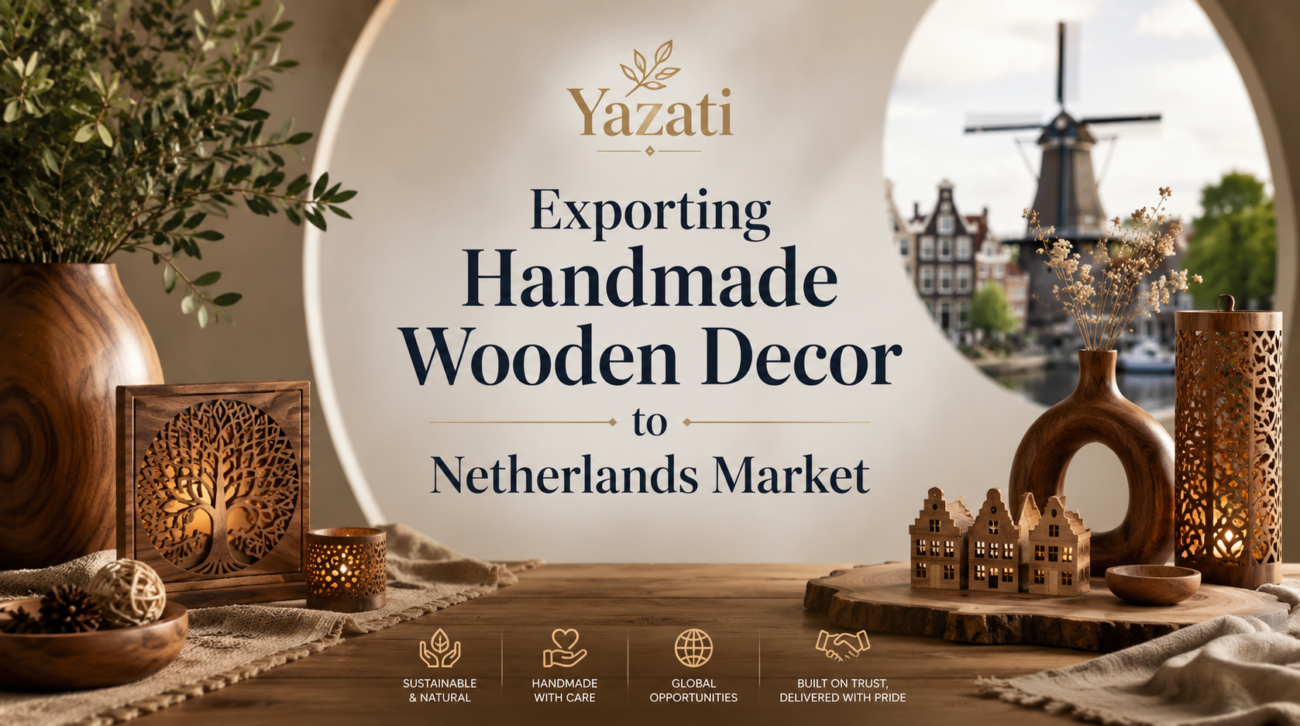
The global demand for eco-friendly home decor is growing rapidly, and the Netherlands has become one of the most attractive destinations for artisans and exporters. Exporting Handmade Wooden Decor to Netherlands Market offers excellent business potential because Dutch consumers appreciate sustainability, craftsmanship, and minimalist design.
The Netherlands is known for its stylish interiors and environmentally conscious buyers. Handmade wooden decor products fit perfectly into this market because they combine natural beauty with authenticity. Whether you produce handcrafted wall hangings, wooden trays, decorative shelves, or carved furniture, Dutch buyers are actively searching for unique products that stand out from mass-produced items.
This guide explains everything you need to know about entering the Dutch market successfully. From legal requirements to pricing strategies, you’ll discover practical steps to grow your export business.
Why the Netherlands Is a Great Market for Wooden Decor
The Netherlands is one of Europe’s strongest import hubs. Dutch consumers have high purchasing power and a strong interest in home decoration products. Interior styling is a major lifestyle trend, and sustainable products are especially popular.
Several factors make the Dutch market attractive:
- Strong demand for eco-friendly products
- Interest in handmade craftsmanship
- Growing online shopping culture
- Access to broader European markets
- Stable economy and transparent trade policies
Dutch consumers often prefer products made from:
- Reclaimed wood
- Sustainably sourced timber
- Natural finishes
- Handmade craftsmanship
This creates excellent opportunities for exporters from countries known for woodworking traditions.
Understanding the Dutch Home Decor Industry
The Dutch home decor industry has expanded significantly in recent years. Minimalist interiors dominate the market, but there is also strong demand for rustic and Scandinavian-inspired decor.
Consumers in the Netherlands often look for:
- Neutral colors
- Functional decor
- Eco-friendly materials
- Long-lasting quality
- Unique handcrafted pieces
Online shopping platforms have accelerated growth in this sector. Many Dutch consumers buy home decor from independent sellers online rather than traditional stores.
Popular Handmade Wooden Decor Products in the Netherlands
Some wooden decor categories perform exceptionally well in Dutch markets:
| Product Type | Market Demand |
|---|---|
| Wooden wall art | High |
| Floating shelves | High |
| Handmade candle holders | Medium |
| Wooden serving trays | High |
| Decorative wooden bowls | High |
| Rustic furniture | Medium |
| Wooden mirrors and frames | High |
Products with simple, clean, and natural aesthetics tend to perform best.
Dutch Consumer Preferences
Dutch buyers prioritize quality over quantity. They are willing to pay premium prices for:
- Authentic handmade products
- Sustainable sourcing
- Ethical manufacturing
- Durable craftsmanship
Minimalist Scandinavian-inspired styles are especially popular. Light wood tones like oak, ash, and pine often sell better than dark heavy finishes.
Benefits of Exporting Handmade Wooden Decor to Netherlands Market
There are many advantages to entering the Dutch market.
Higher Profit Margins
European buyers typically pay more for handcrafted products than local markets.
Strong Demand for Sustainability
Eco-conscious Dutch consumers actively support handmade and natural products.
Gateway to Europe
The Netherlands has one of Europe’s largest ports, making it easier to distribute products across the EU.
Brand Recognition
Selling in Europe improves your international reputation and opens doors to other markets.
Market Research Before Exporting
Before starting exports, research is essential. Understanding competitors and buyer expectations can prevent costly mistakes.
Focus on:
- Competitor pricing
- Popular product designs
- Shipping costs
- Consumer trends
- Online marketplace demand
Useful research platforms include:
- Etsy
- Amazon Netherlands
- Dutch home decor websites
You can also study trade reports from organizations like:
- Centre for the Promotion of Imports (CBI)
- Dutch Chamber of Commerce
External resource:
Identifying Your Target Audience
Different customer groups require different strategies.
Retail Stores
Ideal for premium handcrafted collections.
Wholesalers
Best for larger production quantities.
Online Consumers
Great for personalized and niche products.
Interior Designers
Often seek custom-made decor items.
Understanding your audience helps improve pricing and marketing.
Legal Requirements for Exporting to the Netherlands
Exporting products into the European Union requires compliance with strict regulations.
You must follow:
- EU import laws
- Customs requirements
- Packaging standards
- Timber sourcing regulations
Ignoring legal requirements can result in shipment rejection.
Required Export Documents
Typical export documents include:
| Document | Purpose |
|---|---|
| Commercial Invoice | Product and pricing details |
| Packing List | Shipment contents |
| Bill of Lading | Shipping contract |
| Certificate of Origin | Product origin verification |
| Phytosanitary Certificate | Wood treatment compliance |
Always confirm documentation requirements with your freight forwarder.
EU Timber Regulations and Compliance
The European Union enforces strict anti-illegal logging rules.
You may need:
- FSC Certification
- Proof of legal timber sourcing
- Supplier documentation
Sustainable sourcing significantly improves buyer trust.
Product Quality Standards and Certifications
Quality standards matter greatly in Europe.
Recommended certifications include:
- FSC Certification
- ISO standards
- Eco-friendly packaging certification
High-quality finishing is also critical. Products should be:
- Smoothly polished
- Crack-free
- Moisture resistant
- Properly treated against pests
Packaging Requirements for Wooden Decor Exports
Packaging protects products during international transit.
Good packaging should:
- Prevent scratches and moisture damage
- Use recyclable materials
- Include clear labels
- Reflect premium branding
Eco-friendly packaging is especially appreciated in the Netherlands.
Pricing Strategy for Dutch Buyers
Pricing must balance profitability with competitiveness.
Common export pricing models:
- FOB (Free on Board)
- CIF (Cost Insurance Freight)
- Wholesale pricing
- Retail pricing
When calculating prices, include:
- Production cost
- Packaging cost
- Shipping charges
- Import duties
- Marketplace commissions
Dutch buyers value transparency, so avoid hidden fees.
Currency and Payment Methods
Most transactions are completed in Euros (€).
Popular international payment methods include:
- Bank transfer
- PayPal
- Wise
- Letter of Credit (LC)
For new buyers, secure payment terms are recommended.
Best Shipping Methods to the Netherlands
Shipping choice depends on order size and urgency.
| Shipping Method | Advantages | Disadvantages |
|---|---|---|
| Sea Freight | Affordable for bulk orders | Slower delivery |
| Air Freight | Fast shipping | Expensive |
| Courier Services | Easy tracking | Limited volume |
Sea freight is usually best for furniture and large decor shipments.
Choosing Reliable Logistics Partners
A trustworthy logistics company can simplify exporting.
Look for:
- Experience with EU customs
- Competitive rates
- Cargo insurance options
- Warehousing services
Freight forwarders also help with customs clearance and documentation.
Selling Through Online Platforms
Online marketplaces are powerful tools for international sales.
Popular platforms include:
- Etsy
- Amazon Handmade
- Shopify
- eBay
- Faire
Etsy is particularly strong for handmade wooden decor products.
Optimize listings with:
- High-quality images
- SEO keywords
- Clear product descriptions
- Sustainability details
Using Social Media Marketing
Social media strongly influences home decor purchases.
Best platforms:
- TikTok
Content ideas include:
- Behind-the-scenes craftsmanship videos
- Product styling inspiration
- Sustainability stories
- Customer testimonials
Pinterest is especially useful because many Dutch consumers search for home decor inspiration there.
Finding Buyers in the Netherlands
Several methods can help you connect with Dutch buyers.
Trade Shows
Attend international exhibitions focused on home decor.
Popular European trade fairs include:
- Ambiente Frankfurt
- Maison & Objet Paris
B2B Marketplaces
Use platforms like:
- Alibaba
- Faire
- Europages
LinkedIn Networking
Connect directly with importers and interior retailers.
Building Long-Term Relationships with Dutch Importers
Dutch business culture values honesty and professionalism.
To build trust:
- Respond quickly
- Deliver consistently
- Maintain quality standards
- Communicate transparently
Long-term buyers often provide repeat business and referrals.
Common Challenges and How to Overcome Them
Exporting internationally comes with challenges.
| Challenge | Solution |
|---|---|
| Shipping delays | Use reliable logistics partners |
| Product damage | Improve packaging |
| High competition | Focus on unique craftsmanship |
| EU compliance issues | Obtain certifications |
| Currency fluctuations | Use stable pricing agreements |
Preparation reduces most export risks.
Future Trends in Wooden Decor Exports
The future looks promising for handmade wooden decor exports.
Emerging trends include:
- Personalized wooden decor
- Sustainable production
- Multifunctional home products
- Scandinavian-inspired design
- Natural unfinished wood aesthetics
Consumers increasingly want products with a story and ethical background.
FAQs
1. Is the Netherlands a profitable market for handmade wooden decor?
Yes. Dutch consumers highly value sustainable, handmade, and premium-quality home decor products.
2. Do I need FSC certification to export wooden products?
While not always mandatory, FSC certification greatly improves trust and competitiveness in European markets.
3. Which wooden decor products sell best in the Netherlands?
Wooden wall art, serving trays, floating shelves, bowls, and minimalist decor products are highly popular.
4. What is the best shipping method for wooden decor exports?
Sea freight is generally the most cost-effective option for bulk shipments, while air freight is suitable for urgent orders.
5. Can I sell directly to Dutch customers online?
Yes. Platforms like Etsy, Shopify, and Amazon Handmade allow direct sales to Dutch consumers.
6. How can I find Dutch importers for wooden decor?
You can use trade fairs, B2B marketplaces, LinkedIn, and export promotion agencies to connect with buyers.
Conclusion
Exporting Handmade Wooden Decor to Netherlands Market presents a major opportunity for artisans and exporters seeking international growth. Dutch consumers appreciate sustainable craftsmanship, minimalist aesthetics, and authentic handmade products.
Success depends on:
- Understanding market trends
- Maintaining high product quality
- Following EU regulations
- Building reliable logistics systems
- Creating strong branding and marketing
With proper planning and consistent quality, handmade wooden decor exporters can build profitable long-term businesses in the Netherlands and across Europe.
✨ Discover Global Sourcing Excellence with Netyex ✨
Netyex is your trusted B2B sourcing partner, connecting international buyers with India’s finest manufacturers and curated product lines—from handicrafts and home décor to kitchenware, textiles, hospitality essentials, and more. With verified suppliers and end-to-end support, we make global procurement seamless, reliable, and efficient.
👉 Elevate your sourcing experience—explore Netyex today.
📦 Bulk orders & customisation | 🌍 Worldwide delivery | 🤝 Trusted by global buyers
Visit Netyex to source premium Indian products with confidence.