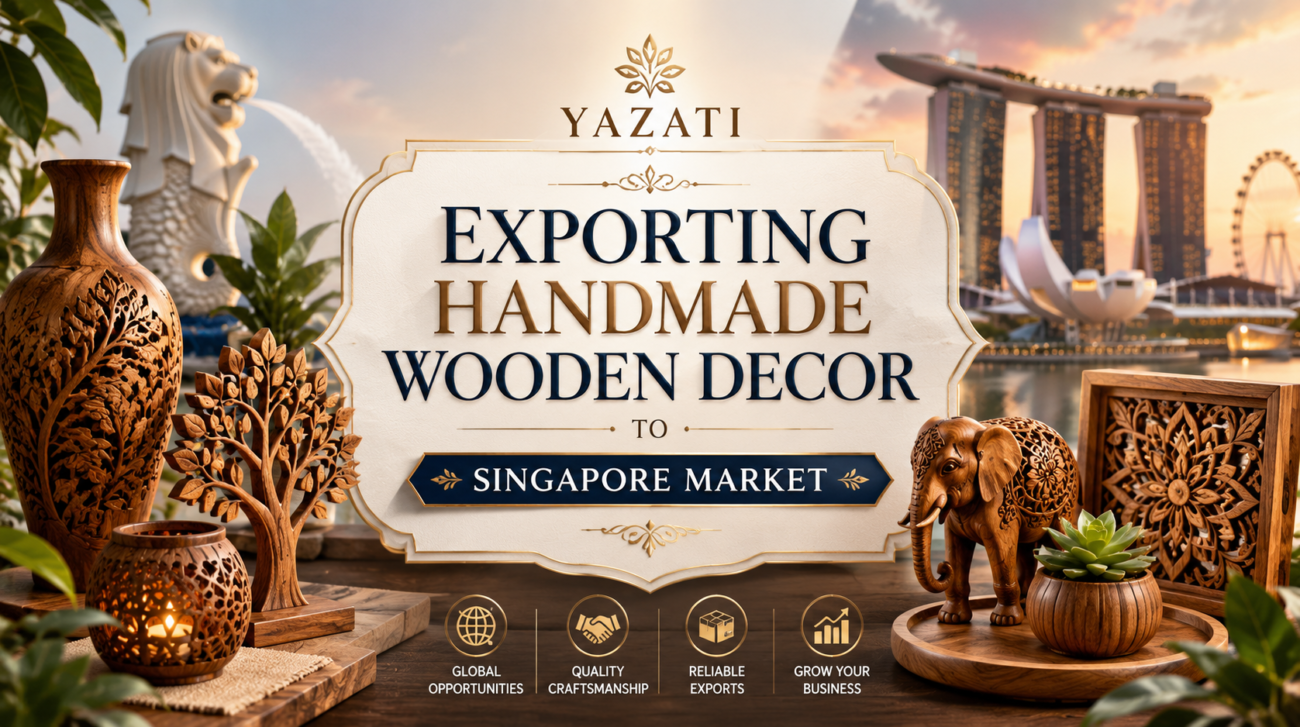
Introduction to Exporting Handmade Wooden Decor to Singapore Market
The opportunity for Exporting Handmade Wooden Decor to Singapore Market has grown significantly over the last decade. Singapore’s affluent consumers increasingly seek sustainable, artisanal, and premium home décor products that combine craftsmanship with environmental responsibility. Handmade wooden décor products fit perfectly into this trend, making Singapore an attractive destination for exporters.
From carved wall hangings and wooden sculptures to decorative trays and handcrafted furniture accents, wooden décor items appeal to homeowners, interior designers, boutique retailers, and hospitality businesses throughout Singapore.
This guide explores everything exporters need to know to successfully enter and grow within the Singapore market.
Understanding Singapore’s Home Decor Industry
Market Size and Growth Trends
Singapore’s home décor sector continues to expand due to:
- Rising disposable incomes
- Growth in luxury residential developments
- Increased focus on interior design
- Consumer interest in sustainable products
Homeowners increasingly invest in personalized living spaces, creating opportunities for imported handmade décor.
Consumer Preferences for Handmade Products
Singaporean consumers often prefer:
- Authentic craftsmanship
- Unique designs
- Sustainable materials
- Ethical sourcing
- Premium-quality finishing
Products with a compelling story behind their creation often attract greater attention than mass-produced alternatives.
Why Singapore Is an Attractive Market for Wooden Decor Exporters
High Purchasing Power
Singapore consistently ranks among Asia’s wealthiest economies. Consumers are willing to pay premium prices for:
- Artisan-made products
- Sustainable home accessories
- Exclusive décor collections
- Limited-edition handcrafted items
Demand for Sustainable and Artisanal Products
Eco-conscious purchasing behavior continues to grow. Many consumers actively seek:
- FSC-certified wood products
- Reclaimed wood décor
- Handmade artisan collections
- Ethically sourced materials
Businesses that emphasize sustainability gain a competitive advantage.
Types of Handmade Wooden Decor Popular in Singapore
Wall Art and Decorative Panels
Popular options include:
- Hand-carved wooden wall décor
- Geometric wall panels
- Cultural art pieces
- Minimalist wooden installations
These products complement Singapore’s modern interior design trends.
Wooden Sculptures and Figurines
Consumers appreciate:
- Abstract sculptures
- Nature-inspired carvings
- Traditional cultural artwork
- Decorative tabletop pieces
These items serve as statement pieces in homes and offices.
Functional Decorative Accessories
Products that combine beauty with utility perform particularly well:
| Product Category | Demand Level |
|---|---|
| Decorative Trays | High |
| Wooden Candle Holders | High |
| Serving Boards | Medium-High |
| Wooden Clocks | Medium |
| Storage Boxes | High |
Researching Singaporean Consumer Behavior
Design Preferences
Singapore consumers generally favor:
- Minimalist aesthetics
- Scandinavian-inspired designs
- Modern luxury styles
- Natural wood finishes
Neutral colors and clean lines often outperform highly ornate designs.
Eco-Friendly Purchasing Trends
Environmental awareness continues to influence buying decisions.
Consumers often look for:
- Sustainable sourcing certifications
- Low-carbon production methods
- Recyclable packaging
- Socially responsible brands
Legal Requirements for Exporting Handmade Wooden Decor to Singapore Market
Import Regulations and Standards
Before entering the market, exporters should understand:
- Customs documentation requirements
- Product classification codes
- Import permits when applicable
- Tax obligations
Consult the official Singapore customs portal for updated requirements:
https://www.customs.gov.sg
Product Safety Requirements
Although decorative products generally face fewer restrictions than furniture, compliance remains essential.
Wood Treatment and Certification
Wood products may require:
- Phytosanitary certificates
- Fumigation treatment
- Pest-free declarations
- Sustainable forestry certifications
Proper documentation reduces customs delays.
Preparing Handmade Wooden Decor for Export
Quality Control Procedures
Maintain strict quality standards by checking:
- Surface finishing
- Structural integrity
- Moisture content
- Packaging durability
Consistency builds buyer confidence.
Packaging and Labeling Standards
Effective packaging should:
- Prevent moisture damage
- Protect against scratches
- Include product information
- Display country of origin
Professional packaging enhances perceived value.
Pricing Strategy for the Singapore Market
Cost Calculation Methods
Export pricing should include:
- Manufacturing costs
- Packaging expenses
- Freight charges
- Customs fees
- Marketing costs
- Distributor margins
Competitive Positioning
Position products within one of three segments:
| Segment | Target Market |
|---|---|
| Premium | Luxury retailers |
| Mid-Range | Home décor stores |
| Boutique Artisan | Specialty design shops |
Many handmade products perform best in premium and boutique categories.
Finding Buyers and Distribution Channels
Retail Partnerships
Potential retail channels include:
- Home décor chains
- Furniture retailers
- Lifestyle stores
- Gift boutiques
Long-term retail partnerships provide stable revenue streams.
Interior Designers and Boutique Stores
Interior designers often source unique products for residential and commercial projects.
Benefits include:
- Repeat business
- Higher-value orders
- Greater brand visibility
Online Marketplaces
Popular sales channels include:
- E-commerce platforms
- Social commerce
- Specialty artisan marketplaces
- Independent online stores
Digital channels significantly expand market reach.
Digital Marketing for Handmade Wooden Decor Exporters
Social Media Promotion
Strong visual marketing is essential.
Focus on:
- Instagram content
- Pinterest inspiration boards
- Facebook campaigns
- Video storytelling
Showcasing the creation process can dramatically increase engagement.
SEO and Content Marketing
Useful content ideas include:
- Wood craftsmanship guides
- Sustainability stories
- Interior design inspiration
- Home decoration tips
Content marketing helps attract organic traffic and potential buyers.
Trade Shows and Networking Opportunities in Singapore
Home and Lifestyle Exhibitions
Industry events allow exporters to:
- Meet distributors
- Discover market trends
- Showcase products
- Build relationships
Business Matchmaking Events
Networking opportunities often lead to:
- Wholesale contracts
- Strategic partnerships
- Retail distribution agreements
- Private-label opportunities
Face-to-face interactions remain valuable despite digital commerce growth.
Logistics and Shipping Considerations
Choosing Freight Options
Common shipping methods include:
| Method | Best For |
|---|---|
| Air Freight | Small urgent orders |
| Sea Freight | Large shipments |
| Courier Services | Samples and prototypes |
Customs Clearance Procedures
Prepare:
- Commercial invoices
- Packing lists
- Certificates of origin
- Shipping documents
Accurate paperwork speeds customs processing.
Building a Strong Brand Presence
Storytelling and Craftsmanship
Modern consumers buy stories as much as products.
Highlight:
- Artisan backgrounds
- Traditional techniques
- Handmade processes
- Community impact
Sustainability Messaging
Communicate:
- Responsible sourcing
- Eco-friendly production
- Reduced waste practices
- Ethical labor standards
Authentic sustainability messaging resonates strongly with Singaporean consumers.
Challenges in Exporting Handmade Wooden Decor to Singapore Market
Competition from Global Brands
Exporters may face competition from:
- International décor companies
- Regional manufacturers
- Online marketplaces
- Local artisan brands
Differentiation through quality and storytelling is critical.
Compliance and Documentation Issues
Common challenges include:
- Missing certifications
- Incorrect customs codes
- Packaging non-compliance
- Delayed shipments
Strong documentation processes help minimize risks.
Future Opportunities and Emerging Trends
Smart Home Decor Integration
Future opportunities include:
- Decorative wooden charging stations
- Smart lighting accessories
- Technology-integrated décor
Personalized Wooden Products
Customization remains one of the fastest-growing segments.
Examples include:
- Personalized wall signs
- Custom carvings
- Corporate gifting products
- Name plaques
Personalization increases perceived value and customer loyalty.
Frequently Asked Questions (FAQs)
1. Is Singapore a good market for handmade wooden décor exports?
Yes. Singapore has strong purchasing power and growing demand for sustainable, premium, and artisan-made home décor products.
2. Do handmade wooden products require special certification?
Many wood products require phytosanitary compliance and may need treatment certificates depending on the material and origin.
3. Which wooden décor products sell best in Singapore?
Wall art, decorative trays, sculptures, candle holders, and personalized wooden accessories are among the most popular.
4. How can exporters find buyers in Singapore?
Retail partnerships, interior designers, trade shows, online marketplaces, and business networking events are effective channels.
5. What shipping method is best for wooden décor exports?
Sea freight is generally cost-effective for larger shipments, while air freight works well for samples and urgent orders.
6. How important is sustainability in the Singapore market?
Very important. Many consumers actively seek eco-friendly products and brands that demonstrate responsible sourcing and production practices.
Conclusion
Exporting Handmade Wooden Decor to Singapore Market presents a compelling opportunity for artisans, manufacturers, and home décor brands seeking international growth. Singapore’s strong economy, appreciation for craftsmanship, and increasing preference for sustainable products create favorable conditions for exporters.
Success depends on understanding consumer preferences, complying with import regulations, maintaining exceptional quality standards, and building strong relationships with buyers and distributors. Businesses that combine authentic craftsmanship with effective branding and marketing strategies can establish a profitable and sustainable presence in this dynamic market.
✨ Discover Global Sourcing Excellence with Netyex ✨
Netyex is your trusted B2B sourcing partner, connecting international buyers with India’s finest manufacturers and curated product lines—from handicrafts and home décor to kitchenware, textiles, hospitality essentials, and more. With verified suppliers and end-to-end support, we make global procurement seamless, reliable, and efficient.
👉 Elevate your sourcing experience—explore Netyex today.
📦 Bulk orders & customisation | 🌍 Worldwide delivery | 🤝 Trusted by global buyers
Visit Netyex to source premium Indian products with confidence.