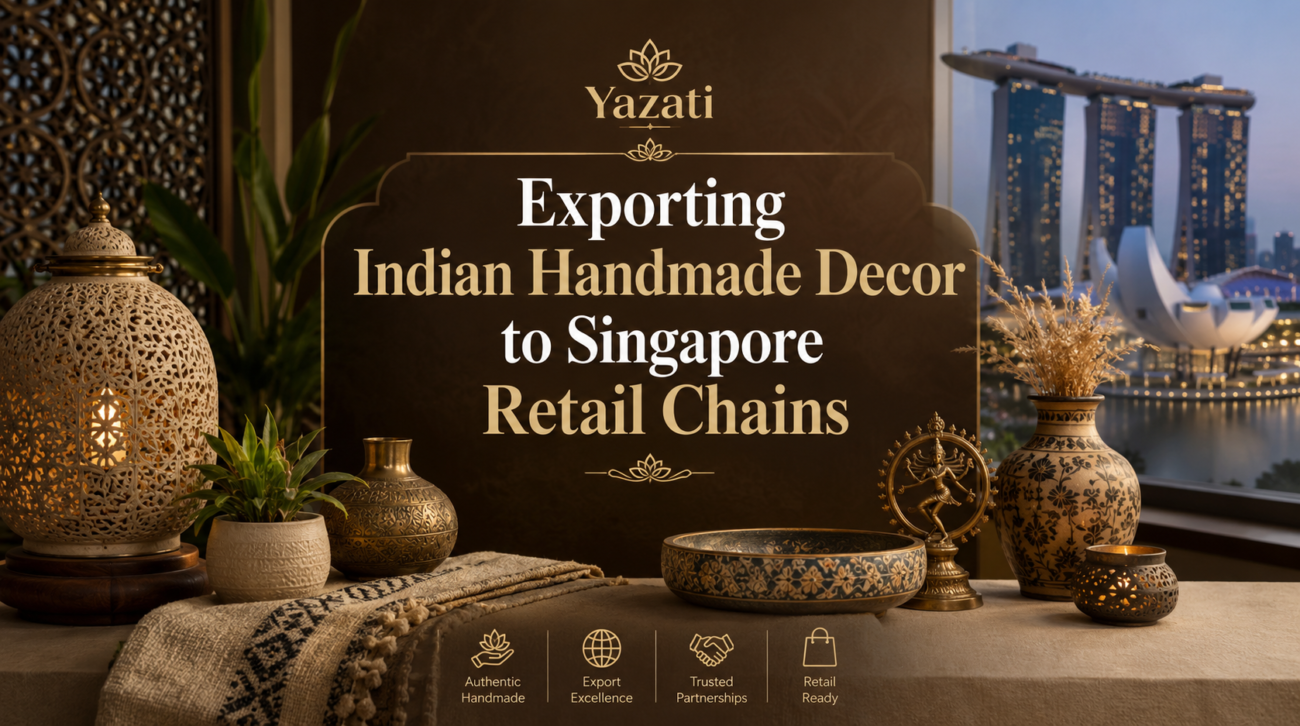
Introduction to Exporting Indian Handmade Decor to Singapore Retail Chains
Exporting Indian Handmade Decor to Singapore Retail Chains represents one of the most promising opportunities for Indian artisans, manufacturers, and export businesses. Singapore is known for its sophisticated retail sector, affluent consumers, and appreciation for unique, high-quality home decor products. Indian handmade decor items—including wooden crafts, metal art, handwoven textiles, ceramic pieces, and eco-friendly decorations—fit perfectly into Singapore’s growing demand for authentic and culturally rich products.
With increasing interest in sustainable living and artisan-made products, Indian exporters have a strong opportunity to establish long-term relationships with Singapore retail chains. However, success requires more than simply shipping products overseas. Exporters must understand market preferences, pricing expectations, compliance requirements, and retail buyer behavior.
This guide provides a comprehensive roadmap for successfully entering Singapore’s retail landscape.
Understanding the Singapore Home Decor Market
Singapore’s home decor industry continues to evolve as consumers seek stylish, sustainable, and globally inspired products.
Consumer Preferences and Buying Trends
Singaporean consumers increasingly prefer:
- Handmade and artisan-crafted products
- Sustainable and environmentally friendly decor
- Minimalist yet culturally distinctive designs
- Premium-quality decorative accessories
- Unique statement pieces for modern homes
Consumers value authenticity and craftsmanship, making Indian handmade decor highly attractive.
Popular Handmade Decor Categories
The strongest-performing categories include:
| Category | Market Demand |
|---|---|
| Wooden Decor | High |
| Metal Handicrafts | High |
| Wall Art | High |
| Sustainable Decor | Very High |
| Handwoven Textiles | Medium-High |
| Decorative Lighting | Medium |
Seasonal and Festive Demand Patterns
Demand typically rises during:
- Chinese New Year
- Deepavali
- Hari Raya
- Christmas season
- New home purchases
- Corporate gifting periods
Understanding these buying cycles helps exporters plan inventory efficiently.
Why Singapore Is an Attractive Export Destination
Strategic Trade Advantages
Singapore serves as a gateway to Southeast Asia. Many retail chains source products through Singapore before distributing them to neighboring countries.
Benefits include:
- Stable business environment
- Efficient customs procedures
- Excellent logistics infrastructure
- Strong intellectual property protection
High Purchasing Power and Retail Growth
Singapore’s consumers enjoy some of the highest disposable incomes in Asia. This creates demand for premium decor products rather than low-cost alternatives.
Retail buyers often prioritize:
- Product uniqueness
- Consistent quality
- Reliable suppliers
- Strong brand stories
Types of Indian Handmade Decor with Export Potential
Wooden Handicrafts
Indian wooden handicrafts remain highly popular due to their craftsmanship and cultural appeal.
Examples include:
- Hand-carved wall panels
- Decorative trays
- Wooden sculptures
- Furniture accents
- Temple-inspired decor
Metal Art and Decorative Pieces
Metal craftsmanship from regions such as Moradabad continues to attract international buyers.
Popular items:
- Brass figurines
- Decorative bowls
- Lanterns
- Candle holders
- Wall installations
Handmade Textiles and Wall Hangings
Textile-based decor products include:
- Macramé wall hangings
- Embroidered cushions
- Handloom throws
- Decorative rugs
- Tapestries
Sustainable and Eco-Friendly Decor
Sustainability is becoming a key purchasing factor.
Growing categories include:
- Bamboo decor
- Jute products
- Recycled wood items
- Upcycled decorative accessories
- Natural fiber baskets
Researching Singapore Retail Chains
Before approaching buyers, exporters must identify the right retail channels.
Large Retail Groups
Large chains generally require:
- Consistent supply capacity
- Professional packaging
- Product certifications where applicable
- Competitive pricing
Boutique Home Decor Stores
Boutiques often prioritize:
- Unique collections
- Limited editions
- Artisan stories
- Sustainable production methods
Lifestyle and Gift Retailers
Lifestyle stores frequently stock:
- Decorative accessories
- Corporate gifting products
- Festival-themed collections
- Contemporary ethnic decor
Export Regulations and Compliance Requirements
Compliance is critical when Exporting Indian Handmade Decor to Singapore Retail Chains.
Documentation Needed
Typical export documentation includes:
- Commercial invoice
- Packing list
- Bill of lading
- Certificate of origin
- Export declaration
- Insurance documents
Product Labeling Standards
Labels should clearly indicate:
- Country of origin
- Material composition
- Care instructions
- Safety information where required
Customs and Import Procedures
Singapore’s customs system is known for efficiency, but exporters should ensure:
- Accurate HS codes
- Proper product classification
- Correct valuation declarations
Failure to comply can result in delays and additional costs.
Pricing Strategy for Singapore Retail Buyers
Calculating Export Costs
Consider:
- Manufacturing costs
- Packaging expenses
- Freight charges
- Customs duties
- Insurance
- Currency fluctuations
Wholesale Pricing Models
Common wholesale pricing methods:
- Cost-plus pricing
- Value-based pricing
- Distributor pricing
- Retail margin-based pricing
Profit Margin Optimization
Successful exporters regularly:
- Consolidate shipments
- Improve packaging efficiency
- Negotiate freight contracts
- Increase average order value
Building a Competitive Product Catalog
Product Photography and Presentation
Retail buyers often evaluate suppliers online before initiating contact.
Best practices include:
- High-resolution images
- Lifestyle photography
- Multiple product angles
- Dimension specifications
- Material descriptions
Creating Retail-Ready Packaging
Professional packaging improves acceptance rates significantly.
Packaging should be:
- Durable
- Attractive
- Eco-friendly
- Retail display ready
Finding Buyers and Retail Partnerships
Trade Shows and Exhibitions
Industry events provide direct access to decision-makers.
Useful opportunities include:
- International gift fairs
- Home decor exhibitions
- Lifestyle product expos
- Trade promotion events
B2B Marketplaces
Popular channels include:
- Alibaba
- IndiaMART
- Global Sources
- TradeIndia
Direct Outreach Methods
Effective outreach methods:
- Personalized emails
- LinkedIn networking
- Product catalogs
- Virtual presentations
A compelling brand story often differentiates suppliers from competitors.
Logistics and Shipping Considerations
Air Freight vs Sea Freight
| Factor | Air Freight | Sea Freight |
|---|---|---|
| Speed | Fast | Slow |
| Cost | Higher | Lower |
| Volume | Smaller | Larger |
| Flexibility | High | Medium |
Warehousing Options
Exporters may use:
- Direct shipment
- Third-party logistics providers
- Singapore distribution centers
Delivery Timelines
Retail chains value predictable lead times more than simply fast shipping.
Reliable delivery builds trust and encourages repeat orders.
Marketing Indian Handmade Decor in Singapore
Storytelling and Artisan Branding
Consumers increasingly buy stories, not just products.
Highlight:
- Artisan heritage
- Traditional craftsmanship
- Sustainable sourcing
- Community impact
Digital Marketing Strategies
Effective channels include:
- Retail partnerships
- Influencer collaborations
For export guidance and trade resources, exporters can also explore the official export support information available through organizations such as the Federation of Indian Export Organisations (FIEO) at https://www.fieo.org.
Negotiating with Singapore Retail Chains
Buyer Expectations
Retail buyers typically expect:
- Fast communication
- Transparent pricing
- Product consistency
- Quality assurance
Contract Terms and Payment Methods
Common payment options include:
- Advance payment
- Letter of Credit (LC)
- Telegraphic Transfer (TT)
- Open account terms for established relationships
Clear agreements reduce future disputes.
Common Challenges and Solutions
Competition from Global Suppliers
Solution:
- Differentiate through craftsmanship
- Emphasize sustainability
- Offer exclusive collections
Quality Consistency Issues
Solution:
- Implement quality inspections
- Standardize production processes
- Conduct pre-shipment audits
Maintaining consistency is often the biggest factor determining long-term retail partnerships.
Future Opportunities in the Singapore Decor Industry
Several trends are shaping future demand:
- Sustainable decor growth
- Premium artisan products
- Eco-conscious purchasing
- Smart home styling accessories
- Customized decorative collections
Indian exporters who adapt to these trends can significantly increase market share over the next decade.
FAQs
1. Is Singapore a good market for Indian handmade decor?
Yes. Singapore has strong demand for premium, sustainable, and artisan-made decor products, making it highly attractive for Indian exporters.
2. Which handmade decor products sell best in Singapore?
Wooden handicrafts, metal art, wall decor, eco-friendly products, and handwoven textiles typically perform well.
3. Do Singapore retail chains require certifications?
Requirements vary by product category. Most decor items require proper documentation, labeling, and compliance with import regulations.
4. How can I find Singapore retail buyers?
Trade shows, B2B marketplaces, LinkedIn networking, direct outreach, and industry referrals are effective channels.
5. What is the biggest challenge when exporting handmade decor?
Maintaining consistent quality and reliable delivery schedules are often the biggest challenges.
6. Should exporters use air freight or sea freight?
Air freight is suitable for smaller urgent orders, while sea freight is more economical for larger shipments.
Conclusion
Exporting Indian Handmade Decor to Singapore Retail Chains offers substantial growth potential for Indian manufacturers, artisans, and export businesses. Singapore’s appreciation for authentic craftsmanship, sustainable products, and premium home decor creates an ideal environment for Indian handmade goods. Success depends on understanding market trends, meeting compliance requirements, developing competitive pricing, and building strong relationships with retail buyers.
By combining exceptional craftsmanship with professional export practices, Indian suppliers can establish a lasting presence in Singapore’s thriving retail sector and expand into broader Southeast Asian markets.
✨ Discover Global Sourcing Excellence with Netyex ✨
Netyex is your trusted B2B sourcing partner, connecting international buyers with India’s finest manufacturers and curated product lines—from handicrafts and home décor to kitchenware, textiles, hospitality essentials, and more. With verified suppliers and end-to-end support, we make global procurement seamless, reliable, and efficient.
👉 Elevate your sourcing experience—explore Netyex today.
📦 Bulk orders & customisation | 🌍 Worldwide delivery | 🤝 Trusted by global buyers
Visit Netyex to source premium Indian products with confidence.