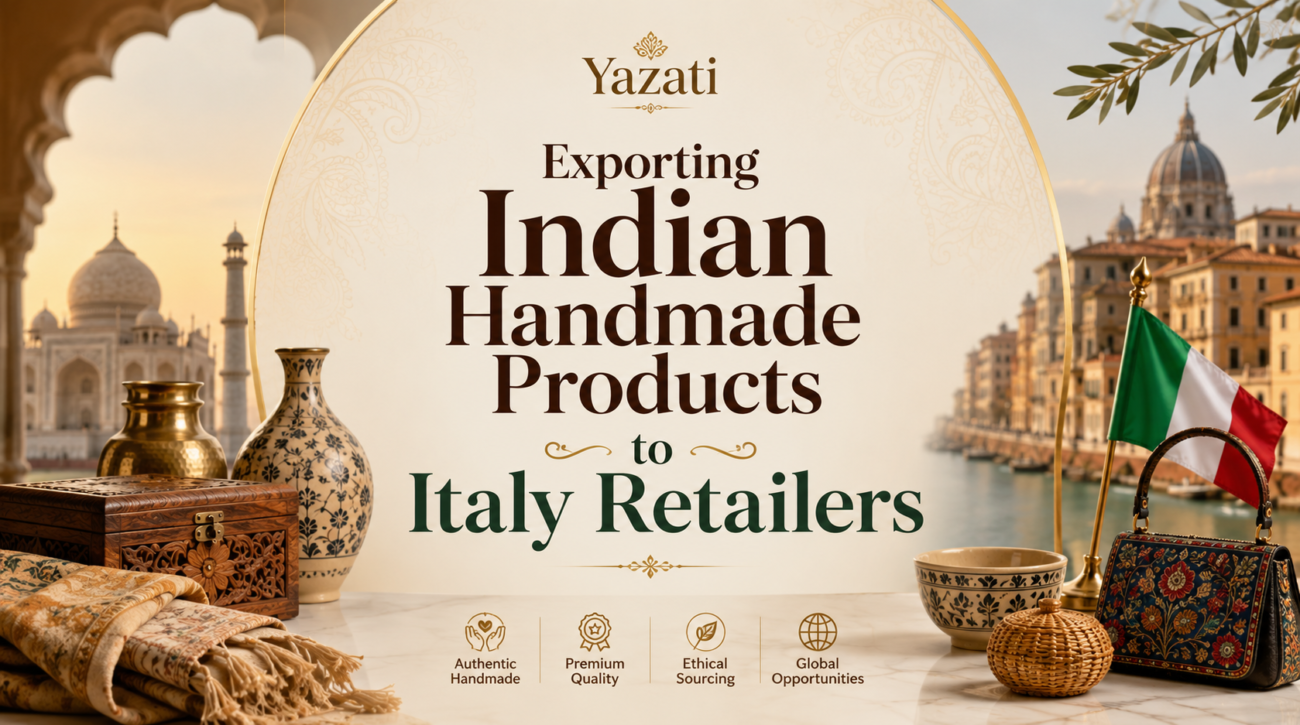
Introduction to the Italian Market for Indian Handmade Products
Exporting Indian Handmade Products to Italy Retailers has become an attractive business opportunity for Indian manufacturers, artisans, cooperatives, and export houses. Italy is known worldwide for its appreciation of craftsmanship, artistic expression, quality materials, and unique designs. These qualities align closely with India’s rich heritage of handmade products.
Italian consumers increasingly seek authentic, sustainable, and ethically produced goods. As a result, handmade products from India—including textiles, home décor, handicrafts, jewelry, and artisanal accessories—have gained popularity among retailers throughout Italy.
For Indian exporters, the Italian market offers access not only to local consumers but also to broader European distribution networks. Retailers are constantly searching for unique products that help differentiate their stores from mass-market competitors.
Understanding Exporting Indian Handmade Products to Italy Retailers
The process involves more than simply shipping products overseas. Success requires market research, compliance with European regulations, competitive pricing, professional packaging, and strong retailer relationships.
Market Potential and Growth Opportunities
Italy’s retail sector includes:
- Boutique gift shops
- Interior décor stores
- Artisan concept stores
- Fashion accessory retailers
- Eco-friendly lifestyle brands
- Department stores
Many of these retailers actively source handmade products that tell a story and showcase cultural heritage.
Key Consumer Preferences in Italy
Italian consumers generally value:
- Authentic craftsmanship
- Sustainable sourcing
- High-quality materials
- Elegant design
- Limited-edition products
- Cultural uniqueness
Products that combine traditional Indian artistry with modern European aesthetics often perform particularly well.
Most Popular Indian Handmade Products in Italy
Handmade Home Décor Items
Home décor remains one of the strongest categories for export.
Wooden Crafts and Carvings
Popular items include:
- Hand-carved wall panels
- Decorative boxes
- Wooden candle holders
- Artisan furniture accents
Italian retailers appreciate intricate workmanship and natural finishes.
Brass and Metal Artifacts
Demand exists for:
- Decorative bowls
- Lanterns
- Sculptures
- Traditional Indian art pieces
These products fit well within Italy’s luxury and artisan décor market.
Handmade Textiles and Fabrics
Indian textile craftsmanship enjoys strong recognition internationally.
Block-Printed Fabrics
Retailers often stock:
- Tablecloths
- Cushion covers
- Curtains
- Scarves
The uniqueness of hand-printing appeals to customers seeking individuality.
Embroidered Products
Popular embroidered products include:
- Fashion accessories
- Decorative pillows
- Bags
- Wall hangings
Jewelry and Fashion Accessories
Handmade jewelry is another profitable category.
Examples include:
- Silver jewelry
- Beaded necklaces
- Handmade earrings
- Artisan leather accessories
Researching Italian Retailers and Buyers
Finding the right buyer is crucial.
Identifying Target Retail Chains
Potential targets include:
- Lifestyle stores
- Interior design retailers
- Museum gift shops
- Specialty décor chains
Research retailer product assortments before making contact.
Working with Boutique Stores and Concept Shops
Boutique stores often offer:
- Faster purchasing decisions
- Greater flexibility
- Interest in unique collections
Many Italian concept stores actively seek products with compelling artisan stories.
Legal Requirements for Exporting to Italy
Compliance is essential when entering the European market.
Export Documentation Needed
Typical documents include:
| Document | Purpose |
|---|---|
| Commercial Invoice | Product and pricing details |
| Packing List | Shipment contents |
| Bill of Lading | Transport document |
| Certificate of Origin | Product origin verification |
| Export Declaration | Customs requirement |
Product Labeling and Compliance Standards
Retailers may require:
- Country of origin labeling
- Material composition details
- Safety compliance documentation
- Packaging information
Always verify current EU requirements through official sources such as the European Commission: https://trade.ec.europa.eu
Pricing Strategy for the Italian Market
Pricing can determine whether a retailer accepts your offer.
Calculating Export Costs
Include:
- Manufacturing costs
- Packaging expenses
- Inland transportation
- Freight charges
- Insurance
- Customs duties
- Marketing costs
Ignoring hidden costs can severely reduce profitability.
Wholesale vs Retail Pricing Models
A common wholesale approach:
- Production Cost × 2 = Export Price
- Export Price × 2–2.5 = Retail Price
This varies by product category and retailer expectations.
Packaging Requirements for Handmade Products
Packaging significantly affects retailer perception.
Sustainable Packaging Trends
Italian retailers increasingly prefer:
- Recyclable materials
- Plastic-free packaging
- Eco-certified paper
- Sustainable inks
Sustainability can become a major selling point.
Protecting Fragile Handmade Goods
Use:
- Corrugated boxes
- Protective inserts
- Bubble wrapping where permitted
- Fragile handling labels
Reducing breakage improves retailer satisfaction.
Logistics and Shipping Solutions
Reliable delivery builds trust.
Air Freight vs Sea Freight
| Method | Advantages | Disadvantages |
|---|---|---|
| Air Freight | Fast delivery | Higher cost |
| Sea Freight | Lower cost | Longer transit time |
Large-volume shipments often benefit from sea freight.
Choosing Reliable Freight Forwarders
Look for providers offering:
- EU experience
- Customs support
- Cargo tracking
- Insurance services
Experienced logistics partners simplify export operations.
Building Relationships with Italian Retailers
Personal relationships matter in Italian business culture.
Communication and Business Etiquette
Best practices include:
- Prompt responses
- Professional catalogs
- High-quality product photographs
- Transparent pricing
Consistency builds credibility.
Negotiation Tips for Long-Term Partnerships
Focus on:
- Product quality
- Reliable delivery
- Flexible order quantities
- Seasonal collections
Long-term partnerships often generate recurring orders.
Marketing Indian Handmade Products in Italy
Strong marketing improves visibility.
Digital Marketing Strategies
Effective methods include:
- LinkedIn outreach
- Email campaigns
- B2B marketplaces
- Professional websites
- Product catalogs
Showcasing artisan stories can significantly increase interest.
Trade Shows and International Exhibitions
Important opportunities include:
- Home décor exhibitions
- Giftware fairs
- Artisan product expos
- International sourcing events
Trade shows provide direct access to buyers and distributors.
Payment Methods and Risk Management
Secure International Payment Options
Preferred options include:
- Letter of Credit (LC)
- Advance Payment
- Documentary Collection
- Bank Transfers
For new buyers, secure payment methods reduce risk.
Managing Currency and Credit Risks
Consider:
- Currency hedging
- Credit insurance
- Buyer background checks
- Export credit protection
These measures safeguard profitability.
Common Challenges and How to Overcome Them
Cultural Differences
Understanding Italian buying habits improves communication and sales outcomes.
Competition from Other Countries
Competitors may include:
- Vietnam
- Indonesia
- Turkey
- Morocco
Indian exporters can stand out through craftsmanship, customization, and heritage-based storytelling.
Future Opportunities for Indian Handmade Exporters
Eco-Friendly Product Demand
Demand for environmentally responsible products continues to grow across Europe.
Growth of Premium Artisan Retail Segments
Luxury and artisan-focused retailers increasingly seek:
- Small-batch products
- Handmade collections
- Fair-trade products
- Sustainable sourcing stories
This trend creates excellent opportunities for Indian exporters.
Frequently Asked Questions
1. Which Indian handmade products sell best in Italy?
Home décor, textiles, handcrafted jewelry, wooden crafts, brass products, and artisan accessories generally perform well.
2. Do I need special certifications to export to Italy?
Requirements depend on the product category. Certain items may require safety, labeling, or material compliance documentation.
3. How can I find Italian retailers?
You can use trade fairs, B2B marketplaces, industry directories, LinkedIn, and export promotion organizations.
4. What is the best shipping method?
Air freight is ideal for urgent orders, while sea freight is more economical for larger shipments.
5. How important is sustainable packaging?
Very important. Many Italian retailers actively prefer environmentally friendly packaging solutions.
6. What payment method is safest for first-time exports?
Letters of Credit and advance payments generally provide greater security for exporters.
Conclusion
Exporting Indian Handmade Products to Italy Retailers offers substantial opportunities for Indian artisans, manufacturers, and exporters. Italy’s appreciation for craftsmanship, authenticity, and sustainable products creates a favorable environment for handmade goods. By understanding market preferences, complying with regulations, implementing competitive pricing, and building strong retailer relationships, exporters can establish successful and profitable long-term partnerships.
The growing demand for ethically sourced and artisan-made products suggests that the future remains bright for Indian handmade exports entering the Italian retail market.
✨ Discover Global Sourcing Excellence with Netyex ✨
Netyex is your trusted B2B sourcing partner, connecting international buyers with India’s finest manufacturers and curated product lines—from handicrafts and home décor to kitchenware, textiles, hospitality essentials, and more. With verified suppliers and end-to-end support, we make global procurement seamless, reliable, and efficient.
👉 Elevate your sourcing experience—explore Netyex today.
📦 Bulk orders & customisation | 🌍 Worldwide delivery | 🤝 Trusted by global buyers
Visit Netyex to source premium Indian products with confidence.