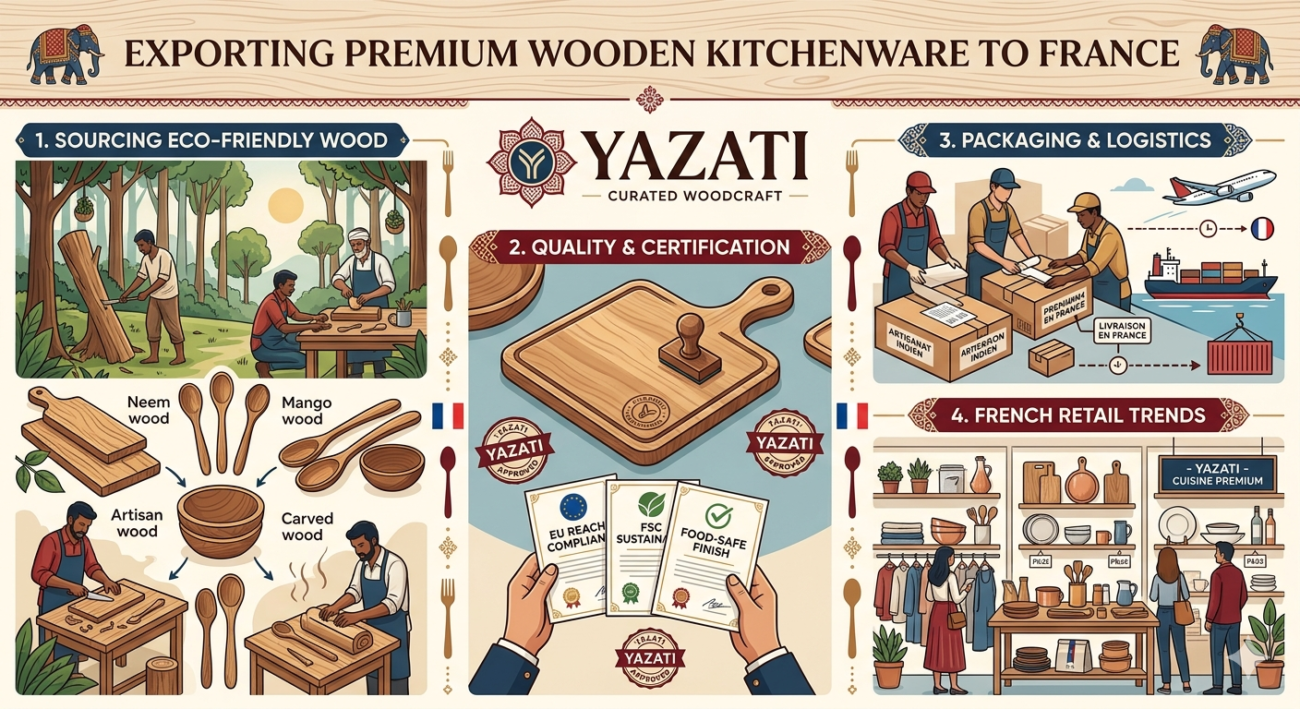
Exporting Premium Wooden Kitchenware to France is becoming an increasingly attractive opportunity for manufacturers and artisans worldwide. France is known for its rich culinary heritage, and consumers there value high-quality kitchen tools that combine aesthetics with functionality. Wooden kitchenware—such as cutting boards, spoons, spatulas, and serving trays—fits perfectly into this market due to its natural appeal and eco-friendly image.
The demand for sustainable and handcrafted kitchen products is growing rapidly. French consumers are especially drawn to items that reflect authenticity, durability, and environmental responsibility. This creates a strong opportunity for exporters who can deliver premium-quality wooden kitchenware.
🇫🇷 Why France is a Lucrative Market
France stands out as one of Europe’s most promising destinations for kitchenware exports. The country has a strong culture of cooking at home, dining, and entertaining guests. High-end kitchen tools are not just functional items—they are part of the lifestyle.
Several factors make France appealing:
- High purchasing power
- Preference for premium products
- Growing awareness of sustainability
- Appreciation for craftsmanship
French consumers are willing to pay more for products that align with their values, especially eco-friendly and artisanal goods.
🍽️ Overview of Wooden Kitchenware Demand
The demand for wooden kitchenware in France is fueled by multiple trends:
- Shift toward plastic-free kitchens
- Interest in natural materials
- Rise of home cooking post-pandemic
- Popularity of rustic and minimalist design
Products like olive wood utensils, bamboo cutting boards, and handcrafted serving trays are especially popular.
🛍️ Understanding the French Consumer Market
Understanding consumer behavior is essential when Exporting Premium Wooden Kitchenware to France. French buyers are discerning and prioritize quality over quantity.
📈 Consumer Preferences and Trends
French consumers prefer:
- Elegant, minimalist designs
- Long-lasting durability
- Eco-conscious production
- Authentic craftsmanship
They often research products before purchasing and value transparency about materials and sourcing.
🌱 Sustainability and Eco-Friendly Demand
Sustainability is not just a trend—it’s a necessity in France. Consumers actively look for:
- FSC-certified wood
- Non-toxic finishes
- Plastic-free packaging
Products marketed as environmentally responsible tend to perform better.
🎨 Premium and Artisanal Appeal
Handcrafted items with unique textures and grains are highly desirable. Artisanal products often carry a story, which enhances their perceived value.
🔍 Market Research and Competitor Analysis
Before entering the French market, thorough research is essential.
🏪 Identifying Key Competitors
Look at:
- Local French brands
- European imports
- Online marketplaces
Study their:
- Product range
- Pricing
- Branding strategies
💶 Pricing Strategies
Premium products require careful pricing. Consider:
- Production cost
- Shipping fees
- Import duties
- Retail markup
French consumers accept higher prices if quality is evident.
⚖️ Legal Requirements for Exporting
Compliance is critical when Exporting Premium Wooden Kitchenware to France.
📜 EU Regulations and Compliance
You must adhere to European Union standards, including:
- REACH regulations (chemical safety)
- Food contact material laws
🥗 Food Safety Standards
Wooden kitchenware must be:
- Free from harmful chemicals
- Treated with food-safe oils
📦 Packaging and Labeling Laws
Labels should include:
- Product origin
- Material type
- Care instructions
All information must be in French.
🏅 Certifications Needed for Wooden Kitchenware
Certifications boost trust and credibility.
🌳 FSC Certification Importance
The Forest Stewardship Council (FSC) certification ensures:
- Sustainable sourcing
- Responsible forestry practices
✔️ CE Marking and Other Standards
While CE marking may not always be required, compliance with EU safety standards is mandatory.
🚚 Logistics and Shipping Considerations
Shipping plays a major role in profitability.
✈️ Choosing the Right Shipping Method
🚢 Air vs Sea Freight
| Method | Pros | Cons |
| Air Freight | Fast delivery | Expensive |
| Sea Freight | Cost-effective | Slower |
🛃 Customs Clearance Process
Ensure:
- Accurate documentation
- Proper HS codes
- Payment of duties and VAT
📦 Packaging Strategies for Premium Appeal
Packaging is part of the product experience.
♻️ Sustainable Packaging Materials
Use:
- Recycled cardboard
- Kraft paper
- Biodegradable wraps
🎁 Branding and Presentation
Premium packaging enhances perceived value. Include:
- Elegant branding
- Minimalist design
- Story cards
💰 Pricing Strategy and Profit Margins
📊 Cost Breakdown
Key cost elements:
- Raw materials
- Manufacturing
- Shipping
- Taxes
💱 Currency and Tax Considerations
Be aware of:
- Euro exchange rates
- VAT (Value Added Tax)
🌟 Building a Strong Brand Presence
📖 Storytelling and Craftsmanship
Share:
- Origin of wood
- Artisan techniques
- Sustainability efforts
📱 Digital Marketing Strategies
Use:
- Social media marketing
- Influencer collaborations
- SEO optimization
🤝 Finding Buyers in France
🏢 B2B vs B2C Channels
- B2B: Retailers, wholesalers
- B2C: Direct online sales
🎪 Trade Shows and Exhibitions
Participate in:
- Maison & Objet Paris
- Ambiente Frankfurt
📦 Distribution Channels
🛒 Online Marketplaces
Platforms include:
- Amazon France
- Etsy
- Local e-commerce sites
🏬 Retail Partnerships
Collaborate with:
- Kitchenware boutiques
- Eco-friendly stores
⚠️ Challenges in Exporting Wooden Kitchenware
🚧 Regulatory Barriers
Strict EU regulations can be complex.
🏁 Competition
High competition from European brands.
🛡️ Risk Management Strategies
📄 Insurance
Protect shipments with export insurance.
🔍 Quality Control
Maintain consistent product quality to avoid returns.
📚 Case Study: Successful Export Business
A small artisan brand from Asia successfully entered the French market by:
- Obtaining FSC certification
- Using eco-friendly packaging
- Partnering with boutique stores
Within two years, they doubled their revenue.
❓ FAQs
1. Is exporting wooden kitchenware to France profitable?
Yes, due to high demand for premium and eco-friendly products.
2. What certifications are required?
FSC certification and compliance with EU safety standards.
3. How long does shipping take?
Sea freight takes 4–6 weeks; air freight takes 5–10 days.
4. What products sell best?
Cutting boards, utensils, and serving trays.
5. Do I need a local distributor?
Not mandatory, but helpful for market entry.
6. How do I price my products?
Include all costs and position as premium products.
🏁 Conclusion
Exporting Premium Wooden Kitchenware to France offers immense opportunities for growth and profitability. With the right strategy—focusing on quality, sustainability, compliance, and branding—you can successfully enter and thrive in this competitive market.
By understanding French consumer preferences, adhering to regulations, and building a strong brand story, exporters can position themselves as premium providers in a market that truly values craftsmanship and eco-conscious living.
✨ Discover Global Sourcing Excellence with Netyex ✨
Netyex is your trusted B2B sourcing partner, connecting international buyers with India’s finest manufacturers and curated product lines—from handicrafts and home décor to kitchenware, textiles, hospitality essentials, and more. With verified suppliers and end-to-end support, we make global procurement seamless, reliable, and efficient.
👉 Elevate your sourcing experience—explore Netyex today.
📦 Bulk orders & customisation | 🌍 Worldwide delivery | 🤝 Trusted by global buyers
Visit Netyex to source premium Indian products with confidence.