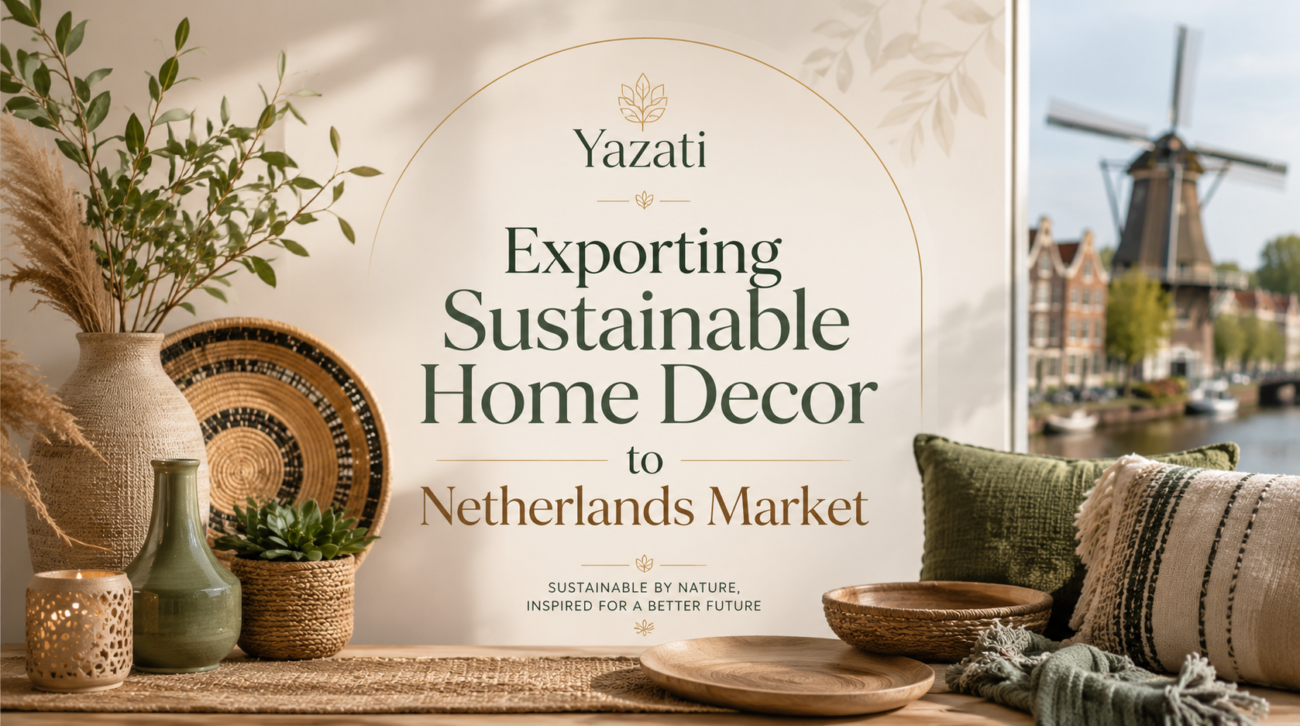
The global demand for eco-friendly products is growing rapidly, and one of the most attractive destinations for sustainable lifestyle goods is the Netherlands. Businesses involved in Exporting Sustainable Home Decor to Netherlands Market are finding exciting opportunities due to rising environmental awareness, strong consumer purchasing power, and increasing interest in ethically sourced products.
Dutch consumers appreciate stylish yet environmentally responsible products. From recycled wood furniture to organic textiles and handmade decorative pieces, sustainable home decor products are becoming mainstream across the Netherlands. Exporters who understand market trends, regulations, and buyer expectations can build profitable long-term partnerships.
In this guide, you will learn everything needed for successful Exporting Sustainable Home Decor to Netherlands Market, including legal requirements, logistics, pricing, and marketing strategies.
Introduction to Exporting Sustainable Home Decor to Netherlands Market
The Netherlands has emerged as one of Europe’s leading markets for sustainable products. Consumers actively seek brands that promote environmental responsibility, fair labor practices, and recyclable materials.
For exporters, this creates enormous business potential. Sustainable home decor products appeal strongly to Dutch buyers because they combine beauty with conscious living. Whether you manufacture handcrafted decor, eco-friendly furniture, or recycled accessories, the Dutch market offers excellent growth possibilities.
Additionally, the Netherlands serves as a gateway to Europe. Many imported products enter Europe through Dutch ports and are later distributed across neighboring countries such as Germany, Belgium, and France.
Why the Netherlands Is a Prime Destination for Sustainable Home Decor
Growing Consumer Awareness in the Netherlands
Dutch consumers are highly informed about climate change and sustainability. Many prefer products with ethical sourcing and low environmental impact. As a result, eco-conscious shopping behavior has become common.
People are willing to pay premium prices for:
- Handmade products
- Fair-trade certified goods
- Recycled materials
- Carbon-neutral packaging
- Sustainable production methods
This trend strongly supports businesses involved in Exporting Sustainable Home Decor to Netherlands Market.
Demand for Eco-Friendly Lifestyle Products
Minimalist living and eco-friendly interiors are highly popular in Dutch households. Products made from natural materials such as bamboo, jute, rattan, and reclaimed wood perform especially well.
Consumers also appreciate:
- Long-lasting quality
- Timeless designs
- Functional decor
- Multipurpose furniture
- Low-waste packaging
Amsterdam and Rotterdam as Trade Hubs
The Netherlands offers world-class logistics infrastructure. The Amsterdam and Rotterdam regions provide excellent warehousing, shipping, and distribution facilities.
The Port of Rotterdam is one of Europe’s busiest ports, making imports highly efficient for international exporters.
Understanding the Netherlands Home Decor Industry
The Dutch home decor industry combines modern aesthetics with sustainability. Consumers value functionality, simplicity, and environmentally responsible craftsmanship.
Popular Sustainable Home Decor Categories
Recycled Wood Furniture
Furniture made from reclaimed wood remains in high demand. Tables, shelves, coffee tables, and rustic cabinets are particularly attractive to eco-conscious buyers.
Organic Textile Products
Organic cotton cushions, linen curtains, and recycled fabric rugs appeal strongly to Dutch consumers seeking toxin-free household products.
Handmade Decorative Accessories
Artisan-made pottery, handwoven baskets, candles, and eco-friendly wall decor are becoming increasingly popular.
Bamboo and Natural Fiber Products
Natural materials fit perfectly with Scandinavian-inspired Dutch interior trends. Bamboo lamps, rattan chairs, and jute rugs are frequently imported.
Market Trends Driving Sustainable Decor Imports
Minimalist Scandinavian-Inspired Designs
Dutch buyers favor neutral colors, clean lines, and practical design. Sustainable decor that combines minimalism with functionality tends to perform best.
Popular color palettes include:
- White
- Beige
- Soft gray
- Earth tones
- Olive green
Circular Economy and Ethical Sourcing
The Netherlands strongly supports circular economy principles. Buyers prefer products that:
- Use recycled materials
- Reduce waste
- Promote repairability
- Support fair wages
Transparency in sourcing is becoming essential.
Sustainable Packaging Expectations
Plastic-heavy packaging is increasingly rejected. Exporters should use:
- Recyclable cartons
- Compostable materials
- Soy-based inks
- Minimal packaging designs
Eco-friendly packaging improves brand reputation significantly.
Key Regulations for Exporting Sustainable Home Decor to Netherlands Market
Understanding European regulations is essential before entering the Dutch market.
EU Sustainability Standards
Products entering the European Union must comply with environmental and consumer safety standards. Exporters should ensure all materials are legally approved.
Packaging and Labeling Requirements
Labels should clearly mention:
- Country of origin
- Material composition
- Care instructions
- Safety warnings
Proper labeling improves customs clearance and buyer confidence.
FSC and Fair Trade Certifications
Certifications greatly increase credibility. Valuable certifications include:
- FSC (Forest Stewardship Council)
- Fair Trade
- Global Organic Textile Standard (GOTS)
These certifications help products stand out in retail stores and online marketplaces.
REACH Compliance Rules
The EU’s REACH regulation controls chemicals used in products. Exporters must ensure their products do not contain restricted substances.
For official guidance, visit the European Chemicals Agency website.
How to Identify Dutch Buyers and Importers
Finding reliable buyers is one of the biggest success factors.
Online B2B Platforms
Popular B2B marketplaces include:
- Alibaba
- Faire
- Europages
- Global Sources
LinkedIn is also highly effective for networking with Dutch importers.
Trade Fairs and Exhibitions
Attending trade fairs helps exporters meet wholesalers and retailers directly.
Important European trade fairs include:
- Ambiente Frankfurt
- Maison&Objet Paris
- Dutch Design Week
These events attract sustainable product buyers from across Europe.
Partnering With Local Distributors
Working with Dutch distributors simplifies market entry. Local partners understand:
- Consumer behavior
- Legal compliance
- Retail trends
- Distribution networks
Pricing Strategy for the Netherlands Market
Pricing plays a critical role in competitiveness.
Understanding Import Duties and VAT
Importers in the Netherlands typically pay:
- Customs duties
- VAT
- Handling fees
Exporters should clearly define Incoterms such as FOB or CIF during negotiations.
Competitive Pricing Models
Successful exporters balance:
- Quality
- Sustainability
- Design appeal
- Price competitiveness
Premium buyers may pay more for unique craftsmanship and ethical production.
Shipping Cost Optimization
Reducing shipping costs improves profit margins. Strategies include:
- Consolidated shipments
- Efficient packaging
- Sea freight optimization
- Long-term logistics partnerships
Logistics and Shipping Considerations
Best Ports for Importing Goods
The Port of Rotterdam is Europe’s largest shipping gateway. It offers:
- Fast customs processing
- Extensive warehousing
- Strong inland transportation
Sustainable Shipping Solutions
Dutch buyers increasingly value low-carbon shipping methods. Exporters can improve competitiveness through:
- Carbon offset programs
- Eco-friendly packaging
- Efficient freight planning
Warehousing and Fulfillment
Third-party logistics providers help exporters manage:
- Inventory
- Packaging
- Local deliveries
- Returns management
This improves customer satisfaction significantly.
Effective Marketing Strategies for Dutch Consumers
Building an Eco-Friendly Brand Story
Storytelling matters in sustainable branding. Share details about:
- Artisan communities
- Ethical sourcing
- Handmade production
- Environmental impact reduction
Authentic stories build emotional connections with consumers.
Social Media Marketing
Platforms like Instagram and Pinterest are ideal for home decor marketing.
Use high-quality content featuring:
- Interior styling ideas
- Sustainability messaging
- Behind-the-scenes production
Influencer and Interior Designer Collaborations
Dutch interior designers and eco-lifestyle influencers can increase product visibility dramatically.
Collaborations help brands build credibility faster.
Common Challenges Exporters Face
Cultural and Communication Differences
Dutch business culture values:
- Direct communication
- Transparency
- Timeliness
- Reliability
Professional communication builds trust quickly.
Maintaining Consistent Product Quality
European buyers expect consistency. Quality control systems are essential for long-term success.
Competition From European Suppliers
Exporters must differentiate themselves through:
- Unique craftsmanship
- Competitive pricing
- Ethical production
- Innovative design
Opportunities for Growth in the Netherlands
E-Commerce Expansion
Online sales of sustainable home decor continue growing rapidly. Selling through marketplaces and independent webshops creates strong opportunities.
Luxury Sustainable Decor Segment
High-income consumers increasingly seek premium eco-luxury decor products.
Private Label Manufacturing
Many Dutch retailers seek private-label manufacturing partnerships for sustainable product lines.
FAQs About Exporting Sustainable Home Decor to Netherlands Market
1. What sustainable home decor products sell best in the Netherlands?
Products made from recycled wood, bamboo, organic textiles, and handmade natural materials perform especially well.
2. Do I need certifications to export sustainable products to the Netherlands?
While not always mandatory, certifications such as FSC and Fair Trade improve buyer confidence and market access.
3. Which Dutch port is best for imports?
The Port of Rotterdam is the largest and most efficient entry point for imports into Europe.
4. Is sustainable packaging important in the Dutch market?
Yes. Dutch consumers strongly prefer recyclable and low-waste packaging solutions.
5. How can I find buyers in the Netherlands?
Trade fairs, B2B marketplaces, LinkedIn networking, and local distributors are effective channels.
6. Are Dutch consumers willing to pay premium prices for eco-friendly decor?
Yes. Many consumers prioritize sustainability and are willing to spend more on ethically produced products.
Conclusion
The future of Exporting Sustainable Home Decor to Netherlands Market looks extremely promising. Dutch consumers value sustainability, ethical sourcing, and modern minimalist design, creating strong demand for eco-friendly home decor products.
Success depends on understanding regulations, maintaining quality standards, building strong logistics systems, and communicating authentic sustainability stories. Exporters who invest in certifications, eco-friendly packaging, and reliable partnerships can establish profitable long-term businesses in the Netherlands and across Europe.
By combining innovative design with responsible manufacturing, sustainable home decor exporters can thrive in one of Europe’s most environmentally conscious markets.
✨ Discover Global Sourcing Excellence with Netyex ✨
Netyex is your trusted B2B sourcing partner, connecting international buyers with India’s finest manufacturers and curated product lines—from handicrafts and home décor to kitchenware, textiles, hospitality essentials, and more. With verified suppliers and end-to-end support, we make global procurement seamless, reliable, and efficient.
👉 Elevate your sourcing experience—explore Netyex today.
📦 Bulk orders & customisation | 🌍 Worldwide delivery | 🤝 Trusted by global buyers
Visit Netyex to source premium Indian products with confidence.