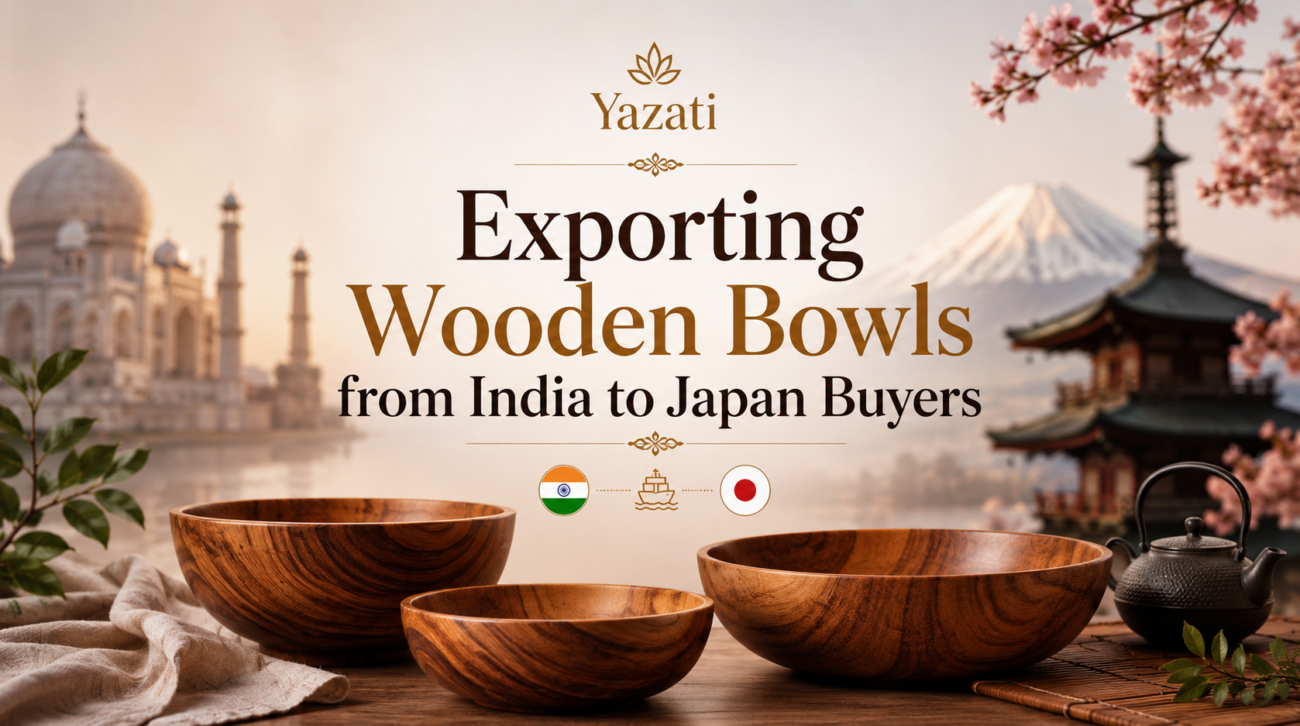
Introduction to the Indian Wooden Bowl Export Market
Exporting Wooden Bowls from India to Japan Buyers has become an attractive business opportunity due to growing Japanese demand for eco-friendly, handcrafted, and sustainable homeware products. India possesses abundant raw materials, skilled artisans, competitive labor costs, and a rich tradition of wooden handicraft manufacturing.
Japanese consumers appreciate quality craftsmanship and natural materials. This aligns perfectly with India’s expertise in producing premium wooden bowls made from acacia, mango, teak, and other hardwoods.
The increasing popularity of minimalist interiors, sustainable dining accessories, and handcrafted tableware has created a favorable environment for Indian exporters seeking entry into the Japanese market.
Why Japan Imports Wooden Bowls from India
Japan has a strong culture of using natural materials in homes, restaurants, tea houses, and gift markets. Wooden bowls fit naturally into Japanese aesthetics, particularly styles inspired by simplicity and nature.
Key reasons Japanese buyers source from India include:
- Competitive pricing
- High-quality handcrafted products
- Diverse wood species
- Flexible customization
- Sustainable production methods
- Small and large order capabilities
Indian manufacturers can produce both mass-market and premium handcrafted collections, making them suitable for different Japanese customer segments.
Market Demand for Wooden Bowls in Japan
Consumer Preferences
Japanese consumers generally prefer:
- Smooth finishes
- Natural wood grain visibility
- Lightweight designs
- Functional elegance
- Durable construction
Products with simple designs often perform better than heavily decorated items.
Sustainability Trends
Environmental awareness continues to influence purchasing decisions. Buyers increasingly seek products made from responsibly sourced wood and environmentally friendly production methods.
Eco-friendly packaging and sustainable manufacturing practices can significantly improve market acceptance.
Types of Wooden Bowls Popular in Japan
Acacia Wood Bowls
Acacia wood bowls are among the most demanded products because they offer:
- Attractive grain patterns
- Water resistance
- Durability
- Lightweight characteristics
Mango Wood Bowls
Mango wood provides:
- Affordable pricing
- Sustainable sourcing
- Smooth finishing potential
- Attractive appearance
Teak Wood Bowls
Teak bowls target premium buyers due to:
- Exceptional durability
- Rich texture
- Luxury appeal
- Long lifespan
Understanding Japanese Import Regulations
Phytosanitary Requirements
Wooden products entering Japan may require compliance with plant protection regulations. Proper treatment and processing of wood help prevent pest-related issues.
Exporters should verify current requirements through Japanese customs authorities and import partners before shipment.
Product Safety Standards
Products must be:
- Free from harmful chemicals
- Properly finished
- Suitable for intended use
- Accurately labeled
Food-contact wooden bowls may require additional compliance considerations depending on the intended use.
Export Documentation Required
Proper documentation ensures smooth customs clearance.
Commercial Invoice
The invoice should clearly state:
- Product description
- Quantity
- Unit price
- Total value
- HS Code
- Country of origin
Packing List
A detailed packing list includes:
- Number of cartons
- Product dimensions
- Weight information
- Packaging details
Certificate of Origin
This document confirms that the wooden bowls were manufactured in India and may be requested by Japanese importers.
Additional documents often include:
- Bill of Lading
- Insurance Certificate
- Fumigation Certificate (when required)
- Inspection Reports
Certifications That Increase Buyer Confidence
Japanese buyers often favor suppliers with recognized certifications such as:
- FSC Certification
- ISO 9001
- BSCI Compliance
- SEDEX Membership
- Quality Inspection Reports
These certifications demonstrate professionalism and commitment to quality.
Finding Japan Buyers for Wooden Bowls
B2B Marketplaces
Popular platforms include:
- Alibaba
- Global Sources
- TradeKey
- Made-in-China
- EC21
These platforms allow exporters to connect directly with Japanese importers.
Trade Fairs
Participation in international trade exhibitions can generate valuable buyer contacts.
Relevant events include:
- Tokyo International Gift Show
- Lifestyle Week Tokyo
- Interior Lifestyle Tokyo
Importers and Distributors
Directly approaching Japanese importers can often result in long-term business relationships.
Prepare:
- Product catalog
- Price list
- Company profile
- Product certifications
- Sample availability
Pricing Strategy for Japanese Buyers
When calculating export prices, consider:
| Cost Component | Example |
|---|---|
| Manufacturing Cost | Product Production |
| Packaging Cost | Export Cartons |
| Inland Transportation | Factory to Port |
| Export Documentation | Customs Documents |
| Freight Charges | Sea or Air |
| Insurance | Shipment Protection |
| Profit Margin | Business Earnings |
Japanese buyers typically value consistency and quality over extremely low prices.
Packaging Requirements for Japan
Proper packaging helps prevent damage and enhances product appeal.
Recommended packaging features:
- Moisture-resistant materials
- Eco-friendly packaging
- Individual protection for bowls
- Clear product labeling
- Barcode compatibility
Many Japanese retailers appreciate minimalistic and environmentally responsible packaging.
Shipping and Logistics Planning
Sea Freight
Best for:
- Large orders
- Lower shipping costs
- Bulk shipments
Advantages:
- Cost-efficient
- Suitable for container loads
Air Freight
Best for:
- Samples
- Urgent deliveries
- Small orders
Advantages:
- Faster transit
- Better inventory management
Negotiation Tips with Japanese Buyers
Successful negotiations require:
- Professional communication
- Detailed quotations
- Timely responses
- Quality consistency
- Respect for deadlines
Japanese business culture places strong emphasis on trust and reliability. Long-term relationships often outweigh short-term gains.
Common Challenges and Solutions
| Challenge | Solution |
|---|---|
| Language Barriers | Use professional translators |
| Quality Expectations | Implement strict quality control |
| Delivery Delays | Plan production schedules carefully |
| Compliance Issues | Stay updated on regulations |
| Price Competition | Focus on quality and uniqueness |
Digital Marketing for Exporters
Modern exporters should maintain:
- Professional website
- Product catalog downloads
- High-quality product photography
- LinkedIn presence
- B2B marketplace profiles
Useful export promotion resources can also be found through the Export Promotion Council for Handicrafts and the Japan External Trade Organization.
Future Opportunities in Japan
The future remains promising for Indian wooden bowl exporters because of:
- Rising eco-conscious consumption
- Growth of premium home décor
- Expanding restaurant industry
- Increased appreciation for handcrafted goods
- Demand for sustainable tableware
Companies that focus on quality, sustainability, and strong buyer relationships will likely experience continued growth.
FAQs
1. Is Japan a good market for Indian wooden bowls?
Yes. Japanese consumers value craftsmanship, sustainability, and natural materials, making wooden bowls an attractive product category.
2. What wood types sell best in Japan?
Acacia, mango, and teak wood bowls are among the most popular options.
3. Do I need certifications to export wooden bowls to Japan?
While not always mandatory, certifications such as FSC and quality assurance certifications improve buyer confidence.
4. What is the best way to find Japanese buyers?
Trade fairs, B2B marketplaces, direct importer outreach, and industry networking are effective methods.
5. Is sea freight or air freight better?
Sea freight is generally more economical for bulk orders, while air freight is suitable for samples and urgent shipments.
6. How can I stand out from competitors?
Focus on premium quality, consistent supply, sustainable sourcing, attractive packaging, and excellent customer service.
Conclusion
Exporting Wooden Bowls from India to Japan Buyers offers significant opportunities for manufacturers and exporters willing to meet Japan’s high standards for quality, sustainability, and reliability. By understanding market preferences, complying with import requirements, developing strong buyer relationships, and maintaining consistent product quality, Indian exporters can establish a profitable and sustainable presence in the Japanese market.
✨ Discover Global Sourcing Excellence with Netyex ✨
Netyex is your trusted B2B sourcing partner, connecting international buyers with India’s finest manufacturers and curated product lines—from handicrafts and home décor to kitchenware, textiles, hospitality essentials, and more. With verified suppliers and end-to-end support, we make global procurement seamless, reliable, and efficient.
👉 Elevate your sourcing experience—explore Netyex today.
📦 Bulk orders & customisation | 🌍 Worldwide delivery | 🤝 Trusted by global buyers
Visit Netyex to source premium Indian products with confidence.