Introduction
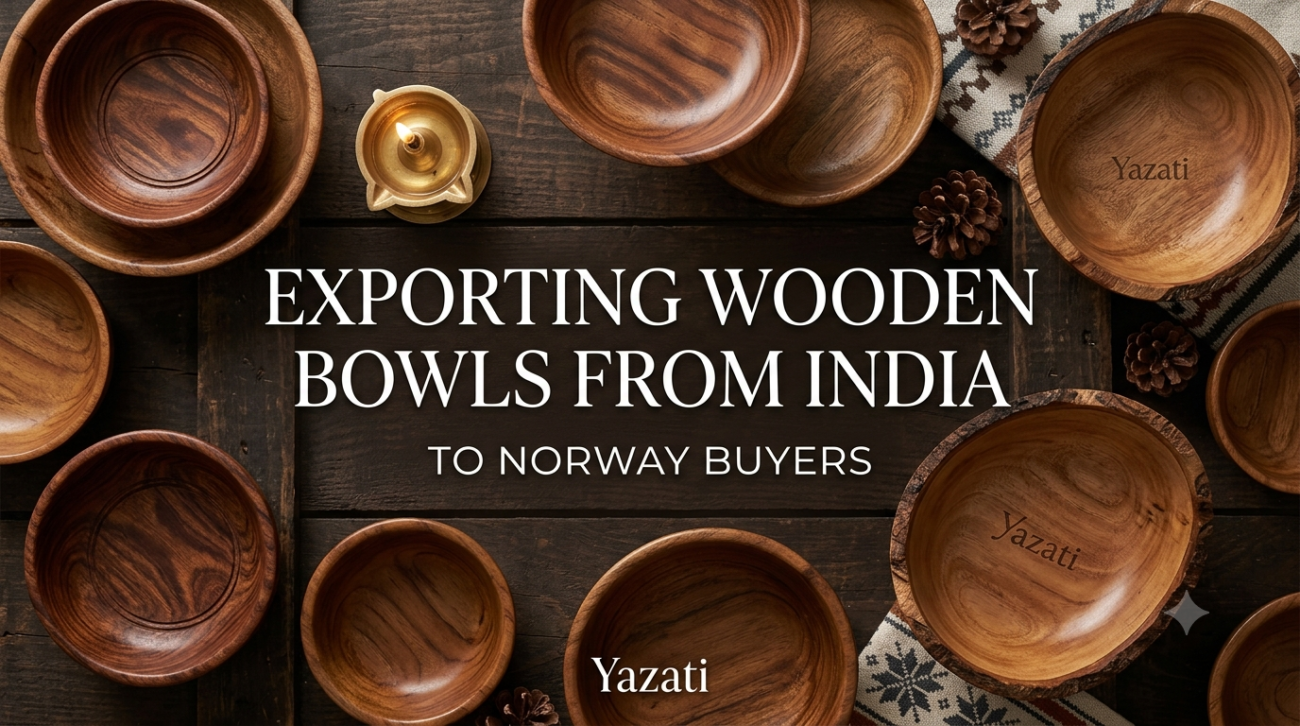
The global demand for sustainable wooden kitchenware continues to grow, making Exporting Wooden Bowls from India to Norway Buyers an attractive opportunity for Indian manufacturers, handicraft exporters, and trading companies. Norwegian consumers value environmentally friendly, handcrafted, and ethically sourced products, creating a strong market for premium wooden bowls made in India.
India has earned an excellent reputation for producing handcrafted wooden products using traditional woodworking techniques combined with modern finishing standards. States such as Rajasthan, Uttar Pradesh, Gujarat, Karnataka, and Jammu & Kashmir are well known for manufacturing wooden handicrafts that meet international quality expectations.
Norway is among Europe’s environmentally conscious markets. Consumers increasingly choose reusable, biodegradable, and sustainable kitchen products over plastic alternatives. Wooden serving bowls, salad bowls, fruit bowls, decorative bowls, and handcrafted dining accessories fit perfectly into this trend.
For Indian exporters, success depends on understanding Norwegian buyer expectations, maintaining consistent quality, complying with export regulations, and building reliable supply chains. Whether you are an experienced exporter or entering international markets for the first time, this guide provides practical insights into exporting wooden bowls successfully.
Why Norway Is a Promising Market for Wooden Bowls
Norway offers significant opportunities because of its high purchasing power and preference for premium home décor and kitchen products.
Several factors contribute to this growing demand:
- Increasing awareness of sustainable living
- High demand for handmade home accessories
- Preference for natural materials
- Growth of eco-friendly retail stores
- Rising popularity of Scandinavian interior design
- Strong appreciation for artisan craftsmanship
Unlike many price-sensitive markets, Norwegian buyers often prioritize quality, durability, and sustainability over the lowest price. This creates opportunities for Indian manufacturers capable of delivering premium products consistently.
Key Market Advantages
| Advantage | Benefit for Indian Exporters |
| High disposable income | Better profit margins |
| Eco-conscious consumers | Strong demand for wooden products |
| Preference for handmade items | Premium pricing opportunities |
| Growing home décor sector | Continuous product demand |
| Established import infrastructure | Easier international trade |
Overview of India’s Wooden Handicraft Industry
India is one of the world’s leading producers of handcrafted wooden products. Thousands of small and medium-sized enterprises manufacture wooden bowls using traditional techniques passed down through generations.
Major production centers include:
- Saharanpur
- Jodhpur
- Jaipur
- Moradabad
- Channapatna
- Kashmir
- Mysore
Indian manufacturers produce both handcrafted and machine-finished wooden bowls suitable for international retail chains, wholesalers, hospitality businesses, and specialty stores.
Many exporters also offer:
- Private labeling
- OEM manufacturing
- Customized dimensions
- Laser engraving
- Retail packaging
- Bulk production
These capabilities make Indian suppliers attractive partners for Norwegian importers seeking unique and customizable product ranges.
Types of Wooden Bowls Exported from India
Indian manufacturers produce a diverse range of wooden bowls designed for different customer segments.
Serving Bowls
Ideal for serving salads, fruits, snacks, pasta, and side dishes. Available in rustic, polished, or modern finishes.
Salad Bowls
Large bowls crafted with food-safe finishes, suitable for restaurants, hotels, and household use.
Fruit Bowls
Decorative wooden fruit bowls combine functionality with attractive Scandinavian-inspired aesthetics.
Decorative Bowls
Often carved by hand, decorative bowls are used for interior decoration and gifting purposes.
Snack Bowls
Smaller bowls designed for nuts, candies, dry fruits, and appetizers.
Multipurpose Bowls
Suitable for kitchens, restaurants, cafés, hotels, resorts, and hospitality businesses.
Popular Wood Species Used in Manufacturing
Choosing the right wood species significantly influences product quality and buyer preference.
Mango Wood
One of the most popular export materials because it is sustainable, durable, and offers beautiful natural grain patterns.
Advantages include:
- Renewable source
- Attractive texture
- Easy to carve
- Food-safe finishing compatibility
- Affordable production costs
Acacia Wood
Known for exceptional durability and moisture resistance.
Norwegian buyers appreciate acacia because it:
- Resists cracking
- Has rich natural colors
- Lasts for many years
- Requires minimal maintenance
Sheesham Wood
Sheesham remains popular in premium handcrafted collections due to its:
- Rich grain
- High strength
- Elegant appearance
- Luxury appeal
Teak Wood
Although more expensive, teak bowls offer:
- Superior durability
- Water resistance
- Premium appearance
- Excellent export value
The Growing Demand for Sustainable Wooden Products
Environmental awareness is transforming consumer purchasing decisions across Europe.
Norwegian consumers increasingly prefer products that are:
- Plastic-free
- Biodegradable
- Sustainably sourced
- Handmade
- Ethically manufactured
- Long-lasting
Wooden bowls meet these preferences exceptionally well when produced from responsibly managed timber and finished with food-safe, eco-friendly coatings.
Exporters can strengthen their market position by emphasizing:
- Sustainable sourcing practices
- Recyclable packaging
- Minimal plastic usage
- Artisan craftsmanship
- Long product life cycles
- Compliance with international quality expectations
Highlighting these benefits in catalogs, websites, and buyer presentations can help differentiate Indian products in the Norwegian market.
Export Documentation Requirements for Exporting Wooden Bowls from India to Norway Buyers
Successful Exporting Wooden Bowls from India to Norway Buyers begins with proper documentation. Accurate paperwork ensures smooth customs clearance, minimizes delays, and builds trust with overseas buyers.
Essential Export Documents
Indian exporters typically need the following documents:
| Document | Purpose |
|---|---|
| Commercial Invoice | Details the product, quantity, and value |
| Packing List | Lists packaging specifications and carton details |
| Bill of Lading or Air Waybill | Proof of shipment |
| Certificate of Origin | Confirms the products were manufactured in India |
| Phytosanitary Certificate (when required) | Verifies wood products meet plant health regulations |
| Insurance Certificate | Covers goods during international transit |
| Export Declaration | Required for customs processing |
Before shipping, verify the specific import requirements requested by the Norwegian buyer, as documentation may vary depending on the product category and shipping method.
Quality Standards and Compliance
Norwegian importers expect consistently high-quality products that meet international safety and sustainability standards.
Food-Safe Finishes
Wooden bowls intended for serving food should be finished with food-safe oils, waxes, or coatings that do not release harmful substances.
Moisture Control
Proper drying and seasoning of wood helps prevent:
- Cracking
- Warping
- Mold growth
- Surface splitting
Smooth Finish
Premium buyers expect:
- Uniform polishing
- No sharp edges
- Even coloring
- High-quality craftsmanship
- Consistent dimensions
Quality Inspection Checklist
Before shipment, inspect each batch for:
- Correct size and weight
- Uniform finish
- Structural integrity
- Proper engraving (if customized)
- Packaging quality
- Label accuracy
Maintaining documented quality control procedures can improve buyer confidence and encourage repeat orders.
Packaging and Shipping Best Practices
Proper packaging protects handcrafted wooden bowls during international transportation.
Recommended Packaging Materials
- Corrugated export cartons
- Bubble wrap
- Kraft paper
- Recyclable paper fillers
- Corner protectors
- Moisture-resistant liners
Whenever possible, use recyclable and eco-friendly packaging materials, as sustainability is valued by many Norwegian buyers.
Container Loading Tips
To reduce damage during transit:
- Stack cartons evenly.
- Avoid excessive weight on lower cartons.
- Use pallets for easier handling.
- Secure cargo to prevent movement.
- Clearly label fragile shipments.
Shipping Methods
Sea Freight
- Most economical for bulk orders
- Suitable for wholesalers and retailers
- Lower cost per unit
Air Freight
- Faster delivery
- Ideal for samples or urgent orders
- Higher transportation costs
Pricing Strategy for Norwegian Buyers
A well-planned pricing strategy helps exporters remain competitive while maintaining healthy profit margins.
Factors Affecting Export Pricing
- Raw material cost
- Labor expenses
- Manufacturing complexity
- Packaging
- Inland transportation
- Port charges
- Freight costs
- Insurance
- Currency exchange rates
Value-Based Pricing
Norwegian buyers often focus on quality rather than simply choosing the lowest-priced supplier. Highlighting craftsmanship, sustainability, and customization can justify premium pricing.
Offer Flexible Pricing
Consider offering:
- Volume discounts
- Long-term contract pricing
- Private label rates
- Seasonal promotions
- Sample pricing for new buyers
Transparent quotations that clearly state product specifications, shipping terms, and payment conditions help build trust.
Finding Genuine Buyers in Norway
Locating reliable buyers is one of the most important aspects of building a successful export business.
Potential Buyer Categories
- Home décor retailers
- Kitchenware distributors
- Gift shops
- Furniture stores
- Hospitality suppliers
- Online retailers
- Eco-friendly lifestyle brands
- Import wholesalers
Effective Buyer Search Strategies
- Create a professional export website with high-quality product images.
- Participate in international trade fairs.
- Register on reputable B2B marketplaces.
- Connect with buyers through professional networking platforms.
- Reach out directly to importers with personalized product catalogs.
Build Credibility
Norwegian buyers appreciate suppliers who provide:
- Clear product specifications
- Professional communication
- Prompt responses
- Consistent pricing
- Reliable delivery schedules
- High-quality product photography
Offering product samples can also help establish confidence before larger orders are placed.
Marketing Your Wooden Bowl Business Internationally
Strong marketing increases visibility and helps attract overseas buyers.
Optimize Your Website
Your website should include:
- Product catalogs
- Company profile
- Manufacturing capabilities
- Certifications
- Factory photos
- Contact information
- Export experience
- Inquiry form
Create Professional Product Catalogs
Include:
- Multiple product images
- Dimensions
- Wood species
- Finish details
- Packaging information
- Minimum order quantity (MOQ)
- Lead time
Leverage Digital Marketing
Invest in:
- Search engine optimization (SEO)
- Content marketing
- Email campaigns
- Social media marketing
- B2B directory listings
Publishing informative articles about sustainable wooden products can improve search engine rankings and attract qualified buyers.
Common Export Challenges and How to Overcome Them
Exporters may encounter challenges such as:
- Fluctuating freight costs
- Currency exchange risks
- Delayed shipments
- Customs documentation issues
- Product damage during transit
- Communication barriers
Practical Solutions
- Maintain accurate export records.
- Work with experienced freight forwarders.
- Use secure payment methods.
- Invest in durable packaging.
- Communicate proactively with buyers.
- Monitor shipment progress regularly.
Addressing these issues promptly helps build long-term relationships and enhances your reputation in international markets.
Tips for Long-Term Success in Exporting Wooden Bowls from India to Norway Buyers
Building a sustainable export business requires more than competitive pricing. Long-term success comes from reliability, innovation, and maintaining strong relationships with overseas buyers.
1. Maintain Consistent Product Quality
Consistency is one of the most important factors in international trade. Buyers expect every shipment to match previously approved samples. Implement quality checks at every stage of production, from raw material selection to final packaging.
2. Focus on Sustainable Manufacturing
Norwegian consumers value environmentally responsible products. Consider:
- Using sustainably sourced timber
- Reducing production waste
- Choosing recyclable packaging
- Minimizing plastic use
- Promoting eco-friendly manufacturing practices
Communicating these initiatives in your marketing materials can strengthen your brand image.
3. Offer Product Customization
Customization can help differentiate your business. Popular options include:
- Private labeling
- Custom sizes
- Unique finishes
- Laser engraving
- Logo branding
- Gift packaging
These value-added services can increase customer loyalty and justify premium pricing.
4. Build Strong Buyer Relationships
International trade is built on trust. Maintain regular communication, respond promptly to inquiries, and provide shipment updates. After delivery, seek feedback to improve future orders and strengthen long-term partnerships.
5. Stay Updated on Market Trends
Monitor changes in consumer preferences, design trends, and sustainability expectations. Scandinavian markets often favor minimalist designs, natural finishes, and functional products. Regular market research can help you adapt your product range.
Frequently Asked Questions (FAQs)
1. Why is Norway a good market for Indian wooden bowls?
Norway has a strong demand for sustainable, handcrafted home and kitchen products. Consumers appreciate eco-friendly materials, quality craftsmanship, and unique designs, making Indian wooden bowls an attractive option.
2. Which types of wooden bowls are most popular in Norway?
Serving bowls, salad bowls, fruit bowls, decorative bowls, snack bowls, and multipurpose kitchen bowls are commonly imported by Norwegian retailers and distributors.
3. What wood species are preferred for export?
Popular choices include mango wood, acacia wood, sheesham wood, and teak. These woods are valued for their durability, attractive grain patterns, and suitability for food-safe finishes.
4. What is the minimum order quantity (MOQ) for exports?
The MOQ varies depending on the manufacturer and the level of customization. Many exporters are willing to negotiate smaller trial orders for new buyers before moving to larger volumes.
5. How can Indian exporters find buyers in Norway?
Potential buyers can be reached through B2B marketplaces, international trade fairs, export promotion councils, digital marketing, professional networking platforms, and direct outreach to importers and retailers.
6. What factors help build trust with Norwegian buyers?
Reliable product quality, transparent communication, timely deliveries, professional documentation, competitive pricing, and consistent customer service are essential for building long-term business relationships.
Conclusion
The opportunity for Exporting Wooden Bowls from India to Norway Buyers continues to grow as global demand shifts toward sustainable, handcrafted, and environmentally friendly products. India’s rich tradition of woodworking, combined with competitive manufacturing capabilities, positions exporters well to serve this expanding market.
Success depends on more than producing attractive wooden bowls. Exporters should prioritize quality control, comply with export and import regulations, use secure packaging, and establish dependable logistics. Investing in professional branding, digital marketing, and responsive customer service can further enhance competitiveness.
By understanding Norwegian buyer expectations and delivering products that combine craftsmanship with sustainability, Indian exporters can build lasting partnerships and create a profitable presence in one of Europe’s most quality-conscious markets.
For additional guidance on export procedures and international trade, consult resources from India’s export promotion organizations and customs authorities. A useful starting point is the official website of the Directorate General of Foreign Trade (DGFT): https://www.dgft.gov.in
✨ Discover Global Sourcing Excellence with Netyex ✨
Netyex is your trusted B2B sourcing partner, connecting international buyers with India’s finest manufacturers and curated product lines—from handicrafts and home décor to kitchenware, textiles, hospitality essentials, and more. With verified suppliers and end-to-end support, we make global procurement seamless, reliable, and efficient.
👉 Elevate your sourcing experience—explore Netyex today.
📦 Bulk orders & customisation | 🌍 Worldwide delivery | 🤝 Trusted by global buyers
Visit Netyex to source premium Indian products with confidence.