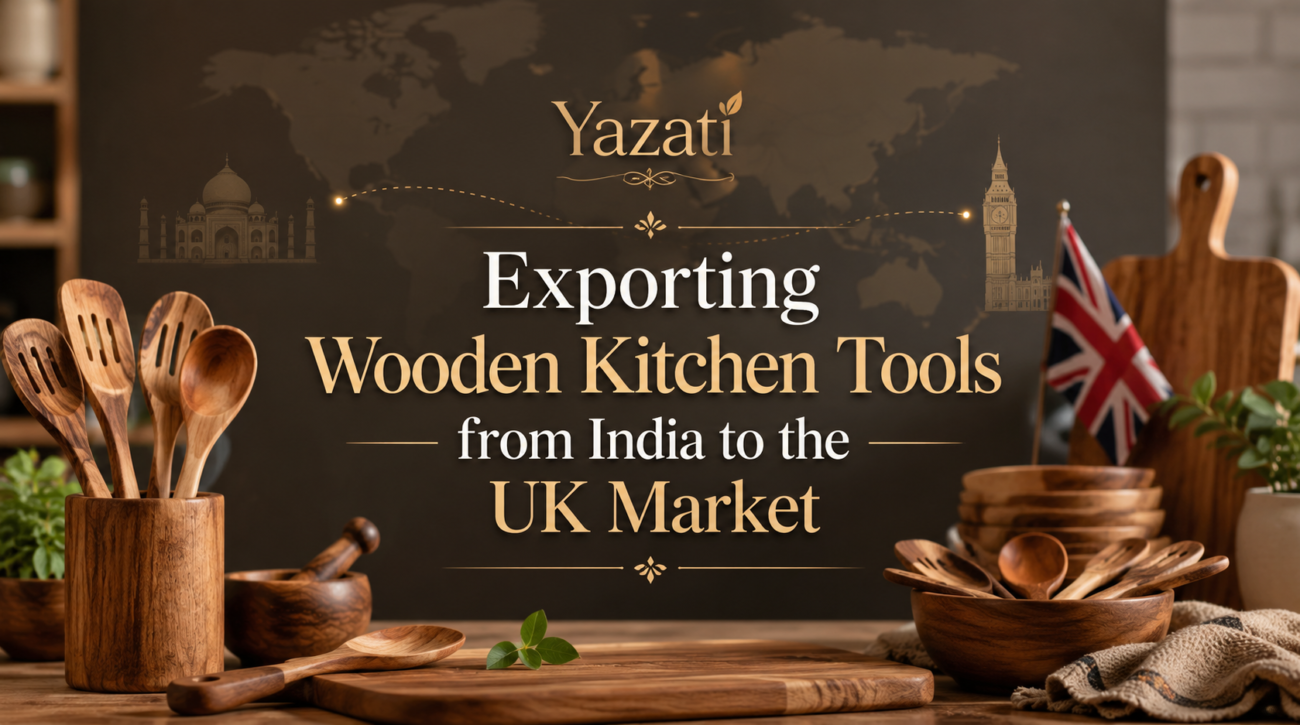
The business of Exporting Wooden Kitchen Tools from India to the UK Market is growing rapidly as consumers in the United Kingdom increasingly prefer eco-friendly, handmade, and sustainable kitchen products. Indian manufacturers and exporters have a strong advantage because India has abundant raw materials, skilled artisans, and competitive production costs.
Wooden kitchenware such as spatulas, serving trays, chopping boards, ladles, and rolling pins are becoming popular in British homes due to their natural appearance and environmentally friendly qualities. As plastic reduction movements gain momentum across Europe, the UK market is shifting toward reusable and biodegradable products.
For Indian exporters, this creates a golden opportunity to build a profitable international business.
Understanding the UK Demand for Wooden Kitchen Tools
The UK home and kitchen industry has experienced significant changes over the last decade. Consumers now pay close attention to sustainability, craftsmanship, and product origin.
Why UK Consumers Prefer Wooden Kitchenware
Wooden kitchen tools are favored because they:
- Are eco-friendly
- Do not scratch cookware
- Have a natural and premium appearance
- Last longer with proper care
- Support sustainable living
British buyers also appreciate handcrafted products that carry cultural and artisanal value.
Trending Wooden Kitchen Products in the UK
Some high-demand products include:
| Product | Popularity Reason |
| Wooden spatulas | Safe for non-stick cookware |
| Chopping boards | Stylish and durable |
| Serving trays | Decorative and functional |
| Salad bowls | Rustic dining trend |
| Rolling pins | Baking culture in the UK |
| Wooden spoons | Traditional kitchen essential |
Benefits of Exporting Wooden Kitchen Tools from India
India is one of the best countries for manufacturing wooden handicrafts and kitchen tools.
India’s Strength in Wooden Handicrafts
States like Rajasthan, Uttar Pradesh, Gujarat, and Kerala are known for skilled woodworking traditions. Indian artisans can produce both handmade and machine-finished products.
This allows exporters to target:
- Luxury buyers
- Wholesale importers
- Eco-friendly retailers
- Boutique kitchen brands
Cost Advantages for Indian Exporters
Indian production costs are generally lower compared to Europe. Exporters benefit from:
- Affordable labor
- Local wood availability
- Scalable production
- Government export support schemes
These factors make Indian products highly competitive in the UK market.
Best Wooden Kitchen Tools to Export
Choosing the right products is essential for export success.
Wooden Spoons and Spatulas
These are lightweight, affordable, and easy to ship. They are also used daily in homes and restaurants.
Popular styles include:
- Flat spatulas
- Curved spoons
- Slotted spoons
- Cooking paddles
Chopping Boards and Serving Trays
Premium chopping boards made from mango wood or teak are highly attractive in the UK.
Features buyers love:
- Natural grain patterns
- Food-safe coating
- Rustic finishes
- Engraved branding
Rolling Pins and Mortar Sets
Traditional baking tools remain in demand because of the growing home-baking trend in Britain.
Eco-Friendly Product Opportunities
Products with eco-conscious branding sell especially well. Consider offering:
- Chemical-free polish
- Recyclable packaging
- Organic finishing oils
- Plastic-free branding
Raw Materials Used in Wooden Kitchenware
The quality of wood directly affects export value.
Sheesham Wood
Sheesham is durable, attractive, and naturally resistant to decay. It is widely used for premium kitchenware.
Mango Wood
Mango wood is sustainable because it comes from fruit-bearing trees that have completed their lifecycle.
Benefits include:
- Lightweight structure
- Beautiful grain patterns
- Affordable pricing
Teak Wood
Teak is highly durable and water-resistant, making it suitable for luxury kitchen products.
UK Import Regulations and Compliance
Understanding regulations is crucial when Exporting Wooden Kitchen Tools from India to the UK Market.
Food Safety Standards
Kitchen tools that come into contact with food must be safe and non-toxic.
Products should avoid:
- Harmful paints
- Toxic coatings
- Unsafe adhesives
The UK follows strict food-contact material standards.
Timber and Phytosanitary Rules
Wood products may require phytosanitary treatment to prevent pests or contamination.
Common requirements include:
- ISPM-15 compliance
- Fumigation certification
- Heat treatment records
Always verify the latest UK customs rules before shipping.
Product Labeling Requirements
Labels should clearly mention:
- Country of origin
- Material type
- Care instructions
- Importer information
For updated regulations, exporters can refer to the official UK government trade portal:
https://www.gov.uk/import-goods-into-uk
Certifications Needed for Export
Certifications improve buyer confidence and help secure larger orders.
FSC Certification
The Forest Stewardship Council (FSC) certification proves responsible sourcing of wood materials.
Many UK retailers prefer FSC-certified suppliers.
ISO and Quality Standards
ISO certifications demonstrate manufacturing consistency and quality management.
Common certifications include:
- ISO 9001
- ISO 14001
EORI Registration
UK importers generally require an EORI number for customs clearance.
Indian exporters should coordinate closely with UK buyers regarding documentation.
How to Start an Export Business in India
Setting up properly avoids legal and financial complications.
Getting IEC Code
An Import Export Code (IEC) from the Directorate General of Foreign Trade (DGFT) is mandatory.
Without IEC, exports cannot legally occur.
GST Registration
GST registration helps exporters claim tax benefits and refunds.
Choosing the Right Export Business Structure
Options include:
| Structure | Best For |
| Sole Proprietorship | Small startups |
| Partnership Firm | Family businesses |
| LLP | Medium-sized exporters |
| Private Limited Company | Large export operations |
Finding Buyers in the UK Market
Buyer acquisition is one of the most important steps in export growth.
B2B Marketplaces
Popular platforms include:
- Alibaba
- IndiaMART
- TradeIndia
- Global Sources
These platforms connect exporters with wholesale buyers.
Trade Shows and Exhibitions
International exhibitions help build trust and direct buyer relationships.
Popular trade fairs include:
- Ambiente Frankfurt
- Spring Fair Birmingham
- Maison & Objet Paris
Building Distributor Partnerships
Partnering with UK distributors allows easier market entry and better local support.
Distributors already understand:
- Consumer trends
- Retail pricing
- Import procedures
- Logistics networks
Packaging and Branding Strategies
Good branding increases perceived value.
Sustainable Packaging Ideas
Eco-friendly packaging is highly appreciated in the UK market.
Consider using:
- Kraft paper boxes
- Recycled cardboard
- Jute wrapping
- Soy-based inks
Private Label Opportunities
Many UK brands prefer white-label suppliers.
This means exporters manufacture products under the buyer’s brand name.
Benefits include:
- Larger order quantities
- Long-term contracts
- Stable revenue streams
Shipping and Logistics Process
Efficient logistics ensure timely delivery and customer satisfaction.
Air Freight vs Sea Freight
| Shipping Method | Advantages | Disadvantages |
| Air Freight | Faster delivery | Higher cost |
| Sea Freight | Economical for bulk orders | Longer transit time |
Choosing Freight Forwarders
A reliable freight forwarder can help with:
- Customs documentation
- Cargo insurance
- Container booking
- Duty calculations
Customs Clearance Process
Required export documents usually include:
- Commercial invoice
- Packing list
- Bill of lading
- Certificate of origin
- Phytosanitary certificate
Pricing Strategy for UK Buyers
Correct pricing is essential for profitability.
Calculating Export Costs
Include:
- Manufacturing cost
- Packaging
- Freight charges
- Customs duties
- Marketing expenses
- Commission fees
Profit Margin Planning
Most exporters target margins between 15% and 40%, depending on product positioning.
Premium handcrafted items often achieve higher profits.
Digital Marketing for Export Growth
Modern exporting requires strong online visibility.
Building an Export Website
Your website should include:
- Product catalog
- Certifications
- Factory photos
- Buyer testimonials
- Contact forms
Using LinkedIn and Email Marketing
LinkedIn helps connect with:
- Importers
- Retail chains
- Wholesale distributors
Cold email campaigns can also generate leads effectively.
Selling Through Amazon UK and Etsy
Online marketplaces provide direct access to UK consumers.
Popular platforms include:
- Amazon UK
- Etsy
- eBay UK
- Wayfair
Common Challenges and Solutions
Exporting always involves risks, but preparation minimizes problems.
Currency Fluctuations
Exchange rate volatility can impact profits.
Solutions include:
- Forward contracts
- Multi-currency pricing
- Faster payment terms
Product Damage During Transit
Use:
- Bubble wrapping
- Moisture barriers
- Strong export cartons
Insurance is strongly recommended.
Competition from Other Countries
India competes with suppliers from:
- China
- Vietnam
- Indonesia
Indian exporters can stand out through:
- Handmade quality
- Ethical sourcing
- Customization
- Eco-friendly branding
Future Trends in Wooden Kitchenware Exports
The future looks promising for wooden kitchenware businesses.
Sustainable Living Movement
Consumers worldwide are reducing plastic use and choosing sustainable products.
This trend strongly supports wooden kitchen tools.
Rising Demand for Handmade Products
Handcrafted items carry emotional and artistic appeal, especially among premium UK buyers.
Small-batch artisan products are expected to grow significantly over the next decade.
FAQs
Is exporting wooden kitchen tools from India profitable?
Yes, it can be highly profitable because of increasing global demand for eco-friendly kitchenware and India’s low production costs.
Which wood is best for kitchen tools?
Sheesham, mango wood, and teak are among the most popular options due to durability and appearance.
Do wooden kitchen tools require certification for export to the UK?
Yes, exporters may need phytosanitary certificates, FSC certification, and food-safe compliance documentation.
How can I find UK buyers for wooden kitchenware?
You can use B2B marketplaces, LinkedIn, trade fairs, distributor partnerships, and export promotion councils.
What is the best shipping method for wooden kitchen tools?
Sea freight is usually more economical for bulk shipments, while air freight works for urgent smaller orders.
Can I sell wooden kitchen tools under private labels?
Yes, many UK brands prefer private-label manufacturing arrangements with Indian exporters.
Conclusion
The opportunity for Exporting Wooden Kitchen Tools from India to the UK Market continues to expand as sustainability and eco-conscious living become mainstream trends. Indian exporters possess several competitive advantages, including skilled craftsmanship, diverse wood resources, affordable manufacturing, and growing global recognition.
Success in this business depends on understanding UK regulations, maintaining consistent quality, building strong buyer relationships, and creating appealing eco-friendly branding. Exporters who focus on product innovation, sustainable sourcing, and efficient logistics can build long-term international businesses with excellent profit potential.
The UK market values authenticity, craftsmanship, and sustainability — all strengths that Indian wooden kitchenware manufacturers already possess.
✨ Discover Global Sourcing Excellence with Netyex ✨
Netyex is your trusted B2B sourcing partner, connecting international buyers with India’s finest manufacturers and curated product lines—from handicrafts and home décor to kitchenware, textiles, hospitality essentials, and more. With verified suppliers and end-to-end support, we make global procurement seamless, reliable, and efficient.
👉 Elevate your sourcing experience—explore Netyex today.
📦 Bulk orders & customisation | 🌍 Worldwide delivery | 🤝 Trusted by global buyers
Visit Netyex to source premium Indian products with confidence.