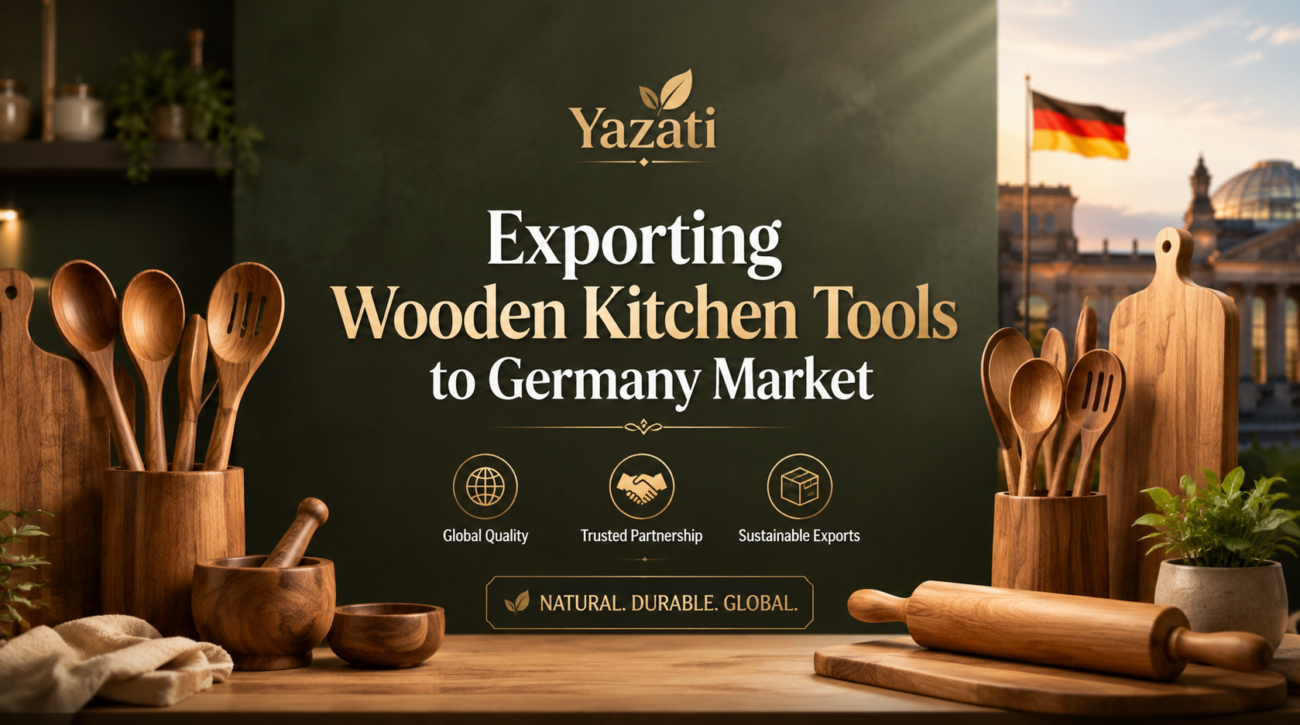
Germany is one of Europe’s largest and most stable import markets for eco-friendly household products. Over the last decade, demand for sustainable kitchenware has grown rapidly, making Exporting Wooden Kitchen Tools to Germany Market an attractive opportunity for manufacturers and exporters worldwide.
German consumers are increasingly choosing natural, reusable, and environmentally friendly products over plastic alternatives. Wooden kitchen tools such as spatulas, spoons, chopping boards, rolling pins, and serving trays are now popular in homes, restaurants, and retail stores across the country.
For exporters, Germany offers several advantages:
- High purchasing power
- Strong demand for premium-quality products
- Growing eco-conscious consumer base
- Large retail and online distribution channels
However, entering the German market requires proper planning, compliance with European regulations, competitive pricing, and a clear understanding of buyer expectations.
This guide explains everything you need to know about successfully Exporting Wooden Kitchen Tools to Germany Market.
Understanding the Germany Wooden Kitchenware Industry
Why Germany Is a Strong Market for Wooden Kitchen Tools
Germany is known for its environmentally responsible consumers. Buyers actively search for products that support sustainability and reduce plastic waste.
Wooden kitchen tools fit perfectly into this lifestyle trend because they are:
- Biodegradable
- Reusable
- Durable
- Safe for cookware
- Stylish and natural-looking
Germany also has one of Europe’s largest home goods and kitchenware retail industries. Stores regularly import products from Asia, Eastern Europe, and other manufacturing hubs.
Growth Trends in Sustainable Kitchen Products
The eco-friendly product market in Germany continues to expand. Many consumers now prefer:
- Plastic-free kitchens
- Handmade products
- Natural wood textures
- Organic lifestyle products
Retailers increasingly promote sustainable kitchen collections to meet customer demand.
According to European sustainability trends, reusable kitchenware sales are expected to continue rising over the next several years.
For official EU trade and compliance information, exporters can visit:
https://trade.ec.europa.eu/
Popular Wooden Kitchen Tools in Germany
Wooden Spoons and Spatulas
Wooden spoons remain among the top-selling kitchen tools in Germany. Buyers prefer them because they:
- Do not scratch cookware
- Resist heat well
- Offer a natural appearance
Olive wood and beech wood spoons are especially popular.
Chopping Boards and Serving Trays
German households often purchase premium wooden chopping boards for both cooking and serving purposes.
Trending styles include:
- Rustic farmhouse designs
- Minimal Scandinavian aesthetics
- Personalized engraved boards
Eco-Friendly Utensil Sets
Complete utensil sets packaged in eco-friendly boxes sell well online and in gift stores.
Common items include:
- Spatulas
- Tongs
- Soup ladles
- Salad servers
- Rolling pins
German Consumer Preferences
Sustainability and Eco-Conscious Buying
German consumers carefully evaluate environmental impact before purchasing products.
Many buyers specifically look for:
- FSC-certified wood
- Recyclable packaging
- Non-toxic finishes
- Ethically sourced materials
Sustainability is not just a trend in Germany—it is often a purchasing requirement.
Preference for Minimalist Designs
Simple and elegant designs perform best in the German market.
Popular characteristics include:
- Neutral colors
- Smooth finishing
- Functional shapes
- Minimal branding
Overly decorative products may not appeal to German consumers.
Importance of Product Safety
Kitchen tools must meet strict European food safety standards.
German buyers value:
- Chemical-free coatings
- Smooth edges
- Hygienic manufacturing
- Durable construction
Quality control is extremely important when Exporting Wooden Kitchen Tools to Germany Market.
Legal Requirements for Exporting Wooden Kitchen Tools to Germany Market
European Union Import Regulations
Germany follows European Union import laws. Exporters must comply with EU standards regarding:
- Product safety
- Packaging waste
- Chemical restrictions
- Consumer protection
Failure to comply can lead to shipment rejection.
FSC Certification and Sustainability Standards
Many German importers request FSC certification to confirm responsible forestry practices.
Benefits of FSC certification include:
- Increased buyer trust
- Better retail opportunities
- Access to premium markets
While not always mandatory, it significantly improves marketability.
Food Contact Material Compliance
Wooden kitchen tools used with food must comply with food-contact regulations.
Products should be:
- Free from harmful chemicals
- Properly treated for hygiene
- Manufactured under safe conditions
Testing from recognized laboratories may be required.
Selecting the Right Wood Materials
Bamboo vs Hardwood
Bamboo products are increasingly popular because bamboo grows quickly and supports sustainability goals.
Advantages of bamboo:
- Lightweight
- Eco-friendly
- Affordable
- Strong moisture resistance
Hardwoods such as beech, maple, teak, and olive wood offer premium appeal.
Popular Wood Types for German Buyers
German buyers commonly prefer:
| Wood Type | Benefits |
|---|---|
| Beech Wood | Durable and affordable |
| Olive Wood | Premium appearance |
| Bamboo | Eco-friendly and lightweight |
| Maple | Smooth texture |
| Acacia | Stylish grain patterns |
Selecting the right material can strongly influence buyer interest.
Packaging and Labeling Standards
Eco-Friendly Packaging Requirements
German retailers increasingly reject excessive plastic packaging.
Preferred packaging materials include:
- Recycled cardboard
- Kraft paper
- Compostable wrapping
- Minimal ink printing
Eco-packaging improves brand perception.
German Language Labeling
Product labels should ideally include German-language information such as:
- Product name
- Material type
- Country of origin
- Care instructions
Professional labeling increases customer trust.
Pricing Strategy for Germany Market
Competitive Pricing Techniques
Pricing depends on several factors:
- Material quality
- Production costs
- Shipping expenses
- Certifications
- Packaging standards
German buyers compare prices carefully, but they also value quality.
Balancing Quality and Profitability
Low-cost products may struggle if quality is poor.
Successful exporters usually focus on:
- Mid-range premium positioning
- Long-term buyer relationships
- Reliable quality standards
Consistent quality often matters more than extremely cheap pricing.
Shipping and Logistics
Sea Freight vs Air Freight
Sea freight is the most common option for exporting wooden kitchen tools.
Sea Freight Advantages
- Lower costs
- Suitable for large orders
- Better profit margins
Air Freight Advantages
- Faster delivery
- Ideal for samples or urgent shipments
Most commercial exporters prefer sea freight for bulk orders.
Choosing German Distribution Channels
Popular distribution channels include:
- Retail chains
- Kitchenware stores
- Eco-friendly boutiques
- Amazon Germany
- Online marketplaces
Some exporters also work directly with wholesalers and distributors.
Finding Buyers in Germany
Trade Fairs and Exhibitions
Germany hosts several world-famous trade fairs where exporters can connect with buyers.
Important trade fairs include:
- Ambiente Frankfurt
- Tendence
- Heimtextil
These events attract global kitchenware importers.
B2B Marketplaces
Online B2B platforms help exporters find buyers faster.
Popular platforms include:
- Alibaba
- Europages
- Global Sources
Professional product catalogs improve credibility.
Working with Importers and Retailers
Importers simplify market entry by handling:
- Distribution
- Warehousing
- Retail relationships
- Local compliance
Strong partnerships can lead to long-term business growth.
Marketing Wooden Kitchen Tools in Germany
Digital Marketing Strategies
Online visibility is essential when Exporting Wooden Kitchen Tools to Germany Market.
Effective strategies include:
- SEO optimization
- Instagram marketing
- Pinterest promotion
- Sustainability storytelling
- Influencer partnerships
German consumers often research products online before purchasing.
Building a Sustainable Brand Story
A compelling brand story can increase buyer trust.
Highlight:
- Eco-friendly sourcing
- Handmade craftsmanship
- Ethical production
- Sustainable packaging
Authenticity matters greatly in Germany.
Common Challenges and Solutions
Managing Competition
Competition in the wooden kitchenware market is growing.
To stand out:
- Offer premium quality
- Focus on sustainable materials
- Develop unique designs
- Maintain reliable delivery schedules
Handling Compliance Issues
Regulatory compliance can be challenging for new exporters.
Solutions include:
- Working with export consultants
- Conducting laboratory testing
- Using certified suppliers
- Maintaining documentation
Preparation reduces risks significantly.
FAQs About Exporting Wooden Kitchen Tools to Germany Market
1. Is Germany a profitable market for wooden kitchen tools?
Yes. Germany has strong demand for sustainable and eco-friendly kitchenware products.
2. What certifications are important for exporting wooden kitchen tools?
FSC certification and food-contact compliance certifications are highly valuable.
3. Which wooden kitchen products sell best in Germany?
Wooden spoons, spatulas, chopping boards, and eco-friendly utensil sets are top sellers.
4. Do German buyers prefer bamboo or hardwood products?
Both are popular. Bamboo is favored for sustainability, while hardwood products appeal to premium buyers.
5. How can exporters find German buyers?
Trade fairs, B2B marketplaces, importers, wholesalers, and online networking are effective channels.
6. What packaging works best for Germany market exports?
Eco-friendly and recyclable packaging is strongly preferred.
Conclusion
Exporting Wooden Kitchen Tools to Germany Market presents a major opportunity for manufacturers and exporters focused on sustainability, quality, and compliance.
Germany’s growing preference for eco-friendly kitchenware creates steady demand for wooden spoons, spatulas, chopping boards, and other natural products. However, success requires more than low prices. Exporters must prioritize:
- Sustainable sourcing
- Premium quality
- Proper certifications
- Attractive packaging
- Reliable logistics
- Strong branding
Businesses that align with German consumer expectations can build profitable, long-term relationships in one of Europe’s most attractive markets.
✨ Discover Global Sourcing Excellence with Netyex ✨
Netyex is your trusted B2B sourcing partner, connecting international buyers with India’s finest manufacturers and curated product lines—from handicrafts and home décor to kitchenware, textiles, hospitality essentials, and more. With verified suppliers and end-to-end support, we make global procurement seamless, reliable, and efficient.
👉 Elevate your sourcing experience—explore Netyex today.
📦 Bulk orders & customisation | 🌍 Worldwide delivery | 🤝 Trusted by global buyers
Visit Netyex to source premium Indian products with confidence.