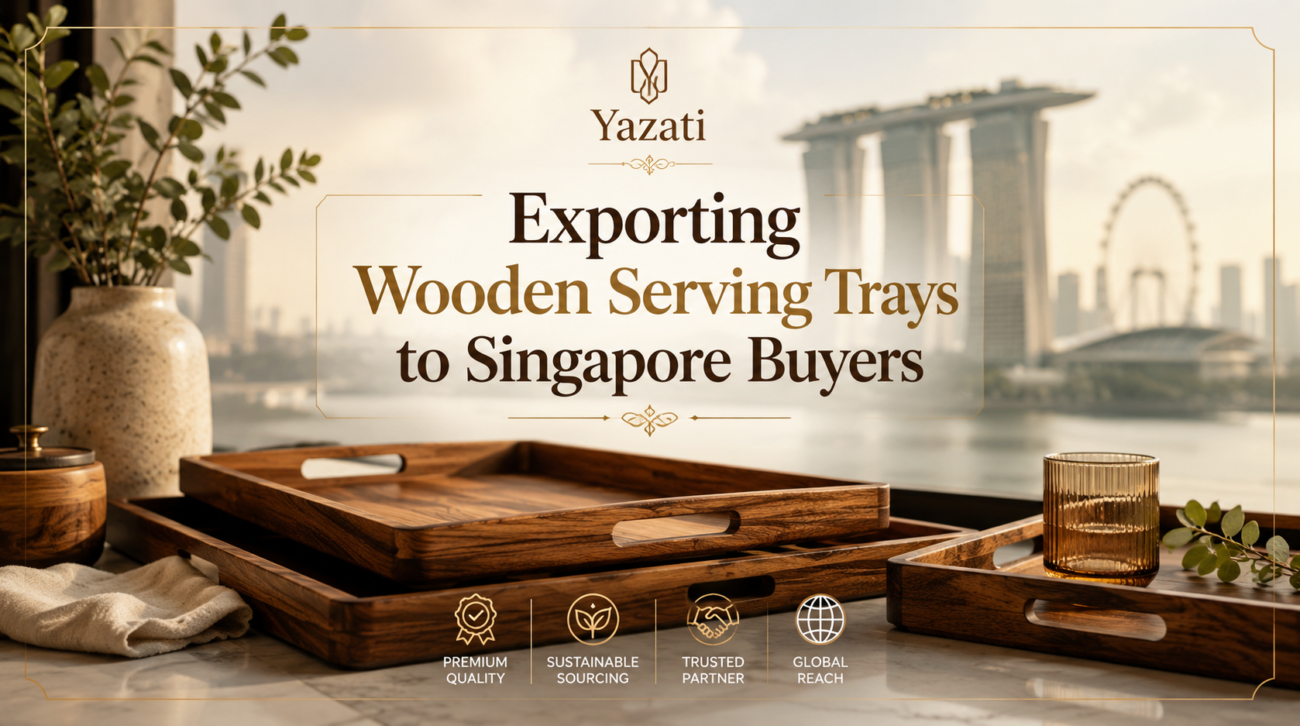
Singapore is one of Asia’s most sophisticated import markets, offering excellent opportunities for manufacturers and exporters of wooden homeware products. Exporting Wooden Serving Trays to Singapore Buyers has become increasingly attractive due to growing consumer interest in eco-friendly products, premium dining experiences, and sustainable home décor.
Whether you are a manufacturer, wholesaler, or trading company, understanding the Singapore market can help you secure long-term contracts and build a profitable export business.
Introduction to the Singapore Wooden Serving Tray Market
Singapore imports a substantial portion of its consumer goods due to limited domestic manufacturing capacity. The country’s strong retail sector, hospitality industry, and premium lifestyle market create consistent demand for high-quality wooden serving trays.
Consumers in Singapore appreciate:
- Sustainable products
- Elegant craftsmanship
- Premium finishes
- Functional designs
- Food-safe materials
As a result, wooden serving trays are commonly purchased by:
- Hotels
- Restaurants
- Cafés
- Retail chains
- Home décor stores
- Online marketplaces
- Corporate gift suppliers
Why Singapore Is an Attractive Export Destination
Growth of Hospitality and Food Service Industries
Singapore’s hospitality sector continues to expand through luxury hotels, boutique accommodations, restaurants, and cafés. These establishments frequently require serving trays for food presentation and guest services.
Premium dining experiences have increased demand for:
- Handcrafted wooden trays
- Rustic serving boards
- Decorative food presentation products
- Hotel room service trays
Rising Demand for Sustainable Wooden Products
Environmental awareness among Singapore consumers is increasing rapidly.
Popular purchasing trends include:
| Trend | Impact on Demand |
|---|---|
| Sustainable Living | Higher demand for natural wood products |
| Eco-Friendly Packaging | Preference for recyclable materials |
| Premium Home Décor | Increased spending on wooden accessories |
| Ethical Sourcing | Buyers request responsible forestry certifications |
Exporters that highlight sustainability often gain a competitive advantage.
Understanding Wooden Serving Tray Product Categories
Acacia Wood Trays
Acacia wood remains one of the most sought-after materials due to:
- Attractive grain patterns
- Durability
- Moisture resistance
- Food-safe applications
These trays are commonly sold through premium retail channels.
Mango Wood Trays
Mango wood products appeal to environmentally conscious consumers.
Benefits include:
- Sustainable sourcing
- Unique appearance
- Lightweight structure
- Affordable pricing
Teak Wood Trays
Teak offers premium positioning because of:
- Exceptional durability
- Water resistance
- Luxury appearance
- Long lifespan
Many hotels prefer teak trays for room service applications.
Bamboo Serving Trays
Bamboo is increasingly popular because it is:
- Renewable
- Lightweight
- Affordable
- Modern in appearance
Market Research Before Exporting
Proper research significantly improves export success.
Identifying Target Buyers
Potential buyer categories include:
- Importers
- Distributors
- Retail chains
- E-commerce sellers
- Hotel suppliers
- Restaurant equipment distributors
Create detailed buyer profiles before outreach.
Analyzing Competitor Offerings
Study competing suppliers by evaluating:
- Product design
- Price points
- Packaging
- Certifications
- Delivery timelines
This helps identify market gaps and positioning opportunities.
Singapore Import Regulations and Compliance
Before shipping products, ensure compliance with Singapore’s import requirements.
Product Safety Standards
Wooden serving trays should be:
- Free from harmful chemicals
- Manufactured using food-safe finishes
- Properly treated against pests when required
Documentation Requirements
Typical export documents include:
| Document | Purpose |
|---|---|
| Commercial Invoice | Transaction details |
| Packing List | Shipment contents |
| Bill of Lading | Shipping documentation |
| Certificate of Origin | Product origin verification |
| Fumigation Certificate | Wood treatment confirmation when required |
Accurate documentation reduces customs delays.
Packaging Requirements for Wooden Serving Trays
Export Packaging Best Practices
Effective packaging protects products during transportation.
Recommended methods:
- Individual wrapping
- Bubble protection
- Carton reinforcement
- Palletization
Moisture Protection Measures
Wood products are vulnerable to humidity.
Protect shipments using:
- Desiccant packs
- Shrink wrapping
- Moisture barriers
- Climate-controlled storage when necessary
Pricing Strategies for Singapore Buyers
FOB vs CIF Pricing
Two common export pricing methods include:
| Pricing Method | Description |
|---|---|
| FOB | Buyer arranges freight |
| CIF | Seller includes freight and insurance |
Many Singapore importers request quotations under both terms.
Wholesale Pricing Models
Volume-based discounts often increase order sizes.
Example:
- 500 units: Standard pricing
- 1,000 units: 5% discount
- 5,000 units: 10% discount
Competitive pricing encourages repeat orders.
Finding Singapore Buyers
One of the most critical aspects of Exporting Wooden Serving Trays to Singapore Buyers is identifying reliable purchasing partners.
Importers and Distributors
Importers offer:
- Established distribution networks
- Warehousing capabilities
- Market expertise
These buyers often purchase in large quantities.
Retail Chains
Potential channels include:
- Homeware stores
- Department stores
- Lifestyle retailers
- Gift shops
Retail chains seek consistent quality and reliable supply.
Hotel and Restaurant Suppliers
Hospitality suppliers frequently source:
- Serving trays
- Room service accessories
- Food presentation products
Building relationships in this segment can generate recurring business.
Digital Marketing for Exporters
B2B Marketplaces
Useful platforms include:
- Alibaba
- Global Sources
- TradeIndia
- Made-in-China
- ExportHub
Optimize product listings with professional photography and detailed specifications.
LinkedIn Prospecting
LinkedIn helps exporters connect directly with:
- Purchasing managers
- Import specialists
- Category buyers
- Hospitality procurement teams
Personalized outreach typically produces better results than mass messaging.
Trade Shows and Business Networking
Trade exhibitions remain effective for finding serious buyers.
Benefits include:
- Face-to-face meetings
- Product demonstrations
- Market feedback
- Relationship building
Industry events often accelerate trust and shorten sales cycles.
Logistics and Shipping Considerations
Sea Freight Options
Sea freight offers:
- Lower shipping costs
- Better margins
- Suitable for bulk orders
Ideal for large-volume exports.
Air Freight Options
Air freight provides:
- Faster delivery
- Reduced lead times
- Emergency shipment capabilities
Best for samples and urgent orders.
Payment Methods and Risk Management
Recommended payment methods include:
- Letter of Credit (LC)
- Telegraphic Transfer (TT)
- Advance Payment
- Documentary Collection
To reduce risk:
- Verify buyer credentials
- Request references
- Use trade credit insurance
- Start with smaller orders
Building Long-Term Relationships with Buyers
Successful exporters focus on retention, not just acquisition.
Best practices:
- Maintain consistent quality
- Respond quickly
- Meet delivery schedules
- Offer product customization
- Share market insights
Long-term partnerships often lead to larger and more profitable contracts.
Common Export Challenges and Solutions
| Challenge | Solution |
|---|---|
| Shipping Delays | Work with reliable freight forwarders |
| Price Competition | Differentiate through quality |
| Customs Issues | Maintain accurate documentation |
| Product Damage | Improve packaging standards |
| Currency Fluctuations | Use hedging strategies |
Being proactive helps avoid costly disruptions.
Future Trends in Singapore’s Wooden Homeware Market
Emerging trends include:
- Sustainable sourcing certifications
- FSC-certified wood products
- Premium handcrafted designs
- Corporate gifting solutions
- Luxury hospitality products
- Eco-friendly packaging
Exporters who adapt early can secure stronger market positions.
Frequently Asked Questions
1. Are wooden serving trays popular in Singapore?
Yes. Demand is driven by hospitality businesses, home décor retailers, restaurants, cafés, and eco-conscious consumers.
2. Which wood types are most preferred by Singapore buyers?
Acacia, teak, mango wood, and bamboo are among the most popular choices.
3. Do wooden serving trays require fumigation certificates?
In some cases, wood products may require treatment and supporting documentation. Requirements depend on the product and origin country.
4. What is the best way to find Singapore buyers?
B2B marketplaces, trade shows, LinkedIn networking, and direct outreach to importers are highly effective.
5. Should exporters offer FOB or CIF pricing?
Offering both options provides flexibility and increases your chances of securing orders.
6. What certifications can improve buyer confidence?
Food-safe certifications, FSC certification, quality management certifications, and sustainability credentials can strengthen your market position.
Conclusion
Exporting Wooden Serving Trays to Singapore Buyers presents significant opportunities for exporters who understand the market, comply with regulations, maintain product quality, and develop strong buyer relationships. Singapore’s growing demand for sustainable homeware, premium hospitality products, and eco-friendly lifestyle goods makes it an attractive destination for wooden serving tray suppliers. By combining effective market research, competitive pricing, professional packaging, and strategic networking, exporters can establish a strong presence and achieve long-term success in this dynamic market.
For additional information on Singapore trade and import procedures, visit the official Singapore customs resources through Singapore Customs.
✨ Discover Global Sourcing Excellence with Netyex ✨
Netyex is your trusted B2B sourcing partner, connecting international buyers with India’s finest manufacturers and curated product lines—from handicrafts and home décor to kitchenware, textiles, hospitality essentials, and more. With verified suppliers and end-to-end support, we make global procurement seamless, reliable, and efficient.
👉 Elevate your sourcing experience—explore Netyex today.
📦 Bulk orders & customisation | 🌍 Worldwide delivery | 🤝 Trusted by global buyers
Visit Netyex to source premium Indian products with confidence.