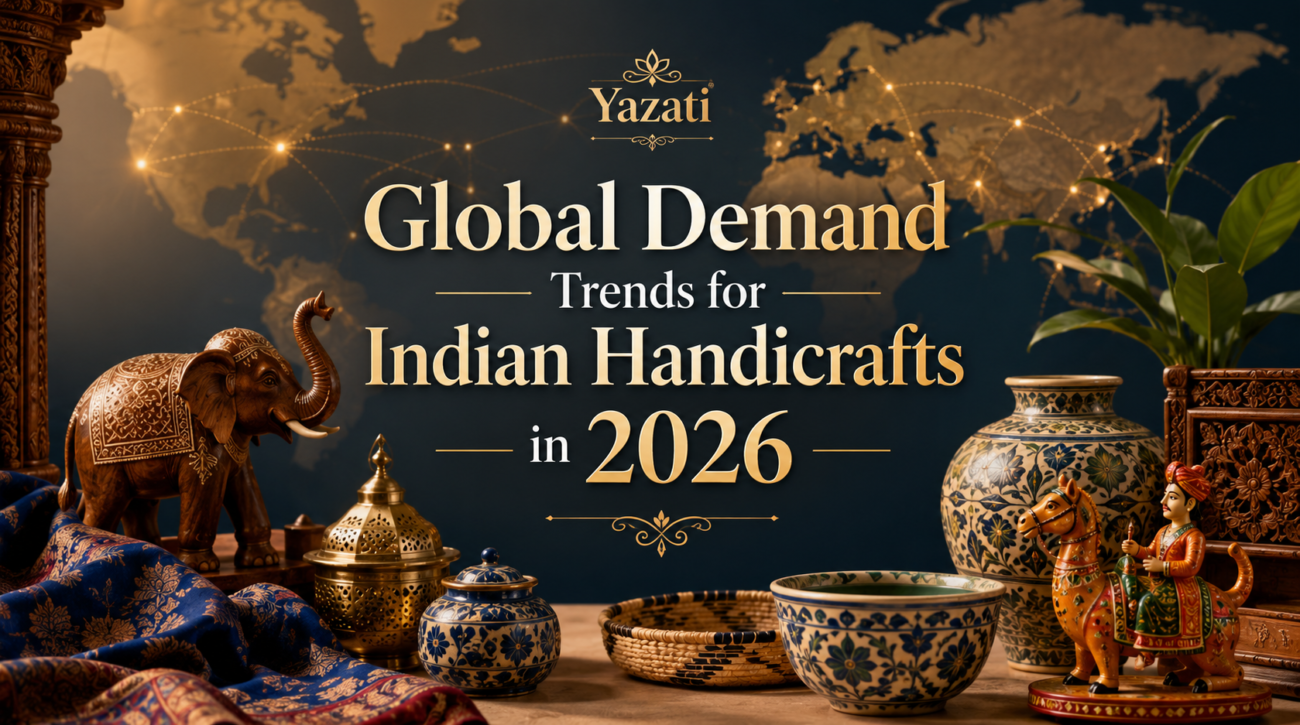
Introduction to Global Demand Trends for Indian Handicrafts in 2026
The Global Demand Trends for Indian Handicrafts in 2026 indicate a promising future for artisans, exporters, and businesses involved in the handicraft sector. Around the world, consumers are increasingly seeking authentic, handmade, and sustainable products that reflect culture, craftsmanship, and individuality. Indian handicrafts, known for their rich heritage and artistic excellence, are benefiting from this global shift.
As buyers move away from mass-produced items, Indian artisans are finding new opportunities in international markets. From handcrafted textiles and pottery to wooden décor and metal art, demand is growing steadily across multiple regions.
Overview of the Indian Handicrafts Industry
India possesses one of the world’s most diverse handicraft traditions. Every region contributes unique artistic styles, techniques, and materials.
Historical Significance of Indian Handicrafts
Indian handicrafts have been admired globally for centuries. Ancient trade routes connected Indian artisans with buyers from Asia, Europe, and the Middle East. Traditional crafts such as block printing, embroidery, weaving, wood carving, and metalwork continue to attract international attention.
Economic Contribution to India
The handicrafts sector supports millions of artisans, many of whom live in rural areas. It plays an important role in preserving cultural heritage while generating employment and export revenue. The industry also contributes significantly to women’s empowerment and rural economic development.
Key Drivers Shaping Global Demand in 2026
Several factors are influencing purchasing behavior and boosting demand for Indian handicrafts.
Rising Consumer Preference for Handmade Products
Consumers increasingly value uniqueness and authenticity. Handmade products offer a personal touch that factory-made goods cannot replicate. Buyers appreciate the craftsmanship, creativity, and human effort behind each piece.
Key reasons include:
- Unique designs
- Limited production runs
- Cultural significance
- Superior craftsmanship
- Emotional connection with artisans
Sustainability and Eco-Friendly Purchasing Trends
Environmental awareness continues to influence buying decisions. Many Indian handicrafts utilize natural materials, recycled resources, and traditional production methods with lower environmental impact.
Popular sustainable materials include:
| Material | Common Products |
|---|---|
| Bamboo | Home décor, baskets |
| Jute | Bags, mats |
| Cotton | Textiles |
| Clay | Pottery |
| Wood | Furniture and decorative items |
Growth of Ethical and Fair-Trade Shopping
Modern consumers increasingly seek transparency in supply chains. Products that support artisan communities and fair wages often command premium prices in international markets.
Most Popular Indian Handicraft Categories Worldwide
Textile and Embroidery Products
Indian textiles remain among the most sought-after handicraft exports. Handwoven fabrics, block-printed textiles, embroidered garments, and handcrafted home furnishings continue to attract buyers globally.
Popular textile exports include:
- Handloom fabrics
- Kashmiri embroidery
- Kantha work
- Block-printed textiles
- Traditional scarves and shawls
Wooden Handicrafts and Furniture
Hand-carved wooden products have gained popularity due to growing interest in artisanal home décor. Consumers appreciate their craftsmanship and durability.
Metal Crafts and Decorative Items
Brass, copper, and iron handicrafts continue to enjoy strong demand. Decorative sculptures, wall art, and traditional artifacts are particularly popular among collectors and interior designers.
Pottery and Ceramic Art
Handmade pottery has become increasingly desirable among consumers looking for sustainable and artistic home accessories. Functional ceramics, decorative vases, and handcrafted tableware are experiencing notable growth.
Jewelry and Traditional Accessories
Handcrafted jewelry featuring traditional Indian designs appeals to international buyers seeking distinctive fashion accessories.
Major International Markets for Indian Handicrafts
North America
The United States and Canada remain major importers of Indian handicrafts. Consumers in these markets show strong interest in sustainable products, artisanal home décor, and ethically sourced goods.
Europe
European consumers value heritage, sustainability, and craftsmanship. Countries such as Germany, France, the Netherlands, and the United Kingdom continue to offer significant opportunities.
Middle East
The Middle East remains an attractive market due to cultural appreciation for decorative arts and luxury handcrafted products.
Asia-Pacific Region
Growing middle-class populations and rising disposable incomes are fueling demand across Asia-Pacific markets.
Impact of E-Commerce on Global Demand
One of the most important factors behind the Global Demand Trends for Indian Handicrafts in 2026 is digital commerce.
Cross-Border Online Marketplaces
Global e-commerce platforms allow artisans and exporters to reach customers directly without relying solely on traditional distribution channels.
Benefits include:
- Wider market access
- Reduced marketing costs
- Improved customer engagement
- Faster international expansion
Direct-to-Consumer Export Opportunities
Brands can now build direct relationships with global buyers through websites, social media, and online marketplaces. This model often increases profitability while strengthening brand identity.
Technology and Digital Transformation in Handicraft Exports
AI-Powered Marketing and Product Discovery
Artificial intelligence is helping businesses identify consumer trends, optimize advertising campaigns, and personalize product recommendations.
Virtual Showrooms and Digital Catalogs
Virtual exhibitions and digital product catalogs allow buyers to explore collections from anywhere in the world. This reduces travel costs and expands global visibility.
Challenges Facing Indian Handicraft Exporters
Despite strong growth prospects, several challenges remain.
Competition from Machine-Made Products
Mass-produced goods often compete on price, making it difficult for handmade products to maintain market share among cost-conscious consumers.
Logistics and Supply Chain Issues
Exporters may face:
- Shipping delays
- Rising transportation costs
- Customs complexities
- Packaging challenges
Quality Standardization Concerns
Maintaining consistent quality across handcrafted products can be difficult due to variations in manual production processes.
Government Initiatives Supporting Handicraft Exports
Export Promotion Programs
Government agencies continue to support exporters through trade fairs, international exhibitions, and market development initiatives.
Skill Development and Artisan Welfare
Training programs help artisans improve product quality, adopt modern techniques, and access global markets more effectively.
Emerging Consumer Preferences in 2026
Personalized Handmade Products
Customization has become a major purchasing factor. Consumers increasingly seek products tailored to their personal preferences.
Examples include:
- Customized home décor
- Personalized gifts
- Bespoke furniture
- Made-to-order accessories
Home Décor and Cultural Storytelling
Consumers are increasingly interested in products that tell a story. Handicrafts connected to cultural traditions, artisan communities, and regional heritage often command higher value.
Investment Opportunities in the Handicrafts Sector
Investors are recognizing the long-term potential of the handicrafts industry due to:
- Growing global demand
- Increasing e-commerce adoption
- Rising sustainability awareness
- Expanding premium product markets
Businesses focusing on branding, export development, and artisan empowerment may benefit significantly from these trends.
For additional industry insights, readers can explore resources from the World Trade Organization and other international trade organizations that monitor global commerce and handicraft exports.
Future Outlook for Global Demand Trends for Indian Handicrafts in 2026
The future appears highly favorable for Indian handicrafts. Consumers increasingly prioritize authenticity, sustainability, and ethical production. As digital platforms continue expanding global access and artisans embrace technology, the sector is positioned for continued growth.
Several trends are expected to shape future demand:
- Stronger demand for sustainable products.
- Growth in premium handcrafted goods.
- Increased adoption of direct-to-consumer sales.
- Expansion into emerging international markets.
- Greater appreciation for cultural heritage and storytelling.
The Global Demand Trends for Indian Handicrafts in 2026 suggest that Indian artisans and exporters have a significant opportunity to strengthen their global presence while preserving traditional craftsmanship.
Frequently Asked Questions (FAQs)
1. Why is global demand for Indian handicrafts increasing in 2026?
Growing interest in sustainability, handmade products, ethical sourcing, and cultural authenticity is driving demand worldwide.
2. Which Indian handicrafts are most popular internationally?
Textiles, embroidery, wooden handicrafts, metal crafts, pottery, ceramics, and handcrafted jewelry remain highly popular.
3. Which countries import the most Indian handicrafts?
Major markets include the United States, Canada, Germany, France, the United Kingdom, the UAE, and several Asia-Pacific countries.
4. How does e-commerce help Indian handicraft exporters?
E-commerce platforms enable direct access to international consumers, reduce market-entry barriers, and improve profitability.
5. What challenges do Indian handicraft exporters face?
Key challenges include competition from machine-made products, logistics issues, quality consistency, and changing consumer expectations.
6. Are sustainable handicrafts becoming more important?
Yes. Consumers increasingly prefer environmentally responsible products made from natural, recycled, and renewable materials.
Conclusion
The Global Demand Trends for Indian Handicrafts in 2026 highlight a period of substantial opportunity and transformation. Increasing consumer appreciation for handmade artistry, sustainability, ethical sourcing, and cultural heritage is creating favorable conditions for Indian artisans and exporters. With continued investment in digital commerce, innovation, quality improvement, and global branding, Indian handicrafts are well-positioned to achieve even greater international success in the years ahead.
✨ Discover Global Sourcing Excellence with Netyex ✨
Netyex is your trusted B2B sourcing partner, connecting international buyers with India’s finest manufacturers and curated product lines—from handicrafts and home décor to kitchenware, textiles, hospitality essentials, and more. With verified suppliers and end-to-end support, we make global procurement seamless, reliable, and efficient.
👉 Elevate your sourcing experience—explore Netyex today.
📦 Bulk orders & customisation | 🌍 Worldwide delivery | 🤝 Trusted by global buyers
Visit Netyex to source premium Indian products with confidence.