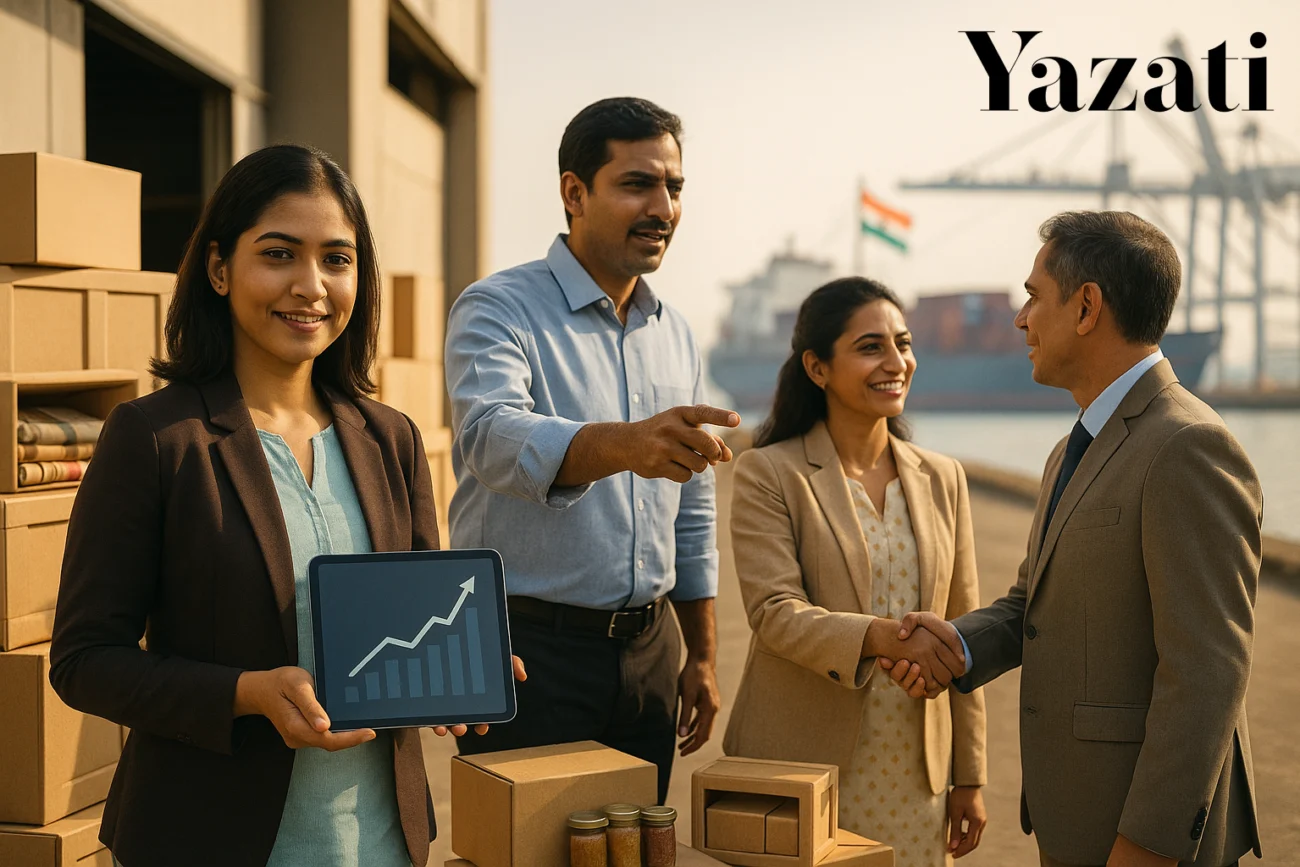
Introduction: The Changing Landscape of Indian Exports
India’s export landscape has undergone a massive transformation over the past decade. From a largely domestic-focused economy to one of the fastest-growing export hubs globally, the Indian government has been a key driver in this shift. Today, the nation’s export growth is powered by a mix of innovation, policy support, and robust trade partnerships.
Government initiatives are no longer just policy statements—they are tangible frameworks empowering small, medium, and large exporters to expand into new global markets. As India sets its sights on becoming a $2 trillion export economy by 2030, understanding these initiatives becomes vital for entrepreneurs, policymakers, and investors alike.
Understanding India’s Export Ecosystem
Historical Context of Indian Exports
Historically, India has been known for its rich trade heritage—exporting textiles, spices, and handicrafts to markets across Asia and Europe. However, the liberalization of 1991 was a turning point, opening India’s doors to global competition and modern export-oriented industries.
Key Sectors Driving India’s Export Growth
Today, sectors like pharmaceuticals, IT services, engineering goods, and agricultural products lead India’s export momentum. The government’s focus on promoting value-added manufacturing has further diversified the export base, enabling India to compete in high-demand global sectors like renewable energy and electronics.
Role of the Indian Government in Strengthening Exports
Policy Support and Export Promotion Frameworks
The Indian government has introduced multiple policies under the Foreign Trade Policy (FTP) framework to simplify export procedures and reduce red tape. Initiatives like the Remission of Duties and Taxes on Exported Products (RoDTEP) and Interest Equalization Schemes have made Indian goods more competitive in global markets.
Public–Private Partnerships in Export Growth
Government agencies are collaborating with private players to streamline logistics, improve export infrastructure, and build sector-specific export promotion councils. This collaboration has led to better market intelligence, product standardization, and quality certification—key for accessing premium markets.
Major Government Initiatives Empowering Indian Exporters
Make in India: Enhancing Manufacturing and Export Competitiveness
Launched in 2014, Make in India encourages global and domestic companies to manufacture within India. This initiative has significantly improved India’s export competitiveness by promoting localized production and value addition across sectors like automobiles, textiles, and electronics.
Production Linked Incentive (PLI) Scheme and Its Impact
The PLI Scheme offers financial incentives to boost domestic manufacturing and exports in strategic sectors such as semiconductors, pharmaceuticals, and solar equipment. It has attracted billions in investment, creating jobs and enhancing India’s export readiness.
Digital India and E-Commerce Export Facilitation
Through the Digital India initiative, exporters can now access global markets via online platforms. Schemes like e-Marketplace for Exporters (GeM) and collaborations with e-commerce giants have simplified the process of reaching international buyers.
Export Credit Guarantee Corporation (ECGC) Support
The ECGC provides insurance cover and risk protection to exporters against payment defaults, enabling small exporters to trade confidently with international clients.
Market Access Initiative (MAI) and Market Development Assistance (MDA)
Both MAI and MDA are designed to help exporters explore new markets, participate in international trade fairs, and develop branding strategies—enhancing visibility for Indian products abroad.
Infrastructure Development and Logistics Modernization
Sagarmala and Bharatmala Projects: Strengthening Trade Corridors
The Sagarmala Project aims to modernize ports and integrate them with industrial clusters, while Bharatmala focuses on improving road connectivity for faster cargo movement. Together, they drastically reduce logistics costs and transit times.
Inland Waterways and Port Modernization
India’s Inland Waterways Authority is developing efficient cargo movement through rivers, easing congestion on highways and cutting freight costs. Modernized ports are now capable of handling larger vessels and offering digital customs clearance.
Trade Agreements and Global Market Expansion
Bilateral and Multilateral Trade Agreements
India is actively pursuing new trade deals with regions like the EU, the UK, and ASEAN. These agreements reduce tariffs and open up new export opportunities, particularly for MSMEs and agricultural producers.
Integration with Global Value Chains (GVCs)
By participating in GVCs, Indian exporters gain access to advanced technology, raw materials, and global distribution networks—making them more competitive on the world stage.
Financial and Tax Incentives for Exporters
Duty Drawback and Remission of Duties Scheme (RoDTEP)
The RoDTEP scheme replaces the old MEIS system, reimbursing exporters for taxes and duties not refunded through other means. This ensures Indian exports remain price-competitive globally.
Simplified GST Refund Mechanisms for Exporters
The introduction of automated GST refund systems has improved liquidity for exporters, especially MSMEs, by reducing delays and simplifying compliance.
Digital Transformation and Export Facilitation
eSANCHIT, ICEGATE, and Single-Window Customs Clearance
These digital systems allow exporters to submit shipping and customs documents online, minimizing human intervention and speeding up approvals.
Role of AI and Blockchain in Export Documentation
AI tools now analyze trade data for better market insights, while blockchain-based systems are improving transparency in export documentation and reducing fraud.
Skill Development and Capacity Building for Exporters
Export Promotion Councils and Training Programs
The Indian government has established over 25 Export Promotion Councils (EPCs) dedicated to specific industries—from textiles and engineering to pharmaceuticals and agriculture. These councils provide exporters with training, market research, and networking opportunities.
In addition, organizations such as the Indian Institute of Foreign Trade (IIFT) and the Federation of Indian Export Organisations (FIEO) conduct skill development programs to help exporters understand documentation, compliance, and digital marketing for global audiences.
MSME Empowerment Through Digital Literacy
Micro, Small, and Medium Enterprises (MSMEs) play a critical role in India’s export growth. To empower them, the government has introduced initiatives under the Skill India and Digital MSME programs. These programs train business owners in e-commerce operations, logistics management, and digital payments—helping smaller exporters compete effectively in international markets.
Success Stories: How Indian Exporters Are Benefiting
Case Study: Textile Sector Growth Through PLI
The PLI scheme for textiles has transformed India’s garment and apparel exports. By offering production-based incentives, the government has encouraged firms to adopt high-efficiency machinery and sustainable production methods. As a result, textile exports surged by over 25% between 2022 and 2025, with India regaining its position among the top five global apparel exporters.
Case Study: Agri-Tech Exports and Government Support
Agricultural exporters, especially those using Agri-Tech innovations, have benefited from the Agriculture Export Policy (AEP) and initiatives such as One District One Product (ODOP). These efforts promote regional products like Darjeeling tea, Basmati rice, and mango pulp in global markets. Combined with digital traceability systems, these policies have boosted brand recognition and ensured product authenticity abroad.
Challenges and the Road Ahead for Indian Exporters
Global Trade Uncertainty and Supply Chain Disruptions
Despite strong policy support, exporters face challenges from fluctuating global demand, geopolitical tensions, and trade protectionism. The COVID-19 pandemic exposed vulnerabilities in global supply chains, pushing India to invest in supply chain resilience and self-reliant manufacturing through the Atmanirbhar Bharat initiative.
Future Policy Directions for Sustainable Export Growth
The government’s focus for 2026 and beyond includes green exports, sustainable manufacturing, and digital trade infrastructure. Policies encouraging renewable energy exports, eco-friendly packaging, and reduced carbon emissions are aligning India’s trade growth with global sustainability goals. Continued policy reforms under the Foreign Trade Policy (2023–2028) are expected to make export procedures even more seamless and digitalized.
FAQs on How Government Initiatives Are Empowering Indian Exporters
1. What are the key government schemes supporting Indian exporters?
Major schemes include Make in India, PLI, RoDTEP, Digital India, Sagarmala, and Bharatmala. These programs focus on improving manufacturing capacity, infrastructure, and financial incentives for exporters.
2. How does the PLI scheme help Indian exporters?
The Production Linked Incentive (PLI) scheme provides financial benefits based on output, encouraging companies to scale production, adopt advanced technology, and expand exports in sectors like electronics, textiles, and renewable energy.
3. What financial support do exporters receive from the government?
Exporters can access low-interest loans, duty exemptions, tax refunds, and insurance coverage through the Export Credit Guarantee Corporation (ECGC) and schemes like Interest Equalization and RoDTEP.
4. How is technology transforming India’s export system?
Digital platforms like ICEGATE, eSANCHIT, and DGFT’s Online Trade Facilitation Portal have simplified customs clearance and reduced paperwork, while AI and blockchain are enhancing transparency and efficiency in export documentation.
5. What role do MSMEs play in India’s export sector?
MSMEs contribute nearly 45% of India’s total exports. Government initiatives such as MSME Cluster Development, Digital MSME, and Skill India are helping these businesses access international markets more effectively.
6. What future opportunities lie ahead for Indian exporters?
Emerging areas like renewable energy equipment, pharmaceuticals, agri-tech, and digital services exports offer significant growth potential. Ongoing trade agreements with the UK, EU, and ASEAN are expected to further expand market access.
Conclusion: The Future of India’s Export-Driven Growth
Government initiatives are undeniably shaping India’s transformation into a global export powerhouse. By focusing on infrastructure, digitalization, skill development, and financial inclusion, these policies are creating a robust foundation for sustainable trade growth.
Indian exporters are now better equipped than ever to compete in the international marketplace—thanks to proactive reforms, strategic policy support, and technological innovation. As the nation moves toward its ambitious target of becoming a $2 trillion export economy by 2030, collaboration between the government, private sector, and MSMEs will remain key to achieving this vision.
With resilience, innovation, and strong policy backing, the future of Indian exports looks brighter than ever.
✨ Discover Global Sourcing Excellence with Netyex ✨
Netyex is your trusted B2B sourcing partner, connecting international buyers with India’s finest manufacturers and curated product lines—from handicrafts and home décor to kitchenware, textiles, hospitality essentials, and more. With verified suppliers and end-to-end support, we make global procurement seamless, reliable, and efficient.
👉 Elevate your sourcing experience—explore Netyex today.
📦 Bulk orders & customisation | 🌍 Worldwide delivery | 🤝 Trusted by global buyers
Visit Netyex to source premium Indian products with confidence.