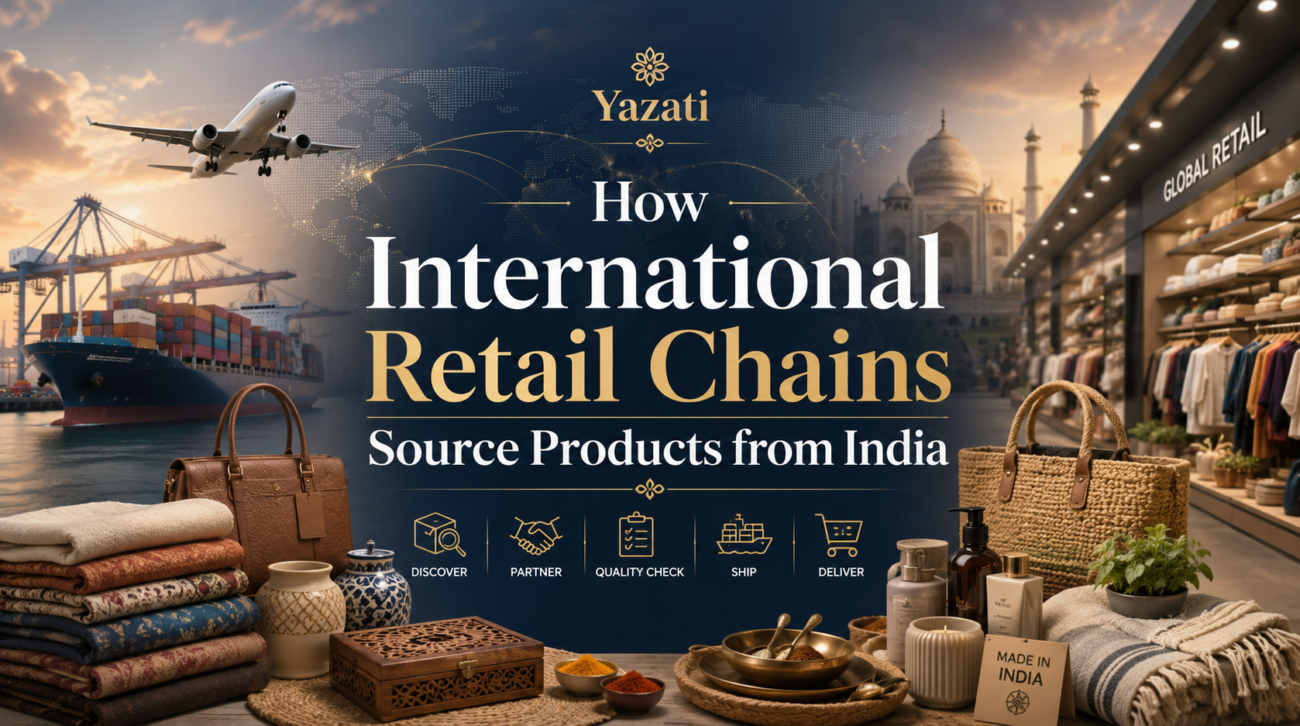
India has become one of the world’s most important manufacturing and sourcing destinations. From handcrafted home décor and textiles to pharmaceuticals, engineering products, food items, and consumer goods, Indian manufacturers supply products to leading retail chains across North America, Europe, the Middle East, Australia, and Asia.
Understanding How International Retail Chains Source Products from India helps manufacturers, exporters, entrepreneurs, and sourcing professionals prepare for global business opportunities. International retailers follow structured procurement processes that focus on quality, reliability, compliance, pricing, and long-term partnerships.
This guide explains the complete sourcing journey, industry best practices, and practical tips for businesses aiming to become trusted suppliers.
Why India Is a Preferred Global Sourcing Destination
International retailers choose India for several compelling reasons.
Competitive Manufacturing Costs
India offers competitive labor and production costs while maintaining high manufacturing standards across many industries.
Large Supplier Network
Thousands of factories and export houses serve international buyers, providing flexibility across different product categories.
Skilled Workforce
India has decades of expertise in textiles, leather, handicrafts, engineering, pharmaceuticals, gems, jewelry, and information technology.
Government Export Support
Various export promotion initiatives, infrastructure improvements, and trade facilitation programs encourage international sourcing.
Industries That Attract International Retail Buyers
Several sectors consistently receive significant global sourcing demand.
- Apparel and garments
- Home textiles
- Furniture
- Handicrafts
- Kitchenware
- Leather goods
- Organic food products
- Spices
- Jewelry
- Consumer electronics components
- Engineering goods
- Beauty and personal care products
Many international retailers diversify sourcing across multiple Indian states to reduce supply chain risks.
The Step-by-Step Sourcing Process
1. Market Research
Retail procurement teams first identify product categories with growing consumer demand. They evaluate pricing trends, competing suppliers, import regulations, and production capacity before selecting sourcing destinations.
2. Supplier Identification
Potential suppliers are identified through:
- Trade fairs
- Industry associations
- Export councils
- Online B2B marketplaces
- Sourcing agencies
- Existing supplier referrals
The goal is to build a shortlist of manufacturers capable of meeting production requirements.
3. Supplier Evaluation
Before placing any order, retailers conduct extensive assessments, including:
- Factory capabilities
- Financial stability
- Export experience
- Production capacity
- Previous customer references
- Certifications
- Delivery performance
Many buyers also conduct factory audits before approving a supplier.
4. Product Sampling
Suppliers prepare samples that are evaluated for:
- Design accuracy
- Material quality
- Durability
- Packaging
- Color consistency
- Product functionality
Feedback is shared until the sample meets expectations.
5. Price Negotiation
Negotiations involve far more than unit price. Buyers consider:
- Minimum order quantity
- Payment terms
- Packaging costs
- Freight options
- Currency risks
- Lead times
- Long-term pricing agreements
The objective is to achieve value without compromising quality.
6. Compliance Verification
Global retailers require suppliers to comply with:
- Labor regulations
- Environmental standards
- Product safety requirements
- Social responsibility policies
- Ethical sourcing practices
Failure to meet compliance standards can delay or cancel procurement contracts.
7. Production Monitoring
Large orders often include periodic production reviews to ensure manufacturing remains on schedule and quality standards are maintained.
8. Quality Inspection
Independent inspections may occur:
- Before production
- During production
- Before shipment
- At container loading
These inspections reduce the risk of receiving defective products.
9. Shipping and Logistics
Once products pass inspection, shipments are arranged through freight forwarders and logistics providers. Accurate documentation, customs compliance, and shipment tracking help ensure smooth international delivery.
Key Quality Standards Retail Chains Expect
International retailers expect consistency across every shipment. Important requirements include:
- Uniform product specifications
- Reliable packaging
- Accurate labeling
- Timely delivery
- Defect-free production
- Product traceability
- Strong documentation
Suppliers that consistently meet these expectations are more likely to receive repeat orders.
Sustainability and Ethical Sourcing
Sustainability has become a major purchasing criterion.
Retailers increasingly seek suppliers that:
- Reduce carbon emissions
- Conserve water and energy
- Minimize waste
- Use recyclable packaging
- Follow ethical labor practices
- Ensure worker safety
Strong environmental and social practices can improve a supplier’s competitiveness.
Technology Used in Modern Procurement
Digital tools have transformed sourcing operations.
Common technologies include:
- Supplier relationship management systems
- Enterprise resource planning software
- Digital quality inspection platforms
- AI-driven demand forecasting
- Supply chain analytics
- Real-time shipment tracking
- Electronic documentation
These technologies improve visibility, efficiency, and collaboration across the supply chain.
Common Challenges and Solutions
| Challenge | Practical Solution |
| Delivery delays | Improve production planning and logistics coordination |
| Quality inconsistency | Implement standardized quality control processes |
| Communication gaps | Maintain regular updates and clear documentation |
| Currency fluctuations | Use hedging strategies or agreed pricing terms |
| Regulatory changes | Monitor export and import compliance requirements |
Tips for Indian Manufacturers
Businesses aiming to supply international retail chains should:
- Invest in quality management systems.
- Obtain relevant certifications for their industry.
- Build transparent communication with buyers.
- Deliver orders on time.
- Maintain consistent product quality.
- Adopt sustainable manufacturing practices.
- Continuously improve production efficiency.
- Develop long-term relationships instead of focusing only on one-time sales.
These practices enhance credibility and increase the likelihood of becoming preferred suppliers.
Future Trends in Global Retail Sourcing
Several developments are shaping the future of international procurement from India:
- Diversification of sourcing locations
- Increased use of artificial intelligence
- Greater emphasis on sustainability
- Demand for supply chain transparency
- Digital supplier audits
- Faster product development cycles
- Expansion of near-real-time inventory management
Indian exporters that embrace innovation and compliance will be well positioned to benefit from these trends.
For additional guidance on international trade practices, exporters can explore resources from the World Trade Organization: https://www.wto.org/
Frequently Asked Questions
1. Why do international retailers source products from India?
India offers competitive pricing, skilled labor, diverse manufacturing capabilities, and a well-established export ecosystem.
2. What products are commonly sourced from India?
Textiles, garments, furniture, handicrafts, leather goods, engineering products, spices, jewelry, pharmaceuticals, and home décor are among the most popular exports.
3. How do retailers evaluate suppliers?
They assess production capacity, quality systems, financial stability, certifications, compliance, and delivery performance.
4. Why are quality inspections important?
Inspections help ensure products meet agreed specifications before shipment, reducing costly returns and customer complaints.
5. What role does sustainability play in sourcing?
Retailers increasingly prioritize suppliers with environmentally responsible operations and ethical labor practices.
6. How can Indian manufacturers attract international buyers?
By maintaining consistent quality, obtaining relevant certifications, communicating effectively, meeting delivery schedules, and demonstrating long-term reliability.
Conclusion
Understanding How International Retail Chains Source Products from India provides valuable insight into the expectations of global buyers. Successful sourcing depends on careful supplier selection, rigorous quality control, ethical compliance, efficient logistics, and collaborative relationships.
For Indian manufacturers and exporters, focusing on quality, transparency, innovation, and sustainability can create lasting partnerships with international retailers. As global supply chains continue to evolve, businesses that invest in continuous improvement and customer trust will be best positioned to compete in the international marketplace.
✨ Discover Global Sourcing Excellence with Netyex ✨
Netyex is your trusted B2B sourcing partner, connecting international buyers with India’s finest manufacturers and curated product lines—from handicrafts and home décor to kitchenware, textiles, hospitality essentials, and more. With verified suppliers and end-to-end support, we make global procurement seamless, reliable, and efficient.
👉 Elevate your sourcing experience—explore Netyex today.
📦 Bulk orders & customisation | 🌍 Worldwide delivery | 🤝 Trusted by global buyers
Visit Netyex to source premium Indian products with confidence.