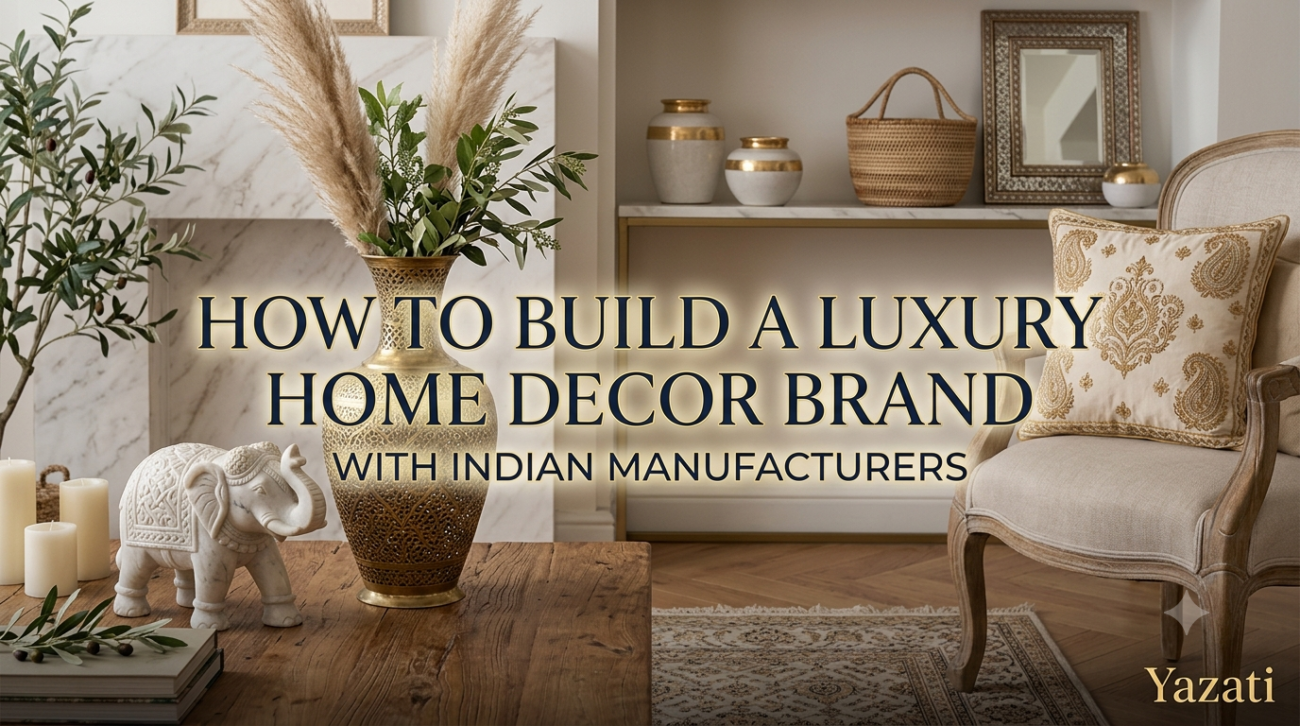
The global luxury home decor industry is experiencing remarkable growth as consumers increasingly invest in beautiful living spaces. Entrepreneurs seeking high margins and strong brand potential are discovering that How to Build a Luxury Home Decor Brand with Indian Manufacturers is not only achievable but also highly profitable.
India has become one of the world’s most respected sourcing destinations for premium home furnishings, handcrafted decor, luxury textiles, artisan furniture, and bespoke accessories. With centuries-old craftsmanship traditions combined with modern manufacturing capabilities, Indian manufacturers offer a unique opportunity for emerging luxury brands.
This guide explores every major step involved in creating a successful luxury home decor business using Indian manufacturing partners.
Understanding the Luxury Home Decor Market
Luxury home decor goes beyond aesthetics. Customers are purchasing exclusivity, craftsmanship, quality, heritage, and status.
Global Demand for Premium Home Decor Products
Several trends are driving growth:
- Rising disposable incomes
- Increased home ownership
- Growth of luxury interior design services
- Social media-inspired home styling
- Demand for artisan-made products
Consumers increasingly seek products that tell a story rather than mass-produced items.
Why Consumers Choose Luxury Decor Brands
Luxury buyers value:
- Superior materials
- Limited-edition collections
- Handmade craftsmanship
- Sustainable production
- Authentic brand stories
Building your brand around these principles creates a strong foundation for long-term success.
Why India Is a Manufacturing Hub for Luxury Home Decor
India offers advantages that few countries can match.
Craftsmanship and Heritage Advantages
Indian artisans possess generations of expertise in:
- Wood carving
- Brass work
- Marble inlay
- Hand weaving
- Embroidery
- Pottery
- Stone carving
These skills help create distinctive luxury products that stand out globally.
Competitive Production Costs
Although luxury products command premium prices, manufacturing in India often provides cost advantages compared to Europe or North America.
Benefits include:
| Advantage | Impact |
|---|---|
| Skilled labor | High-quality production |
| Artisan networks | Unique products |
| Raw material access | Reduced sourcing costs |
| Manufacturing scale | Better margins |
Export Infrastructure and Global Reach
India exports billions of dollars in home furnishings annually and maintains strong trade relationships with major international markets.
For official export information, entrepreneurs can explore the resources available through the Export Promotion Council for Handicrafts.
Identifying Your Luxury Home Decor Brand Positioning
Before contacting manufacturers, define your market position.
Defining Your Target Audience
Ask yourself:
- Who is your ideal customer?
- What income level do they have?
- Which countries will you sell in?
- What interior design style appeals to them?
Common luxury niches include:
- Modern luxury
- Minimalist luxury
- Heritage-inspired decor
- Sustainable luxury
- Boutique hospitality decor
Choosing a Unique Value Proposition
Successful luxury brands avoid being generic.
Examples:
- Handmade brass decor from artisan communities
- Sustainable luxury furniture
- Heritage-inspired modern interiors
- Custom-designed statement pieces
A strong value proposition helps justify premium pricing.
Selecting the Right Product Categories
Not every product category offers equal opportunities.
Furniture and Accent Pieces
Popular options include:
- Coffee tables
- Console tables
- Sideboards
- Accent chairs
- Luxury shelving
Furniture often generates higher average order values.
Textiles and Soft Furnishings
India excels in:
- Handwoven throws
- Cushion covers
- Curtains
- Bedding
- Rugs
These products are easier to ship internationally.
Decorative Accessories and Artisanal Products
Luxury consumers love:
- Candle holders
- Sculptures
- Mirrors
- Vases
- Decorative trays
These products often provide excellent profit margins.
Researching Indian Manufacturing Clusters
Certain regions specialize in specific product categories.
Jaipur for Handcrafted Decor
Known for:
- Marble decor
- Textiles
- Hand-painted products
- Luxury accessories
Moradabad for Metal Products
A globally recognized center for:
- Brass decor
- Aluminum accessories
- Luxury metal furnishings
Jodhpur for Wooden Furniture
Specializes in:
- Solid wood furniture
- Rustic luxury pieces
- Hand-carved designs
Panipat for Home Textiles
Famous for:
- Rugs
- Throws
- Cushions
- Bedding collections
Choosing the correct cluster improves product quality and supplier options.
Finding Reliable Indian Manufacturers
Finding the right partner is critical.
Trade Shows and Industry Networks
Attend events such as the IHGF Delhi Fair to meet suppliers directly.
Benefits include:
- Product inspection
- Relationship building
- Price negotiation
- Trend discovery
B2B Platforms and Supplier Directories
Useful sourcing platforms include:
- Alibaba
- IndiaMART
- TradeIndia
Always verify suppliers independently before placing large orders.
Evaluating Manufacturer Quality Standards
Luxury brands cannot compromise on quality.
Sample Testing Procedures
Always request:
- Material samples
- Production samples
- Packaging samples
Evaluate:
- Finish quality
- Durability
- Consistency
- Packaging standards
Certifications and Compliance Requirements
Depending on your market, verify:
- Social compliance audits
- Sustainability certifications
- Export licenses
- Product testing reports
Creating Custom Luxury Designs
Product Development Process
Avoid selling identical products available everywhere.
Develop:
- Mood boards
- Concept sketches
- CAD drawings
- Prototypes
- Production samples
Exclusive designs strengthen brand value.
Collaborating with Designers and Artisans
Many successful brands combine:
- Contemporary designers
- Traditional artisans
- Modern manufacturing methods
This blend creates highly differentiated collections.
Building a Premium Brand Identity
Brand Storytelling
Luxury customers buy stories.
Your story may focus on:
- Artisan heritage
- Sustainable production
- Cultural inspiration
- Handmade excellence
Logo, Packaging, and Visual Elements
Luxury packaging should include:
- Premium materials
- Elegant typography
- Branded inserts
- High-end photography
Every customer touchpoint should reflect sophistication.
Pricing Strategy for Luxury Home Decor
Cost Analysis and Margin Planning
Calculate:
- Manufacturing costs
- Freight
- Duties
- Packaging
- Marketing
- Returns
Aim for healthy margins that support growth.
Premium Pricing Psychology
Luxury buyers often associate higher prices with greater value.
Avoid competing solely on price.
Instead, emphasize:
- Exclusivity
- Craftsmanship
- Quality
- Design
Managing Production and Quality Control
Inspection Systems
Implement inspections:
- Pre-production
- Mid-production
- Final shipment
Third-party quality inspections can reduce costly mistakes.
Supplier Relationship Management
Strong supplier relationships lead to:
- Better pricing
- Priority production
- Faster problem resolution
- Consistent quality
Treat manufacturers as strategic partners.
Import, Export, and Logistics Considerations
Shipping Methods
Common options:
| Method | Best For |
|---|---|
| Air Freight | Small urgent orders |
| Sea Freight | Bulk shipments |
| Courier Services | Samples |
Customs and Documentation
Prepare:
- Commercial invoices
- Packing lists
- Certificates of origin
- Shipping documents
Professional freight forwarders can simplify the process.
Building an E-Commerce Presence
Website Development
Essential features:
- Premium branding
- High-quality photography
- Mobile optimization
- Fast loading speed
- Secure checkout
Marketplace Expansion
Consider:
- Amazon Luxury Stores
- Etsy
- Wayfair
- Specialized luxury marketplaces
A multi-channel strategy increases visibility.
Marketing a Luxury Home Decor Brand
Social Media and Influencer Partnerships
Focus on:
- YouTube
- Interior design influencers
Luxury home decor performs exceptionally well with visual marketing.
Content Marketing and SEO
Create content about:
- Interior styling
- Decor trends
- Artisan craftsmanship
- Sustainable sourcing
For broader marketing education, resources from HubSpot provide valuable insights.
Scaling Operations for Long-Term Growth
Expanding Product Lines
Growth opportunities include:
- Seasonal collections
- Limited editions
- Hospitality products
- Designer collaborations
Entering International Markets
Potential high-value markets include:
- United States
- United Kingdom
- Australia
- United Arab Emirates
International expansion can significantly increase revenue potential.
Frequently Asked Questions
1. How much capital is needed to start a luxury home decor brand?
Most founders begin with ₹5 lakh to ₹50 lakh depending on inventory, branding, and marketing requirements.
2. Which Indian city is best for sourcing luxury home decor?
Jaipur, Moradabad, Jodhpur, and Panipat are among the top sourcing destinations.
3. Can manufacturers create exclusive designs?
Yes. Many Indian manufacturers offer OEM and private-label production services.
4. What profit margins are typical?
Luxury home decor brands often achieve gross margins between 50% and 75%.
5. Is private labeling common in India?
Yes. Many export-oriented manufacturers specialize in private-label partnerships.
6. How can I verify supplier reliability?
Request samples, conduct factory audits, check export history, and obtain references from previous clients.
Conclusion
Learning How to Build a Luxury Home Decor Brand with Indian Manufacturers can open the door to a highly rewarding business opportunity. India’s blend of artisan heritage, manufacturing expertise, export infrastructure, and competitive production costs makes it one of the most attractive sourcing destinations in the world.
Success depends on selecting the right manufacturing partners, creating distinctive products, maintaining strict quality standards, and building a compelling luxury brand story. By combining thoughtful design, premium positioning, and strategic marketing, entrepreneurs can develop a home decor brand that resonates with discerning customers and scales internationally for years to come.
For many founders, the journey begins with a single carefully sourced product—but with the right strategy, it can evolve into a globally recognized luxury lifestyle brand.
✨ Discover Global Sourcing Excellence with Netyex ✨
Netyex is your trusted B2B sourcing partner, connecting international buyers with India’s finest manufacturers and curated product lines—from handicrafts and home décor to kitchenware, textiles, hospitality essentials, and more. With verified suppliers and end-to-end support, we make global procurement seamless, reliable, and efficient.
👉 Elevate your sourcing experience—explore Netyex today.
📦 Bulk orders & customisation | 🌍 Worldwide delivery | 🤝 Trusted by global buyers
Visit Netyex to source premium Indian products with confidence.