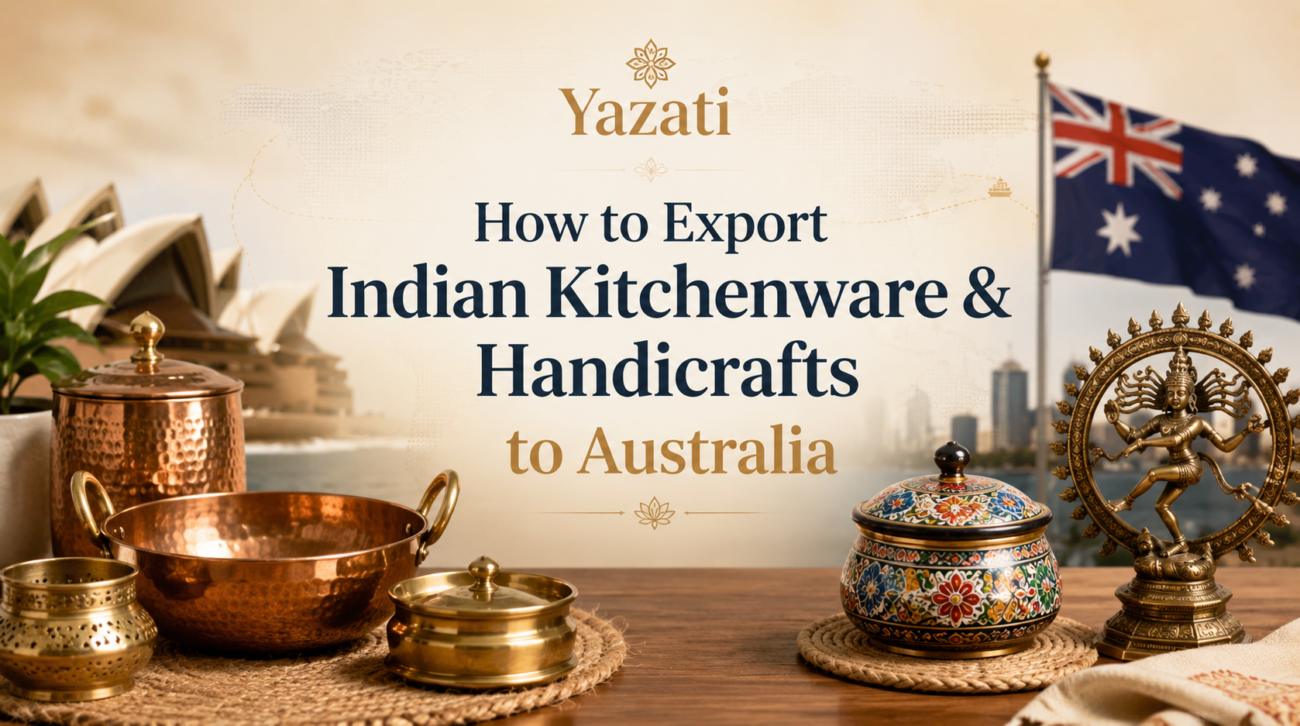
India is famous worldwide for its beautiful handicrafts, traditional cookware, brass utensils, wooden décor, copper bottles, terracotta items, and handmade products. Australia has become one of the most promising markets for Indian exporters because consumers there increasingly prefer eco-friendly, handmade, and culturally rich products.
If you want to learn How to Export Indian Kitchenware & Handicrafts to Australia, this complete guide will walk you through every important step—from business registration and product sourcing to shipping and marketing.
Why Australia Is a Great Market for Indian Products
Australia offers excellent opportunities for Indian exporters for several reasons:
- Strong purchasing power
- Growing Indian population
- High demand for handmade products
- Preference for sustainable and artisanal goods
- Expanding eCommerce market
Indian kitchenware and handicrafts fit perfectly into Australian home décor and lifestyle trends. Products such as copper bottles, spice boxes, wooden serving trays, handwoven baskets, and brass décor pieces are becoming increasingly popular.
According to the Australian trade market, handmade and eco-conscious products continue to grow rapidly among urban consumers.
External resource: Visit the official Australian trade website for regulations and trade insights:
https://www.austrade.gov.au/
Understanding Demand for Indian Kitchenware & Handicrafts
Before exporting, understanding the Australian market is essential.
Popular Kitchenware Products in Australia
Some of the highest-selling Indian kitchenware items include:
| Product | Demand Level |
|---|---|
| Copper Water Bottles | High |
| Brass Utensils | Medium-High |
| Wooden Serving Trays | High |
| Stainless Steel Tiffins | High |
| Spice Boxes | High |
| Cast Iron Cookware | Growing |
| Terracotta Kitchen Items | Medium |
Australians appreciate products that are:
- Eco-friendly
- Handmade
- Durable
- Culturally unique
Fast-Selling Indian Handicrafts
Popular handicraft categories include:
- Handmade candles
- Macrame products
- Wooden carvings
- Marble décor
- Textile wall hangings
- Handwoven rugs
- Brass figurines
- Bamboo products
Products with authentic Indian craftsmanship often command premium prices.
Research Australian Import Regulations
One of the most critical steps in learning How to Export Indian Kitchenware & Handicrafts to Australia is understanding import laws.
Australia has strict customs and quarantine regulations.
Product Safety Standards
Kitchenware products must meet food safety and material standards. Avoid using harmful chemicals or low-quality coatings.
For example:
- Food-contact items should be safe and non-toxic
- Wooden products may require treatment certification
- Packaging must comply with Australian labeling standards
Biosecurity and Quarantine Rules
Australia is extremely strict about biosecurity.
Wood, bamboo, cane, and natural-fiber products may require:
- Fumigation
- Heat treatment
- Inspection certificates
Always verify requirements before shipping.
Register Your Export Business in India
To export legally from India, you need proper registrations.
Obtain IEC Code
The Import Export Code (IEC) is mandatory.
You can apply through the official Indian DGFT portal. The process is usually quick and affordable.
Required documents:
- PAN card
- Aadhaar
- Business registration proof
- Bank account details
GST Registration for Exporters
GST registration is highly recommended for exporters.
Benefits include:
- Input tax credit
- Easier invoicing
- Better compliance
Exports are generally treated as zero-rated supplies.
RCMC Certificate Benefits
An RCMC (Registration Cum Membership Certificate) helps exporters access:
- Government incentives
- Export promotion schemes
- Trade exhibitions
Organizations like EPCH support handicraft exporters.
Choose the Right Export Business Model
Your business model affects pricing, logistics, and profits.
B2B Wholesale Export
You sell large quantities to:
- Australian wholesalers
- Retail chains
- Importers
- Gift stores
Advantages:
- Large orders
- Stable business relationships
- Lower marketing costs
B2C Online Selling
You can sell directly to Australian customers using:
- Amazon Australia
- Etsy
- eBay
- Shopify
This model offers higher margins but requires stronger branding and customer service.
Private Label Opportunities
Many Australian businesses look for Indian manufacturers to create products under their own brand names.
This can become a highly profitable long-term business model.
Find Reliable Suppliers and Artisans
If you are not manufacturing products yourself, finding trusted suppliers is crucial.
Look for:
- Consistent quality
- Timely delivery
- Export experience
- Competitive pricing
Major sourcing hubs in India include:
| Product Type | Major Cities |
|---|---|
| Brassware | Moradabad |
| Wooden Crafts | Saharanpur |
| Textiles | Jaipur |
| Marble Handicrafts | Agra |
| Bamboo Crafts | Assam |
| Copperware | Mumbai & Moradabad |
Quality Control Best Practices
Always:
- Inspect products before shipment
- Use standard measurements
- Check finishing quality
- Test packaging durability
Poor quality can damage your reputation quickly.
Product Pricing and Profit Calculation
Pricing correctly is essential for sustainable profits.
Your export pricing should include:
- Product cost
- Packaging
- Shipping
- Insurance
- Customs duties
- Platform fees
- Marketing expenses
Shipping Cost Estimation
Shipping costs depend on:
- Weight
- Volume
- Shipping method
- Destination city
Sea freight is cheaper for bulk orders, while air freight works better for smaller urgent shipments.
Currency Exchange Considerations
Monitor INR to AUD exchange rates regularly. Currency fluctuations can significantly affect profit margins.
Many exporters use forward contracts or pricing buffers for protection.
Packaging Requirements for Australia
Good packaging improves customer satisfaction and reduces product damage.
Australian buyers prefer:
- Minimal plastic use
- Recyclable materials
- Strong protective packaging
- Professional branding
Eco-Friendly Packaging Trends
Sustainable packaging is a major selling point.
Popular eco-packaging materials:
- Kraft paper
- Corrugated cardboard
- Recycled fillers
- Cloth bags
Adding “Handmade in India” labels can also increase product appeal.
Shipping Methods from India to Australia
Shipping is one of the most important parts of international trade.
Air Freight vs Sea Freight
| Feature | Air Freight | Sea Freight |
|---|---|---|
| Speed | Fast | Slow |
| Cost | Expensive | Affordable |
| Best For | Small orders | Bulk shipments |
| Delivery Time | 5–10 Days | 20–40 Days |
Best Indian Ports for Export
Common export ports include:
- Mumbai
- Chennai
- Mundra
- Nhava Sheva
- Kolkata
Choose ports based on supplier location and freight costs.
Customs Clearance Process
Customs documentation must be accurate and complete.
Important Export Documents
You typically need:
- Commercial invoice
- Packing list
- Bill of lading
- Certificate of origin
- Shipping bill
- IEC certificate
- Insurance documents
Missing paperwork can delay shipments.
Marketing Indian Products in Australia
Marketing is critical if you want long-term success.
Selling Through Amazon Australia
Amazon Australia is an excellent platform for Indian exporters.
Advantages include:
- Large customer base
- Easy fulfillment
- Strong trust factor
Optimize listings with:
- High-quality photos
- SEO keywords
- Detailed product descriptions
Using Social Media Marketing
Instagram and Pinterest work especially well for handicrafts.
Content ideas:
- Behind-the-scenes artisan videos
- Product styling
- Home décor inspiration
- Cultural storytelling
Authentic storytelling increases customer engagement.
Building Long-Term Australian Buyers
Strong relationships create repeat business.
Best practices:
- Communicate professionally
- Deliver on time
- Maintain product consistency
- Offer flexible payment options
- Share new catalog updates regularly
Trust matters enormously in international trade.
Common Challenges and Solutions
| Challenge | Solution |
|---|---|
| High shipping costs | Consolidate shipments |
| Product damage | Improve packaging |
| Customs delays | Use experienced freight forwarders |
| Finding buyers | Attend trade fairs |
| Payment risks | Use LC or secure payment gateways |
Tips to Increase Export Profits
Here are practical ways to grow faster:
- Focus on niche handmade products
- Build your own brand
- Offer eco-friendly packaging
- Use professional product photography
- Attend international exhibitions
- Create product bundles
- Offer customization services
Premium branding often matters more than low pricing in Australia.
FAQs
1. Do I need an IEC code to export from India to Australia?
Yes, an IEC code is mandatory for legal exports from India.
2. Which Indian handicrafts sell best in Australia?
Wooden décor, brassware, textiles, copper bottles, and handmade home décor items perform very well.
3. Is GST applicable on exports from India?
Exports are generally zero-rated under GST, but registration is recommended.
4. What is the cheapest shipping method to Australia?
Sea freight is usually the most affordable option for bulk shipments.
5. Can I sell Indian handicrafts directly on Amazon Australia?
Yes, many Indian exporters successfully sell products through Amazon Australia.
6. Are wooden handicrafts allowed in Australia?
Yes, but they may require fumigation or treatment certificates due to biosecurity laws.
Conclusion
Learning How to Export Indian Kitchenware & Handicrafts to Australia can open the door to a highly profitable international business. Australia’s growing demand for eco-friendly, handmade, and culturally rich products creates excellent opportunities for Indian exporters.
Success depends on:
- Proper business registration
- Product quality
- Strong packaging
- Understanding import regulations
- Smart marketing strategies
With careful planning and consistent execution, Indian entrepreneurs can build sustainable export businesses serving Australian consumers and retailers.
✨ Discover Global Sourcing Excellence with Netyex ✨
Netyex is your trusted B2B sourcing partner, connecting international buyers with India’s finest manufacturers and curated product lines—from handicrafts and home décor to kitchenware, textiles, hospitality essentials, and more. With verified suppliers and end-to-end support, we make global procurement seamless, reliable, and efficient.
👉 Elevate your sourcing experience—explore Netyex today.
📦 Bulk orders & customisation | 🌍 Worldwide delivery | 🤝 Trusted by global buyers
Visit Netyex to source premium Indian products with confidence.