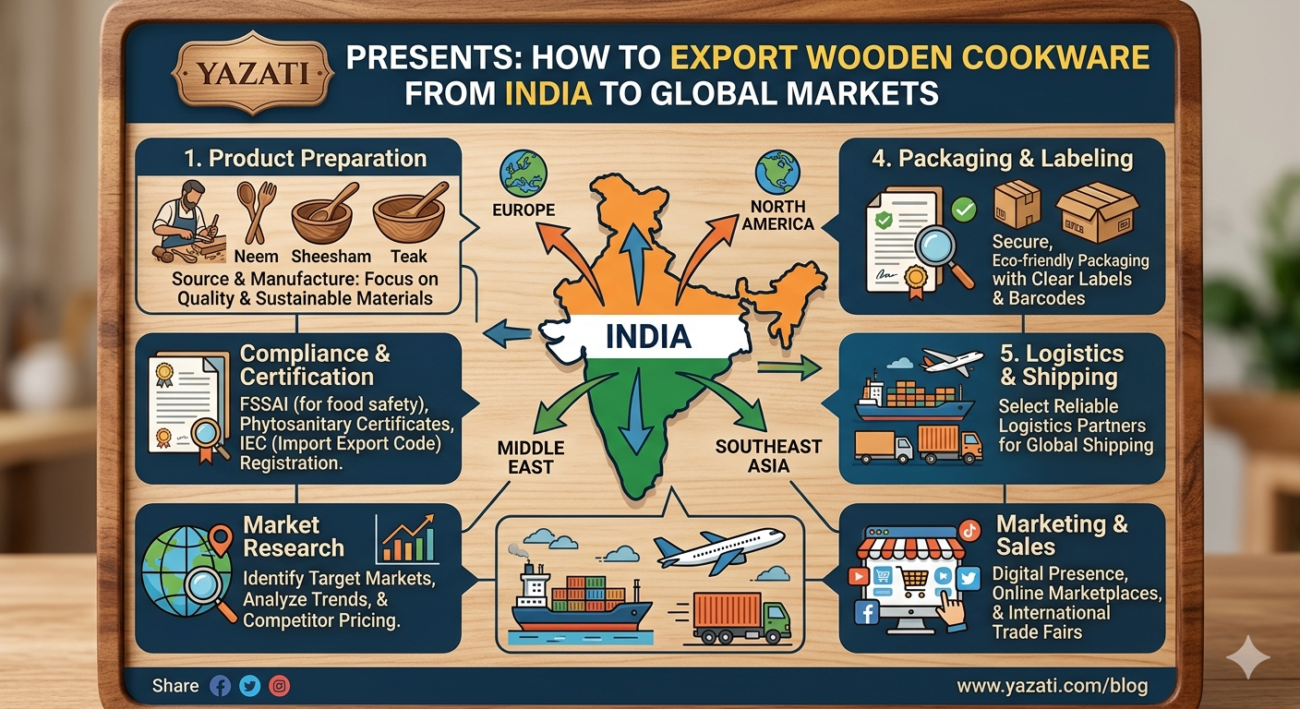
Introduction to Wooden Cookware Export Business
Wooden cookware is gaining strong popularity worldwide due to its eco-friendly nature, durability, and aesthetic appeal. If you’re wondering how to export wooden cookware from India to global markets, you’re stepping into a highly promising business niche.
India, known for its rich craftsmanship and sustainable materials, is one of the top suppliers of wooden kitchenware. With rising global demand for eco-conscious products, wooden utensils like spoons, spatulas, and bowls are becoming essential in modern kitchens.
Why Wooden Cookware is in Global Demand
Consumers today are shifting toward natural and chemical-free kitchen tools. Wooden cookware does not react with food, making it safer than plastic or metal alternatives.
Some key reasons for its demand include:
- Eco-friendly and biodegradable
- Non-toxic and food-safe
- Durable and long-lasting
- Aesthetic and handmade appeal
Market Trends and Growth Opportunities
The global kitchenware market is expanding rapidly. Countries like the USA, Germany, and Australia are major importers of wooden kitchen products. The increasing awareness of sustainability is expected to drive further growth.
Understanding Export Basics in India
Before starting your export journey, it’s essential to understand the fundamentals.
What is Exporting?
Exporting means selling goods produced in one country to buyers in another country. It involves logistics, documentation, and compliance with international standards.
Key Export Terminologies
- FOB (Free on Board)
- CIF (Cost, Insurance, Freight)
- Bill of Lading
- HS Code
Understanding these terms helps in smooth communication with buyers.
Legal Requirements for Exporting from India
To legally export wooden cookware, you must complete several registrations.
IEC Code Registration
You need an Import Export Code (IEC) issued by the Directorate General of Foreign Trade. This is mandatory for all exporters.
GST and Other Licenses
- GST Registration
- MSME Registration (optional but beneficial)
- FSSAI (if applicable for food-contact items)
Choosing the Right Wooden Cookware Products
Selecting the right product line is crucial.
Types of Wooden Kitchenware
Popular products include:
- Wooden spoons and spatulas
- Cutting boards
- Serving bowls
- Rolling pins
Quality Standards and Certifications
Ensure your products meet international standards such as:
- Food-grade certification
- FSC (Forest Stewardship Council)
- ISO standards
Sourcing and Manufacturing Wooden Cookware
Selecting Raw Materials
Use high-quality woods like:
- Teak
- Neem
- Sheesham (Indian Rosewood)
These are durable and safe for cooking.
Working with Manufacturers
You can either:
- Set up your own manufacturing unit
- Partner with local artisans and suppliers
India has strong clusters in Rajasthan and Kerala for wooden products.
Packaging and Labeling Requirements
Packaging plays a major role in exports.
Eco-Friendly Packaging
Use recyclable materials such as:
- Kraft paper
- Cardboard boxes
Avoid plastic wherever possible.
International Labeling Standards
Include:
- Product description
- Country of origin (Made in India)
- Usage instructions
- Safety warnings
Pricing Strategy for Global Markets
Cost Calculation
Include:
- Manufacturing cost
- Packaging
- Shipping
- Taxes and duties
Competitive Pricing Models
Research competitors and set prices accordingly. Offer bulk discounts to attract large buyers.
Finding International Buyers
Online B2B Platforms
Use platforms like:
- Alibaba
- IndiaMART
- Global Sources
Trade Fairs and Exhibitions
Participate in global trade shows to connect with buyers directly.
Export Documentation Process
Essential Documents
- Commercial Invoice
- Packing List
- IEC Certificate
- GST Invoice
Shipping Documents
- Bill of Lading
- Certificate of Origin
- Insurance Certificate
Shipping and Logistics
Choosing Freight Forwarders
Freight forwarders handle logistics, customs, and delivery.
Air vs Sea Shipping
| Mode | Pros | Cons |
| Air | Fast delivery | Expensive |
| Sea | Cost-effective | Slower |
Payment Methods in Export
Secure Payment Options
- Letter of Credit (LC)
- Advance Payment
- PayPal (for small orders)
Risk Management
Always verify buyers and use secure payment terms.
Export Incentives and Government Support
Schemes for Exporters
The Government of India offers:
- RoDTEP Scheme
- Export Promotion Councils
Benefits and Subsidies
These schemes reduce export costs and increase profitability.
Marketing Wooden Cookware Globally
Digital Marketing Strategies
- SEO-optimized website
- Social media marketing
- Email campaigns
Branding and Positioning
Focus on:
- Sustainability
- Handmade craftsmanship
- Premium quality
Challenges in Exporting Wooden Cookware
Common Problems
- Quality control issues
- Shipping delays
- Payment risks
Solutions and Best Practices
- Maintain strict quality checks
- Work with reliable logistics partners
- Use contracts and legal agreements
Future Scope of Wooden Cookware Export
Sustainability Trends
Eco-conscious living is here to stay. Wooden cookware fits perfectly into this trend.
Innovation Opportunities
- Designer wooden cookware
- Customized branding
- Premium gift sets
FAQs
1. Is exporting wooden cookware from India profitable?
Yes, due to high global demand and low production costs in India.
2. Do I need certification for wooden cookware export?
Yes, food safety and quality certifications are often required.
3. Which countries import wooden cookware the most?
USA, UK, Germany, and Australia are major markets.
4. What is the minimum investment required?
It can start from ₹50,000 to several lakhs depending on scale.
5. Can I export without a company?
You need at least a registered business and IEC code.
6. How long does it take to start exporting?
Typically 2–4 weeks after completing registrations.
Conclusion
Understanding how to export wooden cookware from India to global markets can unlock a highly profitable and sustainable business opportunity. With the right strategy, proper documentation, and strong marketing, you can successfully build an international brand.
By focusing on quality, eco-friendliness, and global trends, Indian exporters have a strong competitive advantage in the global wooden cookware market.
✨ Discover Global Sourcing Excellence with Netyex ✨
Netyex is your trusted B2B sourcing partner, connecting international buyers with India’s finest manufacturers and curated product lines—from handicrafts and home décor to kitchenware, textiles, hospitality essentials, and more. With verified suppliers and end-to-end support, we make global procurement seamless, reliable, and efficient.
👉 Elevate your sourcing experience—explore Netyex today.
📦 Bulk orders & customisation | 🌍 Worldwide delivery | 🤝 Trusted by global buyers
Visit Netyex to source premium Indian products with confidence.