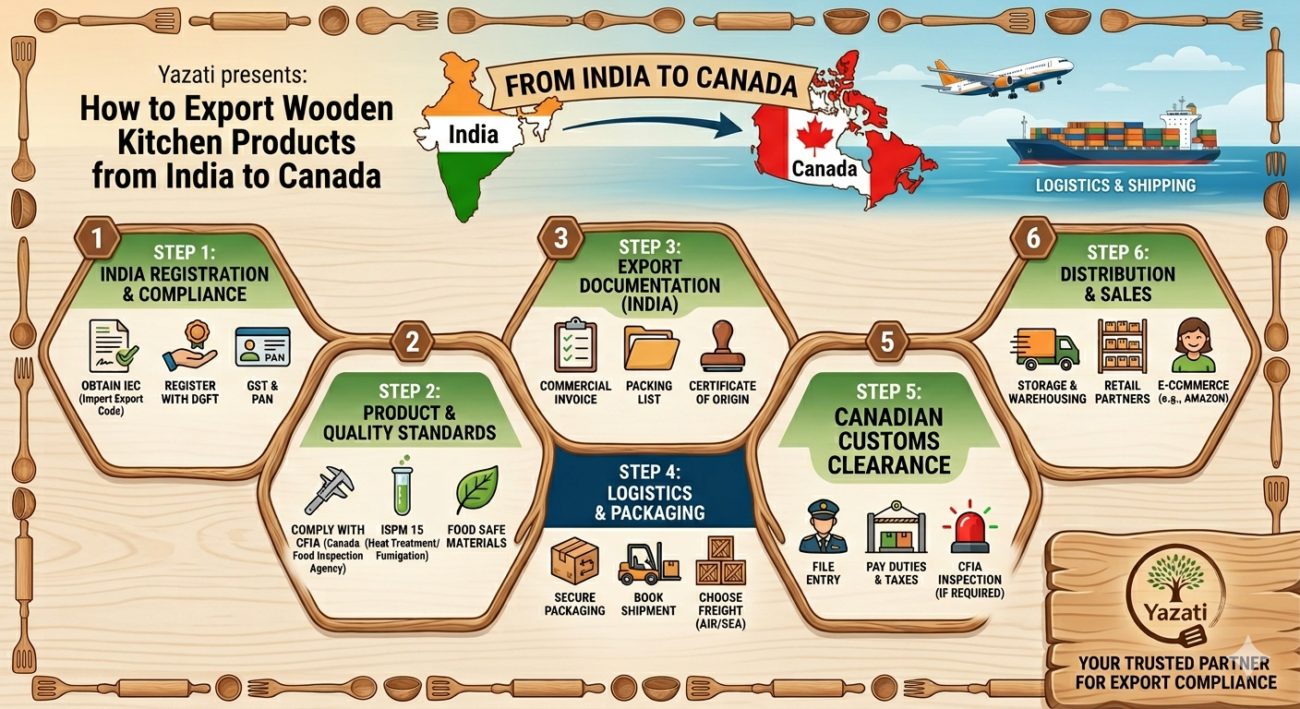
Introduction to Exporting Wooden Kitchen Products
Exporting wooden kitchen products from India to Canada is becoming an increasingly profitable business opportunity. With rising demand for eco-friendly and handcrafted goods, Indian exporters are in a strong position to tap into global markets.
Wooden kitchen items such as cutting boards, utensils, spice racks, and serving trays are especially popular due to their durability and aesthetic appeal. If you’re planning to start exporting, understanding the process thoroughly is essential for success.
Why Choose Wooden Kitchen Products for Export
Wooden kitchen products are:
- Sustainable and eco-friendly
- Durable and long-lasting
- High in demand in Western markets
- Often handcrafted, adding premium value
Market Demand in Canada
Canada has a growing preference for:
- Natural materials
- Sustainable kitchenware
- Handmade and artisanal goods
This trend creates a strong opportunity for Indian exporters.
Understanding Trade Between India and Canada
Trade relations between India and Canada are steadily improving, with both countries encouraging imports and exports.
Trade Agreements and Policies
While there is no full free trade agreement yet, negotiations like CEPA (Comprehensive Economic Partnership Agreement) are ongoing, which may further ease exports.
Import Regulations in Canada
Canada has strict import regulations, especially for wooden items, to prevent pests and diseases. Compliance is non-negotiable.
Legal Requirements for Export from India
Import Export Code (IEC)
To begin exporting, you must obtain an IEC from the Directorate General of Foreign Trade (DGFT). This is your primary license for international trade.
GST Registration and Compliance
You must register for GST and understand export-related tax benefits such as zero-rated supplies.
Product Compliance and Certifications
Phytosanitary Requirements
Wooden products must be treated to eliminate pests. Certification ensures your goods are safe for import.
ISPM-15 Standards
ISPM-15 compliance is mandatory for wood packaging materials. It includes heat treatment and proper marking.
Finding Buyers in Canada
Online Marketplaces
You can find buyers through:
- B2B platforms like Alibaba and IndiaMART
- Wholesale marketplaces
- Direct e-commerce channels
Trade Fairs and Networking
Participating in international trade fairs helps build trust and long-term partnerships.
Pricing Strategy and Cost Calculation
Cost Components
Your pricing should include:
- Raw material cost
- Labor
- Packaging
- Shipping
- Duties and taxes
Competitive Pricing Tips
- Study competitors in Canada
- Offer bulk discounts
- Focus on value, not just price
Packaging and Labeling Requirements
Eco-Friendly Packaging
Canadian consumers prefer sustainable packaging. Use recyclable or biodegradable materials whenever possible.
Labeling Rules in Canada
Labels must include:
- Product description
- Country of origin
- Material details
- Safety instructions
Shipping and Logistics
Choosing Shipping Methods
You can choose between:
- Air freight (faster, expensive)
- Sea freight (cost-effective, slower)
Freight Forwarders
Hiring a freight forwarder simplifies logistics, documentation, and customs clearance.
Documentation for Export
Commercial Invoice and Packing List
These documents include product details, pricing, and shipment contents.
Bill of Lading
This acts as proof of shipment and ownership of goods.
Payment Methods and Risk Management
Letter of Credit
A letter of credit ensures secure payment through banks.
Payment Security
Other options include:
- Advance payment
- Export credit insurance
Customs Clearance Process
Export Clearance in India
Goods must pass customs checks and be approved for export.
Import Clearance in Canada
Canadian authorities inspect shipments for compliance and safety.
Marketing Your Products in Canada
Branding and Positioning
Focus on:
- Eco-friendly messaging
- Handmade craftsmanship
- Premium quality
Digital Marketing Strategies
Use:
- Social media marketing
- SEO optimization
- Online ads targeting Canadian audiences
Challenges and How to Overcome Them
Logistics Delays
Solution: Work with reliable shipping partners and plan ahead.
Regulatory Issues
Solution: Stay updated with Canadian import laws and certifications.
Future Opportunities in Wooden Kitchen Exports
The demand for sustainable kitchenware is expected to grow significantly. Exporters who focus on quality, compliance, and branding will benefit the most.
FAQs
1. Is exporting wooden kitchen products from India to Canada profitable?
Yes, due to high demand for eco-friendly and handcrafted products.
2. What certifications are required?
Phytosanitary certificate and ISPM-15 compliance are essential.
3. How long does shipping take?
Sea freight takes 25–40 days; air freight takes 5–10 days.
4. What is the best way to find buyers in Canada?
Online B2B platforms and trade fairs are effective.
5. Do I need a license to export from India?
Yes, an Import Export Code (IEC) is mandatory.
6. What are the common challenges?
Regulations, logistics delays, and pricing competition.
Conclusion
Exporting wooden kitchen products from India to Canada is a rewarding venture if approached strategically. By understanding regulations, maintaining quality standards, and building strong buyer relationships, you can establish a successful export business.
Stay compliant, focus on sustainability, and keep adapting to market trends—success will follow.
✨ Discover Global Sourcing Excellence with Netyex ✨
Netyex is your trusted B2B sourcing partner, connecting international buyers with India’s finest manufacturers and curated product lines—from handicrafts and home décor to kitchenware, textiles, hospitality essentials, and more. With verified suppliers and end-to-end support, we make global procurement seamless, reliable, and efficient.
👉 Elevate your sourcing experience—explore Netyex today.
📦 Bulk orders & customisation | 🌍 Worldwide delivery | 🤝 Trusted by global buyers
Visit Netyex to source premium Indian products with confidence.