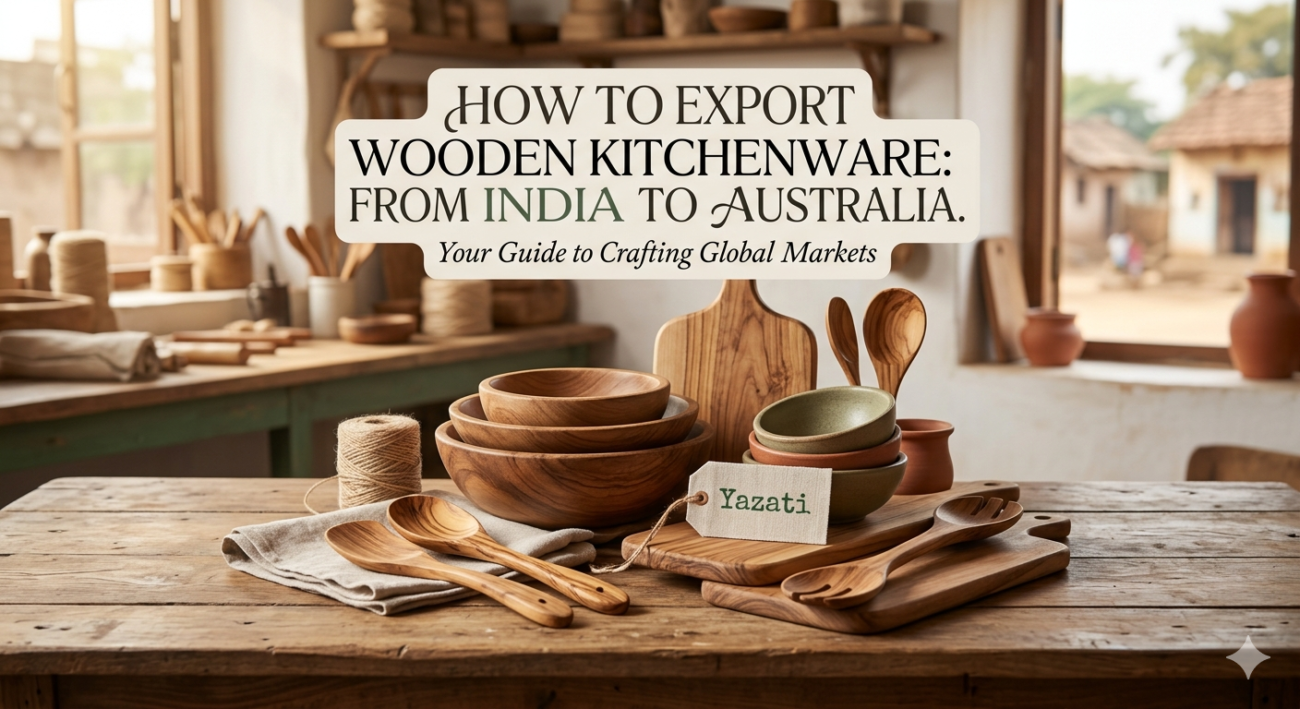
Introduction to Wooden Kitchenware Export Business
The global demand for eco-friendly and sustainable products is growing rapidly, and wooden kitchenware is at the center of this trend. If you’re exploring how to export wooden kitchenware from India to Australia, you’re stepping into a profitable and future-ready business opportunity.
India is one of the largest producers of handcrafted wooden goods, while Australia has a strong consumer base that prefers sustainable, non-toxic kitchen products. This combination creates a perfect export opportunity.
Why Wooden Kitchenware is in Demand in Australia
Australians are increasingly shifting toward environmentally friendly lifestyles. Products like wooden spoons, chopping boards, and bowls are preferred over plastic due to their durability and sustainability.
Key reasons for high demand:
- Eco-conscious consumers
- Preference for natural materials
- Rising trend of aesthetic kitchens
- Demand for handmade and artisanal goods
Market Trends and Consumer Preferences
Modern Australian consumers favor:
- Minimalist designs
- Organic finishes (no harmful chemicals)
- FSC-certified wood products
- Unique handcrafted items
Understanding these preferences is essential when learning how to export wooden kitchenware from India to Australia effectively.
Understanding Export Regulations in India
Before exporting, you must comply with Indian export laws and procedures.
Export License and IEC Code
To begin exporting:
- Obtain an Import Export Code (IEC) from the Directorate General of Foreign Trade
- Register your business legally (GST registration required)
Without an IEC, exporting goods from India is not permitted.
Role of DGFT and Export Promotion Councils
Organizations like:
- Export Promotion Council for Handicrafts
help exporters by providing guidance, training, and market access.
Australian Import Regulations for Wooden Products
Australia has strict biosecurity laws to protect its ecosystem.
Biosecurity Laws and Quarantine Rules
The Australian Department of Agriculture, Fisheries and Forestry enforces strict rules.
All wooden products must:
- Be free from pests
- Be properly treated (heat-treated or fumigated)
- Pass quarantine inspections
ISPM-15 Compliance Requirements
ISPM-15 is an international standard for wood packaging materials.
You must ensure:
- Heat treatment certification
- Proper marking on packaging
- Documentation compliance
Failure to comply can result in shipment rejection.
Product Selection and Quality Standards
Choosing the right products is key to success.
Types of Wooden Kitchenware in Demand
Popular products include:
- Wooden spoons and spatulas
- Cutting boards
- Salad bowls
- Rolling pins
Hardwoods like teak, neem, and acacia are highly preferred.
Certification and Sustainability Standards
Certifications improve trust:
- FSC (Forest Stewardship Council)
- Food-safe coatings
- Non-toxic finishes
These certifications can significantly boost your export credibility.
Pricing Strategy and Cost Calculation
Pricing determines profitability.
FOB vs CIF Pricing Explained
- FOB (Free on Board): Buyer handles shipping
- CIF (Cost, Insurance, Freight): Seller handles shipping
Beginners often start with FOB to reduce complexity.
Hidden Costs in Exporting
Be aware of:
- Customs duties
- Packaging costs
- Freight charges
- Documentation fees
Ignoring these can reduce your profit margins.
Finding Buyers in Australia
Connecting with the right buyers is crucial.
Online B2B Platforms
Use platforms like:
- Alibaba
- IndiaMART
These platforms help you connect with international buyers.
Trade Fairs and Networking
Participate in trade fairs to:
- Showcase products
- Build trust
- Secure bulk orders
Packaging and Labeling Requirements
Proper packaging ensures product safety and compliance.
Eco-Friendly Packaging Trends
Use:
- Recyclable materials
- Minimal plastic
- Kraft paper packaging
This aligns with Australian consumer values.
Labeling Laws in Australia
Labels must include:
- Country of origin
- Material used
- Care instructions
Incorrect labeling can lead to penalties.
Shipping and Logistics
Efficient logistics ensures timely delivery.
Choosing Freight Forwarders
Work with experienced logistics providers to:
- Handle customs clearance
- Manage shipping documentation
- Reduce delays
Transit Time and Shipping Methods
- Sea freight: Cost-effective (20–30 days)
- Air freight: Faster but expensive
Choose based on urgency and budget.
Documentation Required for Export
Proper documentation is essential.
Invoice, Packing List, Bill of Lading
These documents include:
- Product details
- Quantity and value
- Shipping information
Certificate of Origin
Issued by export authorities, this confirms goods are made in India.
Payment Methods and Risk Management
Secure payments are critical in export business.
Letter of Credit vs Advance Payment
- Letter of Credit (LC): Safer for large transactions
- Advance payment: Better for small orders
Currency and Exchange Risk
Fluctuating exchange rates can impact profits.
Use forward contracts to minimize risks.
Marketing and Branding Strategy
Strong branding helps you stand out.
Building a Brand Identity
Focus on:
- Eco-friendly positioning
- Premium packaging
- Storytelling (handcrafted origin)
Digital Marketing for Exporters
Leverage:
- Social media marketing
- SEO optimization
- Product catalogs
Challenges and How to Overcome Them
Every export business faces challenges.
Customs Delays
Solution:
- Ensure accurate documentation
- Work with experienced agents
Quality Rejections
Solution:
- Maintain strict quality checks
- Use certified materials
Government Incentives and Support
The Indian government supports exporters.
Export Subsidies
Schemes like RoDTEP provide tax benefits.
MSME Benefits
Small businesses get:
- Financial support
- Training programs
- Export assistance
Future Opportunities in Wooden Kitchenware Export
The future looks promising due to:
- Rising eco-awareness
- Increasing demand for handmade goods
- Growth in online marketplaces
Learning how to export wooden kitchenware from India to Australia today can position you ahead in a rapidly expanding market.
FAQs
1. Is exporting wooden kitchenware from India profitable?
Yes, due to high demand in eco-conscious markets like Australia.
2. Do I need special certification for wooden products?
Yes, ISPM-15 and food safety certifications are often required.
3. What is the minimum investment required?
It depends, but small-scale exporters can start with ₹50,000–₹2,00,000.
4. How long does shipping take to Australia?
Sea freight takes 20–30 days; air freight is faster but costly.
5. What wood is best for export?
Teak, neem, and acacia are highly preferred.
6. Can small businesses export wooden kitchenware?
Absolutely! Many MSMEs successfully export globally.
Conclusion
Exporting wooden kitchenware from India to Australia is a lucrative opportunity driven by sustainability trends and growing international demand. By understanding regulations, maintaining quality standards, and building strong buyer relationships, you can establish a successful export business.
Take the first step today, and you could soon be part of a thriving global trade network.
✨ Discover Global Sourcing Excellence with Netyex ✨
Netyex is your trusted B2B sourcing partner, connecting international buyers with India’s finest manufacturers and curated product lines—from handicrafts and home décor to kitchenware, textiles, hospitality essentials, and more. With verified suppliers and end-to-end support, we make global procurement seamless, reliable, and efficient.
👉 Elevate your sourcing experience—explore Netyex today.
📦 Bulk orders & customisation | 🌍 Worldwide delivery | 🤝 Trusted by global buyers
Visit Netyex to source premium Indian products with confidence.