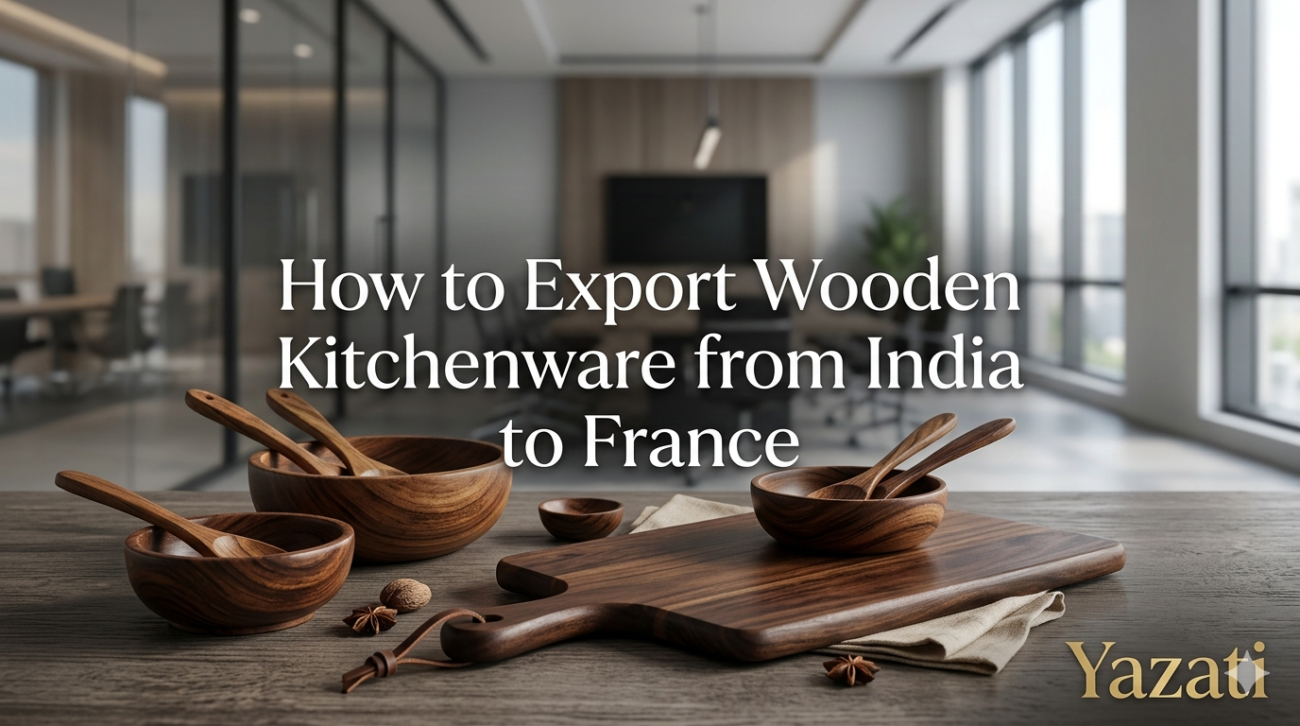
Exporting wooden kitchenware from India to France can be a highly profitable business opportunity. France has a growing demand for sustainable, eco-friendly, and handcrafted kitchen products. Indian manufacturers are well-positioned to meet this demand because of their expertise in woodworking, competitive pricing, and access to quality raw materials.
Whether you manufacture wooden spoons, chopping boards, serving trays, salad bowls, rolling pins, or spatulas, understanding the export process is essential for success. This guide explains everything you need to know about how to export wooden kitchenware from India to France.
Understanding the Market Opportunity in France
France is one of Europe’s largest importers of home décor and kitchen accessories. Consumers increasingly prefer environmentally friendly products made from natural materials.
The demand for wooden kitchenware continues to grow because consumers are moving away from plastic products and embracing sustainable alternatives.
Market Advantages
- Growing eco-conscious consumer base
- High demand for handmade products
- Preference for sustainable materials
- Strong eCommerce market
- Premium pricing opportunities
Why French Buyers Prefer Indian Wooden Kitchenware
Indian wooden kitchenware stands out because of its craftsmanship and affordability.
Popular Wooden Kitchenware Products
French importers commonly source:
- Wooden spoons
- Chopping boards
- Serving platters
- Salad bowls
- Spice boxes
- Rolling pins
- Wooden ladles
- Coasters
- Kitchen organizers
Consumer Trends in France
French consumers value:
- Sustainable sourcing
- Handmade craftsmanship
- Natural finishes
- Non-toxic products
- Ethical production
Products that combine functionality with aesthetics generally achieve better market acceptance.
Research French Import Regulations
Before exporting, thoroughly understand French and European Union regulations.
EU Product Safety Standards
Your products must comply with European safety standards. Wooden kitchenware that comes into contact with food must be safe for consumer use.
Important considerations include:
- No harmful chemicals
- Food-safe coatings
- Proper finishing
- Traceable production processes
Food Contact Material Requirements
Kitchenware touching food must meet EU food-contact regulations.
Manufacturers should ensure:
- Safe varnishes and oils
- Heavy-metal-free coatings
- Hygienic manufacturing practices
- Product testing where applicable
Register Your Export Business in India
A legally compliant business structure is essential.
Obtain IEC Code
The Import Export Code (IEC) issued by the Directorate General of Foreign Trade is mandatory for exports from India.
Without an IEC, export transactions cannot be processed.
GST Registration
GST registration is generally required for export businesses.
Benefits include:
- Export under LUT
- GST refunds
- Better compliance
- Increased buyer confidence
Choose the Right Wood and Materials
Material selection significantly impacts market acceptance.
Common export-grade woods include:
- Acacia wood
- Mango wood
- Neem wood
- Teak wood
- Rubberwood
- Sheesham wood
Sustainable Sourcing
French and European buyers increasingly prefer sustainably sourced wood.
Maintain records showing:
- Source of timber
- Supplier details
- Sustainability practices
FSC Certification Benefits
Obtaining certification from the Forest Stewardship Council can improve buyer confidence.
Benefits include:
- Easier market access
- Premium pricing
- Sustainability credentials
- Enhanced brand image
Product Quality Standards and Compliance
Quality consistency is critical.
Quality Testing
Conduct inspections for:
- Moisture content
- Smooth finishing
- Food safety
- Durability
- Dimensional accuracy
Product Labeling Requirements
Labels should include:
- Product name
- Country of origin
- Material details
- Importer information
- Care instructions
Proper labeling reduces customs delays.
Essential Export Documentation
Documentation errors can cause shipment delays.
Commercial Invoice
Include:
- Buyer details
- Product description
- Quantity
- Price
- Incoterms
Packing List
A packing list should specify:
- Carton count
- Dimensions
- Weight
- Packaging details
Certificate of Origin
A Certificate of Origin verifies that goods were manufactured in India.
This document may help buyers claim preferential tariff treatment where applicable.
Finding Buyers in France
Buyer acquisition is often the most challenging aspect of exporting.
B2B Marketplaces
Useful platforms include:
- Alibaba Group
- Global Sources
- Europages
Create detailed product catalogs with professional photographs.
Trade Fairs and Exhibitions
Participating in trade fairs helps establish credibility and generate leads.
Relevant European events include:
- Maison & Objet
- Ambiente
- International home and lifestyle exhibitions
Face-to-face meetings often result in long-term business relationships.
Pricing and Cost Calculation
A detailed pricing strategy is essential.
FOB vs CIF Pricing
| Pricing Method | Description |
|---|---|
| FOB | Buyer pays freight and insurance |
| CIF | Seller includes freight and insurance |
Many first-time exporters begin with FOB quotations.
Export Profit Margins
Include:
- Manufacturing cost
- Packaging cost
- Inland transportation
- Documentation charges
- Freight costs
- Insurance
- Commission fees
A comprehensive costing model prevents unexpected losses.
Packaging and Shipping Requirements
Proper packaging protects products during international transit.
Eco-Friendly Packaging
French buyers increasingly prefer:
- Recyclable cartons
- Paper fillers
- Plastic-free packaging
- Sustainable branding
Container Shipping
Depending on shipment volume:
- LCL (Less than Container Load)
- FCL (Full Container Load)
Sea freight is generally the most economical option for wooden kitchenware exports.
Customs Clearance Procedures
Indian Export Customs
Typical steps include:
- Filing shipping bill
- Customs assessment
- Cargo examination
- Let Export Order (LEO)
- Shipment dispatch
French Import Customs
The importer typically handles:
- Customs declaration
- VAT payment
- Import duties
- Product compliance verification
Ensure documentation matches shipment details precisely.
Payment Methods and Risk Management
Export payment security should never be overlooked.
Letters of Credit
Advantages include:
- Reduced payment risk
- Bank-backed assurance
- Greater transaction security
Advance Payments
For new buyers, consider:
- 30% advance
- Balance before shipment
As trust develops, payment terms can be adjusted.
Marketing Your Wooden Kitchenware Brand
A strong brand can significantly increase export sales.
Digital Marketing Strategies
Focus on:
- Professional website
- Product catalog PDFs
- SEO optimization
- LinkedIn outreach
- Email marketing
Consider publishing sustainability stories and craftsmanship content.
Building Long-Term Buyer Relationships
Maintain relationships through:
- Consistent quality
- Timely communication
- Reliable deliveries
- Product innovation
Long-term buyers often provide recurring orders and referrals.
Common Challenges and Solutions
| Challenge | Solution |
|---|---|
| Finding buyers | Use trade fairs and B2B portals |
| Compliance issues | Follow EU standards |
| Payment risk | Use LC or advance payment |
| Logistics delays | Partner with experienced freight forwarders |
| Quality complaints | Implement strict quality control |
FAQs
1. Do I need an IEC to export wooden kitchenware from India to France?
Yes. An IEC is mandatory for conducting export transactions from India.
2. Is FSC certification compulsory?
No. However, many European buyers strongly prefer FSC-certified products.
3. Can I export handmade wooden kitchenware to France?
Yes. Handmade products are often highly valued in the French market.
4. Which shipping method is best?
Sea freight is usually the most cost-effective for bulk shipments.
5. Do wooden kitchen products require special certification?
Products intended for food contact must comply with EU food safety requirements.
6. How can I find French importers?
Use B2B platforms, trade fairs, industry directories, and direct outreach campaigns.
Conclusion
Learning How to Export Wooden Kitchenware from India to France involves more than simply shipping products overseas. Success requires understanding French market preferences, complying with EU regulations, maintaining high-quality standards, preparing accurate documentation, and building strong buyer relationships.
Indian exporters have a significant competitive advantage due to craftsmanship, sustainable material availability, and cost-effective production. By focusing on quality, compliance, sustainability, and effective marketing, exporters can establish a profitable and long-lasting presence in the French market.
For additional guidance on EU trade requirements, consult the official European Union trade portal and work with experienced customs brokers and freight forwarders to streamline the export process.
✨ Discover Global Sourcing Excellence with Netyex ✨
Netyex is your trusted B2B sourcing partner, connecting international buyers with India’s finest manufacturers and curated product lines—from handicrafts and home décor to kitchenware, textiles, hospitality essentials, and more. With verified suppliers and end-to-end support, we make global procurement seamless, reliable, and efficient.
👉 Elevate your sourcing experience—explore Netyex today.
📦 Bulk orders & customisation | 🌍 Worldwide delivery | 🤝 Trusted by global buyers
Visit Netyex to source premium Indian products with confidence.