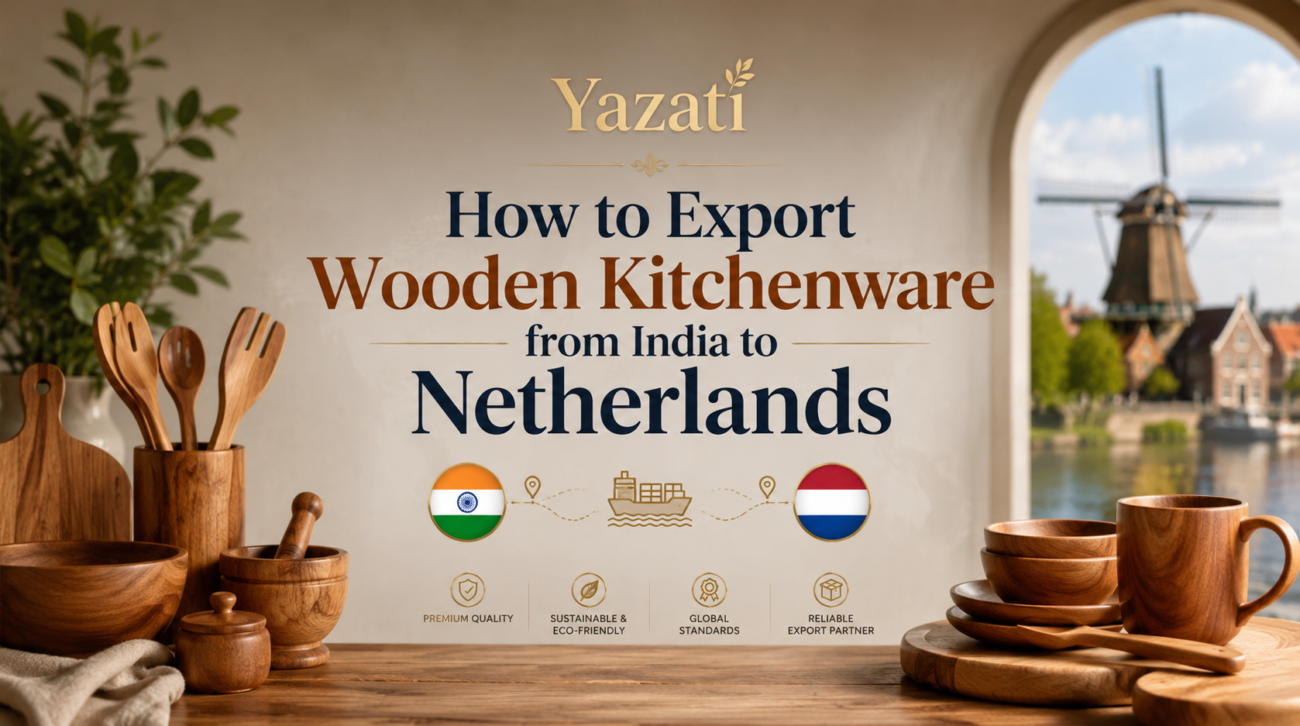
Exporting wooden kitchenware from India to the Netherlands is becoming a profitable business opportunity. European consumers are increasingly choosing eco-friendly and handmade kitchen products over plastic alternatives. India, known for its skilled artisans and quality wooden handicrafts, has a strong advantage in this market.
If you want to learn How to Export Wooden Kitchenware from India to Netherlands, this detailed guide will help you understand every important step. From legal registrations to finding buyers and handling shipping, this article covers everything in simple language.
Understanding the Wooden Kitchenware Export Market
The Netherlands acts as a major European trading hub. Many imported products entering Dutch ports are distributed across Europe. This creates excellent opportunities for Indian exporters.
Why the Netherlands Imports Wooden Kitchenware
Dutch consumers prefer sustainable and environmentally friendly kitchen products. Wooden kitchenware fits perfectly into this trend because it is:
- Biodegradable
- Reusable
- Stylish
- Natural-looking
- Durable
The rise of eco-conscious living has increased demand for wooden products such as spatulas, chopping boards, serving bowls, and salad spoons.
Popular Wooden Kitchenware Products in Europe
Some of the most demanded products include:
| Product | Demand Level |
|---|---|
| Wooden spatulas | High |
| Chopping boards | Very High |
| Serving trays | Medium |
| Wooden bowls | High |
| Salad servers | High |
| Coasters | Medium |
Wood types like teak, mango wood, acacia wood, neem wood, and sheesham are especially popular.
Benefits of Exporting Wooden Kitchenware from India
India has several natural advantages in this industry.
India’s Strength in Wooden Handicrafts
Indian manufacturers already have global recognition for handcrafted wooden products. States like Rajasthan, Uttar Pradesh, Gujarat, and Kerala have experienced artisans producing export-quality goods.
Key advantages include:
- Competitive labor costs
- Large availability of raw materials
- Traditional craftsmanship
- Strong export ecosystem
Growing Demand for Eco-Friendly Products
European countries are reducing plastic usage rapidly. This creates a strong market for wooden alternatives.
Consumers are now searching for:
- Sustainable kitchenware
- Handmade products
- Organic home decor
- Chemical-free utensils
This trend directly benefits Indian exporters.
Research the Netherlands Market Before Exporting
Proper market research helps reduce business risks.
Consumer Preferences in Dutch Markets
Dutch buyers usually prefer:
- Minimalist designs
- Light natural wood colors
- Food-safe finishes
- Sustainable packaging
- Premium-quality craftsmanship
Avoid overly decorative designs unless specifically requested.
Trending Sustainable Kitchen Products
Current trends include:
- Zero-waste kitchen accessories
- Organic cooking utensils
- FSC-certified wooden products
- Multipurpose serving boards
Research websites like:
- Etsy
- Amazon Netherlands
- Bol.com
- Faire Marketplace
You can also study competitors already selling in Europe.
Choose the Right Wooden Kitchenware Products
Selecting the correct products is crucial.
Wooden Spoons and Spatulas
These are easy to manufacture and highly demanded. They are also lightweight, reducing shipping costs.
Chopping Boards and Bowls
Premium chopping boards with natural finishes are very popular in European homes.
Important features:
- Smooth finishing
- Water resistance
- Crack resistance
- Food-safe polish
Serving Trays and Utensils
Luxury restaurants and cafes in Europe often buy handcrafted serving trays in bulk.
Legal Requirements for Export from India
Before exporting, your business must complete several registrations.
Obtain IEC Code
You need an Import Export Code (IEC) from the Directorate General of Foreign Trade.
Without IEC, international trade is not possible.
Apply online through the official DGFT portal.
GST Registration
GST registration is mandatory for export businesses in India.
Benefits include:
- Tax refunds
- Input tax credits
- Easier compliance
RCMC Certificate
An RCMC (Registration Cum Membership Certificate) from the Export Promotion Council for Handicrafts may help access export incentives.
Certifications Required for Netherlands Imports
European buyers often demand certifications.
Phytosanitary Standards
Wood products must meet pest-control regulations. Some untreated wood may require phytosanitary certification.
This ensures:
- No insect infestation
- Safe wood treatment
- Compliance with EU import standards
FSC Certification
The Forest Stewardship Council certification proves wood comes from responsibly managed forests.
Many European retailers prefer FSC-certified suppliers.
Food-Safe Coating Compliance
Any polish or coating used on kitchenware must comply with EU food-contact safety rules.
Avoid harmful chemicals or toxic paints.
Product Quality and Safety Standards
High quality is essential for long-term success.
Moisture Content Standards
Wood should be properly seasoned before manufacturing.
Ideal moisture content:
- Around 8–12%
Excess moisture may cause:
- Cracks
- Warping
- Mold growth
European Union Product Compliance
Products entering Europe must meet safety regulations regarding:
- Chemical usage
- Wood treatment
- Consumer safety
- Packaging waste
Learn more from the official EU trade portal:
https://trade.ec.europa.eu/
Packaging Requirements for Wooden Kitchenware
Good packaging protects products and improves branding.
Eco-Friendly Packaging
European customers appreciate recyclable packaging materials.
Recommended options:
- Kraft paper boxes
- Corrugated cartons
- Recycled wrapping paper
Avoid excessive plastic packaging.
Labeling Rules for EU Markets
Labels should mention:
- Country of origin
- Material type
- Food-safe indication
- Care instructions
Example:
“Made in India – Food Safe Acacia Wood”
Finding Buyers in the Netherlands
Finding reliable buyers is one of the most important steps.
B2B Marketplaces
Popular B2B platforms include:
- Alibaba
- IndiaMART
- Global Sources
- Faire
- Tradekey
Trade Fairs and Exhibitions
Attend international fairs such as:
- Ambiente Frankfurt
- Maison & Objet Paris
- Trade fairs in Amsterdam
Networking helps build long-term business relationships.
Pricing Strategy for Export Business
Pricing must cover all costs while remaining competitive.
FOB vs CIF Pricing
| Pricing Type | Meaning |
|---|---|
| FOB | Buyer pays shipping |
| CIF | Seller pays shipping and insurance |
Most beginners start with FOB pricing.
Profit Margin Planning
Include costs such as:
- Raw materials
- Labor
- Packaging
- Inland transport
- Freight charges
- Customs documentation
Avoid underpricing your products.
Shipping and Logistics Process
Efficient logistics are essential.
Sea Freight vs Air Freight
| Shipping Type | Best For |
|---|---|
| Sea Freight | Bulk shipments |
| Air Freight | Urgent small orders |
Sea freight is more economical for wooden kitchenware exports.
Freight Forwarders and CHA
Work with experienced:
- Freight forwarders
- Customs House Agents (CHA)
They help manage:
- Documentation
- Port handling
- Customs clearance
Customs Clearance in Netherlands
Understanding import procedures reduces delays.
Import Duties and VAT
The Netherlands may apply:
- Import duties
- VAT on imported goods
The exact rate depends on product classification codes.
Required Shipping Documents
Common documents include:
- Commercial invoice
- Packing list
- Bill of lading
- Certificate of origin
- Phytosanitary certificate (if needed)
Marketing Wooden Kitchenware in Europe
Strong branding increases sales opportunities.
Branding and Storytelling
European buyers love authentic stories.
Highlight:
- Handmade craftsmanship
- Sustainable sourcing
- Indian artisan heritage
Digital Marketing Strategies
Use:
- B2B email outreach
Professional product photography is extremely important.
Common Challenges in Exporting
Every export business faces some difficulties.
Delayed Shipments
Port congestion and customs inspections may delay deliveries.
Always maintain buffer timelines.
Product Damage Risks
Wood products can crack during transit if poorly packed.
Use:
- Bubble wrap
- Moisture protection
- Strong export cartons
Tips to Build a Long-Term Export Business
Consistency creates long-term success.
Maintain Buyer Relationships
Respond quickly to:
- Emails
- Product inquiries
- Complaints
Reliable communication builds trust.
Focus on Sustainable Manufacturing
Sustainability is no longer optional in Europe.
Use:
- Ethical sourcing
- Eco-friendly packaging
- Waste reduction methods
FAQs
1. Is IEC mandatory for exporting wooden kitchenware from India?
Yes, an IEC code is mandatory for all export businesses in India.
2. Which wood is best for exporting kitchenware to Europe?
Acacia, teak, mango wood, and sheesham are commonly preferred.
3. Do wooden kitchenware products need FSC certification?
It is not always mandatory, but many European buyers strongly prefer it.
4. What is the cheapest shipping method to Netherlands?
Sea freight is usually the most cost-effective option for bulk orders.
5. Can small businesses export wooden kitchenware from India?
Yes, many small manufacturers successfully export through online B2B platforms.
6. Are food-safe coatings required for kitchenware exports?
Yes, coatings must comply with EU food-contact safety standards.
Conclusion
Learning How to Export Wooden Kitchenware from India to Netherlands can open the door to a profitable international business. The growing European demand for sustainable and handmade kitchen products creates excellent opportunities for Indian exporters.
Success depends on:
- Product quality
- Proper certifications
- Strong packaging
- Reliable logistics
- Smart marketing
If you focus on sustainability, consistency, and buyer trust, your wooden kitchenware export business can grow steadily in the Netherlands and across Europe.
✨ Discover Global Sourcing Excellence with Netyex ✨
Netyex is your trusted B2B sourcing partner, connecting international buyers with India’s finest manufacturers and curated product lines—from handicrafts and home décor to kitchenware, textiles, hospitality essentials, and more. With verified suppliers and end-to-end support, we make global procurement seamless, reliable, and efficient.
👉 Elevate your sourcing experience—explore Netyex today.
📦 Bulk orders & customisation | 🌍 Worldwide delivery | 🤝 Trusted by global buyers
Visit Netyex to source premium Indian products with confidence.