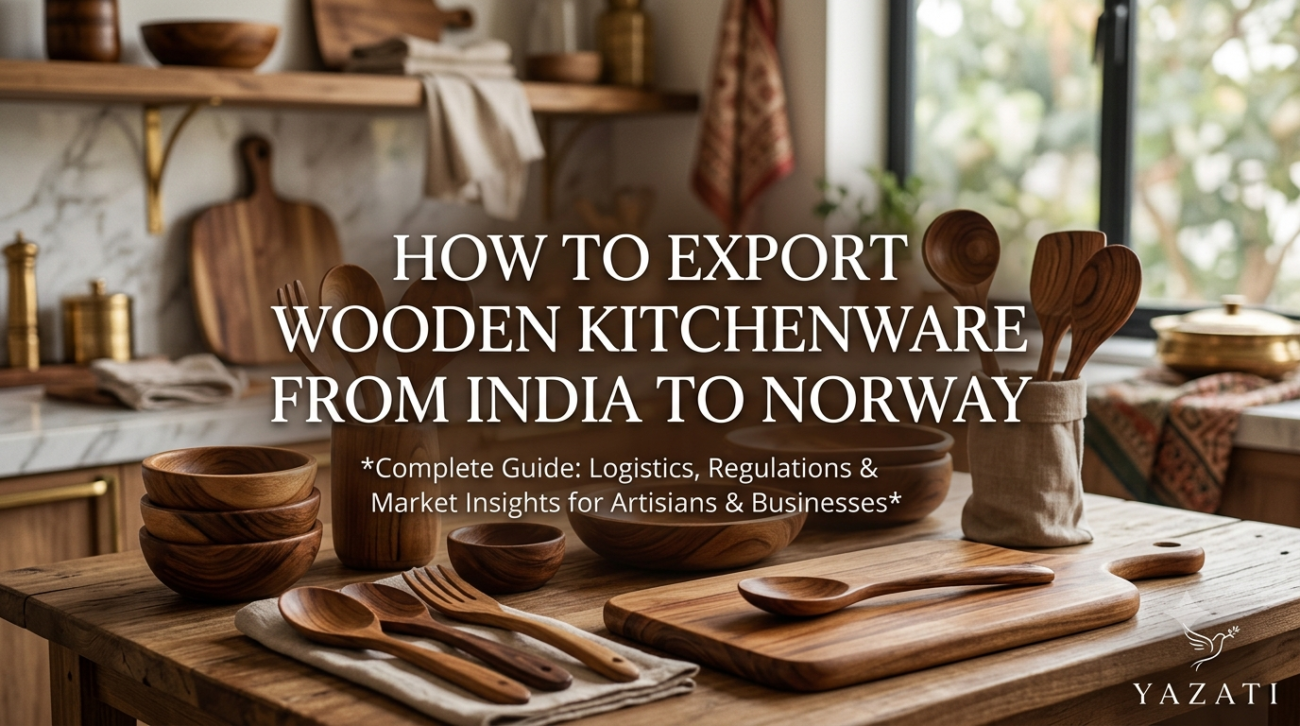
Wooden kitchenware has become one of the fastest-growing eco-friendly product categories worldwide. As consumers increasingly prefer sustainable alternatives to plastic, Indian manufacturers have a significant opportunity to expand into international markets. Among the most promising destinations is Norway, where environmentally conscious consumers value handcrafted, biodegradable, and ethically sourced products.
If you’re wondering How to Export Wooden Kitchenware from India to Norway, this comprehensive guide explains every stage of the export process—from selecting products and obtaining certifications to finding buyers, managing logistics, and complying with Norwegian import regulations.
Why Export Wooden Kitchenware to Norway?
Norway is one of Europe’s wealthiest countries with consumers who prioritize sustainability, premium quality, and ethical sourcing. Wooden kitchenware fits perfectly into these buying preferences because it is reusable, biodegradable, and aesthetically appealing.
Several factors make Norway an attractive export destination:
- High purchasing power
- Strong demand for eco-friendly household products
- Growing preference for handmade products
- Low competition compared to larger European markets
- Stable import policies
Indian exporters can leverage their craftsmanship, competitive pricing, and abundant timber resources to establish long-term relationships with Norwegian importers.
Growing Demand for Wooden Kitchenware
Over the past decade, demand for wooden kitchen utensils has increased significantly due to environmental concerns. Plastic bans across Europe have encouraged consumers to adopt sustainable alternatives.
Popular products include:
- Wooden spoons
- Chopping boards
- Salad bowls
- Rolling pins
- Serving trays
- Spatulas
- Ladles
- Mortar and pestles
- Coasters
- Wooden plates
- Kitchen organizers
Indian hardwoods such as neem, mango wood, acacia, teak, and sheesham are highly appreciated for their durability and attractive grain patterns.
Advantages of Exporting from India
India is one of the world’s leading manufacturers of handcrafted wooden products.
Major advantages include:
Competitive Manufacturing Costs
Indian labor costs remain lower than many competing countries, allowing exporters to offer attractive pricing.
Skilled Craftsmanship
Indian artisans possess generations of woodworking expertise that adds unique value to handmade kitchenware.
Sustainable Raw Materials
Many manufacturers now use responsibly sourced timber and plantation-grown wood, aligning with European sustainability expectations.
Government Support
Indian exporters benefit from export promotion schemes, trade fairs, and assistance through the Directorate General of Foreign Trade (DGFT), Export Promotion Councils, and export incentive programs.
Step 1: Register Your Export Business
Before exporting, establish your business legally.
Required Registrations
- Business Registration
- GST Registration
- Import Export Code (IEC)
- Current Bank Account
- Digital Signature (if required)
The Import Export Code (IEC) issued by the Directorate General of Foreign Trade is mandatory for almost every export shipment from India.
Step 2: Understand Norwegian Import Requirements
Norway is not a member of the European Union but participates in the European Economic Area (EEA), meaning many EU product standards apply.
Exporters should ensure:
- Product safety
- Proper labeling
- Sustainable sourcing
- Accurate customs declarations
- Compliance with phytosanitary requirements where applicable
Products manufactured from untreated natural wood may require additional inspections depending on the type of wood and processing method.
Step 3: Select High-Demand Products
Not every product sells equally well.
Best-selling wooden kitchenware includes:
| Product | Demand |
|---|---|
| Wooden Spoon | High |
| Chopping Board | Very High |
| Serving Tray | High |
| Salad Bowl | High |
| Rolling Pin | Medium |
| Spatula | High |
| Wooden Plate | Medium |
| Coasters | High |
| Mortar & Pestle | Medium |
| Kitchen Storage Box | Growing |
Focus on premium finishing, food-safe coatings, and modern Scandinavian-inspired designs to appeal to Norwegian buyers.
Step 4: Ensure Product Quality
Quality is one of the most important factors for success.
Key considerations include:
- Smooth finishing
- Food-safe oil treatment
- No sharp edges
- Moisture-resistant finishing
- Durable construction
- Crack-free wood
- Uniform dimensions
Quality control should be implemented at every stage of production to minimize defects and build buyer confidence.
Step 5: Obtain Relevant Certifications
While requirements vary depending on the buyer, useful certifications may include:
- FSC certification (responsibly sourced wood)
- Food-contact safety compliance
- Fumigation or ISPM 15 compliance for wooden packaging materials (where applicable)
- Factory quality management certifications requested by buyers
These certifications can significantly improve market acceptance and strengthen your brand’s reputation.
Step 6: Packaging Requirements for Wooden Kitchenware
Packaging is more than just protecting your products—it also influences customer satisfaction and helps ensure compliance with international shipping standards. Norwegian buyers often appreciate sustainable, recyclable, and minimal packaging that reflects environmental responsibility.
Recommended Packaging Materials
- Corrugated cardboard boxes
- Recyclable kraft paper
- Biodegradable cushioning
- Paper tape instead of plastic tape
- Reusable wooden pallets
Each product should be wrapped securely to prevent scratches, dents, or moisture damage during transit. Fragile items such as bowls or serving trays should include protective padding.
Labeling Requirements
Every export carton should display:
- Product name
- Country of origin (Made in India)
- Quantity
- Gross and net weight
- Carton dimensions
- Handling symbols (Fragile, Keep Dry, This Side Up)
- Buyer’s information
Clear labeling helps customs authorities and warehouse operators process shipments efficiently.
Step 7: Choose the Right Shipping Method
Selecting the appropriate shipping method depends on shipment size, budget, and delivery timelines.
| Shipping Method | Best For | Advantages | Limitations |
|---|---|---|---|
| Sea Freight | Large consignments | Lower cost | Longer transit time |
| Air Freight | Urgent or small orders | Fast delivery | Higher transportation cost |
Sea freight is generally the preferred option for wooden kitchenware because of its cost-effectiveness for bulk shipments.
Before finalizing logistics, compare freight forwarders based on transit time, reliability, insurance options, and customs support.
Step 8: Prepare Export Documentation
Accurate documentation is essential for smooth customs clearance.
Typical export documents include:
- Commercial Invoice
- Packing List
- Bill of Lading or Air Waybill
- Import Export Code (IEC)
- Shipping Bill
- Certificate of Origin (if requested)
- Insurance Certificate (where applicable)
- Inspection Certificate (if required by the buyer)
- Purchase Order or Sales Contract
Maintaining complete and error-free documentation reduces the likelihood of customs delays.
Step 9: Identify the Correct HS Code
The Harmonized System (HS) Code is used internationally to classify traded goods. Selecting the correct HS code ensures accurate customs declarations and helps determine applicable duties and taxes.
Since wooden kitchenware covers a variety of products, the correct classification depends on the specific item, material, and intended use. Exporters should verify the appropriate HS code with Indian customs authorities or a licensed customs broker before shipping.
Incorrect classification can result in shipment delays, penalties, or additional inspections.
Step 10: Calculate Export Pricing
Pricing should account for all costs involved in exporting while remaining competitive.
Cost Components
- Raw materials
- Manufacturing
- Packaging
- Quality inspection
- Inland transportation
- Freight charges
- Marine insurance
- Customs clearance
- Export documentation
- Profit margin
A transparent pricing strategy helps build trust with international buyers and supports long-term business relationships.
Step 11: Find Buyers in Norway
Finding reliable buyers is one of the most important steps in building a successful export business.
Effective Buyer Sources
- International trade fairs
- B2B marketplaces
- Importers and distributors
- Retail chains
- Interior décor stores
- Kitchenware wholesalers
- Hospitality suppliers
- Social media and professional networking platforms
When approaching potential buyers:
- Present a professional company profile.
- Share a digital product catalogue with clear photographs.
- Highlight certifications and manufacturing capabilities.
- Offer product samples when appropriate.
- Respond promptly to inquiries.
Building trust through consistent communication is often the key to securing repeat orders.
Step 12: Promote Your Products Internationally
Marketing plays a crucial role in attracting overseas customers.
Digital Marketing Strategies
- Develop a professional website.
- Publish SEO-optimized product pages.
- Create informative blog articles on sustainable kitchenware.
- Share product videos on social media.
- Participate in online B2B sourcing events.
- Collect customer testimonials and case studies.
Content highlighting eco-friendly materials, handcrafted quality, and ethical production practices can resonate strongly with Norwegian buyers.
Step 13: Choose Secure Payment Methods
International trade involves financial risks, so secure payment methods are essential.
Common options include:
- Advance Payment
- Letter of Credit (LC)
- Documents Against Payment (D/P)
- Documents Against Acceptance (D/A)
- Telegraphic Transfer (T/T)
For new business relationships, advance payment or a confirmed Letter of Credit is often preferred to reduce payment risk.
Step 14: Manage Common Export Challenges
Exporters may encounter several challenges, including:
- Shipping delays
- Currency fluctuations
- Quality disputes
- Customs documentation errors
- Damage during transit
- Changes in import regulations
To reduce risks:
- Work with experienced freight forwarders.
- Purchase cargo insurance.
- Conduct thorough quality inspections.
- Maintain accurate records.
- Stay informed about regulatory updates.
Frequently Asked Questions (FAQs)
1. Is an Import Export Code (IEC) mandatory for exporting wooden kitchenware from India?
Yes. An IEC is generally required for businesses exporting goods from India.
2. Do wooden kitchenware products require special certifications?
Certification requirements depend on the buyer and the destination market. Food-contact safety compliance and proof of responsibly sourced wood may be requested.
3. What is the best shipping option for Norway?
Sea freight is usually the most economical choice for bulk shipments, while air freight is suitable for urgent or small consignments.
4. How can I find Norwegian buyers?
You can connect with buyers through trade fairs, B2B marketplaces, importers, distributors, retail chains, and your own digital marketing efforts.
5. Which wood types are most popular for kitchenware exports?
Common choices include acacia, mango wood, neem, teak, and sheesham, provided they meet buyer specifications and regulatory requirements.
6. What factors influence export pricing?
Pricing depends on manufacturing costs, packaging, logistics, freight, insurance, documentation, exchange rates, and desired profit margins.
Conclusion
Exporting wooden kitchenware from India to Norway presents an excellent opportunity for manufacturers and exporters who can deliver high-quality, sustainable products that align with Norwegian consumer preferences. Success requires more than competitive pricing—it depends on understanding market expectations, complying with regulations, maintaining consistent quality, and building long-term relationships with international buyers.
By following the steps outlined in this guide—registering your business, preparing accurate documentation, ensuring product compliance, selecting reliable logistics partners, and investing in effective marketing—you can establish a strong presence in the Norwegian market and create a profitable export business.
As global demand for eco-friendly household products continues to grow, Indian exporters are well positioned to capitalize on this trend by offering durable, responsibly produced wooden kitchenware that meets international standards.
Recommended External Resource
For official guidance on export procedures and trade policies, visit the Directorate General of Foreign Trade (DGFT): https://www.dgft.gov.in/
✨ Discover Global Sourcing Excellence with Netyex ✨
Netyex is your trusted B2B sourcing partner, connecting international buyers with India’s finest manufacturers and curated product lines—from handicrafts and home décor to kitchenware, textiles, hospitality essentials, and more. With verified suppliers and end-to-end support, we make global procurement seamless, reliable, and efficient.
👉 Elevate your sourcing experience—explore Netyex today.
📦 Bulk orders & customisation | 🌍 Worldwide delivery | 🤝 Trusted by global buyers
Visit Netyex to source premium Indian products with confidence.