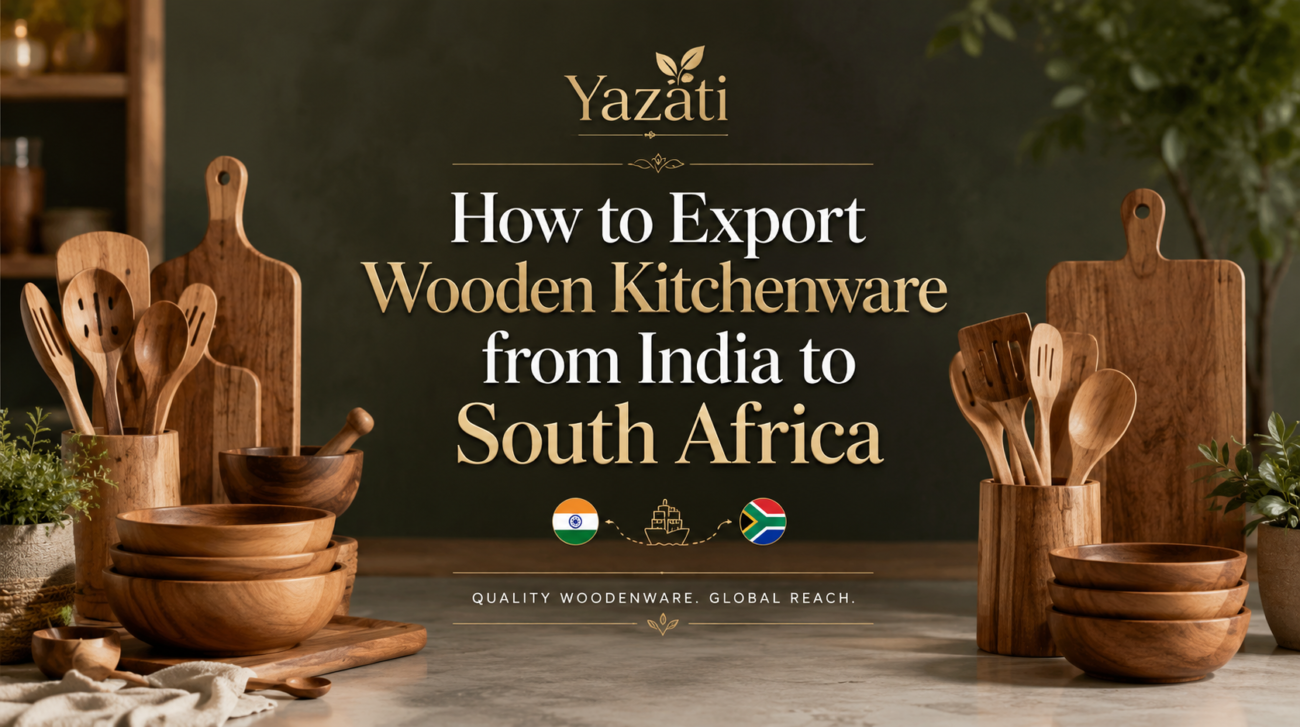
Exporting wooden kitchenware from India to South Africa has become an attractive business opportunity for manufacturers, traders, and small exporters. With growing global demand for eco-friendly and handcrafted products, Indian wooden kitchenware products are gaining popularity in international markets.
India is known for producing high-quality wooden utensils, chopping boards, trays, and serving items made from teak, neem, mango wood, acacia, and bamboo. South African consumers are increasingly choosing sustainable kitchen products over plastic alternatives. This makes the export business highly promising.
In this guide, you will learn How to Export Wooden Kitchenware from India to South Africa step by step, including legal requirements, shipping procedures, buyer sourcing, pricing, and export documentation.
Understanding the Wooden Kitchenware Export Market
The global market for wooden kitchenware is expanding rapidly because consumers prefer natural and reusable products. Wooden kitchen tools are considered stylish, durable, and environmentally friendly.
Indian manufacturers enjoy several advantages:
- Affordable labor costs
- Skilled craftsmanship
- Abundant wood resources
- Strong export infrastructure
- Competitive pricing
South Africa imports a large variety of home and kitchen products each year, especially eco-conscious items for urban households and hospitality businesses.
Why South Africa is a Profitable Market
South Africa serves as a gateway to several African markets. Exporters targeting South Africa can later expand into neighboring countries.
Demand for Eco-Friendly Kitchen Products
Consumers today prefer products that reduce environmental damage. Wooden kitchenware products fit perfectly into this trend.
Popular eco-friendly products include:
- Wooden spoons
- Salad bowls
- Chopping boards
- Serving trays
- Wooden cutlery
- Spice containers
Consumer Trends in South Africa
Modern South African buyers are interested in:
- Handmade products
- Sustainable kitchen items
- Rustic home décor
- Premium dining accessories
Restaurants, hotels, and gift stores also purchase wooden kitchenware in bulk.
Types of Wooden Kitchenware You Can Export
Before entering the export market, it is important to identify profitable products.
Wooden Spoons and Spatulas
These are among the easiest products to export due to high demand and low shipping costs.
Chopping Boards
Acacia wood chopping boards are extremely popular because they are durable and visually attractive.
Wooden Bowls and Serving Trays
Restaurants and cafés often import handcrafted wooden serving products.
Rolling Pins and Mortar Sets
Traditional kitchen tools are increasingly used in modern kitchens for aesthetic appeal.
Legal Requirements for Exporting from India
To begin exporting legally, you must complete several registrations.
Obtain an IEC Code
The Import Export Code (IEC) is mandatory for exports from India.
You can apply through the official website of the Directorate General of Foreign Trade.
Documents required:
- PAN card
- Aadhaar card
- Business registration proof
- Bank account details
Register Your Business
You can operate as:
- Sole proprietorship
- Partnership firm
- LLP
- Private limited company
GST and LUT Requirements
GST registration is required for exporters. Most exporters also file a Letter of Undertaking (LUT) to export without paying IGST upfront.
Export Documentation Needed
Proper documentation is essential in international trade.
Commercial Invoice
This includes:
- Product description
- Quantity
- Unit price
- HS code
- Buyer details
Packing List
The packing list specifies:
- Carton dimensions
- Gross weight
- Net weight
- Number of packages
Bill of Lading
This shipping document is issued by the freight company after cargo loading.
Certificate of Origin
This proves the products are manufactured in India.
You may obtain it from export promotion councils or chambers of commerce.
Quality Standards and Compliance
Wooden kitchenware products must meet quality standards before export.
ISPM-15 Packaging Rules
Wood packaging materials used in exports must comply with international phytosanitary standards.
Heat treatment and fumigation may be required.
Food Safety Standards
Since wooden kitchenware comes into contact with food, exporters should use:
- Non-toxic coatings
- Food-safe oils
- Chemical-free wood processing
Maintaining quality helps build long-term buyer relationships.
Finding Buyers in South Africa
One of the most important parts of learning How to Export Wooden Kitchenware from India to South Africa is finding reliable buyers.
B2B Platforms
You can find importers through:
- Alibaba
- IndiaMART
- TradeIndia
- Global Sources
Trade Fairs and Exhibitions
Participating in international trade fairs helps build direct buyer connections.
Useful trade events include:
- Ambiente
- Africa Big 7
- Housewares trade exhibitions
Direct Importers and Retail Chains
Approach:
- Home décor stores
- Kitchenware wholesalers
- Restaurant suppliers
- Gift shops
You can also connect through LinkedIn and export directories.
Pricing Strategy for Wooden Kitchenware
Pricing plays a major role in export success.
Calculating FOB Price
FOB means “Free on Board.”
Your FOB price should include:
- Product manufacturing cost
- Packaging cost
- Inland transportation
- Customs handling charges
- Profit margin
Shipping and Freight Costs
Sea freight is cheaper for bulk orders.
Air freight is suitable for:
- Samples
- Urgent shipments
- Small quantities
Always compare freight quotes from multiple forwarders.
Packaging and Branding Tips
Professional packaging improves product value and reduces damage risk.
Eco-Friendly Packaging
Use:
- Recycled cardboard
- Kraft paper
- Biodegradable wrapping
Avoid excessive plastic packaging.
Labeling Requirements
Labels should include:
- Product name
- Country of origin
- Material type
- Usage instructions
- Importer details
Strong branding increases customer trust.
Shipping Process from India to South Africa
Understanding logistics is crucial.
Sea Freight vs Air Freight
| Shipping Type | Advantages | Disadvantages |
| Sea Freight | Low cost for bulk cargo | Longer transit time |
| Air Freight | Faster delivery | Higher cost |
Major Indian Export Ports
Popular ports include:
- Nhava Sheva (JNPT)
- Mundra Port
- Chennai Port
- Kochi Port
South African Import Ports
Main import ports:
- Durban
- Cape Town
- Port Elizabeth
Durban is one of the busiest ports in Africa.
Customs Clearance Process
Customs procedures include:
- Filing shipping bill
- Cargo inspection
- Customs duty assessment
- Freight booking
- Cargo loading
In South Africa, importers may need:
- Import permits
- VAT payments
- Customs declarations
Working with a customs broker simplifies the process.
Payment Methods in International Trade
Secure payment methods reduce business risk.
Letter of Credit
A Letter of Credit (LC) provides strong payment security for exporters.
Advance Payment
New exporters often prefer partial advance payments.
Export Credit Insurance
Insurance protects against buyer payment defaults.
You can obtain export insurance support from Export Credit Guarantee Corporation of India.
Common Challenges and Solutions
| Challenge | Solution |
| Finding trustworthy buyers | Verify importers through trade databases |
| Shipping delays | Work with experienced freight forwarders |
| Product damage | Use strong export packaging |
| Payment risk | Use LC or export insurance |
| Customs complications | Hire customs agents |
Planning ahead minimizes export problems.
Marketing Strategies for Export Growth
To grow your export business:
- Build a professional website
- Use SEO for international visibility
- Create product catalogs
- Use social media marketing
- Offer samples to buyers
- Maintain consistent product quality
You can also explore export support from Federation of Indian Export Organisations.
For additional export guidance, visit the official export portal of .
Frequently Asked Questions
1. Is an IEC code mandatory for exporting wooden kitchenware from India?
Yes, the Import Export Code is mandatory for all export businesses in India.
2. Which wood types are best for kitchenware exports?
Acacia, teak, mango wood, bamboo, and neem wood are commonly used.
3. What is the HS code for wooden kitchenware?
HS codes vary depending on product type. Many wooden kitchenware items fall under Chapter 44 of the HS classification system.
4. How long does shipping from India to South Africa take?
Sea freight usually takes 20–35 days depending on the port and shipping line.
5. Can small businesses export wooden kitchenware?
Yes, even small businesses can start exporting with proper registration and buyer sourcing.
6. What is the safest payment method for exporters?
Letters of Credit and advance payments are considered safer payment options.
Conclusion
Learning How to Export Wooden Kitchenware from India to South Africa can open the door to a profitable international business opportunity. South Africa’s demand for eco-friendly kitchen products continues to rise, and Indian manufacturers are well-positioned to supply high-quality handcrafted wooden products at competitive prices.
Success in export business depends on:
- Proper registration
- Strong product quality
- Reliable logistics
- Smart pricing
- Effective buyer sourcing
With the right planning and execution, exporters can build long-term relationships and expand across African markets successfully.
✨ Discover Global Sourcing Excellence with Netyex ✨
Netyex is your trusted B2B sourcing partner, connecting international buyers with India’s finest manufacturers and curated product lines—from handicrafts and home décor to kitchenware, textiles, hospitality essentials, and more. With verified suppliers and end-to-end support, we make global procurement seamless, reliable, and efficient.
👉 Elevate your sourcing experience—explore Netyex today.
📦 Bulk orders & customisation | 🌍 Worldwide delivery | 🤝 Trusted by global buyers
Visit Netyex to source premium Indian products with confidence.