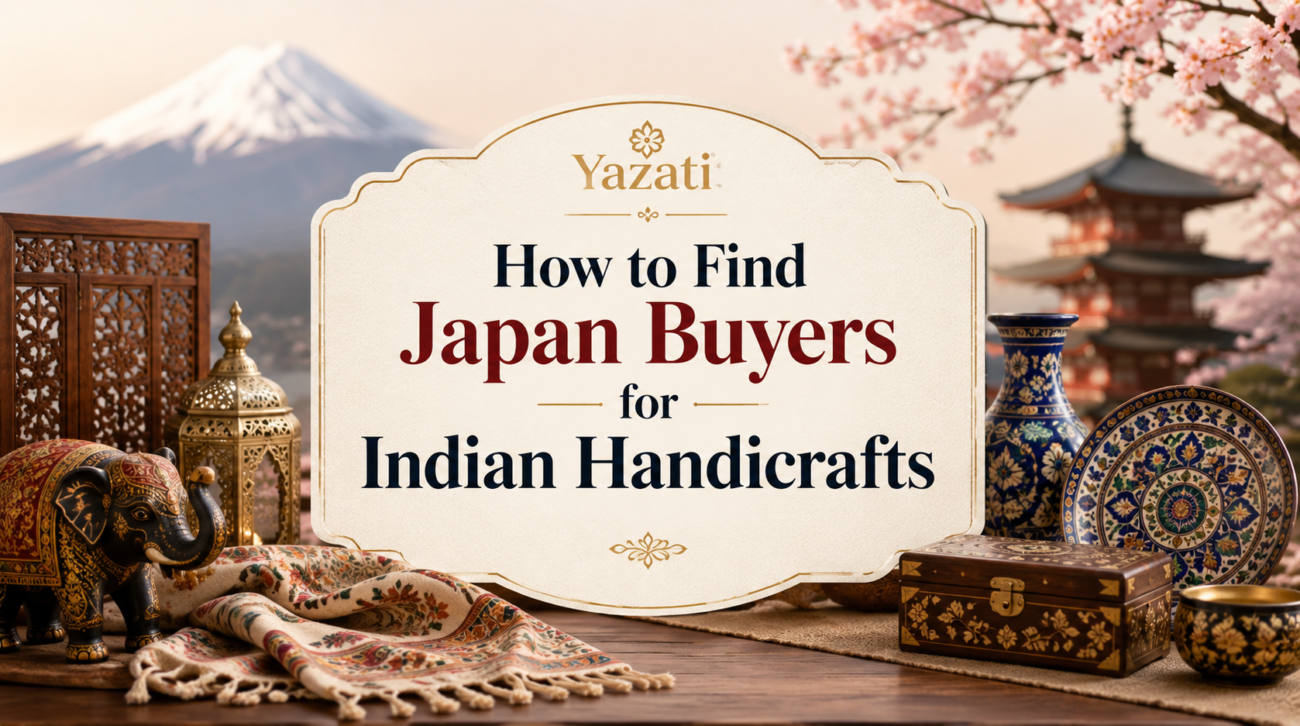
Japan is one of the world’s most quality-conscious consumer markets. Indian handicrafts have long enjoyed appreciation in Japan because of their craftsmanship, cultural value, and uniqueness. Whether you manufacture wooden artifacts, metal décor, handwoven textiles, pottery, or eco-friendly products, Japan offers significant export opportunities.
The challenge for many Indian exporters is not producing quality products but finding reliable Japanese buyers. This guide explains practical methods to identify, approach, and convert Japanese buyers for Indian handicrafts.
Understanding the Japanese Handicrafts Market
Japan has a strong culture of appreciating handmade products. Japanese consumers often prefer items that demonstrate:
- Superior craftsmanship
- Authentic cultural heritage
- Eco-friendly production
- High durability
- Unique artistic value
Indian handicrafts fit well within these preferences, especially products that combine traditional artistry with modern functionality.
Why Japanese Buyers Prefer Indian Handicrafts
Several factors make Indian handicrafts attractive in Japan:
- Rich cultural heritage
- Handmade uniqueness
- Sustainable production methods
- Competitive pricing
- Diverse product range
Japanese retailers frequently seek products that help them differentiate their stores from competitors. Handmade Indian products often provide this uniqueness.
Popular Indian Handicraft Categories in Japan
Wooden Handicrafts
Wooden carvings, decorative boxes, wall art, and furniture accessories are popular among Japanese consumers seeking natural and artistic home décor.
Metal Art and Home Décor
Brass, copper, and aluminum decorative pieces have a niche market in Japan. Traditional Indian metalwork often appeals to collectors and interior designers.
Textiles and Handmade Fabrics
Handloom products, scarves, table runners, cushion covers, and embroidered fabrics perform particularly well due to Japan’s appreciation for textile craftsmanship.
Researching Japanese Import Trends
Before contacting buyers, understand current demand.
Useful sources include:
- Japan customs import statistics
- Market research reports
- Industry associations
- Retail trend publications
Focus on:
- Product categories with growing imports
- Seasonal demand patterns
- Consumer preferences
- Competitor pricing
This research helps position your handicrafts effectively.
Creating an Export-Ready Product Catalog
Japanese buyers expect professional documentation.
Your catalog should include:
| Element | Importance |
|---|---|
| High-resolution images | Essential |
| Product dimensions | Mandatory |
| Material details | Mandatory |
| Packaging information | Important |
| MOQ (Minimum Order Quantity) | Important |
| Certifications | Valuable |
| Pricing structure | Essential |
A bilingual English-Japanese catalog can significantly improve response rates.
Registering with Export Promotion Organizations
Indian exporters should register with relevant organizations.
Consider joining:
- Export Promotion Council for Handicrafts
- Federation of Indian Export Organisations
- MSME Ministry
These organizations often facilitate buyer-seller meets and trade delegations.
Using B2B Marketplaces to Find Buyers
Online B2B platforms remain one of the fastest ways to locate Japanese importers.
Alibaba
Create a verified supplier profile with:
- Professional product photos
- Certifications
- Export history
- Factory information
Many Japanese importers actively source through Alibaba.
TradeIndia
TradeIndia enables direct interaction with overseas buyers and generates export inquiries from Japan.
IndiaMART
Maintain an optimized profile and respond quickly to inquiries. Japanese buyers often shortlist suppliers based on response speed and professionalism.
Participating in Trade Fairs and Exhibitions
Trade exhibitions remain among the most effective methods for finding serious buyers.
Consider participating in:
- Tokyo International Gift Show
- Lifestyle Expo Tokyo
- Interior Lifestyle Tokyo
Benefits include:
- Direct buyer interaction
- Immediate product feedback
- Distributor identification
- Brand visibility
Face-to-face meetings carry substantial importance in Japanese business culture.
Connecting with Japanese Importers and Distributors
Target businesses specializing in:
- Home décor imports
- Gift products
- Lifestyle goods
- Boutique retail chains
- Hotel supply companies
Build a database including:
- Company name
- Website
- Buyer contact
- Product categories
- Import history
Personalized outreach generally produces better results than mass emailing.
Leveraging Japanese E-Commerce Platforms
Many importers monitor online trends.
Popular Japanese platforms include:
- Rakuten
- Yahoo Shopping Japan
- Amazon Japan
Study:
- Best-selling products
- Pricing structures
- Customer reviews
- Design preferences
This helps align your products with market demand.
Building a Professional Export Website
Your website should include:
- Product catalog
- Company profile
- Manufacturing capabilities
- Certifications
- Contact details
- Export experience
Important features:
- Mobile optimization
- Fast loading speed
- Inquiry forms
- Professional photography
Adding Japanese-language pages can improve credibility.
For export guidance, exporters can also explore resources from the Japan External Trade Organization.
Using LinkedIn and Business Networking
LinkedIn is highly effective for B2B outreach.
Target:
- Import managers
- Product sourcing managers
- Retail buyers
- Distribution companies
Best practices:
- Optimize your profile.
- Share product updates.
- Send personalized messages.
- Follow up professionally.
Avoid aggressive sales pitches.
Working with Export Agents and Consultants
Export consultants often have established buyer networks.
Advantages include:
- Faster market entry
- Reduced learning curve
- Buyer introductions
- Regulatory guidance
Ensure the consultant has experience specifically with Japanese imports.
Understanding Japanese Business Culture
Japanese business relationships emphasize:
- Trust
- Consistency
- Long-term cooperation
- Attention to detail
Important tips:
- Be punctual.
- Respond promptly.
- Deliver exactly as promised.
- Maintain consistent quality.
A small quality issue can impact future business opportunities.
Pricing, Packaging, and Quality Standards
Japanese buyers evaluate more than price.
Focus on:
Packaging
- Neat presentation
- Protective materials
- Eco-friendly options
Quality Control
- Consistent craftsmanship
- Accurate dimensions
- Durable finishing
Documentation
- Commercial invoices
- Packing lists
- Certificates of origin
- Shipping documentation
Negotiating with Japanese Buyers
Effective negotiation strategies include:
- Providing transparent pricing
- Offering product customization
- Discussing long-term partnerships
- Being flexible on initial orders
Japanese buyers often begin with smaller trial orders before increasing volume.
Common Mistakes to Avoid
Avoid these frequent errors:
- Sending incomplete catalogs
- Delayed responses
- Poor packaging
- Inconsistent product quality
- Lack of market research
- Ignoring cultural expectations
Professionalism often matters as much as product quality.
Frequently Asked Questions
1. What handicrafts sell best in Japan?
Wooden décor, handwoven textiles, brass handicrafts, eco-friendly products, and handmade gift items generally perform well.
2. How can I contact Japanese importers directly?
Use trade directories, LinkedIn, B2B marketplaces, trade fairs, and importer databases from export promotion organizations.
3. Is Japanese language necessary for exporting?
Not mandatory, but Japanese-language catalogs and communication can significantly improve buyer confidence.
4. Do Japanese buyers place large orders initially?
Usually not. Many start with trial orders before committing to larger volumes.
5. Which trade fair is best for Indian handicrafts?
The Tokyo International Gift Show is among the most valuable events for handicraft exporters targeting Japan.
6. How important is packaging in Japan?
Extremely important. Japanese consumers and retailers expect high-quality, attractive, and secure packaging.
Conclusion
Finding Japanese buyers for Indian handicrafts requires a combination of market research, professional presentation, relationship building, and consistent quality. By leveraging trade fairs, B2B platforms, export promotion councils, LinkedIn networking, and direct importer outreach, Indian handicraft exporters can establish profitable long-term relationships in Japan.
Success in Japan rarely comes from one sales email. It comes from trust, reliability, product excellence, and patience. Exporters who understand these principles often find Japan to be one of the most rewarding international markets for Indian handicrafts.
✨ Discover Global Sourcing Excellence with Netyex ✨
Netyex is your trusted B2B sourcing partner, connecting international buyers with India’s finest manufacturers and curated product lines—from handicrafts and home décor to kitchenware, textiles, hospitality essentials, and more. With verified suppliers and end-to-end support, we make global procurement seamless, reliable, and efficient.
👉 Elevate your sourcing experience—explore Netyex today.
📦 Bulk orders & customisation | 🌍 Worldwide delivery | 🤝 Trusted by global buyers
Visit Netyex to source premium Indian products with confidence.