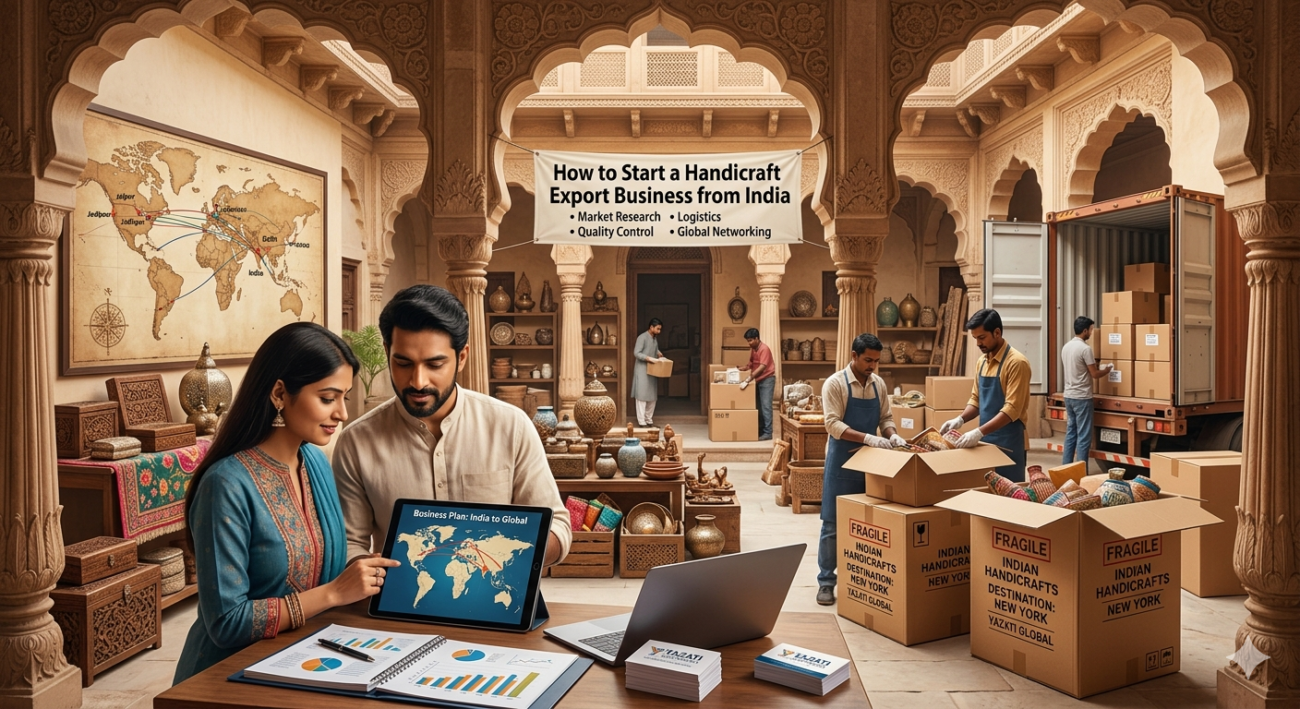
Introduction to the Handicraft Export Industry
Starting a handicraft export business from India is a fantastic opportunity for entrepreneurs who want to blend creativity with global trade. India is known worldwide for its rich tradition of handmade products—ranging from textiles and pottery to wood carvings and jewelry. With increasing demand for sustainable and handmade goods, the global market is more open than ever.
Why Indian Handicrafts Are in Global Demand
Indian handicrafts are loved for their authenticity, cultural heritage, and craftsmanship. Buyers from countries like the USA, UK, and Germany prefer handmade goods because they are unique and eco-friendly. Unlike factory-made items, each piece tells a story, which adds emotional value.
Additionally, global consumers are now shifting towards ethical buying. Products made by local artisans support communities and preserve traditions—this is a strong selling point.
Scope of Export Business in India
India’s export sector is growing rapidly, especially in handicrafts. Government initiatives and digital platforms have made it easier for small businesses to reach international buyers. With minimal investment, you can start small and scale gradually.
Understanding the Market Before You Start
Before diving in, it’s essential to understand your target market.
Identifying Target Countries
Different countries have different tastes. For example:
- The USA prefers bohemian-style décor.
- Europe leans toward minimalistic designs.
- Middle Eastern countries favor luxury handcrafted items.
Research import trends, cultural preferences, and buying patterns before choosing your market.
Researching Trends and Customer Preferences
Use tools like Google Trends, Etsy, and Amazon to analyze trending handicraft products. Keep an eye on seasonal demands such as Christmas decorations or wedding gifts.
Choosing the Right Handicraft Products
Selecting the right product is key to success in a handicraft export business from India.
Popular Export Items
India offers a wide range of export-quality handicrafts:
Handmade Jewelry, Textiles, Wooden Crafts
- Handmade silver jewelry
- Handloom sarees and scarves
- Wooden home décor items
- Terracotta pottery
These items are popular because they combine tradition with usability.
Niche vs Mass Market Products
- Niche Products: High profit margins but limited audience
- Mass Products: Lower margins but higher sales volume
A balanced mix works best when starting out.
Legal Requirements for Export Business in India
To legally start a handicraft export business from India, you must complete a few registrations.
Business Registration
You can register as:
- Sole Proprietorship
- Partnership
- Private Limited Company
Choose based on your scale and investment.
GST Registration
GST is mandatory for exporting goods. It also allows you to claim tax refunds.
Import Export Code (IEC)
IEC is issued by the Directorate General of Foreign Trade (DGFT). Without it, you cannot export goods.
Export Promotion Councils
Registering with organizations like the Export Promotion Council for Handicrafts (EPCH) helps you access resources, training, and global buyers.
Setting Up Your Supply Chain
A strong supply chain ensures consistent quality and timely delivery.
Sourcing from Artisans
Work directly with local artisans to maintain authenticity and reduce costs. Building long-term relationships ensures reliability.
Quality Control Measures
Always inspect products before shipping. Maintain consistency in:
- Material quality
- Finishing
- Packaging
Pricing Strategy for Global Markets
Pricing can make or break your business.
Costing and Profit Margins
Include:
- Production cost
- Packaging
- Shipping
- Duties and taxes
Aim for a healthy margin without overpricing.
Currency and Payment Terms
Use USD or Euro for international transactions. Decide payment terms like:
- Advance payment
- Letter of Credit (LC)
- PayPal or bank transfer
Branding and Packaging
Creating a Unique Brand Identity
Your brand should reflect Indian culture and craftsmanship. Choose a memorable name, logo, and story.
Eco-Friendly Packaging Trends
Sustainable packaging is highly valued globally. Use recyclable materials to attract eco-conscious buyers.
Finding International Buyers
Online Platforms and Marketplaces
Sell on:
- Etsy
- Amazon Global
- eBay
These platforms provide instant access to international customers.
Trade Fairs and Exhibitions
Participate in international trade fairs to connect with bulk buyers and distributors.
Export Logistics and Shipping
Choosing Shipping Methods
- Air Freight: Fast but expensive
- Sea Freight: Cost-effective for bulk orders
Documentation Required
You’ll need:
- Invoice
- Packing List
- Bill of Lading
- Certificate of Origin
Payment Methods and Risk Management
Secure Payment Options
Use trusted payment methods like:
- PayPal
- Wire transfer
- Letter of Credit
Managing Export Risks
Get export insurance to protect against non-payment or damage during transit.
Digital Marketing for Export Business
SEO and Website Optimization
Create a professional website optimized for search engines. Use keywords like how to start a handicraft export business from India to rank higher.
Social Media Marketing
Use Instagram and Pinterest to showcase your products visually. High-quality images attract international buyers.
Government Support and Schemes
Export Incentives
The Indian government offers schemes like:
- Duty Drawback
- RoDTEP Scheme
MSME Benefits
Register as an MSME to access loans, subsidies, and training programs.
Scaling Your Handicraft Export Business
Expanding Product Range
Introduce new designs and categories based on market demand.
Building Long-Term Buyer Relationships
Consistent quality and communication help retain buyers and grow your business.
Common Challenges and How to Overcome Them
Logistics Issues
Partner with reliable shipping companies.
Competition and Pricing Pressure
Differentiate through quality and branding.
❓ FAQs
1. Is handicraft export business profitable in India?
Yes, due to global demand and low production costs, it can be highly profitable.
2. What is the minimum investment required?
You can start with as little as ₹50,000–₹1,00,000 depending on scale.
3. Do I need IEC for small exports?
Yes, IEC is mandatory for all export activities.
4. Which country is best for handicraft export?
The USA, UK, and Germany are top markets.
5. How can I find buyers internationally?
Use online platforms, trade fairs, and B2B portals.
6. What are the risks in export business?
Payment delays, shipping damage, and customs issues.
Conclusion
Starting a handicraft export business from India is not just a business—it’s a chance to showcase India’s rich cultural heritage to the world. With proper planning, legal setup, and smart marketing, you can build a profitable and sustainable export venture.
The key lies in understanding your market, maintaining quality, and building strong relationships with buyers. Start small, stay consistent, and grow steadily.
✨ Discover Global Sourcing Excellence with Netyex ✨
Netyex is your trusted B2B sourcing partner, connecting international buyers with India’s finest manufacturers and curated product lines—from handicrafts and home décor to kitchenware, textiles, hospitality essentials, and more. With verified suppliers and end-to-end support, we make global procurement seamless, reliable, and efficient.
👉 Elevate your sourcing experience—explore Netyex today.
📦 Bulk orders & customisation | 🌍 Worldwide delivery | 🤝 Trusted by global buyers
Visit Netyex to source premium Indian products with confidence.