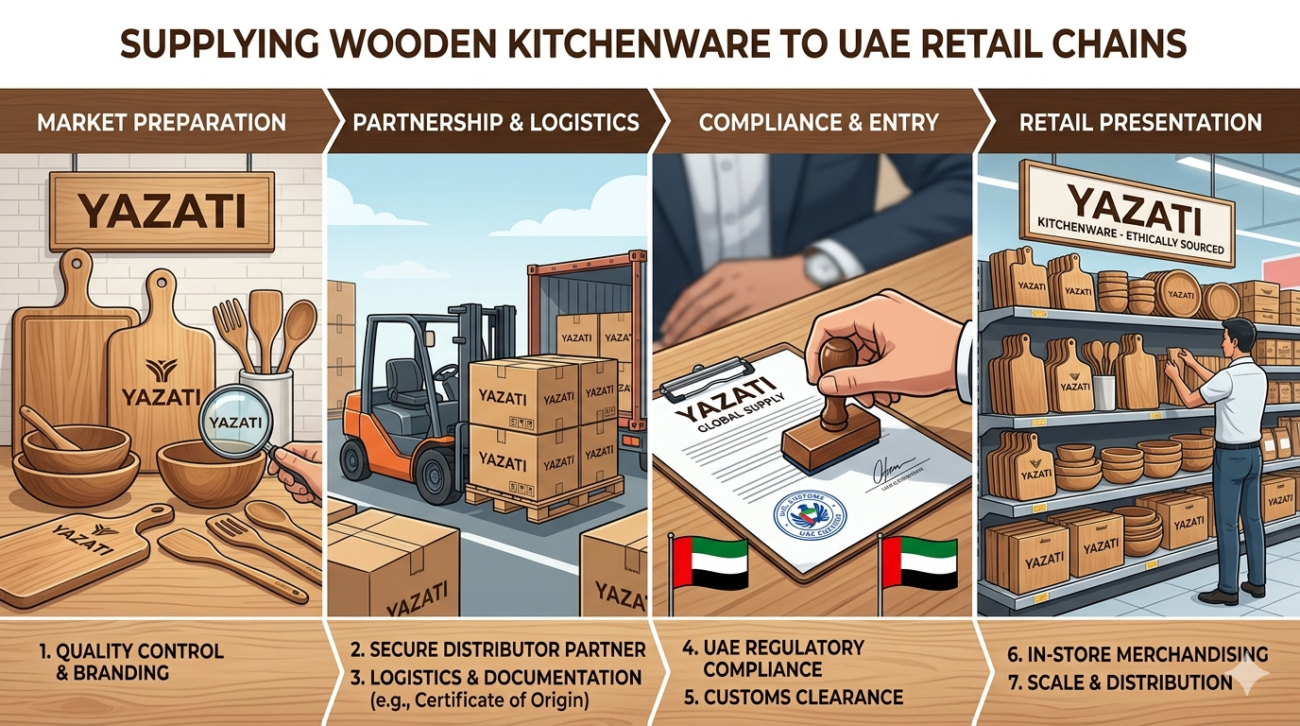
The UAE retail market is growing rapidly, especially in homeware and kitchen products. As consumers become more eco-conscious and style-focused, wooden kitchenware products are gaining strong demand across supermarkets, lifestyle stores, hotels, and eCommerce platforms.
If you want to learn How to Supply Wooden Kitchenware to UAE Retail Chains, this guide will help you understand every important step. From selecting the right wood to meeting import standards and connecting with buyers, this article covers everything exporters need to know to build a successful business in the UAE market.
The UAE is one of the best gateways for exporters because it serves customers not only in Dubai and Abu Dhabi but also across the wider Middle East region. Retail chains in the UAE often look for reliable suppliers who can provide attractive, food-safe, and eco-friendly wooden kitchenware products in bulk.
Understanding the UAE Wooden Kitchenware Market
The UAE market values premium-quality home and kitchen products. Wooden kitchenware has become especially popular because it combines beauty, sustainability, and functionality.
Why Wooden Kitchenware Is Popular in the UAE
Consumers in the UAE prefer kitchen products that look modern and natural. Wooden products create a warm and elegant kitchen appearance. Restaurants, cafes, and hotels also prefer wooden serving items for presentation purposes.
Several factors are increasing demand:
- Rising interest in eco-friendly products
- Growth of luxury kitchenware retail
- Popularity of organic lifestyles
- Expansion of hospitality businesses
- Increased home cooking trends
Wooden kitchenware is often considered healthier than plastic alternatives. Many buyers also see wooden utensils as premium lifestyle products rather than simple kitchen tools.
Consumer Trends Driving Demand
Modern UAE buyers are influenced by:
- Scandinavian-style interiors
- Sustainable living movements
- Instagram and social media trends
- Premium dining experiences
- Minimalist kitchen aesthetics
Products with handcrafted designs, smooth finishing, and sustainable packaging often perform better in UAE retail stores.
Types of Wooden Kitchenware UAE Retailers Buy
Understanding which products are in demand can help suppliers focus on profitable product categories.
Cutting Boards
Wooden cutting boards remain one of the highest-selling kitchenware products in UAE retail chains. Acacia and bamboo boards are especially popular because they are durable and visually attractive.
Retailers often prefer:
- Juice groove cutting boards
- Cheese serving boards
- Personalized chopping boards
- Charcuterie boards
Wooden Spoons and Utensils
Wooden spatulas, spoons, salad servers, and ladles are everyday essentials. Buyers usually look for:
- Heat-resistant utensils
- Smooth polished finishes
- Non-toxic coatings
- Ergonomic designs
Serving Trays and Bowls
Luxury serving trays and wooden bowls are widely used in homes, cafes, and hotels. Products with modern Middle Eastern-inspired designs can attract more attention.
Eco-Friendly Kitchen Accessories
Retailers increasingly demand products such as:
- Wooden coasters
- Bamboo straws
- Spice organizers
- Wooden storage containers
- Sustainable tableware
Researching UAE Retail Chains Before Supplying
Before contacting buyers, exporters should understand which retailers are suitable for their products.
Hypermarkets and Supermarkets
Large retail chains often import wooden kitchenware in high volumes. These businesses usually require:
- Consistent quality
- Large production capacity
- Barcoded packaging
- Competitive pricing
- Strong logistics support
Examples include premium supermarkets and household retail chains across Dubai and Abu Dhabi.
Home Decor and Lifestyle Stores
Lifestyle stores often prefer unique and premium wooden products. They usually focus on:
- Design quality
- Packaging aesthetics
- Eco-friendly branding
- Handmade appearance
Online Retailers and Marketplaces
eCommerce demand in the UAE is expanding rapidly. Many retailers now look for dropshipping or warehouse-ready suppliers.
Popular online product categories include:
- Personalized kitchenware
- Gift sets
- Sustainable cooking products
- Premium dining accessories
UAE Import Rules and Product Compliance
Understanding import regulations is essential when learning How to Supply Wooden Kitchenware to UAE Retail Chains.
Food-Safe Material Standards
Kitchenware products must be safe for food contact. UAE buyers may ask for:
- Food-grade certification
- Non-toxic coating confirmation
- Chemical testing reports
- Moisture resistance verification
Using natural oils and safe finishes improves product acceptance.
Packaging and Labeling Requirements
Most UAE retailers require bilingual labeling in:
- English
- Arabic
Labels typically include:
- Product name
- Country of origin
- Material type
- Care instructions
- Barcode
- Importer details
Customs Documentation
Common export documents include:
| Document | Purpose |
| Commercial Invoice | Product value declaration |
| Packing List | Shipment details |
| Bill of Lading | Shipping proof |
| Certificate of Origin | Country verification |
| Phytosanitary Certificate | Wood treatment verification |
Proper documentation helps avoid customs delays.
Choosing the Right Wood for Export Products
The type of wood used directly affects product quality and buyer confidence.
Bamboo
Bamboo is highly popular because it is:
- Sustainable
- Lightweight
- Affordable
- Moisture-resistant
It works well for utensils and serving trays.
Acacia Wood
Acacia wood is premium and durable. UAE buyers often prefer it for:
- Cutting boards
- Serving platters
- Luxury kitchenware
Its rich grain pattern gives products a luxury appearance.
Teak Wood
Teak is highly durable and water-resistant. Although more expensive, it appeals to premium buyers.
Rubberwood
Rubberwood offers affordability and decent durability. It is suitable for mass-market retail chains.
Building a Competitive Product Line
A strong product collection increases your chances of securing retail contracts.
Designing Modern UAE-Friendly Products
Products should reflect modern kitchen trends. Neutral colors, smooth textures, and minimalist styles usually sell well.
Popular design features include:
- Rounded edges
- Matte finishes
- Natural wood textures
- Space-saving designs
Offering Private Label Services
Many UAE retailers prefer private labeling. This means placing their brand name on your products.
Private labeling advantages include:
- Larger orders
- Long-term contracts
- Better profit margins
- Strong buyer relationships
Creating Product Catalogs
A professional catalog should include:
- High-quality images
- Product dimensions
- Material details
- MOQ information
- Pricing structure
- Packaging details
Digital catalogs are especially useful for email marketing and buyer presentations.
Pricing Strategy for UAE Retail Chains
Pricing plays a major role in export success.
Wholesale Pricing Models
Your pricing should include:
- Manufacturing cost
- Packaging cost
- Shipping expenses
- Customs charges
- Retail margin allowance
Most UAE retailers expect reasonable profit margins while maintaining competitive shelf pricing.
MOQ and Bulk Discounts
Minimum order quantities help manage production efficiently.
Common pricing strategies include:
| Order Volume | Discount Strategy |
| Small Orders | Standard pricing |
| Medium Orders | 5–10% discount |
| Large Orders | Negotiated wholesale rates |
Retail Margin Expectations
Retail chains may apply margins ranging from 30% to 60%, depending on product category and branding.
Understanding this helps suppliers offer practical pricing.
Packaging Strategies That Impress UAE Buyers
Packaging strongly influences buyer decisions.
Sustainable Packaging
Eco-friendly packaging is becoming essential. Consider using:
- Recycled paper
- Kraft boxes
- Soy-based inks
- Plastic-free wrapping
Sustainable packaging supports premium branding.
Arabic and English Labeling
Dual-language packaging improves retail acceptance and customer trust.
Premium Retail Presentation
Luxury packaging can increase perceived value significantly.
Retail-ready packaging may include:
- Window display boxes
- QR codes
- Care instruction cards
- Gift-ready designs
Finding UAE Retail Buyers
Connecting with buyers requires strategy and consistency.
Trade Shows and Exhibitions
Trade fairs are one of the best ways to meet UAE retail chains.
Major benefits include:
- Networking opportunities
- Product showcasing
- Distributor meetings
- Market trend analysis
Relevant exhibitions often include homeware and hospitality trade events.
LinkedIn and B2B Platforms
Professional networking platforms help exporters connect directly with purchasing managers.
Useful platforms include:
- Alibaba
- TradeIndia
- Global Sources
Your profile should showcase:
- Factory capabilities
- Product photos
- Export certifications
- Production capacity
Distributor Partnerships
Working with local distributors can simplify market entry.
Distributors often help with:
- Warehousing
- Customs clearance
- Retail placement
- Buyer introductions
Shipping Wooden Kitchenware to UAE
Efficient logistics are critical for profitability.
Sea Freight vs Air Freight
| Shipping Method | Advantages | Disadvantages |
| Sea Freight | Lower cost | Longer delivery |
| Air Freight | Faster shipping | Higher cost |
Sea freight is generally better for large wholesale orders.
UAE Ports and Logistics
Major UAE ports include:
- Jebel Ali Port
- Port Khalid
- Khalifa Port
Dubai serves as a major re-export hub for the Middle East.
Reducing Shipping Costs
You can lower costs by:
- Optimizing carton sizes
- Consolidating shipments
- Using local freight forwarders
- Improving packaging efficiency
Marketing Your Wooden Kitchenware Brand
Strong branding helps suppliers stand out in competitive markets.
Building an Export Website
A professional website should include:
- Product galleries
- Certifications
- Factory information
- Contact forms
- Wholesale inquiry pages
For export credibility, include clear business details and product specifications.
You can also study global trade opportunities through organizations like International Trade Centre.
Social Media Promotion
Instagram and Pinterest work especially well for kitchenware products because they are highly visual platforms.
Content ideas include:
- Kitchen styling photos
- Product videos
- Sustainability stories
- Behind-the-scenes manufacturing
Sustainability Branding
Eco-conscious branding is a major selling point in the UAE.
Use messaging focused on:
- Sustainable sourcing
- Handmade craftsmanship
- Plastic reduction
- Natural materials
Common Mistakes Exporters Should Avoid
Many suppliers fail because they overlook critical business details.
Poor Packaging
Damaged products create major retail problems. Invest in strong export packaging to protect goods during shipping.
Lack of Certifications
Retail chains prefer suppliers with verified compliance documents.
Inconsistent Product Quality
Consistency is essential for repeat business. Retailers expect every shipment to match approved samples.
Implement quality control procedures for:
- Wood moisture levels
- Finishing smoothness
- Product dimensions
- Coating quality
FAQs About How to Supply Wooden Kitchenware to UAE Retail Chains
1. Is the UAE a good market for wooden kitchenware exports?
Yes. The UAE has strong demand for eco-friendly and premium kitchen products due to growing consumer interest in sustainable living and luxury homeware.
2. Which wooden kitchenware products sell best in the UAE?
Cutting boards, serving trays, wooden utensils, and bamboo kitchen accessories are among the best-selling products.
3. Do UAE retailers require food-safe certifications?
Most professional retail chains prefer food-safe certifications and non-toxic material verification for kitchenware products.
4. What packaging works best for UAE retail stores?
Premium eco-friendly packaging with Arabic and English labeling usually performs best.
5. How can I find UAE retail buyers?
You can connect with buyers through trade shows, LinkedIn, B2B marketplaces, and local distributors.
6. What is the best shipping method for wooden kitchenware exports?
Sea freight is generally more cost-effective for bulk wholesale shipments.
Conclusion
Learning How to Supply Wooden Kitchenware to UAE Retail Chains requires more than simply manufacturing products. Exporters must understand market trends, product compliance, packaging expectations, pricing structures, and buyer relationships.
The UAE offers tremendous opportunities for suppliers who focus on quality, sustainability, and professional branding. Retail chains actively search for reliable exporters capable of delivering attractive, food-safe, and eco-friendly wooden kitchenware products.
By investing in strong product design, export documentation, premium packaging, and consistent communication, suppliers can build profitable long-term partnerships in the UAE retail industry.
The future of wooden kitchenware exports looks promising, especially as consumers continue moving toward sustainable and elegant kitchen solutions.
✨ Discover Global Sourcing Excellence with Netyex ✨
Netyex is your trusted B2B sourcing partner, connecting international buyers with India’s finest manufacturers and curated product lines—from handicrafts and home décor to kitchenware, textiles, hospitality essentials, and more. With verified suppliers and end-to-end support, we make global procurement seamless, reliable, and efficient.
👉 Elevate your sourcing experience—explore Netyex today.
📦 Bulk orders & customisation | 🌍 Worldwide delivery | 🤝 Trusted by global buyers
Visit Netyex to source premium Indian products with confidence.