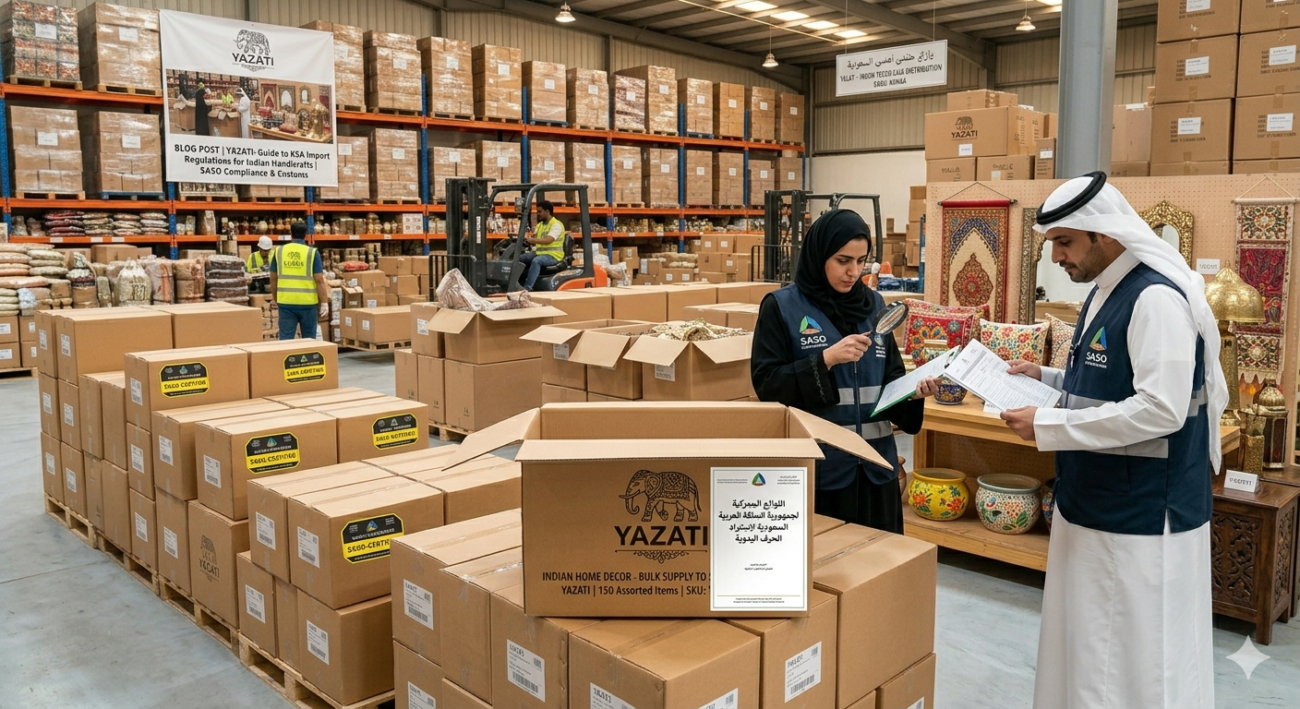
Introduction to Handicraft Imports in Saudi Arabia
Saudi Arabia is becoming a thriving marketplace for cultural and artisan goods. The demand for handmade products—ranging from textiles to decorative items—has grown steadily in recent years. Understanding the Import Regulations for Handicrafts in Saudi Arabia is essential for businesses looking to enter this lucrative market.
Importance of the Saudi Handicraft Market
Saudi Arabia values cultural heritage, both local and international. Handicrafts from countries like India, Morocco, and تركيا are highly sought after. These items are commonly used in home décor, gifting, and tourism-related retail.
Growth Trends in Cultural and Artisan Goods
With initiatives under Vision 2030, the country is encouraging cultural exchange and tourism. As a result, imports of handicrafts have surged, making it an attractive opportunity for exporters worldwide.
Legal Framework Governing Imports
Understanding the legal structure is crucial before exporting handicrafts to Saudi Arabia.
Role of Saudi Customs Authority
The Zakat, Tax and Customs Authority (ZATCA) regulates all imports. It ensures that goods entering the country comply with safety, quality, and religious standards.
Key Trade Laws and Regulations
Saudi Arabia follows international trade agreements while maintaining strict local laws. Importers must comply with Gulf Cooperation Council (GCC) regulations as well as national policies.
Import Regulations for Handicrafts in Saudi Arabia Explained
This section dives deeper into the specific rules governing handicraft imports.
Classification of Handicrafts
Handicrafts are categorized based on materials such as:
- Wood
- Metal
- Textiles
- Ceramics
Each category may have different tariff codes and requirements.
Restricted and Prohibited Items
Certain items are strictly prohibited, including:
- Religious symbols conflicting with Islamic beliefs
- Items made from endangered animal species
- Offensive artwork or imagery
Failure to comply can result in confiscation or penalties.
Required Documentation for Importing Handicrafts
Proper documentation is the backbone of smooth import operations.
Commercial Invoice and Packing List
These documents must clearly describe:
- Product details
- Quantity
- Value
Certificate of Origin
Issued by a recognized authority, this document verifies the country of manufacture.
Bill of Lading
This shipping document acts as proof of ownership and transport agreement.
Duties, Taxes, and Tariffs
Customs Duties Structure
Handicrafts typically attract customs duties ranging from 5% to 15%, depending on the category.
VAT in Saudi Arabia
Saudi Arabia imposes a 15% VAT on most imported goods, including handicrafts.
Quality Standards and Certification
SASO Certification
The Saudi Standards, Metrology and Quality Organization (SASO) ensures product safety and compliance.
Product Labeling Requirements
Labels must include:
- Product name
- Country of origin
- Materials used
Packaging and Labeling Guidelines
Arabic Labeling Requirements
All imported goods must have labels in Arabic or bilingual (Arabic + English).
Eco-Friendly Packaging Trends
Sustainable packaging is becoming increasingly important in Saudi Arabia, aligning with global environmental standards.
Import Licensing Requirements
Commercial Registration
Importers must have a valid commercial registration in Saudi Arabia.
Importer Code
An importer code issued by authorities is required for customs clearance.
Shipping and Logistics Considerations
Approved Ports of Entry
Major ports include:
- Jeddah Islamic Port
- King Abdulaziz Port
Freight and Customs Clearance
Efficient logistics partners can significantly reduce delays and costs.
Cultural and Religious Compliance
Islamic Guidelines on Artifacts
Items must respect Islamic values. For example, statues depicting religious figures are often restricted.
Avoiding Offensive Designs
Designs that may be culturally insensitive should be avoided.
Common Challenges in Importing Handicrafts
Customs Delays
Delays often occur due to incomplete documentation or non-compliance.
Documentation Errors
Incorrect paperwork can lead to penalties or shipment rejection.
Tips for Smooth Import Process
Work with Licensed Agents
Hiring experienced customs brokers can simplify the process.
Stay Updated with Regulations
Regulations can change frequently, so staying informed is essential.
Benefits of Importing Handicrafts into Saudi Arabia
Growing Tourism Sector
Tourism is expanding rapidly, increasing demand for unique handicrafts.
Demand for Unique Products
Consumers are increasingly seeking authentic, handmade items.
Future Outlook of Handicraft Imports
Vision 2030 Impact
Saudi Arabia’s Vision 2030 aims to diversify the economy, boosting cultural industries.
E-commerce Growth
Online platforms are making it easier to sell imported handicrafts directly to consumers.
❓ FAQs
1. What are the main import regulations for handicrafts in Saudi Arabia?
Importers must comply with ZATCA rules, provide proper documentation, and meet SASO standards.
2. Are all handicrafts allowed in Saudi Arabia?
No, items that conflict with Islamic values or use restricted materials are prohibited.
3. What taxes apply to handicraft imports?
Customs duties (5–15%) and 15% VAT apply.
4. Is Arabic labeling mandatory?
Yes, all products must include Arabic labeling.
5. Do I need a license to import handicrafts?
Yes, a commercial registration and importer code are required.
6. How can I avoid customs delays?
Ensure accurate documentation and work with experienced logistics partners.
Conclusion
Understanding the Import Regulations for Handicrafts in Saudi Arabia is essential for any business aiming to succeed in this promising market. From documentation and duties to cultural compliance and certification, every detail matters. By following the guidelines outlined above, importers can avoid costly mistakes and build a successful trade operation in Saudi Arabia.
For more detailed trade insights, visit the official Saudi customs website: https://zatca.gov.sa
✨ Discover Global Sourcing Excellence with Netyex ✨
Netyex is your trusted B2B sourcing partner, connecting international buyers with India’s finest manufacturers and curated product lines—from handicrafts and home décor to kitchenware, textiles, hospitality essentials, and more. With verified suppliers and end-to-end support, we make global procurement seamless, reliable, and efficient.
👉 Elevate your sourcing experience—explore Netyex today.
📦 Bulk orders & customisation | 🌍 Worldwide delivery | 🤝 Trusted by global buyers
Visit Netyex to source premium Indian products with confidence.