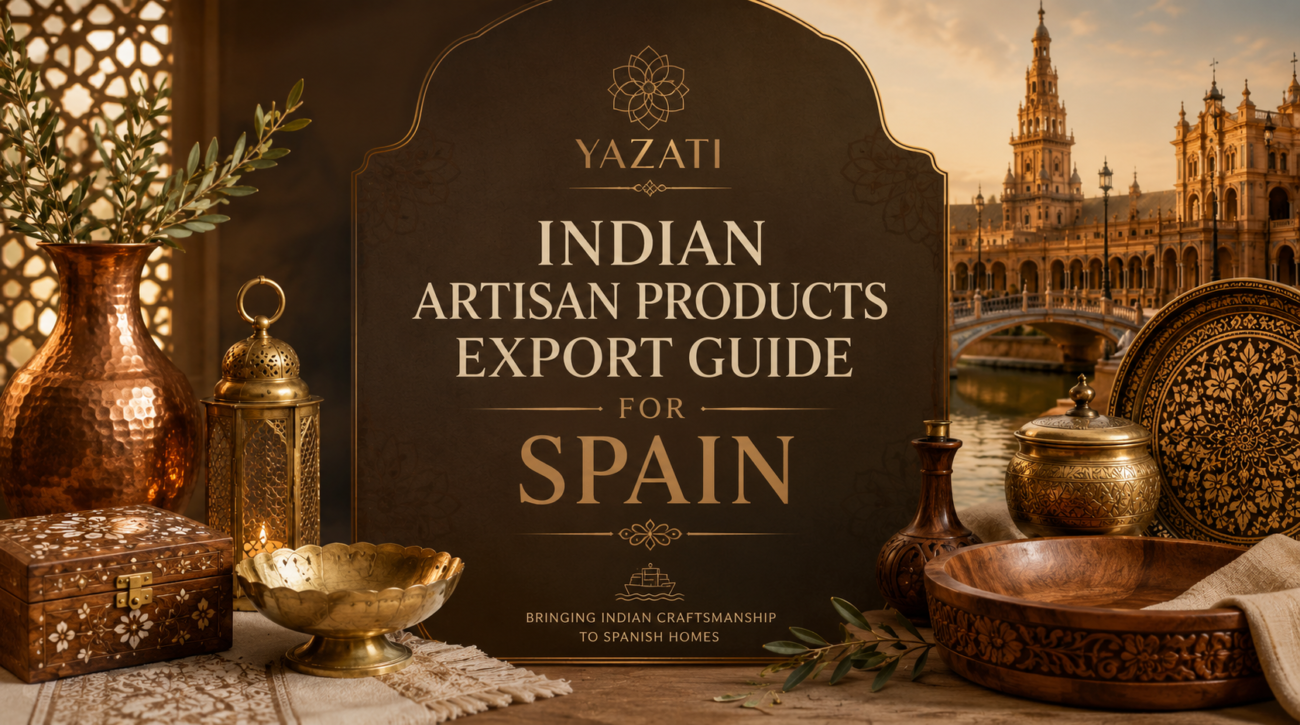
Introduction
India has earned worldwide recognition for its rich heritage of craftsmanship. From handwoven textiles and carved wooden décor to intricate brass artifacts and handcrafted jewelry, Indian artisan products represent centuries of cultural excellence. As global demand for authentic, sustainable, and handmade goods continues to grow, Spain has emerged as one of Europe’s most promising destinations for Indian exporters.
This Indian Artisan Products Export Guide for Spain provides a comprehensive roadmap for businesses, artisans, cooperatives, and exporters who wish to establish a strong presence in the Spanish market. Whether you are a first-time exporter or an experienced manufacturer looking to expand internationally, understanding Spain’s consumer preferences, legal requirements, logistics, and marketing strategies is essential for long-term success.
Spain’s appreciation for traditional craftsmanship aligns well with India’s diverse artisan heritage. Spanish consumers increasingly value products that tell a story, support ethical production, and offer uniqueness beyond mass-produced alternatives. This growing demand creates valuable opportunities for Indian exporters willing to meet European quality standards and market expectations.
Why Spain is an Attractive Market for Indian Artisan Products
Spain has become an important gateway into the European Union for handcrafted goods. Its thriving tourism industry, growing interest in sustainable living, and appreciation for artistic home décor make it an ideal destination for Indian artisan exports.
Growing Demand for Handmade Products
Modern Spanish consumers increasingly prefer handmade products over factory-produced alternatives. Handcrafted items offer individuality, authenticity, and superior craftsmanship that cannot easily be replicated through mass manufacturing.
Popular categories include:
- Handwoven textiles
- Decorative pottery
- Wooden furniture
- Brass and copper décor
- Handmade candles
- Artisan jewelry
- Eco-friendly home accessories
Many Spanish retailers actively seek suppliers capable of delivering products with strong cultural identity and consistent quality.
Interest in Sustainable and Ethical Products
Environmental awareness has significantly influenced purchasing decisions across Spain. Consumers now pay closer attention to:
- Eco-friendly materials
- Fair trade practices
- Sustainable sourcing
- Handmade production methods
- Natural dyes
- Recyclable packaging
Indian artisans who emphasize sustainable production methods gain a competitive advantage in this evolving marketplace.
Understanding the Spanish Artisan Market
Before entering Spain, exporters should understand local buying behavior.
Spanish buyers generally appreciate products that combine traditional craftsmanship with contemporary design. While authentic ethnic designs remain attractive, adapting colors, sizes, and functionality to European lifestyles often improves market acceptance.
Popular Buyer Segments
Several industries regularly import artisan products:
- Interior decoration retailers
- Boutique gift shops
- Furniture stores
- Lifestyle brands
- Museum gift shops
- Luxury hotels
- Online marketplaces
- Fair-trade organizations
Each segment has different purchasing requirements regarding pricing, customization, packaging, and minimum order quantities.
Seasonal Sales Opportunities
Demand typically increases during:
- Christmas season
- Easter holidays
- Summer tourism
- Wedding season
- Home decoration festivals
- Interior design exhibitions
Planning production according to these buying cycles helps exporters maximize revenue.
Most Exported Indian Artisan Products
India offers thousands of artisan products suitable for the Spanish market. Some categories consistently perform better than others.
Handwoven Textiles
Indian textiles remain among the country’s strongest export sectors.
Popular products include:
- Cotton throws
- Handloom scarves
- Silk cushion covers
- Table runners
- Quilts
- Bedspreads
- Embroidered fabrics
Natural fibers continue gaining popularity due to sustainability trends.
Wooden Handicrafts
Spanish consumers appreciate handcrafted wooden products for both functionality and aesthetics.
Examples include:
- Decorative boxes
- Serving trays
- Wall art
- Sculptures
- Candle holders
- Storage organizers
- Furniture accents
Using responsibly sourced wood further enhances product appeal.
Metal Crafts
India’s traditional brass, copper, and iron craftsmanship enjoys strong international recognition.
Best-selling items include:
- Lanterns
- Decorative bowls
- Wall hangings
- Sculptures
- Garden décor
- Candle stands
- Religious artifacts
High-quality finishing and protective coatings are essential for European buyers.
Home Décor
Home décor represents one of the fastest-growing export opportunities.
Popular categories include:
- Macramé decorations
- Handmade rugs
- Ceramic décor
- Wall mirrors
- Decorative baskets
- Terracotta products
- Eco-friendly accessories
Spanish interior designers increasingly incorporate handcrafted products into residential and hospitality projects.
Handmade Jewelry
Indian artisan jewelry appeals to both fashion retailers and tourists.
Common export products include:
- Silver jewelry
- Beaded necklaces
- Brass earrings
- Gemstone accessories
- Handmade bracelets
- Fashion jewelry
Ensuring compliance with EU material safety standards is crucial before exporting.
Export Regulations for Spain
Spain follows European Union import regulations. Exporters must ensure that products comply with applicable EU requirements before shipment.
Key considerations include:
- Accurate product classification using HS Codes
- Proper customs declarations
- Compliance with product safety regulations
- Country of origin documentation
- Commercial invoices
- Packing lists
- Certificates where required
Some product categories, particularly those involving chemicals, paints, textiles, or wooden materials, may require additional compliance documentation depending on the nature of the goods.
For official export and import guidance, exporters should consult the European Commission’s trade resources and India’s export promotion organizations.
Documentation Required for Exporting to Spain
Proper documentation is the backbone of successful international trade. Missing or inaccurate paperwork can delay shipments, increase costs, or result in customs penalties. Before exporting Indian artisan products to Spain, ensure that the following documents are complete and accurate.
Essential Export Documents
- Commercial Invoice
- Packing List
- Bill of Lading or Air Waybill
- Certificate of Origin
- Import Export Code (IEC)
- Shipping Bill
- Insurance Certificate (if applicable)
- Purchase Order or Sales Contract
- Inspection Certificate (where required)
Additional Documents for Specific Products
Depending on the product category, you may also need:
- Phytosanitary Certificate for wooden products
- Material Safety Data Sheet (MSDS) for products containing chemicals
- REACH compliance documentation where applicable
- Product testing reports
- Quality certification from recognized laboratories
Maintaining digital copies of all export documents helps streamline customs clearance and future business transactions.
Packaging and Labeling Standards
Packaging is more than protecting products during transportation—it also reflects your brand image. European buyers expect packaging that is durable, environmentally friendly, and professionally presented.
Packaging Best Practices
For artisan products, packaging should:
- Protect against moisture
- Prevent breakage
- Resist vibration during shipping
- Be recyclable whenever possible
- Use eco-friendly materials
- Include cushioning for fragile items
High-quality packaging reduces product damage and enhances customer satisfaction.
Labeling Requirements
Labels should generally include:
- Product name
- Country of origin (“Made in India”)
- Manufacturer or exporter information
- Material composition
- Care instructions (where applicable)
- Barcode (if required by the buyer)
- Quantity and dimensions
Spanish buyers may also request bilingual labels in English and Spanish to improve retail presentation.
Shipping and Logistics
Choosing the right logistics strategy is essential for maintaining product quality and meeting delivery schedules.
Sea Freight
Sea freight is ideal for:
- Large shipments
- Furniture
- Home décor
- Bulk handicrafts
- Rugs
- Wooden products
Advantages include:
- Lower transportation costs
- High cargo capacity
- Suitable for oversized products
Disadvantages:
- Longer transit time
- Greater planning requirements
Air Freight
Air freight works best for:
- Jewelry
- Premium handcrafted gifts
- Urgent orders
- Small shipments
Advantages include:
- Faster delivery
- Lower risk of prolonged storage
- Better for high-value goods
The primary disadvantage is higher shipping costs.
Choosing a Freight Forwarder
An experienced freight forwarder can help with:
- Customs documentation
- Cargo insurance
- Freight booking
- Warehousing
- Tracking shipments
- Managing import regulations
Working with logistics partners familiar with EU markets minimizes shipping complications.
Pricing Strategy for the Spanish Market
Competitive pricing requires balancing profitability with market expectations.
Factors Affecting Export Pricing
Consider the following when calculating your export price:
- Raw material costs
- Artisan labor
- Packaging
- Inland transportation
- Freight charges
- Customs duties
- Insurance
- Distributor margins
- Currency fluctuations
Transparent pricing builds trust with international buyers.
Value-Based Pricing
Rather than competing solely on price, emphasize the unique value of handmade craftsmanship, sustainable production, and authentic cultural heritage. Buyers are often willing to pay a premium for products with a compelling story and exceptional quality.
Finding Buyers in Spain
Finding reliable buyers is one of the most important steps in building a successful export business.
Business-to-Business (B2B) Marketplaces
Online B2B platforms allow exporters to connect with wholesalers, distributors, and retailers worldwide. A professional company profile, detailed product catalog, and high-quality images improve visibility and credibility.
Retail Chains and Boutique Stores
Spanish boutique retailers often seek unique artisan collections that differentiate them from mass-market products. Personalized outreach and product samples can help establish long-term relationships.
Interior Designers and Hospitality Sector
Hotels, restaurants, and interior design firms frequently source handcrafted décor, furniture, and accessories for commercial projects. Supplying customized collections can create recurring business opportunities.
Digital Marketing for Exporters
Digital marketing helps Indian artisans reach international buyers without significant advertising budgets.
Professional Website
Your export website should include:
- Company profile
- Product catalog
- Certifications
- Manufacturing capabilities
- Quality assurance process
- Contact information
- Inquiry forms
High-resolution images and detailed product descriptions increase buyer confidence.
Search Engine Optimization (SEO)
Optimize your website for keywords such as:
- Indian handicrafts exporter
- Handmade home décor supplier
- Indian artisan products
- Ethical handicraft manufacturer
- Sustainable handcrafted goods
Publishing informative blog articles also improves search engine rankings and establishes industry authority.
Social Media Marketing
Platforms such as Instagram, Pinterest, and LinkedIn are particularly effective for showcasing visually appealing artisan products. Share behind-the-scenes stories, artisan profiles, production processes, and customer testimonials to engage potential buyers.
Trade Shows and Exhibitions
Participating in international trade fairs allows exporters to meet buyers, understand market trends, and build brand recognition.
Benefits of Trade Shows
- Face-to-face networking
- Product demonstrations
- Buyer feedback
- Market research
- Partnership opportunities
- Brand exposure
Prepare professional brochures, catalogs, pricing sheets, and business cards before attending exhibitions.
Common Challenges When Exporting to Spain
Exporting to a new market presents several challenges. Being prepared can help minimize risks.
Regulatory Compliance
Keeping up with changing EU regulations requires continuous monitoring and consultation with trade experts.
Competition
Exporters from various countries compete in the European artisan market. Differentiating through quality, design, sustainability, and storytelling is essential.
Shipping Delays
Unexpected logistics disruptions may affect delivery schedules. Building buffer time into production and maintaining regular communication with buyers helps manage expectations.
Currency Fluctuations
Exchange rate movements can impact profitability. Discussing payment terms and considering appropriate financial strategies can reduce currency-related risks.
Quality Consistency
International buyers expect uniform quality across every shipment. Implementing quality control procedures at every production stage helps maintain customer satisfaction and encourages repeat orders.
Tips for Long-Term Export Success
Building a sustainable export business requires more than securing initial orders. Consider the following strategies:
- Invest in artisan training and skill development.
- Maintain consistent product quality.
- Innovate while preserving traditional craftsmanship.
- Develop environmentally responsible production practices.
- Build long-term relationships with buyers.
- Respond promptly to inquiries and feedback.
- Stay informed about evolving EU regulations.
- Continuously improve packaging and branding.
A reputation for reliability and quality can lead to repeat business and valuable referrals.
Frequently Asked Questions (FAQs)
1. Why is Spain a good market for Indian artisan products?
Spain has a growing appreciation for handmade, sustainable, and culturally authentic products. Demand from retailers, interior designers, hotels, and consumers creates significant opportunities for Indian exporters.
2. Which Indian artisan products are most popular in Spain?
Popular categories include handwoven textiles, wooden handicrafts, metal décor, handmade jewelry, ceramics, home accessories, rugs, and eco-friendly lifestyle products.
3. What documents are required to export artisan products to Spain?
Common documents include the commercial invoice, packing list, certificate of origin, shipping documents, import-export code, and any product-specific compliance certificates required under EU regulations.
4. How can Indian exporters find buyers in Spain?
Exporters can connect with buyers through B2B marketplaces, trade fairs, industry associations, direct outreach to retailers, digital marketing, and partnerships with distributors or agents.
5. Are sustainable products more attractive to Spanish buyers?
Yes. Sustainability, ethical sourcing, eco-friendly packaging, and handcrafted production methods are increasingly valued by Spanish consumers and businesses.
6. What is the biggest challenge when exporting artisan products to Spain?
Maintaining consistent quality while complying with EU regulations and managing logistics efficiently are among the most common challenges.
Conclusion
Spain represents a promising destination for Indian artisan exports, offering a market that values craftsmanship, authenticity, and sustainability. By understanding consumer preferences, complying with European regulations, investing in quality packaging, and adopting effective marketing strategies, Indian exporters can build lasting relationships with Spanish buyers.
This Indian Artisan Products Export Guide for Spain highlights the key steps required to navigate the export process successfully—from selecting the right product categories and preparing accurate documentation to pricing strategically and promoting products through digital channels and trade events.
Success in international trade is built on consistency, trust, and adaptability. Exporters who prioritize quality, embrace sustainable practices, and stay informed about market trends will be well-positioned to grow their presence in Spain and across the wider European Union. By combining India’s rich artisan heritage with professional export practices, businesses can unlock long-term opportunities in one of Europe’s most dynamic markets.
✨ Discover Global Sourcing Excellence with Netyex ✨
Netyex is your trusted B2B sourcing partner, connecting international buyers with India’s finest manufacturers and curated product lines—from handicrafts and home décor to kitchenware, textiles, hospitality essentials, and more. With verified suppliers and end-to-end support, we make global procurement seamless, reliable, and efficient.
👉 Elevate your sourcing experience—explore Netyex today.
📦 Bulk orders & customisation | 🌍 Worldwide delivery | 🤝 Trusted by global buyers
Visit Netyex to source premium Indian products with confidence.