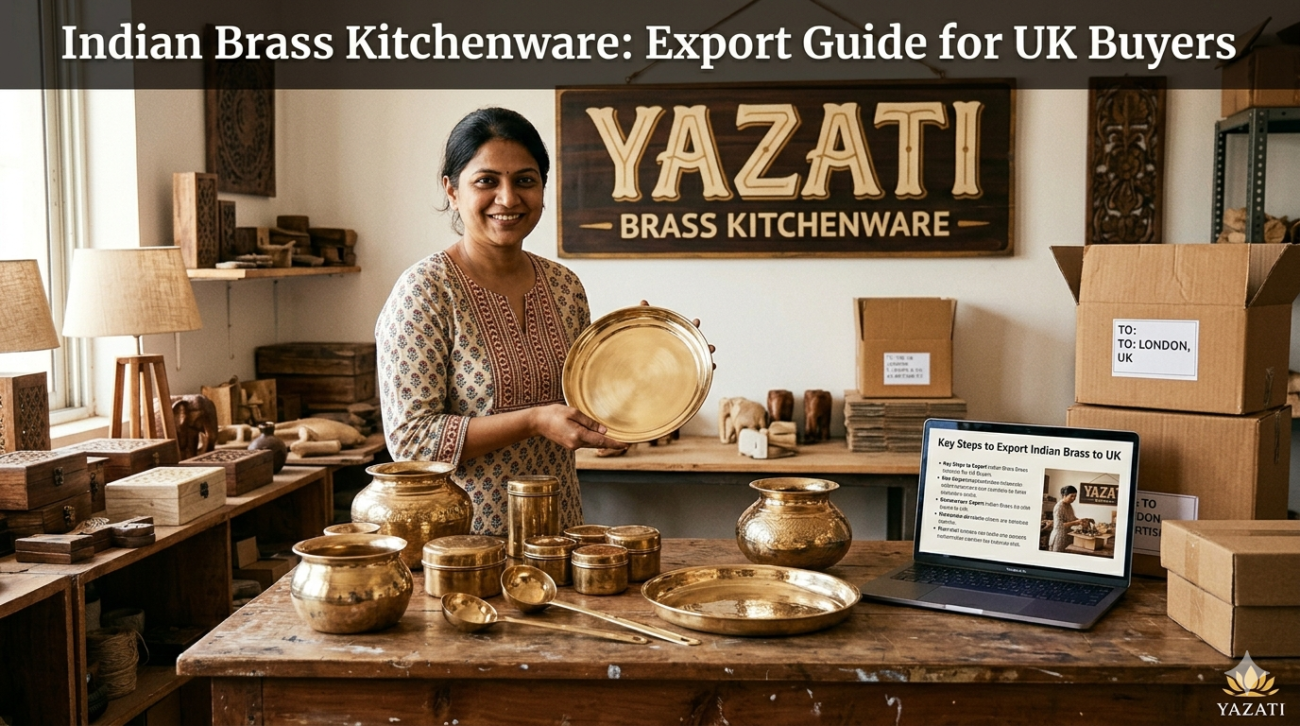
The global demand for handcrafted kitchenware has increased rapidly over the past decade, and India has become one of the leading exporters of brass kitchen products. This Indian Brass Kitchenware Export Guide for UK Buyers provides everything importers need to know before sourcing brass kitchenware from India.
From traditional utensils to luxury decorative cookware, Indian brass products are widely admired for their craftsmanship, durability, and cultural appeal. UK retailers, wholesalers, restaurants, and online sellers are increasingly choosing Indian manufacturers because of competitive pricing and premium quality.
Whether you are a first-time importer or an experienced buyer, understanding sourcing, regulations, logistics, and supplier management can help you avoid costly mistakes and improve profits.
Understanding the Indian Brass Kitchenware Industry
India has a centuries-old tradition of brass craftsmanship. Skilled artisans continue to produce beautiful kitchenware using techniques passed down through generations.
Why Indian Brass Products Are Globally Popular
Indian brass kitchenware is popular because it combines functionality with aesthetics. Many consumers appreciate the golden appearance of brass products and their traditional charm.
Popular reasons behind global demand include:
- Long-lasting durability
- Elegant handcrafted designs
- Eco-friendly metal composition
- Heat retention properties
- Cultural and vintage appeal
Brass products are commonly used for serving dishes, cookware, storage containers, trays, bowls, and decorative kitchen accessories.
Key Manufacturing Regions in India
Several Indian cities specialize in brass manufacturing. Some of the most important production hubs include:
| Region | Specialty |
| Moradabad | Handmade brass utensils and decor |
| Jaipur | Decorative brass kitchenware |
| Delhi NCR | Export-focused manufacturing |
| Gujarat | Industrial brass production |
| Uttar Pradesh | Traditional artisan brassware |
Moradabad is often called the “Brass City of India” because of its massive export industry.
Types of Indian Brass Kitchenware Exported to the UK
Indian exporters manufacture a wide variety of brass kitchen products for UK buyers.
Traditional Brass Utensils
Traditional brass kitchenware remains highly popular among ethnic households and restaurants.
Examples include:
- Brass plates
- Serving bowls
- Cooking pots
- Water vessels
- Spice containers
- Brass thalis
These products are especially popular among buyers targeting Indian and South Asian communities in the UK.
Decorative and Modern Brass Kitchenware
Modern consumers often prefer stylish brass accessories that blend with contemporary kitchens.
Popular products include:
- Brass cutlery
- Designer serving trays
- Brass fruit baskets
- Decorative jars
- Luxury dining accessories
Minimalist and matte-finish brass items are trending strongly in European markets.
Handmade vs Machine-Made Products
Handmade brassware usually commands higher prices because of craftsmanship and uniqueness. Machine-made products are more affordable and suitable for mass retail.
| Feature | Handmade | Machine-Made |
| Uniqueness | High | Moderate |
| Cost | Higher | Lower |
| Production Speed | Slower | Faster |
| Artistic Value | Excellent | Limited |
Why UK Buyers Prefer Indian Brass Kitchenware
The UK market has seen rising demand for artisan kitchen products.
Durability and Long-Term Value
Brass is highly durable and resistant to wear. Buyers appreciate products that last for years without losing functionality.
This durability makes brass kitchenware attractive for:
- Restaurants
- Boutique retailers
- Luxury gift stores
- Home décor brands
Eco-Friendly and Sustainable Appeal
Consumers are becoming more environmentally conscious. Brass products support sustainable purchasing habits because they are reusable and recyclable.
Compared to plastic kitchenware, brass has a significantly lower environmental impact.
Growing Demand for Artisan Products
UK customers increasingly value handcrafted goods with authentic stories. Indian brassware offers traditional craftsmanship that appeals to premium buyers.
Many online marketplaces now promote handmade kitchenware as luxury lifestyle products.
Market Trends in the UK Brass Kitchenware Industry
Understanding market trends helps importers make smarter purchasing decisions.
Consumer Preferences in 2026
Current UK market trends include:
- Vintage-inspired dining accessories
- Sustainable kitchenware
- Handmade artisan products
- Luxury serving collections
- Ethnic dining sets
Consumers are also preferring warm metallic finishes over stainless steel.
Online Retail Growth and Wholesale Demand
E-commerce has transformed kitchenware sales in the UK. Platforms like Amazon, Etsy, and independent Shopify stores are increasing demand for unique imported products.
Wholesale buyers are now looking for:
- Smaller MOQ options
- Fast replenishment
- Private labeling
- Custom packaging
For trade information and import documentation guidance, buyers can refer to the official UK government trade portal:
UK Government Trade Information
Important UK Import Regulations and Compliance
Importing brass kitchenware requires compliance with UK regulations.
Product Safety Standards
UK buyers should ensure products meet:
- Metal composition safety standards
- Food-contact material regulations
- Heavy metal restrictions
- Consumer product safety requirements
Suppliers should provide laboratory test reports whenever required.
Packaging and Labeling Requirements
Proper labeling reduces customs delays.
Labels may need:
- Country of origin
- Product description
- Importer details
- Material composition
- Care instructions
Eco-friendly packaging is increasingly preferred by UK retailers.
Customs Duties and VAT
Import duties depend on product classification codes. UK buyers should verify HS codes before placing large orders.
Typical import costs include:
| Cost Type | Description |
| Customs Duty | Based on product category |
| VAT | Charged at UK rates |
| Freight Charges | Shipping expenses |
| Port Handling Fees | Terminal handling costs |
Working with customs brokers can simplify the process.
How to Find Reliable Indian Brass Kitchenware Suppliers
Choosing the right supplier is critical.
Evaluating Export Experience
Experienced exporters usually understand:
- UK compliance requirements
- Export documentation
- Packaging standards
- Shipping logistics
Buyers should request:
- Export history
- Client references
- Product catalogs
- Certifications
Factory Audits and Certifications
Factory audits help verify supplier credibility.
Useful certifications include:
- ISO certification
- SEDEX audits
- Quality management certifications
- Export licenses
Third-party inspections reduce sourcing risks.
Questions UK Buyers Should Ask Suppliers
Before confirming orders, buyers should ask:
- What is the minimum order quantity?
- Can products be customized?
- What are production timelines?
- Do you provide inspection reports?
- Which UK clients have you worked with?
Clear communication prevents misunderstandings later.
Pricing Structure and Cost Analysis
Pricing varies depending on design, brass quality, and craftsmanship.
Raw Material Pricing Factors
Brass prices fluctuate because of:
- Copper market rates
- Zinc pricing
- Energy costs
- Labor expenses
Importers should monitor commodity trends regularly.
MOQ and Bulk Discounts
Many Indian exporters offer lower prices for larger orders.
| Order Volume | Expected Pricing Benefit |
| Small Trial Orders | Standard pricing |
| Medium Orders | Moderate discount |
| Large Wholesale Orders | Significant savings |
Negotiating annual contracts may improve pricing further.
Shipping and Freight Costs
Shipping costs depend on:
- Weight
- Volume
- Packaging
- Delivery speed
- Freight method
Sea freight is generally more economical for large orders.
Shipping and Logistics from India to the UK
Efficient logistics ensure timely delivery.
Sea Freight vs Air Freight
| Shipping Type | Advantages | Disadvantages |
| Sea Freight | Lower cost | Longer delivery time |
| Air Freight | Faster shipping | Higher cost |
Most brass kitchenware imports use sea freight because products are heavy.
Packaging Protection for Brass Products
Proper packaging prevents scratches and dents.
Recommended protection methods include:
- Bubble wrapping
- Foam inserts
- Corrugated export cartons
- Moisture-resistant packaging
Premium buyers often request branded packaging.
Delivery Timelines and Port Handling
Average delivery timelines:
| Shipping Route | Estimated Transit Time |
| India to UK Sea Freight | 25–40 days |
| India to UK Air Freight | 5–10 days |
Port congestion and customs clearance may affect schedules.
Quality Control Measures for UK Importers
Quality consistency is essential for repeat business.
Pre-Shipment Inspection
Pre-shipment inspections help verify:
- Product dimensions
- Finish quality
- Quantity accuracy
- Packaging standards
Independent inspection agencies are widely used.
Product Testing and Finishing Standards
UK buyers often require:
- Smooth polishing
- Tarnish-resistant coating
- Uniform finish
- Food-safe treatment
Luxury buyers may request handmade finishing details.
Managing Product Consistency
Consistency improves customer trust.
Importers should maintain:
- Approved samples
- Written specifications
- Quality checklists
- Supplier scorecards
Long-term supplier relationships usually improve consistency.
Payment Methods and Trade Security
Secure payments reduce financial risk.
Letter of Credit
Letters of credit provide protection for both buyers and suppliers.
Benefits include:
- Reduced fraud risk
- Bank-backed security
- Document verification
This method is common for large wholesale orders.
Advance Payments and Risk Management
Small suppliers may request partial advance payments.
Typical structures include:
| Payment Stage | Percentage |
| Advance Deposit | 30% |
| Before Shipment | 70% |
Buyers should avoid full advance payments with unverified suppliers.
Trade Insurance Options
Trade insurance protects against:
- Shipment damage
- Non-delivery
- Supplier default
Insurance is especially important for high-value shipments.
Benefits of Long-Term Partnerships with Indian Exporters
Building stable supplier relationships creates long-term advantages.
Better Pricing and Customization
Long-term buyers often receive:
- Lower pricing
- Priority production
- Flexible MOQ
- Faster delivery
Suppliers are more willing to customize products for repeat customers.
Exclusive Product Development
Exclusive designs help UK retailers stand out in competitive markets.
Private labeling opportunities include:
- Custom logos
- Retail packaging
- Unique finishes
- Seasonal collections
This strategy improves brand identity and profit margins.
Common Challenges UK Buyers Face
Importing brass kitchenware also comes with challenges.
Delayed Shipments
Common causes include:
- Port congestion
- Production delays
- Customs inspections
- Weather disruptions
Planning inventory early helps reduce risks.
Quality Mismatch
Sometimes delivered products differ from approved samples.
This issue can be minimized through:
- Clear contracts
- Product specifications
- Inspection reports
- Sample approvals
Communication Barriers
Time zone differences and unclear communication may create misunderstandings.
Using written agreements and video calls can improve coordination.
Tips for Successful Brass Kitchenware Importing
Start with Small Trial Orders
Trial orders help evaluate:
- Product quality
- Delivery reliability
- Supplier communication
- Packaging standards
This reduces financial exposure.
Build Strong Supplier Relationships
Strong partnerships create better long-term business opportunities.
Regular communication and timely payments improve trust.
Stay Updated on UK Import Laws
Import regulations can change frequently. Buyers should monitor:
- Customs updates
- VAT rules
- Packaging regulations
- Sustainability requirements
Staying informed prevents compliance problems.
Frequently Asked Questions
Is brass kitchenware safe for food use?
Yes, high-quality brass kitchenware can be food-safe when manufactured according to proper standards and coatings.
What is the average MOQ for Indian brass exporters?
MOQ varies widely, but many exporters accept orders starting from 50–200 pieces depending on the product.
How long does shipping from India to the UK take?
Sea freight usually takes 25–40 days, while air freight may take 5–10 days.
Can UK buyers request customized brass products?
Yes, many Indian manufacturers offer OEM and private-label services.
Which Indian city is famous for brass exports?
Moradabad is the leading hub for brass exports in India.
What payment method is safest for first-time buyers?
Letters of credit and secure escrow arrangements are considered safer options.
Conclusion
This Indian Brass Kitchenware Export Guide for UK Buyers highlights the major factors importers should understand before sourcing products from India. From supplier selection and quality control to shipping logistics and compliance, every stage plays a critical role in successful importing.
Indian brass kitchenware continues to grow in popularity because of its craftsmanship, sustainability, and timeless appeal. UK buyers who focus on reliable suppliers, proper inspections, and strong business relationships can build highly profitable import operations.
As consumer demand for handmade and eco-friendly kitchen products rises, importing Indian brassware presents a valuable opportunity for wholesalers, retailers, and online brands alike.
✨ Discover Global Sourcing Excellence with Netyex ✨
Netyex is your trusted B2B sourcing partner, connecting international buyers with India’s finest manufacturers and curated product lines—from handicrafts and home décor to kitchenware, textiles, hospitality essentials, and more. With verified suppliers and end-to-end support, we make global procurement seamless, reliable, and efficient.
👉 Elevate your sourcing experience—explore Netyex today.
📦 Bulk orders & customisation | 🌍 Worldwide delivery | 🤝 Trusted by global buyers
Visit Netyex to source premium Indian products with confidence.