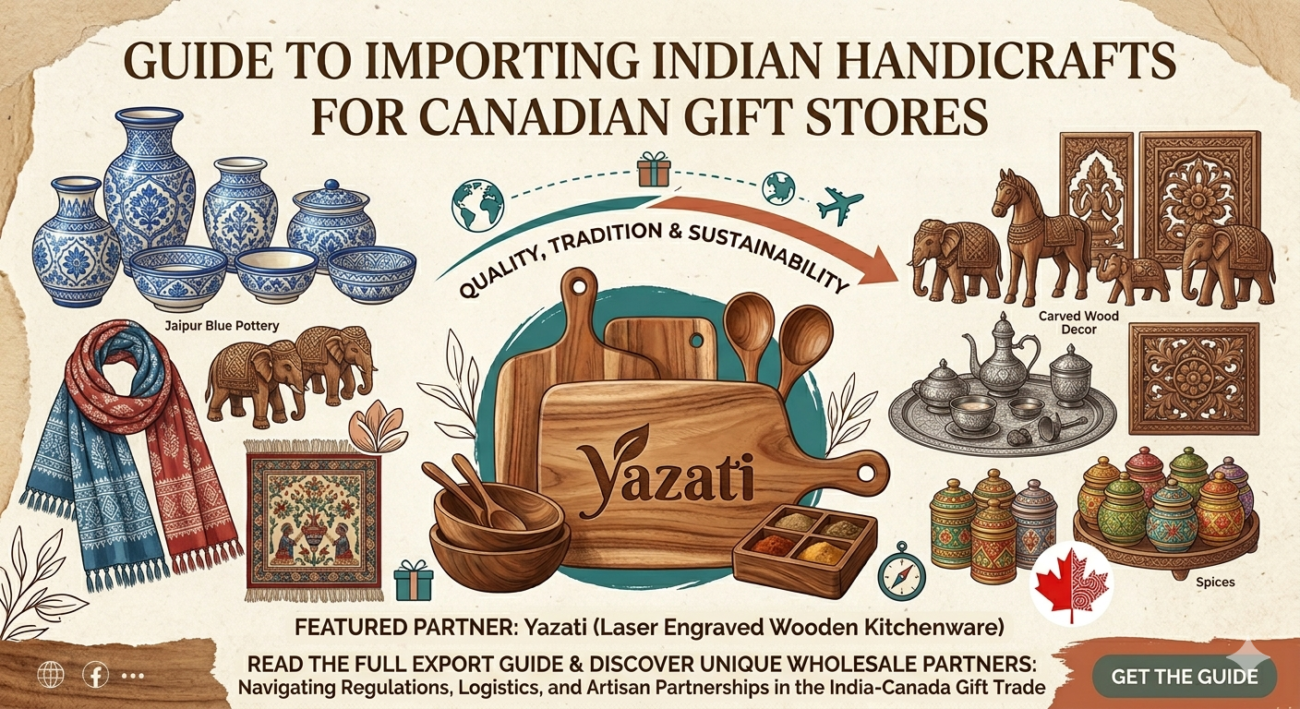
The global demand for handmade and culturally rich products is rising rapidly, and Canadian retailers are increasingly turning toward India for unique artisan goods. This Indian Handicrafts Export Guide for Canadian Gift Stores provides everything retailers need to know about sourcing authentic handicrafts from India, managing imports, understanding regulations, and building a profitable gift store business.
Indian handicrafts are known for their craftsmanship, heritage, sustainability, and artistic beauty. From wooden carvings and brass décor to embroidered textiles and eco-friendly gifts, Indian artisans create products that appeal strongly to Canadian consumers seeking authenticity and quality.
For gift store owners in Canada, importing Indian handicrafts can open doors to higher profit margins, unique inventory, and customer loyalty. However, success requires understanding suppliers, logistics, customs rules, packaging standards, and market trends.
This guide explains the complete process in simple terms so that retailers can confidently source and sell Indian handicrafts.
Understanding the Growing Demand for Indian Handicrafts in Canada
Why Canadian Consumers Love Handmade Products
Canadian shoppers are increasingly interested in products with cultural value and human craftsmanship. Mass-produced goods often lack emotional connection, while handmade products tell stories of tradition, heritage, and creativity.
Indian handicrafts attract buyers because they are:
- Handmade by skilled artisans
- Environmentally friendly
- Often made with natural materials
- Rich in history and culture
- Unique and difficult to replicate
Consumers also appreciate ethical shopping. Many Indian handicrafts support rural communities and women artisans, making them attractive to socially conscious buyers.
Popular Indian Artisan Categories in Canadian Retail
Several categories perform especially well in Canadian gift stores:
- Hand-painted pottery
- Wooden décor
- Brass statues and candle holders
- Handwoven textiles
- Embroidered cushion covers
- Jute bags and eco-friendly accessories
- Handmade jewelry
- Incense holders and wellness products
Products connected to wellness, yoga, meditation, and sustainable living are particularly successful in urban Canadian markets.
Overview of the Indian Handicrafts Industry
India has one of the world’s largest handicrafts industries. Millions of artisans work in rural and urban craft clusters, producing items using traditional methods passed down through generations.
The industry contributes significantly to exports and supports local economies.
Key Export Regions in India
Different regions specialize in unique crafts:
| Region | Specialty |
| Rajasthan | Marble work, textiles, blue pottery |
| Uttar Pradesh | Brassware, wood carving |
| Gujarat | Embroidery, beadwork |
| Kashmir | Carpets, papier-mâché |
| West Bengal | Terracotta, jute crafts |
| Tamil Nadu | Bronze statues |
| Karnataka | Sandalwood carving |
These regional specialties help Canadian retailers create diverse and authentic product collections.
Major Craft Clusters and Specialties
India’s craft clusters often focus on one art form for generations. Buying directly from these clusters can improve authenticity and pricing.
Examples include:
- Moradabad for brass items
- Jaipur for block printing
- Saharanpur for wooden handicrafts
- Kutch for embroidery
- Varanasi for silk textiles
Retailers sourcing from these regions can offer distinctive products unavailable through mainstream wholesalers.
Best Indian Handicrafts for Canadian Gift Stores
Home Décor Products
Home décor remains one of the strongest-selling categories in Canadian retail.
Popular products include:
- Decorative lanterns
- Handmade mirrors
- Wall hangings
- Wooden trays
- Ceramic vases
- Carved furniture accents
Neutral colors mixed with traditional Indian patterns work particularly well in modern Canadian homes.
Sustainable and Eco-Friendly Crafts
Sustainability has become a major purchasing factor. Canadian customers increasingly seek eco-conscious products made from renewable materials.
Strong-selling eco-friendly Indian handicrafts include:
- Jute baskets
- Bamboo décor
- Coconut shell bowls
- Recycled fabric products
- Natural fiber rugs
These items align perfectly with modern environmental values.
Festival and Seasonal Gift Items
Seasonal gifting provides excellent opportunities for retailers.
Best-selling festive items include:
- Diwali candles
- Christmas ornaments
- Handmade gift boxes
- Decorative bells
- Artisan candles
- Festive table décor
Retailers can increase profits by introducing limited seasonal collections.
How to Find Reliable Indian Handicraft Suppliers
Choosing trustworthy suppliers is critical for success.
Working with Export Houses
Export houses simplify international buying. They usually manage:
- Product sourcing
- Quality checks
- Packaging
- Export documentation
- Shipping coordination
For first-time importers, export houses reduce complexity and risk.
Visiting Trade Fairs and B2B Platforms
Trade fairs help buyers discover products and meet suppliers directly.
Popular Indian trade fairs include:
- IHGF Delhi Fair
- India Expo Mart events
- Handicrafts and Gift Fair exhibitions
Useful B2B sourcing platforms include:
- IndiaMART
- TradeIndia
- Alibaba
You can also learn more about India’s export promotion efforts through the official Export Promotion Council for Handicrafts at:
https://www.epch.in/
Before placing large orders, retailers should request:
- Product samples
- Company certifications
- Export references
- Production timelines
Understanding Canadian Import Regulations
Importing products into Canada requires compliance with customs and labeling regulations.
Product Labeling Requirements
Most imported products must clearly display:
- Country of origin
- Material composition
- Safety warnings if applicable
- Manufacturer or importer details
French labeling may also be necessary depending on the product category and province.
Customs Duties and Taxes
Import duties vary based on product classification. Retailers should consult customs brokers to determine:
- Applicable tariffs
- GST/HST requirements
- Import documentation
- Product compliance standards
Using accurate HS codes is essential for avoiding customs delays.
Pricing and Profit Margins for Gift Stores
Successful retailers carefully calculate all costs before pricing products.
Wholesale Pricing Strategies
Typical pricing calculations include:
| Cost Factor | Example |
| Product cost | $5 |
| Shipping | $2 |
| Customs and taxes | $1 |
| Packaging | $1 |
| Total landed cost | $9 |
| Retail price | $24-$30 |
Gift stores often target 2.5x to 3x markup depending on product category.
Shipping and Logistics Costs
Shipping expenses significantly affect profitability.
Factors include:
- Product weight
- Packaging size
- Freight method
- Fuel charges
- Port handling fees
Combining products into larger shipments usually lowers costs per unit.
Packaging and Branding Tips
Good packaging increases perceived value and protects products during shipping.
Eco-Friendly Packaging Trends
Canadian consumers appreciate recyclable packaging materials such as:
- Kraft paper
- Jute wrapping
- Recycled cardboard
- Compostable fillers
Sustainable packaging can strengthen brand identity and customer loyalty.
Storytelling Through Artisan Branding
Customers enjoy knowing the origin of products.
Retailers can improve engagement by sharing:
- Artisan stories
- Regional traditions
- Production techniques
- Sustainability efforts
Simple product tags explaining handmade processes often increase sales.
Shipping Methods from India to Canada
Choosing the right shipping method affects both cost and delivery speed.
Air Freight vs Sea Freight
| Method | Advantages | Disadvantages |
| Air Freight | Fast delivery | Higher cost |
| Sea Freight | Lower cost | Longer transit times |
Air freight works well for small or urgent orders, while sea freight is better for bulk inventory.
Choosing Freight Forwarders
Freight forwarders help coordinate:
- Customs clearance
- Cargo insurance
- Documentation
- Delivery tracking
Retailers should choose forwarders experienced in India-Canada trade routes.
Payment Methods and Risk Management
International transactions require careful planning.
Secure International Transactions
Common payment methods include:
- Wire transfers
- Letters of credit
- PayPal for smaller orders
- Escrow services
For first orders, partial advance payments with balance after inspection are common.
Quality Assurance and Inspections
Before shipping, inspections help verify:
- Product quality
- Packaging standards
- Correct quantities
- Product dimensions
Third-party inspection services can reduce risks and prevent costly disputes.
Marketing Indian Handicrafts in Canada
Marketing plays a huge role in retail success.
Social Media Promotion
Instagram and Pinterest are ideal for handicraft promotion because they focus on visuals.
Retailers should post:
- Product styling ideas
- Behind-the-scenes artisan stories
- Seasonal collections
- Home décor inspiration
Short videos showing handcrafted production processes often attract strong engagement.
In-Store Merchandising Ideas
Effective displays improve customer experience.
Good merchandising ideas include:
- Cultural-themed sections
- Seasonal décor arrangements
- Artisan spotlight corners
- Wellness and yoga displays
Warm lighting and storytelling signs create emotional connections.
Common Challenges and Solutions
Managing Delays and Inventory
International shipping delays can occur because of:
- Weather conditions
- Customs processing
- Port congestion
- Production shortages
Retailers should maintain buffer inventory for popular products.
Handling Product Damage
Fragile handicrafts may break during transport.
Solutions include:
- Double-layer packaging
- Foam protection
- Cargo insurance
- Careful supplier quality control
Testing packaging methods before large orders is highly recommended.
Future Trends in the Indian Handicraft Export Market
The handicraft market continues evolving rapidly.
Ethical Sourcing and Sustainability
Consumers increasingly prefer brands that support:
- Fair wages
- Women artisans
- Eco-friendly production
- Traditional craftsmanship
Retailers emphasizing ethical sourcing can build stronger customer trust.
Growth of Handmade Luxury Products
Luxury handmade products are gaining popularity among premium Canadian consumers.
High-end categories include:
- Artisan furniture
- Handwoven silk décor
- Luxury candles
- Premium ceramics
- Designer handicrafts
Limited-edition collections can increase exclusivity and profitability.
Frequently Asked Questions
Is importing Indian handicrafts to Canada profitable?
Yes. Many Canadian gift stores achieve strong profit margins because handmade products often command premium retail prices.
What are the best-selling Indian handicrafts in Canada?
Home décor, eco-friendly crafts, textiles, wellness products, and handmade gifts perform especially well.
How can I verify Indian suppliers?
Request export certificates, references, product samples, and conduct third-party inspections before placing large orders.
Do Indian handicrafts require special labeling in Canada?
Yes. Products usually require country-of-origin labels and may need bilingual labeling depending on the product type.
What is the cheapest shipping method from India to Canada?
Sea freight is generally the most cost-effective for large shipments.
How can gift stores market Indian handicrafts successfully?
Use storytelling, social media visuals, seasonal displays, and artisan-focused branding to attract customers.
Conclusion
This Indian Handicrafts Export Guide for Canadian Gift Stores demonstrates why Indian artisan products continue gaining popularity across Canada. Their cultural richness, sustainability, and handcrafted quality make them ideal for modern gift retailers seeking unique inventory and higher profit margins.
By selecting reliable suppliers, understanding import regulations, using effective branding, and focusing on customer storytelling, Canadian gift stores can successfully build thriving handicraft businesses.
As global consumers increasingly value ethical and handmade products, Indian handicrafts are positioned for long-term growth in international retail markets. Retailers who invest in authentic artisan partnerships today can create a strong competitive advantage for years to come.
✨ Discover Global Sourcing Excellence with Netyex ✨
Netyex is your trusted B2B sourcing partner, connecting international buyers with India’s finest manufacturers and curated product lines—from handicrafts and home décor to kitchenware, textiles, hospitality essentials, and more. With verified suppliers and end-to-end support, we make global procurement seamless, reliable, and efficient.
👉 Elevate your sourcing experience—explore Netyex today.
📦 Bulk orders & customisation | 🌍 Worldwide delivery | 🤝 Trusted by global buyers
Visit Netyex to source premium Indian products with confidence.