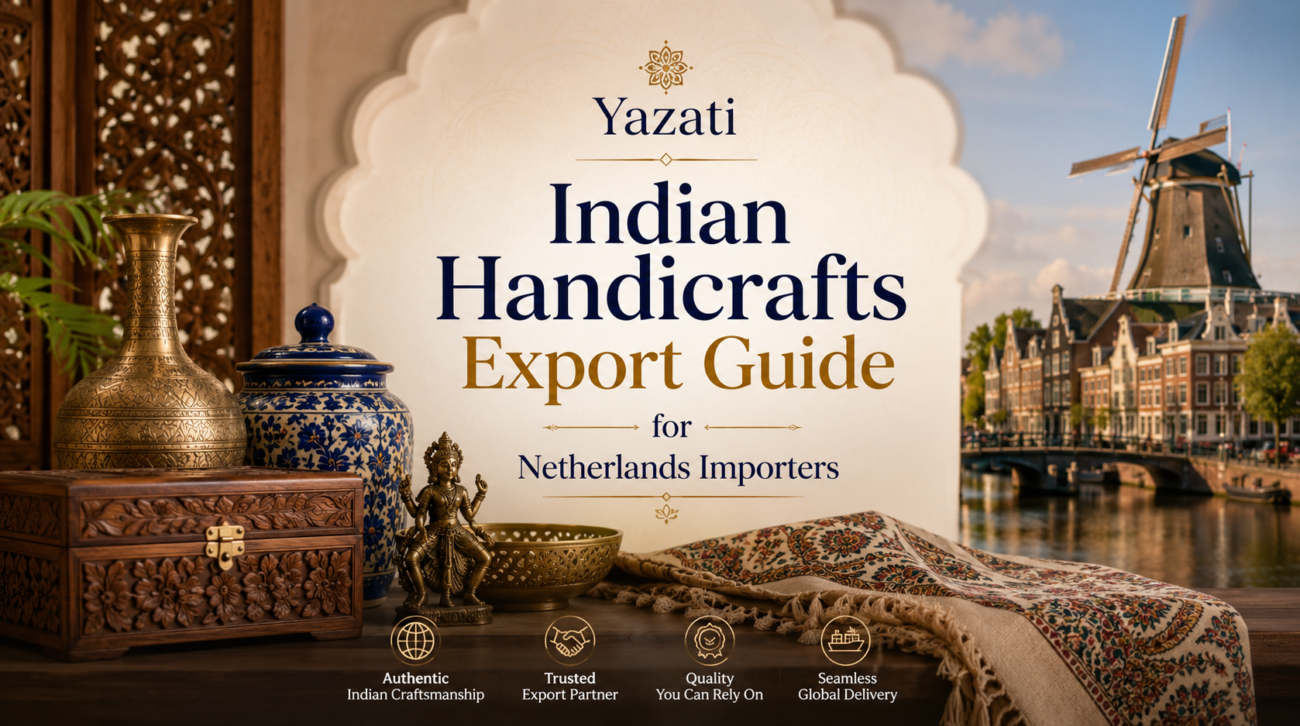
The Indian handicrafts industry has become one of the most attractive sourcing sectors for European buyers. For businesses in the Netherlands, importing handcrafted products from India offers a blend of tradition, quality, sustainability, and affordability. This Indian Handicrafts Export Guide for Netherlands Importers explains everything Dutch importers need to know before sourcing products from India.
From wooden décor and handmade textiles to brassware and eco-friendly crafts, India supplies a wide range of artisan-made goods to the European market. With increasing demand for sustainable and unique home décor in the Netherlands, Indian handicrafts continue to gain strong popularity.
Understanding the Indian Handicrafts Industry
India has one of the world’s oldest and most diverse handicraft traditions. Millions of artisans across rural and urban regions produce handmade items using traditional techniques passed down through generations.
Why Indian Handicrafts Are Popular in Europe
European buyers value authenticity, craftsmanship, and eco-conscious production. Indian handicrafts meet these expectations because they are:
- Handmade and unique
- Often produced with sustainable materials
- Rich in cultural heritage
- Competitive in pricing
- Available in customizable designs
The Netherlands market especially favors artisanal products that support ethical sourcing and environmentally friendly manufacturing.
Key Export Markets for Indian Artisans
India exports handicrafts to several countries including:
- Netherlands
- Germany
- France
- United Kingdom
- United States
- Italy
The European Union remains one of the largest destinations for Indian handmade products.
Why Netherlands Importers Prefer Indian Handicrafts
Dutch consumers increasingly seek products that combine beauty with sustainability. Handmade Indian goods fit perfectly into this trend.
Consumer Trends in Dutch Home Décor
Modern Dutch interiors often blend minimalist design with warm, handcrafted elements. Popular items include:
Retailers in the Netherlands prefer products with a story and artisanal identity.
Sustainability and Ethical Buying Preferences
Consumers in the Netherlands are highly aware of environmental and social impact. Importers therefore prioritize:
- Recycled materials
- Ethical labor practices
- Fair trade production
- Eco-friendly packaging
Indian exporters who offer sustainable production methods gain a strong advantage in European markets.
Top Categories of Indian Handicrafts Exported to Netherlands
India produces thousands of handicraft categories. However, some product segments perform especially well in the Dutch market.
Wooden Handicrafts
Wooden products from Rajasthan and Uttar Pradesh are highly popular. These include:
- Wall décor
- Furniture accents
- Carved trays
- Candle holders
- Storage boxes
Many Dutch buyers prefer mango wood due to its sustainable sourcing.
Brass and Metal Crafts
Moradabad is famous for brass and aluminum handicrafts. Export items include:
- Decorative bowls
- Lanterns
- Vases
- Table accessories
- Garden décor
Antique finishes and matte textures are trending strongly in Europe.
Textile and Embroidered Products
Indian textiles remain globally admired. Popular imports include:
- Cushion covers
- Handwoven throws
- Quilts
- Cotton bags
- Table linens
Block printing and hand embroidery are major selling points.
Handmade Jewelry and Accessories
Fashion accessories continue to grow in demand among boutique retailers in the Netherlands.
Examples include:
- Beaded necklaces
- Handmade earrings
- Leather accessories
- Bohemian-style jewelry
Eco-Friendly and Recycled Crafts
Sustainability is a major buying driver. Products made from recycled metal, reclaimed wood, jute, bamboo, and natural fibers are increasingly successful.
Major Handicraft Export Hubs in India
Different regions specialize in different craft traditions.
Jaipur
Jaipur is known for:
- Blue pottery
- Block printing
- Wooden crafts
- Handmade jewelry
Moradabad
Often called the “Brass City of India,” Moradabad specializes in:
- Metal décor
- Aluminum products
- Iron handicrafts
Saharanpur
Saharanpur is famous for wooden carving and export-quality furniture accents.
Jodhpur
Jodhpur exports rustic furniture and vintage-style décor products.
Kolkata and Chennai
These cities contribute significantly in:
- Jute crafts
- Textile exports
- Handmade accessories
Step-by-Step Import Process for Netherlands Buyers
Importing from India becomes easier with proper planning and supplier verification.
Finding Reliable Exporters
Importers can source suppliers through:
- Trade fairs
- B2B marketplaces
- Export councils
- Industry referrals
Useful official resource:
Export Promotion Council for Handicrafts
Product Sampling and Quality Checks
Always request samples before placing bulk orders. Evaluate:
- Finish quality
- Material consistency
- Packaging
- Product dimensions
Third-party inspections are also common.
Negotiating Pricing and MOQ
Minimum order quantities vary depending on product type. Successful negotiations usually involve:
- Long-term order commitments
- Mixed container options
- Flexible packaging arrangements
Shipping and Customs Documentation
Essential documents include:
| Document | Purpose |
| Commercial Invoice | Product and payment details |
| Packing List | Shipment breakdown |
| Bill of Lading | Transport document |
| Certificate of Origin | Confirms manufacturing country |
| Fumigation Certificate | Required for some wooden items |
Important Certifications and Compliance Standards
European compliance is critical for successful imports.
EU Product Safety Regulations
Products entering the Netherlands must comply with EU safety standards.
FSC Certification
Wooden products with FSC certification assure buyers of responsible forest sourcing.
REACH Compliance
REACH regulations control chemical usage in products sold within Europe.
Ethical Trade Certifications
Many Dutch retailers prefer suppliers with:
- Fair Trade certification
- Sedex audits
- Social compliance programs
Shipping Indian Handicrafts to Netherlands
Logistics planning significantly affects profitability.
Sea Freight vs Air Freight
| Shipping Method | Advantages | Disadvantages |
| Sea Freight | Lower cost | Longer transit time |
| Air Freight | Faster delivery | Higher cost |
Sea freight is generally preferred for bulk handicraft imports.
Packaging Standards
Proper packaging reduces breakage risks. Recommended packaging methods include:
- Bubble wrapping
- Export cartons
- Palletization
- Moisture protection
Port Options in Netherlands
The Port of Rotterdam is one of Europe’s largest import gateways and handles significant handicraft cargo from Asia.
Pricing Structure and Cost Considerations
Importers should understand the complete landed cost before purchasing.
Manufacturing Costs
Factors influencing pricing include:
- Material type
- Handwork complexity
- Labor intensity
- Customization
Shipping and Insurance
Freight rates fluctuate depending on fuel prices and global shipping demand.
Import Duties and VAT
Netherlands importers should calculate:
- Customs duties
- VAT charges
- Clearance fees
- Warehouse costs
Working with a customs broker simplifies the process.
Common Challenges and How to Avoid Them
Even experienced importers face sourcing challenges.
Delayed Shipments
Delays may happen due to:
- Seasonal production peaks
- Port congestion
- Raw material shortages
Buffer timelines help avoid inventory problems.
Product Quality Inconsistencies
Consistent inspections and clear specifications reduce quality risks.
Communication Gaps
Using written contracts, approved samples, and scheduled meetings improves supplier communication.
Best Trade Fairs and B2B Platforms
Trade fairs remain highly effective for discovering suppliers.
Ambiente Frankfurt
One of Europe’s largest consumer goods trade fairs featuring global handicraft exporters.
IHGF Delhi Fair
The Indian Handicrafts & Gifts Fair is among Asia’s largest handicraft sourcing exhibitions.
Online Wholesale Platforms
Popular sourcing platforms include:
- Alibaba
- IndiaMART
- TradeIndia
Digital Trends in Handicrafts Import Business
Technology is changing global sourcing rapidly.
Private Label Opportunities
Many Indian exporters now offer private labeling for European brands.
E-commerce Growth in Europe
Online home décor sales in the Netherlands continue to grow, increasing demand for unique artisan products.
Tips for Building Long-Term Supplier Relationships
Strong partnerships improve product consistency and pricing stability.
Vendor Audits
Regular audits help maintain compliance and quality standards.
Transparent Contracts
Clear agreements should define:
- Delivery timelines
- Quality standards
- Payment terms
- Penalty clauses
Repeat Order Strategies
Stable ordering patterns often lead to:
- Better pricing
- Priority production
- Improved customization
FAQs
Why are Indian handicrafts popular in the Netherlands?
Indian handicrafts are appreciated for their handmade quality, sustainability, affordability, and cultural uniqueness.
What are the most imported Indian handicrafts in Europe?
Wooden décor, textiles, brassware, handmade accessories, and eco-friendly crafts are highly popular.
Do Indian handicrafts require EU certifications?
Yes. Depending on the product category, compliance with REACH, FSC, and EU safety regulations may be required.
Which Indian city is best for handicraft sourcing?
It depends on the product type. Jaipur, Moradabad, Saharanpur, and Jodhpur are major sourcing hubs.
How long does shipping from India to Netherlands take?
Sea freight usually takes 25–40 days, while air freight may take 5–10 days.
What is the safest payment method for importing handicrafts?
Common payment methods include Letters of Credit (LC), Telegraphic Transfer (TT), and secure escrow arrangements.
Conclusion
This Indian Handicrafts Export Guide for Netherlands Importers highlights the enormous opportunities available for Dutch businesses sourcing artisan products from India. With rising European demand for sustainable, handmade, and ethically produced décor, Indian handicrafts offer strong profit potential and market appeal.
Success depends on choosing reliable suppliers, understanding EU compliance requirements, managing logistics carefully, and building long-term sourcing partnerships. Importers who invest in quality control and ethical sourcing practices can create sustainable growth in the expanding European handicraft market.
✨ Discover Global Sourcing Excellence with Netyex ✨
Netyex is your trusted B2B sourcing partner, connecting international buyers with India’s finest manufacturers and curated product lines—from handicrafts and home décor to kitchenware, textiles, hospitality essentials, and more. With verified suppliers and end-to-end support, we make global procurement seamless, reliable, and efficient.
👉 Elevate your sourcing experience—explore Netyex today.
📦 Bulk orders & customisation | 🌍 Worldwide delivery | 🤝 Trusted by global buyers
Visit Netyex to source premium Indian products with confidence.