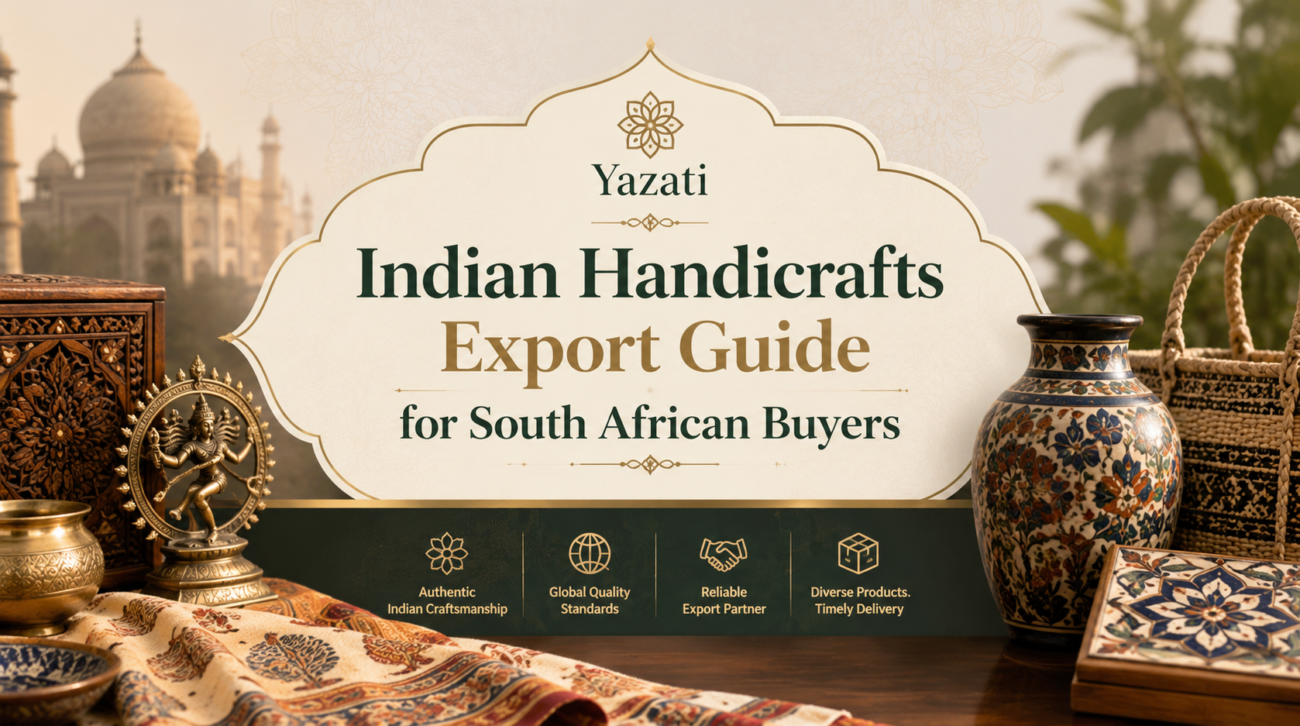
The global handicrafts market is growing rapidly, and India remains one of the world’s leading suppliers of handmade products. This Indian Handicrafts Export Guide for South African Buyers provides everything importers need to know before sourcing products from India. From supplier selection to shipping and quality control, this guide simplifies the import process for wholesalers, retailers, interior decorators, and online sellers in South Africa.
Indian handicrafts are admired for their craftsmanship, cultural richness, and affordability. South African buyers are increasingly sourcing Indian products because they offer excellent value and unique artistic appeal. Whether you want handcrafted furniture, textiles, jewelry, or decorative items, India offers a wide range of export-ready products.
Introduction to Indian Handicrafts Exports
India has a long tradition of producing handmade products. Skilled artisans from different regions create items using methods passed down through generations. These products are exported worldwide and are highly valued for their authenticity.
The Indian handicrafts industry contributes significantly to exports and employment. Thousands of small manufacturers and artisan groups supply products to global buyers. South African importers can benefit from competitive pricing, product variety, and strong export infrastructure.
Some of the major export destinations for Indian handicrafts include the United States, the United Kingdom, Germany, Australia, and South Africa.
Why South African Buyers Prefer Indian Handicrafts
South African consumers appreciate handcrafted products that combine beauty with cultural value. Indian handicrafts fit perfectly into this demand.
Growing Demand in South Africa
The home décor and lifestyle market in South Africa is expanding. Consumers are looking for unique items that stand out from mass-produced goods. Indian handicrafts meet this need because every piece carries artistic individuality.
Hotels, restaurants, gift shops, and interior designers also use Indian handicrafts to create stylish and culturally rich spaces.
Popular Product Categories
Some of the most imported Indian handicrafts in South Africa include:
- Wooden furniture
- Brass décor items
- Handmade rugs
- Embroidered cushion covers
- Incense holders
- Pottery
- Handmade candles
- Ethnic jewelry
- Wall hangings
These products appeal to customers looking for affordable luxury and artistic home styling.
Understanding the Indian Handicraft Industry
India’s handicraft sector is highly diverse. Different regions specialize in unique art forms and materials.
Major Handicraft Manufacturing Regions
Rajasthan
Known for:
- Wooden furniture
- Blue pottery
- Marble handicrafts
- Leather goods
Moradabad
Famous for:
- Brass products
- Metal handicrafts
- Decorative lanterns
Kashmir
Specializes in:
- Woolen carpets
- Papier-mâché
- Shawls
Gujarat
Popular for:
- Embroidery
- Beadwork
- Textile handicrafts
Tamil Nadu
Produces:
- Bronze statues
- Temple art
- Stone carvings
Each region offers products with distinct styles and craftsmanship.
Types of Materials Used
Indian artisans use various natural and recycled materials, including:
| Material | Common Products |
| Wood | Furniture, carvings |
| Brass | Lamps, statues |
| Cotton | Textiles, bags |
| Silk | Scarves, decorative fabrics |
| Clay | Pottery, vases |
| Bamboo | Baskets, eco-friendly décor |
| Leather | Journals, bags |
These materials provide durability and aesthetic value.
Best Indian Handicrafts to Import into South Africa
Choosing the right product category is important for profitability.
Wooden Handicrafts
Indian wooden handicrafts are highly popular due to their intricate carvings and rustic charm. Mango wood, teak wood, and sheesham wood are commonly used.
Popular products include:
- Coffee tables
- Cabinets
- Wall shelves
- Photo frames
- Candle holders
These items suit modern, vintage, and bohemian interiors.
Brass and Metal Artifacts
Metal handicrafts from India are widely recognized worldwide. South African buyers often import:
- Lanterns
- Decorative bowls
- Religious statues
- Wall art
- Candle stands
These products are durable and suitable for both indoor and outdoor décor.
Textile and Embroidered Products
Indian textiles are famous for their vibrant colors and detailed embroidery.
Best-selling items:
- Cushion covers
- Bedspreads
- Table runners
- Quilts
- Curtains
Handmade textiles are especially popular in boutique home décor stores.
Handmade Jewelry
India exports a wide variety of handmade jewelry made from silver, beads, brass, and gemstones.
Popular styles include:
- Tribal jewelry
- Bohemian accessories
- Ethnic earrings
- Handmade necklaces
These products sell well in fashion boutiques and online stores.
Home Décor and Furniture
Furniture exports from India continue to grow because buyers value handcrafted quality and unique designs.
Top-selling furniture includes:
- Side tables
- Antique cabinets
- Carved mirrors
- Dining chairs
- Rustic shelves
How to Find Reliable Indian Suppliers
Supplier selection is one of the most important parts of importing.
Trade Fairs and Exhibitions
Trade shows help buyers connect directly with manufacturers.
Important Indian trade fairs include:
- IHGF Delhi Fair
- India Expo Centre events
- Surajkund Crafts Mela
These exhibitions showcase thousands of export-ready products.
Online B2B Platforms
South African buyers can also use trusted B2B websites such as:
- Alibaba
- IndiaMART
- TradeIndia
When using online platforms:
- Check supplier reviews
- Verify certifications
- Request product samples
- Compare quotations
For official export information, buyers can also visit the .
Supplier Verification Methods
Before placing large orders:
- Ask for business registration documents
- Request export licenses
- Conduct video calls
- Verify factory addresses
- Hire third-party inspection agencies
These steps reduce business risks significantly.
Export Documentation Requirements
Importing goods requires proper documentation.
Invoice and Packing List
The commercial invoice contains:
- Product details
- Quantity
- Unit price
- Total value
The packing list includes:
- Carton details
- Dimensions
- Weight
These documents help customs authorities verify shipments.
Bill of Lading and Certificate of Origin
The bill of lading acts as proof of shipment and ownership.
The certificate of origin confirms the products were manufactured in India. South African customs may require this document for duty assessment.
Import Rules in South Africa
South African importers should:
- Register with customs authorities
- Understand VAT requirements
- Verify import duties
- Ensure product compliance
Working with a customs broker can simplify this process.
Shipping and Logistics for South African Buyers
Shipping plays a major role in total import costs.
Air Freight vs Sea Freight
| Shipping Method | Advantages | Disadvantages |
| Air Freight | Fast delivery | Higher cost |
| Sea Freight | Lower cost for bulk orders | Longer transit time |
Sea freight is usually the best option for large handicraft shipments.
Packaging and Damage Prevention
Handicrafts are often fragile and require strong packaging.
Best practices include:
- Bubble wrapping
- Wooden crates
- Moisture-resistant packaging
- Proper labeling
Good packaging minimizes losses during transport.
Customs Clearance Tips
To avoid customs delays:
- Submit accurate paperwork
- Use HS codes correctly
- Work with experienced freight forwarders
- Ensure packaging complies with regulations
Professional logistics partners can help streamline delivery.
Payment Methods and Risk Management
International trade involves financial risks, so secure payment methods are essential.
Letter of Credit
A letter of credit protects both buyers and suppliers because banks manage payment conditions.
Benefits include:
- Reduced fraud risk
- Secure transactions
- Better trust between parties
Secure International Transfers
Common payment options:
- Bank wire transfers
- PayPal for small orders
- Escrow services
- Trade assurance systems
Always avoid paying full amounts upfront to new suppliers.
Avoiding Fraudulent Suppliers
Warning signs include:
- Unrealistically low prices
- Refusal to provide samples
- Poor communication
- No export history
Background checks help protect your investment.
Pricing and Profit Margins
Profitability depends on proper cost analysis.
Understanding MOQ
MOQ stands for Minimum Order Quantity. Suppliers often offer lower prices for higher quantities.
Buyers should negotiate manageable MOQs during initial orders.
Negotiation Strategies
Successful negotiation tips:
- Compare multiple suppliers
- Ask for discounts on bulk orders
- Negotiate packaging costs
- Build long-term supplier relationships
Strong communication often leads to better pricing.
Quality Control for Handicraft Imports
Handmade products may vary slightly, so quality checks are important.
Factory Inspections
Third-party inspectors can:
- Verify production capacity
- Check working conditions
- Inspect product quality
- Monitor packaging standards
Product Sampling
Always request samples before large orders.
This helps buyers evaluate:
- Material quality
- Color consistency
- Craftsmanship
- Durability
Samples reduce costly mistakes.
Sustainability and Ethical Sourcing
Consumers increasingly prefer ethically sourced products.
Eco-Friendly Products
Indian exporters now offer:
- Recycled wood products
- Organic cotton textiles
- Natural dyes
- Bamboo handicrafts
Eco-friendly products appeal to environmentally conscious buyers.
Supporting Artisan Communities
Buying handmade products supports rural artisans and preserves traditional skills.
Many exporters work directly with artisan cooperatives to ensure fair wages and ethical production.
Marketing Indian Handicrafts in South Africa
Effective marketing increases sales and brand visibility.
Online Retail Opportunities
South African businesses can sell Indian handicrafts through:
- Shopify stores
- Instagram shops
- Facebook Marketplace
- Etsy
- Local eCommerce websites
High-quality photography and storytelling improve customer engagement.
Interior Design and Gift Markets
Indian handicrafts perform well in:
- Boutique décor stores
- Hospitality projects
- Corporate gifting
- Wedding gift markets
Positioning products as handcrafted luxury items can increase profit margins.
Common Challenges and Solutions
| Challenge | Solution |
| Shipping delays | Use reliable freight partners |
| Product damage | Improve packaging |
| Supplier fraud | Conduct verification |
| Customs complications | Hire customs brokers |
| Inconsistent quality | Perform inspections |
Preparation and planning reduce most importing issues.
Future Trends in the Indian Handicraft Market
Several trends are shaping the future of handicraft exports:
- Sustainable products
- Handmade luxury décor
- Customized handicrafts
- Eco-conscious packaging
- Digital B2B sourcing
- Artisan storytelling
South African buyers who adapt to these trends can build strong and profitable businesses.
FAQs
1. Why are Indian handicrafts popular in South Africa?
Indian handicrafts are popular because they are affordable, artistic, handmade, and culturally unique.
2. What are the best Indian handicrafts to import?
Wooden furniture, textiles, brass décor, jewelry, and handmade home décor items are among the best-selling categories.
3. How can South African buyers verify Indian suppliers?
Buyers can verify suppliers through trade fairs, certifications, factory inspections, and third-party verification services.
4. What is the cheapest shipping method for handicrafts?
Sea freight is usually the most cost-effective method for large shipments.
5. Are Indian handicrafts eco-friendly?
Many Indian handicrafts are made using sustainable materials like bamboo, recycled wood, and organic cotton.
6. What documents are needed for importing handicrafts into South Africa?
Common documents include invoices, packing lists, bills of lading, certificates of origin, and customs paperwork.
Conclusion
This Indian Handicrafts Export Guide for South African Buyers shows that importing from India can be a profitable and rewarding business opportunity. India offers exceptional craftsmanship, diverse product categories, and competitive prices that appeal strongly to South African consumers.
By choosing reliable suppliers, understanding export procedures, ensuring quality control, and following smart logistics practices, buyers can build successful long-term import businesses. As global demand for handmade and sustainable products continues to rise, Indian handicrafts are expected to remain highly valuable in the South African market.
Businesses that focus on authenticity, ethical sourcing, and creative marketing will likely achieve the best results in this growing industry.
✨ Discover Global Sourcing Excellence with Netyex ✨
Netyex is your trusted B2B sourcing partner, connecting international buyers with India’s finest manufacturers and curated product lines—from handicrafts and home décor to kitchenware, textiles, hospitality essentials, and more. With verified suppliers and end-to-end support, we make global procurement seamless, reliable, and efficient.
👉 Elevate your sourcing experience—explore Netyex today.
📦 Bulk orders & customisation | 🌍 Worldwide delivery | 🤝 Trusted by global buyers
Visit Netyex to source premium Indian products with confidence.