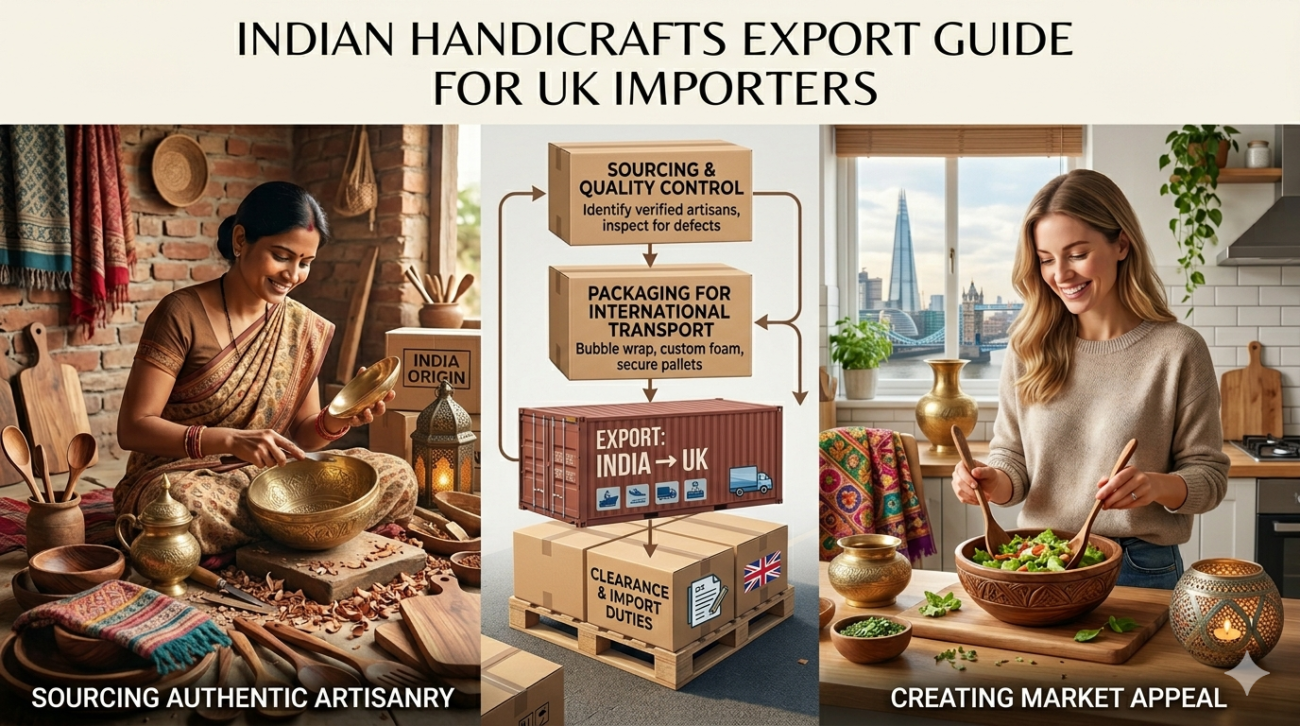
🧵 Introduction to Indian Handicrafts Export Market
The Indian Handicrafts Export Guide for UK Importers is your essential roadmap to tapping into one of the world’s most vibrant artisan industries. India has long been known for its rich cultural heritage, and its handicrafts sector reflects centuries of craftsmanship, tradition, and innovation. For UK importers, this presents a golden opportunity to source unique, high-quality products that appeal to modern consumers seeking authenticity.
Indian handicrafts are not just products—they are stories. Each piece carries the legacy of skilled artisans, often passed down through generations. From handwoven textiles to intricately carved wooden decor, the variety is vast and appealing to niche and mainstream markets alike.
✨ Why Indian Handicrafts Are Popular in the UK
Indian handicrafts have gained immense popularity in the UK due to their uniqueness and cultural value. British consumers increasingly prefer handmade and sustainable products over mass-produced goods. These crafts align perfectly with trends like ethical consumption and eco-conscious living.
Additionally, the aesthetic appeal of Indian designs—rich colors, detailed patterns, and traditional motifs—fits well with both contemporary and vintage interior styles. This versatility makes them a favorite among retailers, interior designers, and online sellers.
📈 Market Demand and Growth Trends
The demand for handicrafts in the UK has been steadily rising. With the growth of e-commerce platforms and global trade accessibility, UK importers can now easily connect with Indian suppliers. The handicrafts export sector in India continues to grow annually, supported by government initiatives and international demand.
🎨 Understanding Indian Handicrafts Categories
India offers a wide range of handicrafts, each representing different regions and traditions. Understanding these categories is crucial for selecting the right products for your target market.
🧶 Textiles and Embroidery Products
Textiles are among the most exported handicrafts from India. These include handwoven fabrics, embroidered garments, and decorative items like cushion covers and wall hangings.
Popular styles include:
- Block printing
- Kantha embroidery
- Bandhani tie-dye
These products are lightweight, making them cost-effective for shipping and highly attractive for UK consumers.
🪵 Wooden and Metal Crafts
Wooden handicrafts include furniture, home decor items, and carved sculptures. Metal crafts, often made from brass or copper, include lamps, utensils, and decorative pieces.
These items are durable and have a premium feel, making them ideal for high-end markets.
🏺 Stone, Marble, and Terracotta Items
Stone and marble handicrafts, such as tabletops and statues, are known for their elegance. Terracotta items, on the other hand, offer a rustic charm and are popular for garden decor.
📍 Key Export Regions in India
Understanding where different handicrafts originate helps in sourcing authentic and high-quality products.
🏜️ Rajasthan Craft Hubs
Rajasthan is famous for:
- Blue pottery
- Wooden furniture
- Textiles and block prints
Cities like Jaipur and Jodhpur are major export centers.
🕌 Uttar Pradesh Artisan Clusters
Uttar Pradesh is known for:
- Brassware (Moradabad)
- Glassware (Firozabad)
- Carpets (Bhadohi)
These clusters specialize in large-scale production with skilled labor.
🌴 South India Specialty Crafts
South India offers:
- Sandalwood carvings (Karnataka)
- Silk textiles (Tamil Nadu)
- Coir products (Kerala)
📜 Legal Requirements for UK Importers
Before importing, it’s essential to understand UK regulations.
💷 Import Duties and VAT in the UK
UK importers must pay:
- Customs duty (varies by product type)
- VAT (usually 20%)
Proper classification using HS codes is crucial to avoid penalties.
📄 Documentation and Certifications
Required documents include:
- Commercial invoice
- Packing list
- Bill of lading
- Certificate of origin
🚢 Export Regulations in India
🆔 Export License and IEC Code
Indian exporters must have an Import Export Code (IEC) issued by the Directorate General of Foreign Trade.
🏛️ Role of Export Promotion Councils
Organizations like the Export Promotion Council for Handicrafts help connect buyers with verified suppliers and provide market insights.
🤝 Finding Reliable Suppliers in India
🌐 Online B2B Platforms
Websites like IndiaMART and TradeIndia are excellent starting points for sourcing suppliers.
🎪 Trade Fairs and Exhibitions
Events such as the IHGF Delhi Fair allow importers to meet suppliers in person and inspect products directly.
💰 Pricing, Negotiation, and MOQ
📊 Understanding Cost Structure
Costs include:
- Product cost
- Packaging
- Shipping
- Duties and taxes
Understanding this helps in setting competitive retail prices.
🗣️ Negotiation Tips
- Order in bulk for better pricing
- Build long-term relationships
- Request samples before finalizing
📦 Shipping and Logistics
✈️ Air Freight vs Sea Freight
- Air freight: Faster but expensive
- Sea freight: Cost-effective for bulk orders
📦 Packaging and Labeling Requirements
Proper packaging ensures product safety and compliance with UK standards.
🔍 Quality Control and Compliance
🧪 Inspection Methods
Hire third-party inspection agencies to ensure product quality before shipment.
🇬🇧 UK Safety Standards
Ensure compliance with UK regulations, especially for items like children’s products and electrical goods.
💳 Payment Methods and Risk Management
🔐 Secure Payment Options
- Letter of Credit (LC)
- PayPal
- Bank transfer
⚠️ Avoiding Fraud
Always verify suppliers and avoid upfront full payments without guarantees.
🌱 Sustainability and Ethical Sourcing
🌿 Eco-Friendly Materials
Many Indian handicrafts use natural and recycled materials, aligning with UK sustainability trends.
🤲 Fair Trade Practices
Supporting artisans ensures ethical sourcing and enhances brand value.
📣 Marketing Indian Handicrafts in the UK
📖 Branding and Storytelling
Highlight the artisan story behind each product to connect with customers emotionally.
🛒 Selling via E-commerce
Platforms like Amazon and Etsy are ideal for selling handicrafts.
⚠️ Common Challenges and Solutions
⏳ Delays and Customs Issues
Solution: Work with experienced freight forwarders.
🔄 Supplier Reliability
Solution: Start with small orders and scale gradually.
❓ FAQs on Indian Handicrafts Export Guide for UK Importers
1. What are the most profitable handicrafts to import from India?
Textiles, home decor, and wooden crafts are highly profitable due to demand and margins.
2. Do I need a license to import handicrafts into the UK?
Generally, no special license is required, but you must comply with customs and VAT regulations.
3. How can I verify Indian suppliers?
Use platforms, check certifications, and request samples.
4. What is the best shipping method?
Sea freight for bulk, air freight for urgent orders.
5. Are Indian handicrafts sustainable?
Yes, many are eco-friendly and handmade.
6. How do I market handicrafts in the UK?
Use storytelling, social media, and e-commerce platforms.
🏁 Conclusion and Final Thoughts
The Indian Handicrafts Export Guide for UK Importers provides a comprehensive pathway to entering a profitable and culturally rich market. With the right sourcing strategies, compliance knowledge, and marketing approach, UK importers can build a successful business around Indian handicrafts.
By focusing on quality, authenticity, and ethical sourcing, you not only create a profitable venture but also support traditional artisans and preserve cultural heritage.
✨ Discover Global Sourcing Excellence with Netyex ✨
Netyex is your trusted B2B sourcing partner, connecting international buyers with India’s finest manufacturers and curated product lines—from handicrafts and home décor to kitchenware, textiles, hospitality essentials, and more. With verified suppliers and end-to-end support, we make global procurement seamless, reliable, and efficient.
👉 Elevate your sourcing experience—explore Netyex today.
📦 Bulk orders & customisation | 🌍 Worldwide delivery | 🤝 Trusted by global buyers
Visit Netyex to source premium Indian products with confidence.