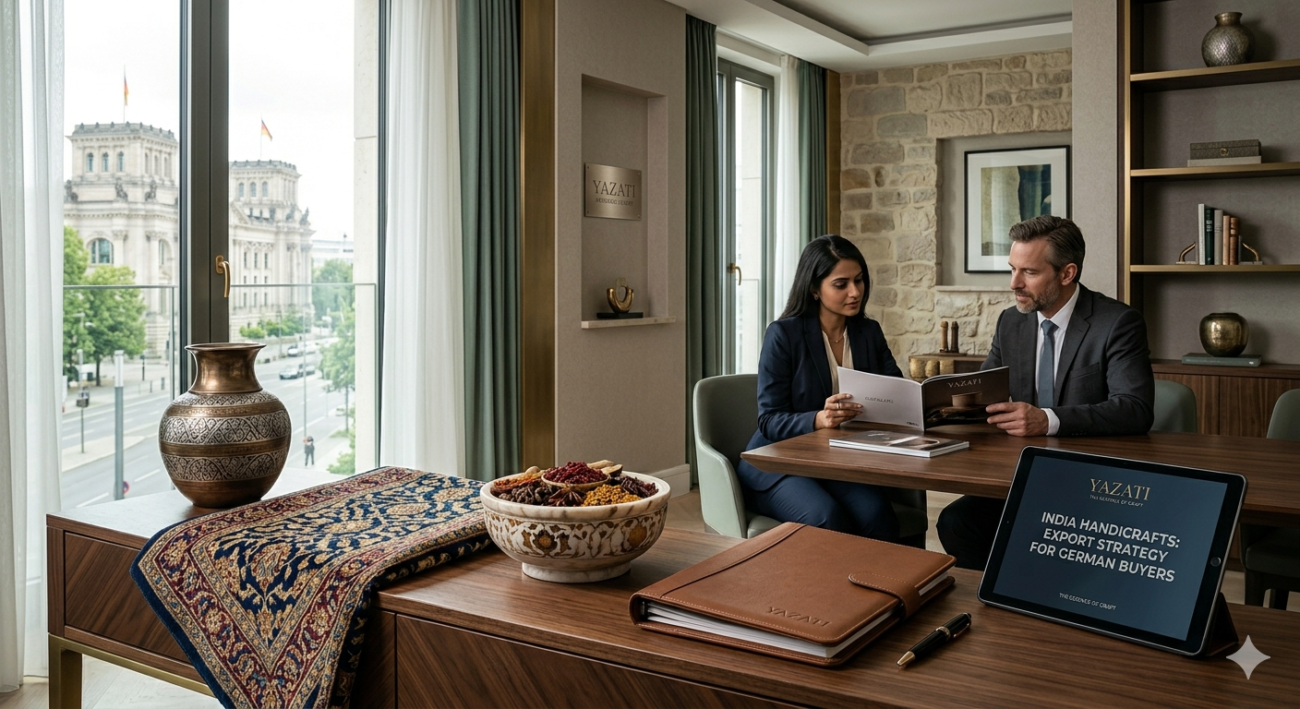
India has long been known for its rich tradition of handmade products, artistic heritage, and skilled craftsmanship. From wooden carvings and handwoven textiles to brassware and eco-friendly décor, Indian handicrafts attract buyers from all over the world. Among the strongest international markets, Germany stands out because of its appreciation for quality craftsmanship, sustainability, and authentic cultural products.
Creating an effective Indian Handicrafts Export Strategy for German Buyers requires more than simply shipping products overseas. Exporters must understand German consumer behavior, product standards, pricing expectations, logistics systems, and branding approaches. Businesses that adapt to the German market can build long-term partnerships and sustainable export growth.
In this detailed guide, you’ll learn how to create a successful export strategy specifically tailored for German buyers.
Understanding the German Handicrafts Market
Germany is one of Europe’s largest importers of handmade and decorative products. German consumers value craftsmanship, authenticity, durability, and environmentally friendly production methods. Unlike impulse-driven markets, German buyers often make thoughtful purchasing decisions based on quality and ethical sourcing.
For exporters, this means products must deliver:
- High consistency
- Premium finishing
- Sustainable materials
- Transparent production practices
- Reliable delivery timelines
Germany’s strong retail sector also creates opportunities for Indian exporters to supply:
- Boutique stores
- Interior décor chains
- Fair-trade retailers
- E-commerce businesses
- Lifestyle brands
An effective Indian Handicrafts Export Strategy for German Buyers begins with understanding these consumer expectations.
Why German Buyers Prefer Indian Handicrafts
Indian handicrafts have several competitive advantages in the German market.
Unique Artistic Heritage
Germany appreciates cultural authenticity. Indian products often reflect centuries-old artistic traditions, making them attractive to German consumers seeking unique home décor items.
Handmade Appeal
Mass-produced products dominate many global markets. Handmade Indian crafts offer individuality and emotional value that machine-made goods cannot replicate.
Eco-Friendly Production
Many Indian handicrafts naturally align with sustainable living trends because they use:
- Natural fibers
- Recycled materials
- Traditional low-energy production methods
Competitive Pricing
Indian exporters can offer high-quality handmade products at competitive prices compared to European manufacturing costs.
Key Product Categories in Demand
Handmade Home Décor
German consumers love artistic home accessories that combine beauty with functionality.
Popular products include:
- Wooden wall art
- Brass lanterns
- Handmade candles
- Ceramic décor
- Marble inlay products
Minimalist designs with earthy colors perform especially well in Germany.
Sustainable Products
Eco-conscious shopping is growing rapidly in Germany.
High-demand sustainable products include:
- Jute bags
- Bamboo products
- Recycled paper crafts
- Organic cotton textiles
- Natural dye products
Products marketed as sustainable should include certifications and transparent sourcing information.
Textile and Fabric Crafts
Indian textile traditions attract premium German buyers.
Top-selling items include:
- Handloom rugs
- Cushion covers
- Embroidered table runners
- Quilts
- Block-printed fabrics
German interior designers often prefer neutral tones combined with subtle ethnic patterns.
Market Research Techniques
Successful exporters conduct detailed market research before entering Germany.
Key research methods include:
- Studying German retail websites
- Analyzing competitor pricing
- Monitoring décor trends
- Reviewing trade statistics
- Visiting international trade fairs
Useful platforms include:
- Amazon Germany
- Etsy Germany
- Wayfair Europe
- Faire marketplace
You can also review German import data to identify top product categories and price ranges.
For official trade information, exporters can visit the .
Building a Strong Export Business Foundation
Business Registration and Licensing
Indian exporters must complete essential legal requirements before exporting handicrafts.
Key registrations include:
- IEC (Import Export Code)
- GST registration
- RCMC from Export Promotion Council for Handicrafts (EPCH)
Without proper documentation, international shipping becomes difficult.
Export Documentation
Essential export documents include:
- Commercial invoice
- Packing list
- Bill of lading
- Certificate of origin
- Insurance certificate
German customs authorities require accurate documentation to avoid delays.
Quality Standards Required in Germany
German buyers maintain strict quality standards.
Products should meet expectations related to:
- Durability
- Material safety
- Finishing consistency
- Packaging quality
Handicrafts containing wood, textiles, paints, or metals may require compliance checks.
Consistency is extremely important. A sample product and bulk shipment must match closely in:
- Color
- Texture
- Size
- Finish
Exporters should implement quality control systems before shipment.
Sustainability and Eco-Friendly Expectations
Sustainability strongly influences German purchasing behavior.
Important sustainability practices include:
- Using recyclable packaging
- Reducing plastic use
- Supporting artisan communities
- Ethical labor practices
Many German buyers ask suppliers for:
- FSC certification
- Fair Trade certification
- Organic certifications
- Carbon-conscious manufacturing information
An environmentally responsible approach can become a major competitive advantage.
Pricing Strategy for German Importers
Pricing requires careful balance.
German buyers compare:
- Product quality
- Shipping cost
- Wholesale margins
- Market competitiveness
A strong pricing strategy should include:
- Manufacturing cost
- Packaging cost
- Freight charges
- Customs duties
- Distributor margins
Avoid underpricing products simply to gain buyers. Extremely low prices may reduce trust in product quality.
Instead, emphasize:
- Handmade value
- Artisan craftsmanship
- Sustainability
- Limited production uniqueness
Packaging and Labeling Best Practices
Packaging plays a huge role in the German market.
German buyers prefer packaging that is:
- Minimalist
- Recyclable
- Durable
- Elegant
Important packaging tips:
- Use strong export cartons
- Add moisture protection
- Include barcode labels
- Provide care instructions
Packaging should protect fragile products during long-distance shipping.
Logistics and Shipping Strategy
Air Freight vs Sea Freight
Air freight works best for:
- Small urgent orders
- High-value handicrafts
- Exhibition samples
Sea freight is ideal for:
- Large wholesale shipments
- Furniture
- Bulk décor items
Choosing the right logistics partner improves delivery reliability.
Customs Clearance
Exporters must understand:
- EU customs regulations
- Import duties
- VAT procedures
- Product compliance requirements
Working with experienced customs brokers reduces delays and penalties.
Finding German Buyers for Indian Handicrafts
Finding the right buyers is critical for export success.
Effective channels include:
- B2B marketplaces
- Trade exhibitions
- LinkedIn networking
- Import-export directories
- Trade commissions
Top B2B platforms include:
- Alibaba
- IndiaMART
- Faire
- Global Sources
Building long-term buyer relationships matters more than quick sales.
Trade Fairs and International Exhibitions
Trade fairs help exporters meet serious buyers face-to-face.
Major German trade fairs include:
- Ambiente Frankfurt
- Tendence
- Heimtextil
Benefits of attending exhibitions:
- Understanding trends
- Building distributor networks
- Receiving direct buyer feedback
- Establishing credibility
Professional product displays significantly improve buyer interest.
Digital Marketing Strategy for Exporters
Modern exporting depends heavily on digital visibility.
Exporters should build:
- Professional websites
- Product catalogs
- Social media profiles
- SEO-focused blogs
Visual storytelling works particularly well for handicrafts.
SEO for Handicraft Export Businesses
SEO helps international buyers discover exporters online.
Important SEO practices:
- Product-specific keywords
- Optimized product descriptions
- Fast-loading website
- Mobile-friendly design
- Export-focused blog content
Useful keywords include:
- Indian handmade décor exporter
- Sustainable handicrafts supplier
- Wholesale handicrafts India
B2B Platforms
B2B marketplaces can generate consistent leads.
To succeed:
- Use professional product photos
- Provide detailed specifications
- Respond quickly to inquiries
- Maintain positive reviews
German buyers appreciate professionalism and prompt communication.
Building Trust with German Importers
Trust is one of the biggest factors in international trade.
German buyers prefer suppliers who are:
- Transparent
- Organized
- Consistent
- Honest about timelines
Ways to build trust:
- Share factory photos
- Provide certifications
- Offer product samples
- Maintain communication clarity
Reliable delivery schedules are extremely important.
Payment Terms and Risk Management
Export businesses must protect themselves financially.
Common payment methods include:
- Advance payment
- Letter of credit
- PayPal for samples
- Bank transfer
Risk reduction strategies:
- Export insurance
- Buyer verification
- Small trial orders
- Clear contracts
Never ship large orders without secure payment agreements.
Common Challenges in Exporting to Germany
Exporters often face challenges such as:
- Strict quality expectations
- Shipping delays
- Currency fluctuations
- High competition
- Communication barriers
Solutions include:
- Better quality control
- Strong logistics planning
- Market-specific product adaptation
- Continuous buyer communication
Patience and consistency are essential for long-term success.
Future Trends in the German Handicrafts Market
Several trends are shaping future demand.
Growing Eco-Conscious Shopping
Sustainability will continue driving buying decisions.
Rise of Ethical Consumerism
Consumers increasingly support artisan-made and fair-trade products.
Minimalist Ethnic Design
German buyers prefer subtle traditional designs integrated into modern interiors.
Online Wholesale Expansion
Digital B2B sourcing platforms will become even more important.
Exporters who adapt early to these trends can gain strong market advantages.
FAQs
What handicrafts are most popular in Germany?
Popular products include home décor, handmade textiles, wooden crafts, eco-friendly bags, brassware, and sustainable lifestyle products.
Do Indian handicrafts need certification for Germany?
Some products may require certifications related to sustainability, material safety, or fair-trade practices depending on the product category.
How can exporters find German buyers?
Exporters can use trade fairs, LinkedIn, B2B marketplaces, and export promotion councils to connect with German importers.
What packaging works best for German buyers?
Minimalist, recyclable, and durable packaging performs best in the German market.
Is Germany a profitable market for Indian handicrafts?
Yes. Germany has strong demand for authentic, sustainable, and handmade products, making it a highly attractive export destination.
What is the biggest challenge in exporting handicrafts to Germany?
Maintaining consistent quality standards and timely delivery are among the biggest challenges.
Conclusion
Developing a successful Indian Handicrafts Export Strategy for German Buyers requires careful planning, market understanding, and long-term relationship building. German buyers value authenticity, sustainability, reliability, and craftsmanship. Exporters who focus on quality control, eco-friendly production, professional branding, and strong communication can create profitable international business opportunities.
India’s handicraft sector already has a powerful global reputation. By aligning products with German consumer preferences and modern trade practices, exporters can build sustainable growth and establish long-term success in Europe’s largest economy.
The future of Indian handicrafts in Germany looks promising for businesses willing to adapt, innovate, and maintain high standards.
✨ Discover Global Sourcing Excellence with Netyex ✨
Netyex is your trusted B2B sourcing partner, connecting international buyers with India’s finest manufacturers and curated product lines—from handicrafts and home décor to kitchenware, textiles, hospitality essentials, and more. With verified suppliers and end-to-end support, we make global procurement seamless, reliable, and efficient.
👉 Elevate your sourcing experience—explore Netyex today.
📦 Bulk orders & customisation | 🌍 Worldwide delivery | 🤝 Trusted by global buyers
Visit Netyex to source premium Indian products with confidence.