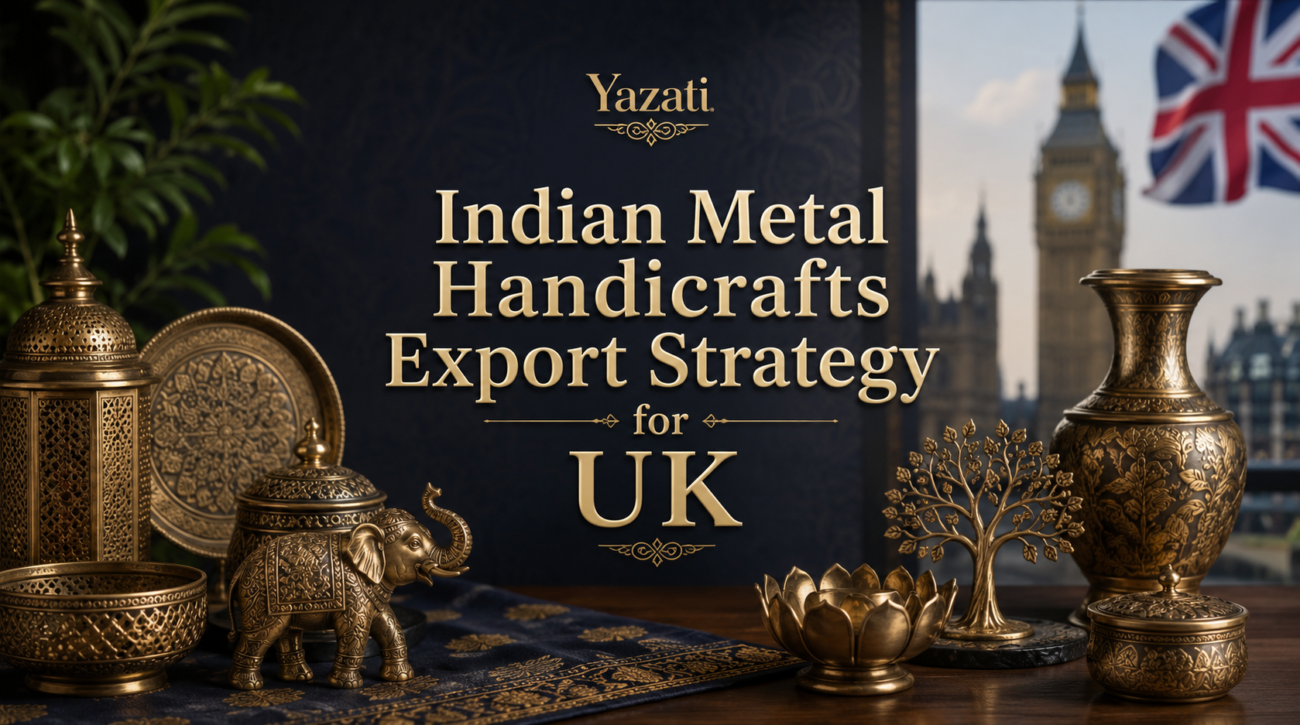
The UK market offers tremendous opportunities for Indian exporters specializing in metal handicrafts. From brass statues and copper utensils to iron wall décor and aluminum art pieces, British consumers appreciate products that combine craftsmanship, heritage, and sustainability. A well-planned Indian Metal Handicrafts Export Strategy for UK can help exporters build long-term relationships, increase profitability, and establish a premium international brand.
India has a strong advantage due to its centuries-old artisan traditions, competitive manufacturing costs, and diverse handicraft ecosystem. Cities like Moradabad, Jaipur, Jodhpur, and Delhi are globally recognized for producing quality metal handicrafts that appeal to international buyers.
This guide explains everything exporters need to know to successfully enter and grow in the UK market.
Understanding the UK Market for Indian Metal Handicrafts
Why Indian Handicrafts Are Popular in the UK
Indian handicrafts have gained popularity in the UK because consumers value handmade, artistic, and culturally rich products. British buyers often prefer products with authentic craftsmanship over mass-produced decorative items.
Several factors drive this demand:
- Growing interest in ethnic and bohemian home décor
- Preference for sustainable and handmade products
- Appreciation for Indian heritage and artisan stories
- Increasing online shopping for unique décor items
Indian metal handicrafts are especially attractive because they combine utility with visual appeal.
Consumer Trends in British Home Décor
The UK home décor market is constantly evolving. Current trends include:
| Trend | Impact on Handicraft Demand |
| Sustainable Living | Higher demand for recyclable metals |
| Minimalist Interiors | Preference for elegant metal accents |
| Vintage Aesthetics | Strong interest in antique finishes |
| Handmade Products | Growth in artisan-based purchasing |
Exporters should adapt designs and finishes according to these trends to stay competitive.
Market Research and Competitive Analysis
Identifying Profitable Product Categories
Before exporting, businesses should analyze which products sell best in the UK market. The most profitable categories often include:
- Brass candle holders
- Copper bottles and mugs
- Iron wall art
- Decorative trays
- Garden lanterns
- Metal sculptures
- Vintage-style home accents
Research can be conducted using:
- Amazon UK
- Etsy UK
- Pinterest trends
- Trade fair reports
- Import-export databases
Competitor Pricing Strategies
Studying competitor pricing helps exporters position their products correctly. UK buyers compare products based on:
- Design quality
- Finish
- Packaging
- Sustainability
- Brand image
Online Marketplace Benchmarking
Popular marketplaces help exporters analyze customer preferences. Monitor:
- Product reviews
- Best-selling categories
- Price ranges
- Seasonal demand
- Customer complaints
This information helps improve product quality and pricing.
Best Metal Handicraft Products to Export
Brass Décor Items
Brass products remain among the most profitable exports from India. Popular items include:
- Religious statues
- Table décor
- Lamps
- Antique-finish bowls
The UK market particularly values handcrafted brass items with traditional Indian motifs.
Copper Kitchenware
Copper drinkware has become popular because of wellness trends. Products with strong export potential include:
- Copper water bottles
- Mugs
- Serving trays
- Kitchen accessories
Health-conscious consumers are driving this segment.
Aluminum Decorative Pieces
Aluminum handicrafts are lightweight and cost-effective for shipping. They are commonly used in:
- Wall art
- Sculptures
- Decorative vases
- Candle stands
Iron Garden Accessories
Garden décor is a major opportunity in the UK because outdoor living spaces are highly valued.
Profitable products include:
- Garden lanterns
- Iron planters
- Decorative gates
- Outdoor sculptures
UK Import Regulations and Compliance
Product Safety Standards
Exporters must ensure products comply with UK safety regulations. Metal products should:
- Avoid toxic coatings
- Meet material safety requirements
- Include proper documentation
Failure to comply can lead to shipment rejection.
Packaging and Labeling Rules
Good packaging protects products during transit and improves brand perception.
Labels should include:
- Country of origin
- Material information
- Importer details
- Care instructions
Eco-friendly packaging is increasingly preferred.
VAT and Customs Duties
Understanding UK customs procedures is critical. Exporters should calculate:
- Import duties
- VAT
- Freight costs
- Customs clearance fees
Consulting a customs broker can reduce errors and delays.
Building a Strong Export Brand
Creating a Premium Indian Craft Identity
Branding plays a huge role in export success. Instead of competing only on price, exporters should focus on:
- Authentic craftsmanship
- Artisan heritage
- Handmade quality
- Cultural storytelling
A strong brand can justify premium pricing.
Sustainable and Ethical Branding
UK consumers increasingly support ethical businesses. Highlight:
- Fair trade practices
- Artisan empowerment
- Recycled materials
- Eco-friendly production
Storytelling in Handicraft Marketing
Every product should tell a story. For example:
- Which artisan community made it
- Traditional crafting techniques used
- Historical significance of the design
Storytelling increases emotional connection and customer loyalty.
Pricing Strategy for the UK Market
FOB vs CIF Pricing
Exporters must understand pricing methods:
| Pricing Type | Meaning |
| FOB | Buyer pays shipping |
| CIF | Seller includes shipping and insurance |
New exporters often prefer FOB to reduce risk.
Currency Exchange Considerations
Fluctuations in the British pound can affect profitability. Businesses should:
- Monitor exchange rates regularly
- Consider forward contracts
- Build currency buffers into pricing
Profit Margin Planning
A successful export business should balance:
- Competitive pricing
- Shipping costs
- Marketplace commissions
- Marketing expenses
Avoid underpricing simply to enter the market.
Distribution Channels in the UK
Selling Through Wholesalers
Wholesalers can help exporters reach retailers faster. Advantages include:
- Bulk orders
- Stable demand
- Reduced marketing costs
However, margins may be lower.
Retail Partnerships
Independent home décor stores often seek unique imported products. Exporters should approach:
- Boutique décor shops
- Lifestyle retailers
- Museum gift stores
- Garden centers
E-commerce and Online Platforms
Online selling is one of the fastest-growing channels for handicrafts.
Amazon UK and Etsy UK Strategy
Successful marketplace selling requires:
- Professional product photography
- SEO-rich product descriptions
- Competitive pricing
- Positive customer reviews
Useful export and trade information can also be found through organizations like
Logistics and Shipping Management
Choosing the Right Freight Forwarder
A reliable freight forwarder helps with:
- Documentation
- Customs clearance
- Shipment tracking
- Insurance
Experience with handicraft exports is important.
Sea Freight vs Air Freight
| Shipping Method | Best For |
| Sea Freight | Large bulk shipments |
| Air Freight | Urgent small orders |
Sea freight is usually more economical for metal handicrafts.
Warehousing Options in the UK
Some exporters use UK warehouses to:
- Speed up delivery
- Reduce shipping times
- Improve customer satisfaction
This strategy works well for e-commerce businesses.
Digital Marketing Strategy for Exporters
SEO for Handicraft Export Businesses
A strong website can generate international leads. Important SEO practices include:
- Product-focused keywords
- Blog content
- Fast-loading pages
- Mobile optimization
Social Media Marketing
Instagram and Pinterest are especially effective for visual products.
Content ideas:
- Artisan videos
- Product styling inspiration
- Behind-the-scenes production
- Customer testimonials
Influencer Collaborations
Home décor influencers can increase brand visibility in the UK market. Even micro-influencers can drive targeted sales.
Trade Shows and Networking Opportunities
UK Trade Fairs for Home Décor
Trade shows help exporters connect directly with buyers.
Important benefits:
- Buyer meetings
- Market feedback
- Trend analysis
- Brand exposure
B2B Buyer Meetings
Virtual meetings and sourcing platforms are also effective for:
- Distributor partnerships
- Retail negotiations
- Long-term contracts
Risk Management in Export Business
Payment Security
To reduce financial risk:
- Use Letters of Credit
- Work with export insurance
- Verify buyers carefully
Managing Returns and Damages
Metal handicrafts can be fragile. Use:
- Protective packaging
- Insurance coverage
- Clear return policies
Government Support for Indian Exporters
Export Promotion Councils
Organizations supporting handicraft exporters include:
- Export Promotion Council for Handicrafts (EPCH)
- DGFT
- MSME support schemes
These organizations assist with trade fairs, certifications, and buyer connections.
Financial Incentives and Schemes
Indian exporters may benefit from:
- Export subsidies
- Duty drawback schemes
- MSME financing programs
Understanding these incentives improves profitability.
Future Trends in UK Handicraft Imports
Eco-Friendly Product Demand
Sustainability will continue shaping consumer preferences. Recycled metal products and environmentally responsible packaging are expected to grow significantly.
Personalized Décor Trends
Customized products such as engraved metal signs, personalized trays, and bespoke sculptures are gaining popularity.
Exporters offering customization may achieve higher margins.
FAQs
What are the best Indian metal handicrafts to export to the UK?
Brass décor items, copper kitchenware, iron garden accessories, and aluminum decorative products are among the most profitable categories.
Do Indian exporters need certifications for the UK market?
Yes. Exporters must comply with UK import regulations, product safety standards, and labeling requirements.
Which UK marketplaces are best for handicrafts?
Amazon UK and Etsy UK are highly effective for selling handmade and decorative products.
How can exporters reduce shipping costs?
Using sea freight, optimizing packaging, and consolidating shipments can significantly lower costs.
Why is branding important in handicraft exports?
Strong branding helps businesses stand out, build trust, and charge premium prices.
What marketing strategies work best for handicraft exporters?
SEO, social media marketing, influencer collaborations, and trade shows are highly effective.
Conclusion
A successful Indian Metal Handicrafts Export Strategy for UK requires more than just quality products. Exporters must understand market trends, pricing strategies, compliance requirements, branding, logistics, and digital marketing.
The UK market values authenticity, sustainability, and craftsmanship — all areas where Indian artisans excel naturally. Businesses that combine traditional artistry with modern branding and smart export planning can build a profitable and sustainable international presence.
With the right strategy, Indian metal handicraft exporters can transform local craftsmanship into a globally recognized premium brand.
✨ Discover Global Sourcing Excellence with Netyex ✨
Netyex is your trusted B2B sourcing partner, connecting international buyers with India’s finest manufacturers and curated product lines—from handicrafts and home décor to kitchenware, textiles, hospitality essentials, and more. With verified suppliers and end-to-end support, we make global procurement seamless, reliable, and efficient.
👉 Elevate your sourcing experience—explore Netyex today.
📦 Bulk orders & customisation | 🌍 Worldwide delivery | 🤝 Trusted by global buyers
Visit Netyex to source premium Indian products with confidence.