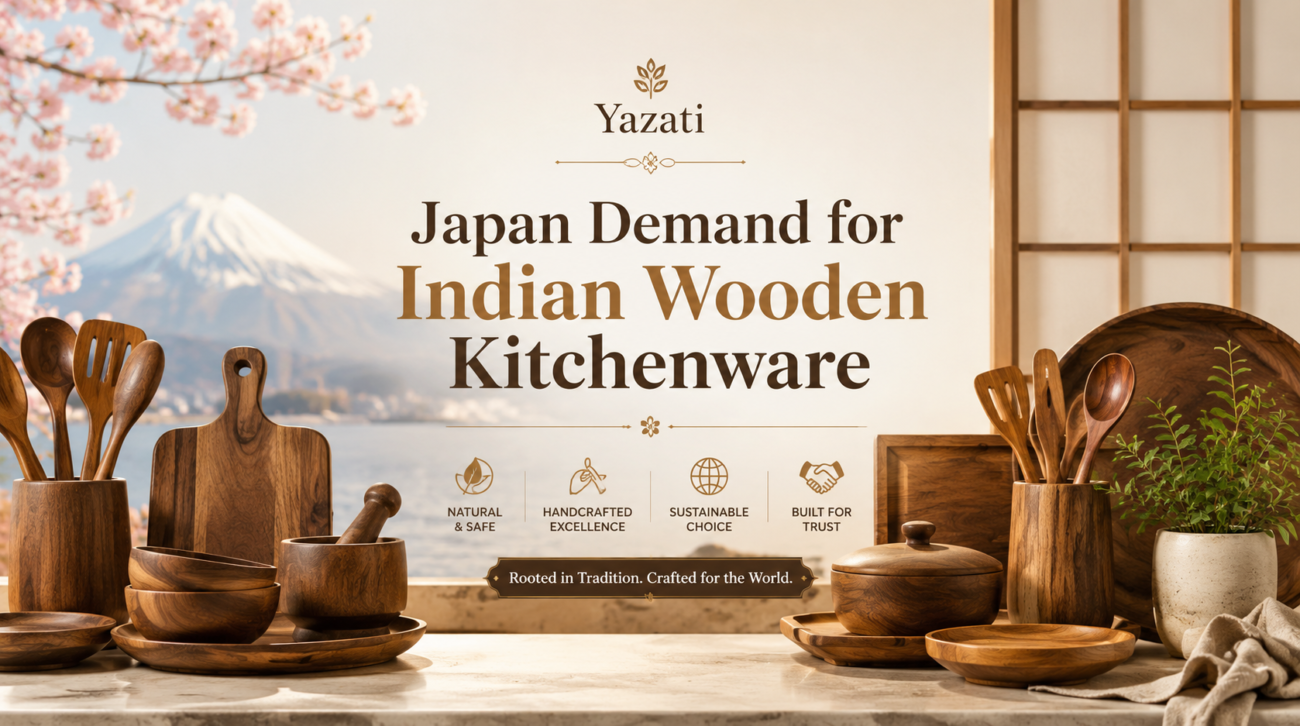
Introduction to Japan Demand for Indian Wooden Kitchenware
The Japan Demand for Indian Wooden Kitchenware has been steadily increasing over the last decade. Japanese consumers are known for their appreciation of quality, craftsmanship, sustainability, and aesthetics. These characteristics align closely with the strengths of Indian wooden kitchenware manufacturers.
India has a rich tradition of woodworking and handcrafted kitchen products made from materials such as neem wood, acacia wood, mango wood, teak wood, and sheesham wood. These products are increasingly attracting Japanese importers, retailers, and consumers seeking eco-friendly alternatives to plastic and synthetic kitchen utensils.
For Indian exporters, Japan represents a promising market with significant growth potential. Understanding consumer preferences, regulatory requirements, and market trends can help businesses capitalize on this opportunity.
Understanding the Japanese Kitchenware Market
The Japanese kitchenware industry is highly sophisticated and quality-driven. Consumers place great emphasis on functionality, durability, and design.
Consumer Preferences in Japan
Japanese households often prefer products that are:
- Minimalist in design
- Durable and long-lasting
- Environmentally friendly
- Safe for food contact
- Easy to clean and maintain
The popularity of natural materials has grown significantly as consumers become more environmentally conscious.
Growth of Sustainable and Eco-Friendly Products
Sustainability is no longer a niche trend in Japan. Many consumers actively seek products that reduce environmental impact. Wooden kitchenware fits perfectly into this movement because it is:
- Biodegradable
- Renewable
- Reusable
- Plastic-free
This shift creates favorable conditions for Indian wooden kitchenware exporters.
Why Indian Wooden Kitchenware Appeals to Japanese Buyers
Indian manufacturers possess several competitive advantages that resonate with Japanese consumers.
Traditional Craftsmanship and Handcrafted Value
India’s artisans have centuries of experience in woodworking techniques. Handcrafted products often carry unique patterns and textures that mass-produced alternatives cannot replicate.
Japanese consumers value authenticity and craftsmanship, making handcrafted Indian wooden kitchenware particularly attractive.
Natural Materials and Sustainability Benefits
Many Indian wooden products are manufactured using responsibly sourced wood. This appeals to environmentally conscious buyers who prefer natural alternatives over synthetic materials.
Key benefits include:
| Feature | Benefit |
|---|---|
| Natural Wood | Eco-friendly |
| Handmade Design | Unique appearance |
| Durable Construction | Long product lifespan |
| Renewable Resources | Sustainable consumption |
| Non-toxic Materials | Safe food preparation |
Popular Indian Wooden Kitchenware Products in Japan
Certain product categories perform exceptionally well in the Japanese market.
Wooden Spoons and Spatulas
Wooden cooking utensils remain among the most imported kitchen products. They are gentle on cookware surfaces and provide a natural cooking experience.
Popular items include:
- Rice paddles
- Cooking spoons
- Stirring spatulas
- Salad servers
Chopping Boards and Serving Trays
Japanese consumers appreciate aesthetically pleasing serving products that complement modern home décor.
Demand is particularly strong for:
- Acacia wood cutting boards
- Handmade serving trays
- Decorative platters
- Cheese boards
Bowls, Plates, and Utensils
Wooden bowls and serving dishes are gaining popularity in restaurants and households seeking natural dining experiences.
Key Factors Driving Japan Demand for Indian Wooden Kitchenware
Several important factors continue to fuel market growth.
Rising Eco-Conscious Consumer Behavior
Consumers are increasingly moving away from single-use plastics and synthetic materials. Wooden kitchenware provides a sustainable alternative that aligns with environmental goals.
Demand for Handmade and Artisanal Goods
Handcrafted products are viewed as premium items in Japan. Buyers often appreciate the cultural heritage and artistry behind handmade kitchenware.
Growth of Premium Home and Kitchen Segments
The premium home goods market has expanded considerably. Consumers are willing to pay higher prices for products offering:
- Superior craftsmanship
- Attractive design
- Sustainable materials
- Unique character
Market Size and Import Trends
Japan imports a significant amount of kitchenware products from international suppliers each year. While China remains a dominant supplier, diversification efforts have opened opportunities for Indian exporters.
Japanese Import Patterns
Importers increasingly seek:
- Sustainable product suppliers
- Reliable manufacturers
- Ethical sourcing practices
- Consistent quality standards
These requirements align well with many Indian manufacturers capable of producing high-quality wooden kitchenware.
Opportunities for Indian Exporters
Key opportunities include:
- Premium handcrafted products
- Eco-friendly kitchen accessories
- Restaurant supply products
- Gift and lifestyle products
- Custom-designed kitchenware
Quality Standards and Compliance Requirements
Entering the Japanese market requires strict adherence to quality standards.
Food Safety Regulations
Products must be:
- Safe for food contact
- Free from harmful chemicals
- Properly treated and finished
Exporters should maintain comprehensive quality control systems.
Packaging and Labeling Expectations
Japanese buyers expect:
- Professional packaging
- Clear product information
- Durable transport protection
- Attractive presentation
Proper packaging significantly influences purchasing decisions.
Challenges Faced by Indian Manufacturers
Despite strong opportunities, exporters may face several challenges.
Competition from Other Asian Countries
Major competitors include:
- China
- Vietnam
- Thailand
- Indonesia
These countries already have established supply relationships with Japanese importers.
Logistics and Supply Chain Issues
Exporters must manage:
- Shipping costs
- Delivery timelines
- Inventory planning
- Customs documentation
Efficient logistics can become a major competitive advantage.
Strategies to Increase Exports to Japan
Success requires a targeted market-entry strategy.
Product Customization for Japanese Consumers
Consider adapting products by:
- Using minimalist designs
- Offering compact sizes
- Improving packaging aesthetics
- Including Japanese-language labels
Customization increases acceptance among local buyers.
Building Long-Term Buyer Relationships
Japanese business culture values trust and consistency.
Effective strategies include:
- Maintaining product quality
- Delivering on schedule
- Providing responsive communication
- Offering after-sales support
Strong relationships often lead to repeat orders and long-term partnerships.
Digital Marketing and E-Commerce Opportunities
Online sales channels are becoming increasingly important.
Online Marketplaces in Japan
Popular channels include:
- Rakuten
- Amazon Japan
- Yahoo Shopping Japan
These platforms allow international brands to reach Japanese consumers directly.
Brand Building Through Storytelling
Successful brands often emphasize:
- Artisan heritage
- Sustainable sourcing
- Handmade craftsmanship
- Cultural authenticity
Storytelling helps differentiate Indian products from mass-produced alternatives.
For additional export guidance, businesses can consult resources provided by the World Trade Organization (WTO): https://www.wto.org
Future Outlook for Japan Demand for Indian Wooden Kitchenware
The future outlook remains highly positive. Several trends are expected to support continued growth:
- Increasing environmental awareness
- Growth of sustainable lifestyles
- Rising interest in handcrafted products
- Expansion of premium home décor markets
- Greater appreciation for natural materials
As Japanese consumers continue seeking eco-friendly and aesthetically pleasing kitchen products, Indian manufacturers are well-positioned to expand their market presence.
Frequently Asked Questions (FAQs)
1. Why is Japan importing more Indian wooden kitchenware?
Japan is experiencing growing demand for eco-friendly, sustainable, and handcrafted kitchen products, which Indian manufacturers can supply competitively.
2. Which wooden materials are most popular in Japan?
Acacia wood, teak wood, mango wood, neem wood, and sheesham wood are commonly preferred due to durability and appearance.
3. What products have the highest export potential?
Wooden spoons, spatulas, cutting boards, serving trays, bowls, and dining accessories show strong demand.
4. Do Indian exporters need special certifications?
Food-contact safety compliance, quality control documentation, and buyer-specific certifications may be required.
5. How important is packaging for Japanese buyers?
Packaging is extremely important. Attractive, clean, and professional packaging can significantly improve product acceptance.
6. Is the Japanese market suitable for small exporters?
Yes. Small and medium-sized manufacturers with unique handcrafted products can successfully enter niche and premium market segments.
7. What is the biggest challenge when exporting to Japan?
Meeting strict quality expectations and maintaining consistent product standards are often the biggest challenges.
Conclusion
The Japan Demand for Indian Wooden Kitchenware presents a significant opportunity for Indian exporters seeking growth in international markets. Japan’s strong preference for sustainability, quality craftsmanship, and premium home products creates ideal conditions for Indian wooden kitchenware manufacturers.
Businesses that focus on quality, compliance, attractive packaging, and long-term relationship building can establish a strong foothold in this lucrative market. As environmental awareness continues to rise, demand for eco-friendly wooden kitchenware is expected to grow further, making Japan an increasingly valuable destination for Indian exports.
✨ Discover Global Sourcing Excellence with Netyex ✨
Netyex is your trusted B2B sourcing partner, connecting international buyers with India’s finest manufacturers and curated product lines—from handicrafts and home décor to kitchenware, textiles, hospitality essentials, and more. With verified suppliers and end-to-end support, we make global procurement seamless, reliable, and efficient.
👉 Elevate your sourcing experience—explore Netyex today.
📦 Bulk orders & customisation | 🌍 Worldwide delivery | 🤝 Trusted by global buyers
Visit Netyex to source premium Indian products with confidence.