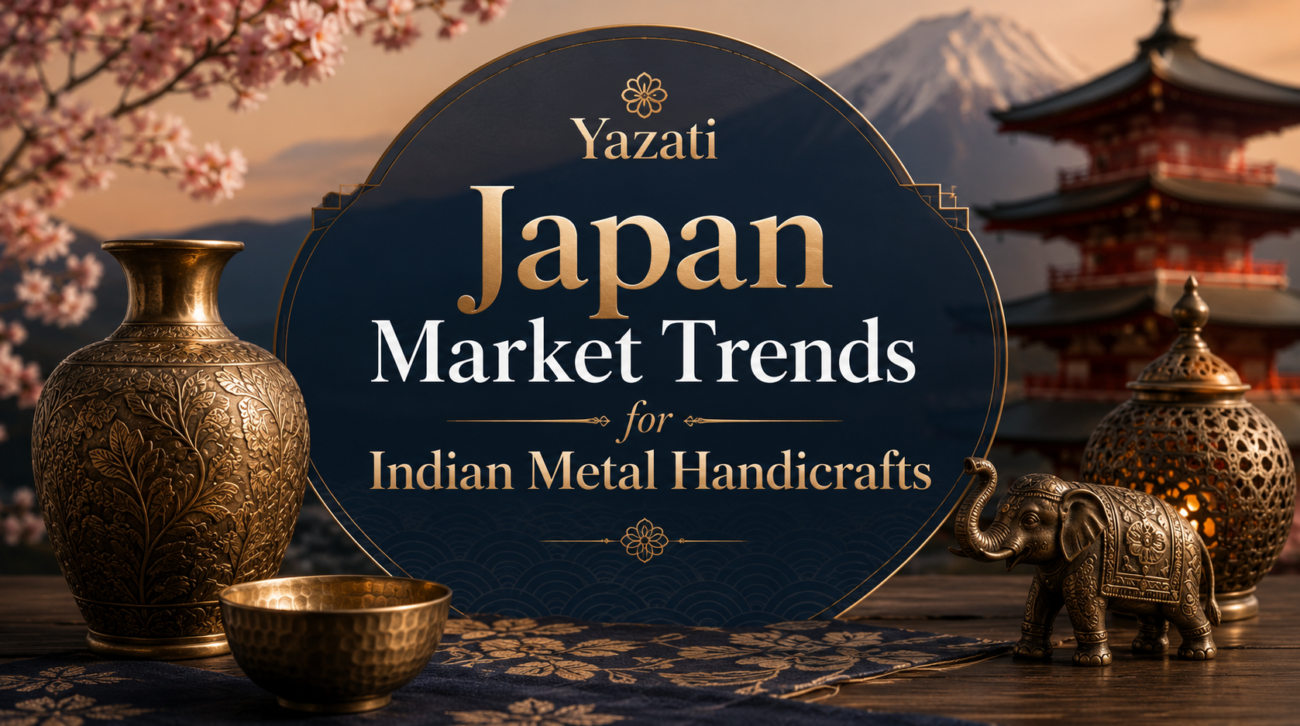
Japan has long been known for its appreciation of craftsmanship, quality, and artistic excellence. These characteristics make the country an attractive destination for Indian artisans and exporters seeking international opportunities. Understanding Japan Market Trends for Indian Metal Handicrafts is essential for businesses aiming to expand their footprint in one of Asia’s most sophisticated consumer markets.
As Japanese consumers increasingly seek authentic handmade products with cultural significance, Indian metal handicrafts are finding new opportunities across home décor, gifting, hospitality, and luxury retail sectors.
Introduction to the Japanese Handicrafts Market
Japan possesses a mature consumer market where buyers place exceptional value on craftsmanship, authenticity, and durability. Handmade products often command premium prices when they meet Japanese quality expectations.
The country’s aging population, increasing disposable income among affluent consumers, and growing interest in international cultural products have created favorable conditions for imported handicrafts.
Indian metal handicrafts, renowned for intricate workmanship and historical significance, align well with these preferences.
Why Japan Is an Attractive Market for Indian Metal Handicrafts
Growing Appreciation for Artisanal Products
Japanese consumers increasingly value products that tell a story. Handmade metal handicrafts from India represent centuries of tradition, making them appealing to buyers seeking unique and meaningful possessions.
Artisan-made products are viewed as alternatives to mass-produced goods, especially among younger urban consumers interested in sustainability and individuality.
Demand for Cultural and Heritage-Based Goods
Cultural appreciation remains strong in Japan. Products featuring traditional craftsmanship, historical motifs, and cultural narratives often perform well in specialty retail stores, museums, and premium gift shops.
Indian brass figurines, decorative lamps, and handcrafted sculptures can appeal to consumers interested in global art and heritage.
Current Market Size and Growth Potential
Import Trends in Home Décor Products
Japan continues to import significant quantities of premium home décor products. Imported decorative accessories have gained popularity as homeowners seek distinctive interior design elements.
Metal décor products that combine artistic beauty with functionality are particularly attractive.
Expansion of Premium Lifestyle Segments
Luxury lifestyle categories continue to grow, especially among consumers seeking exclusive and limited-edition products.
Indian handicrafts fit naturally into this segment due to their handcrafted nature, artistic value, and uniqueness.
Key Consumer Preferences in Japan
Understanding buyer behavior is crucial when analyzing Japan Market Trends for Indian Metal Handicrafts.
Minimalist Design Aesthetics
Japanese consumers often prefer:
- Clean lines
- Balanced proportions
- Subtle elegance
- Functional beauty
Indian exporters may benefit from offering collections that blend traditional Indian craftsmanship with minimalist design principles.
High Quality Expectations
Quality standards in Japan are among the highest in the world.
Consumers carefully evaluate:
- Surface finishing
- Material quality
- Packaging
- Product durability
- Attention to detail
Even minor defects can negatively impact customer satisfaction.
Sustainable and Ethical Purchasing
Environmental awareness continues to influence purchasing decisions.
Consumers increasingly seek products that:
- Use sustainable materials
- Support artisan communities
- Employ ethical production practices
- Minimize environmental impact
Highlighting fair-trade practices and artisan empowerment can strengthen market positioning.
Popular Indian Metal Handicraft Categories
Brass Decorative Items
Brass Handicrafts remain among the most exportable products.
Popular items include:
- Decorative bowls
- Lanterns
- Candle holders
- Table accents
- Traditional figurines
These products fit well within Japanese interior design preferences.
Copper Home Accessories
Copper Handicrafts are increasingly attractive due to their warm appearance and perceived health benefits.
Examples include:
- Copper vases
- Decorative trays
- Drinkware
- Artistic containers
Religious and Spiritual Artifacts
Spirituality-oriented products continue to find niche demand.
Examples include:
- Buddha statues
- Meditation accessories
- Temple-inspired décor
- Sacred symbols
These products often appeal to wellness-conscious consumers.
Metal Wall Décor and Sculptures
Modern Japanese homes increasingly incorporate artistic focal points.
Popular products include:
- Abstract sculptures
- Wall-mounted metal art
- Contemporary decorative panels
- Nature-inspired designs
Influence of Japanese Interior Design Trends
Wabi-Sabi and Traditional Craftsmanship
The Japanese concept of Wabi-Sabi values beauty in imperfection, authenticity, and natural aging.
Indian handcrafted metal products often embody these principles through:
- Hand-finishing marks
- Unique textures
- Artisan individuality
- Traditional techniques
This alignment creates a natural market opportunity.
Fusion of Modern and Traditional Décor
Many Japanese consumers mix modern furniture with traditional decorative accents.
Indian metal handicrafts can serve as statement pieces that add warmth and cultural richness to contemporary interiors.
E-Commerce Opportunities in Japan
Online Marketplaces
Digital commerce continues expanding across Japan.
Popular channels include:
- Amazon Japan
- Rakuten
- Yahoo! Shopping Japan
These platforms provide access to a large customer base while reducing entry barriers.
Social Commerce Growth
Social media increasingly influences purchasing behavior.
Effective platforms include:
- YouTube
Visual storytelling showcasing artisans, production techniques, and cultural heritage can significantly improve engagement.
Challenges for Indian Exporters
Quality Standards and Regulations
Exporters must comply with:
| Requirement | Importance |
|---|---|
| Product Safety | High |
| Material Standards | High |
| Labeling Compliance | High |
| Packaging Requirements | High |
| Import Documentation | High |
Meeting these standards is essential for long-term success.
Packaging and Logistics Requirements
Japanese buyers expect premium packaging.
Successful packaging should be:
- Durable
- Elegant
- Environmentally responsible
- Informative
- Damage-resistant
Investing in superior packaging often improves customer perception.
Effective Market Entry Strategies
Working with Japanese Distributors
Partnering with experienced distributors offers several advantages:
- Market knowledge
- Retail connections
- Regulatory expertise
- Customer support capabilities
Strong local partnerships often accelerate market penetration.
Participating in Trade Shows
Trade exhibitions remain valuable for building relationships.
Relevant opportunities include:
- International gift fairs
- Home décor exhibitions
- Lifestyle product expos
- Artisan craft showcases
Face-to-face interactions remain highly valued in Japanese business culture.
Pricing Strategies for Success
Japanese consumers are often willing to pay premium prices for exceptional quality.
Effective pricing strategies include:
- Positioning products as artisan luxury items.
- Highlighting craftsmanship and heritage.
- Offering limited-edition collections.
- Creating exclusive Japan-focused product lines.
- Emphasizing authenticity and handmade value.
Competing solely on price is generally less effective than competing on quality and uniqueness.
Future Outlook for Indian Metal Handicrafts
The future of Japan Market Trends for Indian Metal Handicrafts appears highly promising.
Several factors support continued growth:
- Rising demand for handcrafted goods
- Growing sustainability awareness
- Increased interest in global cultures
- Expansion of premium home décor markets
- Growth of online retail channels
Exporters who adapt products to Japanese tastes while preserving authentic Indian craftsmanship will likely achieve the strongest results.
Frequently Asked Questions
1. Why is Japan a good market for Indian metal handicrafts?
Japan values craftsmanship, quality, and authenticity, making it highly receptive to premium handmade products.
2. Which Indian metal handicrafts sell best in Japan?
Brass décor, copper accessories, sculptures, spiritual artifacts, and artistic home décor products are among the most popular categories.
3. What quality standards are important in Japan?
Japanese consumers expect flawless finishing, durable materials, excellent packaging, and consistent product quality.
4. Is e-commerce important for selling handicrafts in Japan?
Yes. Online marketplaces and social media channels provide significant opportunities for reaching Japanese consumers.
5. How can Indian exporters enter the Japanese market?
Working with distributors, participating in trade fairs, and utilizing e-commerce platforms are common entry strategies.
6. What design trends influence Japanese buyers?
Minimalism, Wabi-Sabi aesthetics, sustainability, and the fusion of traditional and modern décor strongly influence purchasing decisions.
Conclusion
The Japan Market Trends for Indian Metal Handicrafts indicate substantial opportunities for exporters willing to meet Japan’s high standards and evolving consumer preferences. Japanese buyers increasingly seek authentic, sustainable, and beautifully crafted products that add character and meaning to their homes and lifestyles.
By focusing on quality, adapting designs to local tastes, investing in premium packaging, and leveraging digital sales channels, Indian handicraft businesses can establish a strong presence in Japan’s lucrative market. The combination of India’s rich artisan heritage and Japan’s appreciation for craftsmanship creates a powerful foundation for long-term export success.
For additional export guidance, visit the official export promotion resources at https://www.epch.in/.
✨ Discover Global Sourcing Excellence with Netyex ✨
Netyex is your trusted B2B sourcing partner, connecting international buyers with India’s finest manufacturers and curated product lines—from handicrafts and home décor to kitchenware, textiles, hospitality essentials, and more. With verified suppliers and end-to-end support, we make global procurement seamless, reliable, and efficient.
👉 Elevate your sourcing experience—explore Netyex today.
📦 Bulk orders & customisation | 🌍 Worldwide delivery | 🤝 Trusted by global buyers
Visit Netyex to source premium Indian products with confidence.