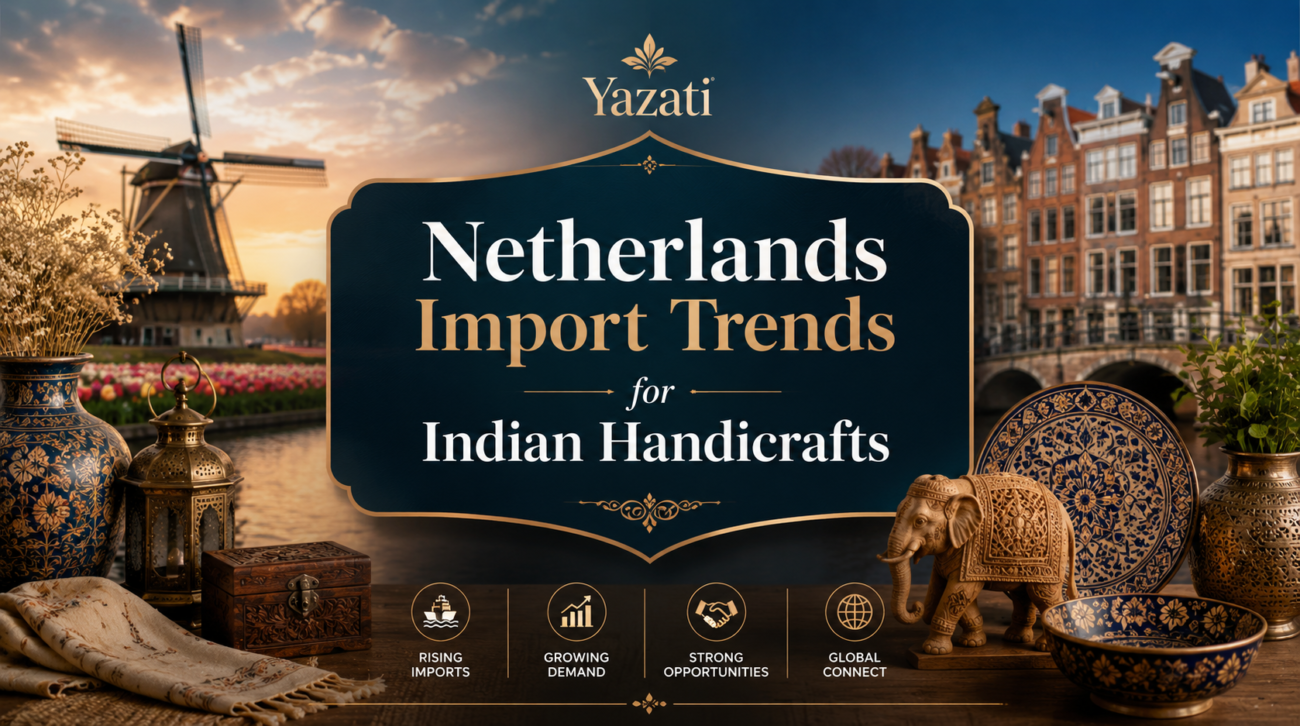
The Netherlands has become one of Europe’s most attractive destinations for Indian handicraft exports. From handmade furniture and eco-friendly décor to artistic textiles and traditional crafts, Dutch consumers are increasingly embracing products that combine authenticity, sustainability, and craftsmanship.
In recent years, Netherlands Import Trends for Indian Handicrafts have shown remarkable growth due to changing consumer lifestyles and the expansion of ethical shopping habits across Europe. Indian artisans and exporters now have a valuable opportunity to tap into this growing market.
According to trade insights from organizations like the Centre for the Promotion of Imports from Developing Countries and Export Promotion Council for Handicrafts, the European home décor and lifestyle market continues to favor handmade and eco-conscious products.
Introduction to the Netherlands Handicrafts Import Market
The Netherlands is known for its strong retail sector, modern logistics network, and high purchasing power. Dutch buyers actively seek premium handmade products that reflect creativity and environmental responsibility.
Indian handicrafts fit perfectly into this market because they offer:
- Traditional craftsmanship
- Sustainable production methods
- Unique artistic value
- Competitive pricing
- Cultural authenticity
Large Dutch importers often distribute products across Europe, making the Netherlands an important entry point for Indian exporters.
Why the Netherlands is Important for Indian Handicraft Exporters
Netherlands as a European Trade Gateway
The Netherlands hosts one of Europe’s busiest ports, the Port of Rotterdam. This allows imported handicrafts to move efficiently throughout the European Union.
Many wholesalers operating in Amsterdam, Rotterdam, and Utrecht supply products to neighboring countries such as:
- Germany
- Belgium
- France
- Denmark
- Sweden
For Indian exporters, entering the Dutch market often creates access to broader European opportunities.
Consumer Preference for Handmade Products
Dutch consumers increasingly value products with a human story behind them. Mass-produced items are gradually losing appeal among environmentally conscious buyers.
Handmade Indian products stand out because they:
- Preserve artisan heritage
- Support rural communities
- Use natural materials
- Offer limited-edition uniqueness
This trend strongly supports the growth of Netherlands Import Trends for Indian Handicrafts.
Key Netherlands Import Trends for Indian Handicrafts in 2026
Growing Demand for Sustainable Handicrafts
Sustainability has become one of the biggest purchasing factors in Europe. Dutch retailers now prioritize products made from:
- Recycled wood
- Bamboo
- Organic cotton
- Jute
- Natural dyes
Indian handicraft exporters using eco-friendly production methods gain a major competitive advantage.
Many European buyers also request certifications related to sustainability and ethical sourcing.
Rise in Eco-Friendly Home Décor
Eco-conscious interior decoration is booming in the Netherlands. Dutch homeowners increasingly prefer handcrafted decorative items over factory-made imports.
Popular products include:
| Product Type | Market Demand |
|---|---|
| Handmade wall art | High |
| Wooden candle holders | High |
| Jute baskets | Very High |
| Ceramic décor | Medium |
| Brass decorative items | High |
Minimalist and earthy designs perform especially well in Dutch retail stores.
Increasing Popularity of Handmade Furniture
Indian handmade furniture exports are growing rapidly due to the popularity of rustic and vintage-inspired interiors.
Popular categories include:
- Mango wood tables
- Reclaimed wood cabinets
- Hand-carved chairs
- Rustic shelving units
Consumers appreciate handcrafted imperfections because they create authenticity.
Dutch buyers also favor multifunctional furniture suitable for compact urban homes.
Demand for Ethical and Fair-Trade Products
Ethical shopping is no longer a niche trend. Many Dutch consumers actively support fair-trade businesses that ensure artisans receive fair wages.
Organizations like Fairtrade International influence purchasing behavior across Europe.
Indian exporters who share artisan stories and transparent sourcing practices often attract stronger buyer loyalty.
Expansion of Online Retail Channels
Online platforms have transformed the handicraft import business.
Dutch consumers increasingly purchase handicrafts through:
- eCommerce websites
- Online home décor marketplaces
- Social media shops
- Sustainable lifestyle platforms
This creates direct-to-consumer opportunities for Indian handicraft brands.
Platforms like Etsy and Amazon also help artisans reach European customers more efficiently.
Most Imported Indian Handicraft Categories in the Netherlands
Wooden Handicrafts
Wooden handicrafts remain among the top-performing export categories.
Best-selling products include:
- Hand-carved boxes
- Wooden trays
- Decorative mirrors
- Sustainable furniture
Mango wood products are especially popular because they combine durability with sustainability.
Metal Art and Decorative Items
Indian brass and iron handicrafts enjoy strong demand in luxury home décor stores.
Trending products include:
- Lanterns
- Metal sculptures
- Antique-finish décor
- Wall hangings
Dutch buyers often prefer matte finishes and minimalist artistic styles.
Textiles and Embroidered Products
Indian textiles continue to attract European consumers due to their vibrant craftsmanship.
Popular imports include:
- Cushion covers
- Handwoven rugs
- Table runners
- Embroidered throws
Organic and naturally dyed textiles are becoming increasingly important.
Handmade Jewelry and Accessories
Bohemian-style accessories remain highly fashionable in the Netherlands.
Products with growing demand include:
- Beaded jewelry
- Handmade leather accessories
- Silver artisan jewelry
- Eco-friendly handbags
Younger Dutch consumers particularly support handmade fashion items with ethical branding.
Consumer Buying Behavior in the Netherlands
Preference for Minimalist Scandinavian Designs
Dutch consumers prefer simplicity and functionality.
Indian exporters succeed when they adapt traditional designs into:
- Neutral colors
- Minimalist patterns
- Modern finishes
- Functional décor items
Blending Indian craftsmanship with Scandinavian aesthetics creates strong market appeal.
Seasonal Purchasing Trends
Sales increase significantly during:
| Season | Popular Products |
|---|---|
| Spring | Garden décor |
| Summer | Outdoor accessories |
| Autumn | Rustic home décor |
| Winter | Holiday gifting items |
Christmas and holiday seasons generate major import demand across Europe.
Export Regulations and Compliance Requirements
EU Product Safety Standards
Indian exporters must comply with European Union safety standards.
Important areas include:
- Chemical restrictions
- Product labeling
- Packaging standards
- Timber legality rules
The European Commission regularly updates compliance requirements.
More information is available at: https://trade.ec.europa.eu/
Sustainable Packaging Rules
Dutch importers increasingly demand eco-friendly packaging materials.
Preferred packaging includes:
- Recyclable cardboard
- Biodegradable wrapping
- Plastic-free filling materials
Sustainable packaging improves brand image and buyer trust.
Opportunities for Indian MSMEs and Artisans
Government Export Promotion Schemes
Indian exporters can benefit from support programs offered by:
- Export Promotion Council for Handicrafts
- Ministry of Textiles
- Directorate General of Foreign Trade
These programs assist with:
- International exhibitions
- Export training
- Financial incentives
- Buyer-seller meetings
Digital Export Platforms
B2B marketplaces now simplify international trade.
Useful platforms include:
- Alibaba
- IndiaMART
- TradeIndia
- Global Sources
Digital catalogs and virtual trade fairs help artisans connect with Dutch buyers.
Challenges Faced by Indian Handicraft Exporters
Competition from Other Asian Countries
India competes with countries like:
- Vietnam
- Indonesia
- China
- Thailand
To remain competitive, Indian exporters must focus on quality, storytelling, and authenticity.
Logistics and Freight Costs
Shipping costs continue to affect export margins.
Challenges include:
- Container shortages
- Rising freight rates
- Customs delays
- Insurance costs
Efficient supply chain planning is essential for profitability.
Strategies to Succeed in the Netherlands Market
Product Customization for European Buyers
Successful exporters often customize products based on Dutch preferences.
Recommended adaptations include:
- Softer color palettes
- Compact product sizing
- Sustainable materials
- Modern packaging
Market research plays a critical role in identifying trends.
Building Long-Term Buyer Relationships
Dutch importers value reliability and professionalism.
Key success factors include:
- Timely deliveries
- Transparent communication
- Consistent product quality
- Ethical sourcing practices
Strong relationships often lead to repeat orders and long-term contracts.
Future Outlook for Indian Handicrafts in the Netherlands
The future looks highly promising for Indian handicraft exports to the Netherlands. Consumer demand for sustainable, handmade, and ethically sourced products continues to rise across Europe.
Experts predict continued growth in categories such as:
- Eco-friendly décor
- Artisan furniture
- Handmade textiles
- Sustainable gifting
Indian exporters who innovate while preserving traditional craftsmanship are likely to gain significant market share in the coming years.
Frequently Asked Questions
1. Why are Indian handicrafts popular in the Netherlands?
Indian handicrafts are valued for their handmade quality, cultural authenticity, and sustainable production methods.
2. Which Indian handicrafts are most imported into the Netherlands?
Wooden décor, handmade furniture, textiles, metal crafts, and artisan accessories are among the most imported categories.
3. What trends are shaping Netherlands Import Trends for Indian Handicrafts?
Sustainability, ethical sourcing, minimalist designs, and online retail growth are the major trends.
4. Do Dutch consumers prefer eco-friendly handicrafts?
Yes. Dutch buyers strongly prefer environmentally responsible and fair-trade products.
5. What certifications help Indian exporters enter the Dutch market?
Fair-trade, FSC certification, organic certifications, and eco-labeling improve market acceptance.
6. How can Indian artisans find buyers in the Netherlands?
They can participate in trade fairs, use B2B marketplaces, collaborate with importers, and leverage online retail channels.
Conclusion
The evolving Netherlands Import Trends for Indian Handicrafts present a valuable opportunity for Indian artisans, exporters, and MSMEs. Dutch consumers increasingly appreciate products that combine sustainability, craftsmanship, and ethical production.
By adapting to European design preferences, maintaining quality standards, and embracing digital export channels, Indian handicraft businesses can strengthen their presence in the Netherlands and across the European market.
The demand for authentic handmade products is expected to grow steadily, making this an ideal time for Indian exporters to expand internationally.
✨ Discover Global Sourcing Excellence with Netyex ✨
Netyex is your trusted B2B sourcing partner, connecting international buyers with India’s finest manufacturers and curated product lines—from handicrafts and home décor to kitchenware, textiles, hospitality essentials, and more. With verified suppliers and end-to-end support, we make global procurement seamless, reliable, and efficient.
👉 Elevate your sourcing experience—explore Netyex today.
📦 Bulk orders & customisation | 🌍 Worldwide delivery | 🤝 Trusted by global buyers
Visit Netyex to source premium Indian products with confidence.