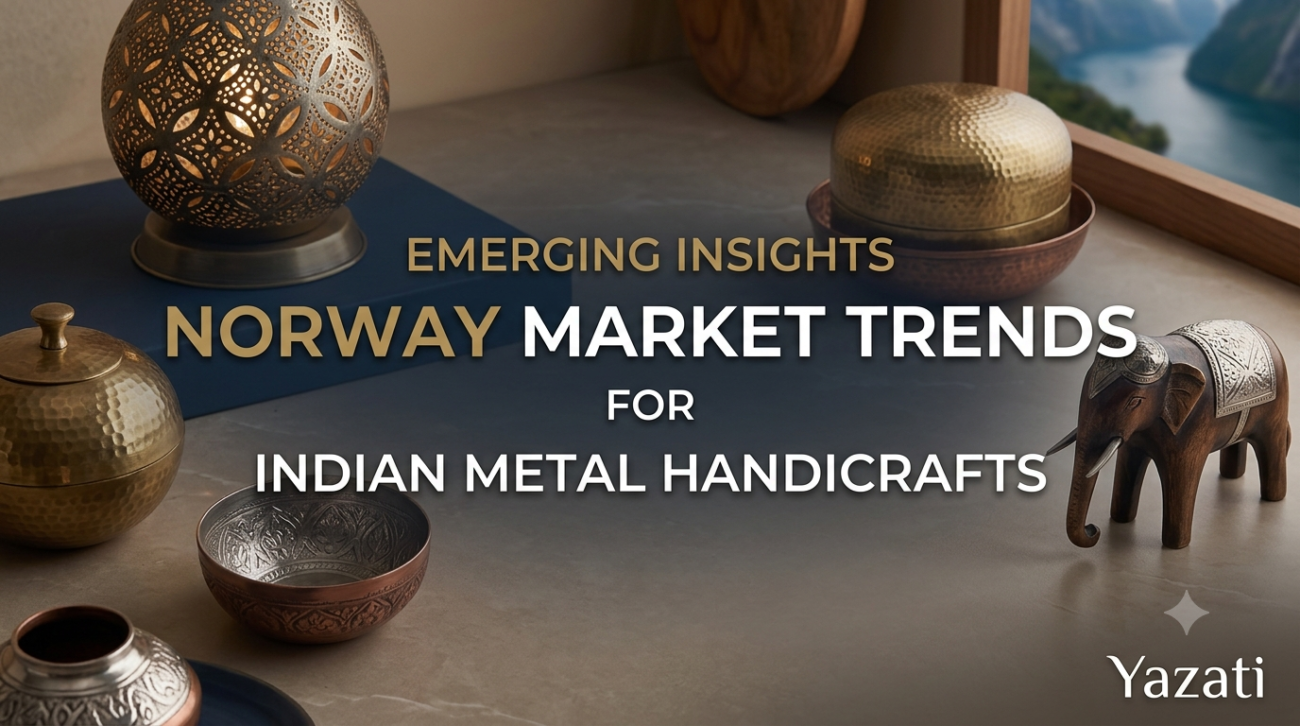
Norway Market Trends for Indian Metal Handicrafts
Norway has become an increasingly attractive destination for Indian metal handicrafts due to its strong purchasing power, growing appreciation for handcrafted products, and rising demand for sustainable home décor. Norwegian consumers value high-quality craftsmanship, ethical sourcing, and timeless designs, making Indian artisans well-positioned to meet these expectations.
Although Norway has a relatively small population of around 5.5 million, it enjoys one of Europe’s highest per capita incomes. This translates into strong spending on premium home accessories, gifts, and decorative products. Indian exporters can capitalize on these trends by offering products that combine traditional craftsmanship with modern Scandinavian aesthetics.
Market Overview
| Market Indicator | Status |
|---|---|
| Market Potential | High |
| Consumer Purchasing Power | Very High |
| Demand for Sustainable Products | Excellent |
| Demand for Handmade Products | Growing |
| Competition | Moderate |
| Import Opportunities | Strong |
Why Norway is Attractive for Indian Metal Handicrafts
Several factors contribute to Norway’s appeal as an export market:
- High disposable income
- Preference for premium handmade products
- Increasing interest in sustainable living
- Popularity of ethnic and global home décor
- Growth of online home furnishing retailers
- Strong appreciation for artisan craftsmanship
Norwegian consumers often prefer fewer but higher-quality decorative products, making handcrafted metal items a good fit.
Current Consumer Trends
1. Sustainable Home Décor
Environmental awareness strongly influences purchasing decisions.
Consumers increasingly seek:
- Recycled metals
- Eco-friendly packaging
- Fair Trade products
- Handmade rather than mass-produced goods
- Products with transparent sourcing
Indian manufacturers using recycled brass, iron, copper, or aluminum can gain a competitive advantage.
2. Minimalist Scandinavian Design
Norwegian homes typically feature:
- Neutral colours
- Clean lines
- Functional decoration
- Natural materials
- Modern aesthetics
Indian exporters can adapt traditional craftsmanship by offering:
- Matte brass finishes
- Black iron décor
- Simple candle holders
- Minimalist wall art
- Geometric sculptures
3. Handmade Luxury
Consumers increasingly value products that tell a story.
Popular selling points include:
- Handmade by artisans
- Traditional craftsmanship
- Limited production
- Authentic origin
- Cultural heritage
Storytelling has become an important marketing tool.
Most Popular Indian Metal Handicrafts in Norway
Decorative Items
- Brass bowls
- Decorative trays
- Candle holders
- Lanterns
- Wall hangings
- Sculptures
- Vases
Religious and Spiritual Products
Demand continues to grow for:
- Yoga accessories
- Meditation décor
- Buddha statues
- Singing bowls
- Incense holders
These products are commonly sold through wellness stores and lifestyle boutiques.
Kitchen and Dining Products
Consumers increasingly prefer handcrafted dining accessories such as:
- Brass serving bowls
- Copper mugs
- Wine accessories
- Cake stands
- Decorative serving trays
Garden Décor
Outdoor living is popular in Norway.
Demand exists for:
- Metal lanterns
- Garden sculptures
- Decorative planters
- Fire pit accessories
- Hanging décor
Import Trends
Recent years have shown:
- Increased imports of premium home décor
- Rising online purchases
- Higher demand for ethically sourced products
- Preference for sustainable packaging
- Growth in boutique interior stores
Indian exporters have gradually increased their presence, although competition from countries such as Vietnam, China, Indonesia, and Morocco remains significant.
Pricing Trends
Norwegian consumers are generally willing to pay premium prices for quality products.
| Product | Typical Retail Position |
|---|---|
| Brass Lantern | Premium |
| Decorative Bowl | Mid to Premium |
| Handmade Sculpture | Premium |
| Candle Holder | Mid Range |
| Wall Art | Premium |
Rather than competing on price, exporters should focus on:
- Superior craftsmanship
- Attractive packaging
- Unique designs
- Sustainability certifications
Distribution Channels
Successful distribution channels include:
Interior Design Stores
Independent home décor retailers remain major buyers.
Gift Shops
Gift boutiques frequently stock handcrafted decorative items.
Furniture Retailers
Modern furniture stores increasingly add artisan accessories.
Online Retailers
Growing e-commerce platforms provide access to Norwegian consumers.
Popular online channels include:
- Amazon Europe
- Etsy
- Nordic lifestyle websites
- Independent décor stores
Hospitality Sector
Hotels, restaurants, cafés, and resorts regularly purchase decorative metal products.
Seasonal Buying Patterns
Peak purchasing seasons include:
| Season | Opportunity |
|---|---|
| Christmas | Excellent |
| Easter | Moderate |
| Summer | Garden décor |
| Wedding Season | Strong |
| Autumn Interior Refresh | High |
Christmas remains the largest sales season for decorative products.
Packaging Preferences
Norwegian buyers increasingly expect:
- Plastic-free packaging
- Recyclable cartons
- Kraft paper wrapping
- Eco-friendly labels
- Minimal packaging waste
Luxury presentation remains important.
Quality Expectations
Norwegian importers place high importance on:
- Smooth finishing
- Rust resistance
- Consistent colour
- Safe coatings
- Product durability
Every shipment should undergo strict quality inspection before export.
Challenges for Indian Exporters
Common challenges include:
- Higher freight costs
- Strong competition
- Strict quality standards
- Sustainable sourcing expectations
- Smaller order quantities from boutique retailers
However, suppliers offering unique craftsmanship and reliable delivery often establish long-term buyer relationships.
Opportunities for Growth
Several emerging trends favor Indian exporters:
Sustainable Luxury
Eco-friendly handcrafted décor continues to gain popularity.
Boutique Retail Growth
Independent lifestyle stores increasingly seek exclusive artisan collections.
Hotel Renovations
Hotels are investing in unique decorative interiors.
Online Direct-to-Consumer Sales
Cross-border e-commerce enables Indian brands to reach Norwegian consumers directly.
Fair Trade Products
Ethically produced handicrafts appeal strongly to environmentally conscious buyers.
Marketing Tips for Indian Exporters
To succeed in Norway:
- Highlight handmade craftsmanship.
- Share artisan stories and production methods.
- Use professional lifestyle photography.
- Obtain sustainability certifications where possible.
- Offer modern Scandinavian-inspired collections.
- Ensure reliable shipping and documentation.
- Participate in European trade fairs.
- Maintain consistent product quality.
Future Market Outlook
The outlook for Indian metal handicrafts in Norway is positive.
Key growth drivers include:
- Rising consumer interest in handcrafted products
- Continued focus on sustainability
- Premium home décor demand
- Growth in online retail
- Expansion of ethical purchasing practices
Exporters combining traditional Indian craftsmanship with contemporary Scandinavian design are likely to benefit the most.
Frequently Asked Questions (FAQs)
1. Is Norway a good market for Indian metal handicrafts?
Yes. Norway offers high purchasing power, strong demand for premium handcrafted products, and growing interest in sustainable home décor.
2. Which metal handicrafts sell best in Norway?
Brass lanterns, candle holders, decorative bowls, sculptures, trays, wall décor, and garden accessories are among the most popular.
3. What do Norwegian consumers value most?
Quality, sustainability, minimalist design, ethical production, and authentic craftsmanship.
4. How important is eco-friendly packaging?
Very important. Many buyers prefer recyclable, plastic-free, and environmentally responsible packaging.
5. Which sales channels are most effective?
Interior design stores, boutique gift shops, hospitality businesses, and online marketplaces are key channels.
6. What is the biggest opportunity for Indian exporters?
Positioning handcrafted metal décor as sustainable, premium, and artisan-made while aligning designs with Scandinavian preferences.
Conclusion
Norway presents a promising market for Indian metal handicrafts, particularly for exporters who emphasize quality, sustainability, and design. Although the market is competitive, Norwegian consumers are willing to invest in handcrafted products that combine functionality with aesthetic appeal. By adapting product designs to local tastes, maintaining high quality standards, and leveraging both traditional retail and e-commerce channels, Indian artisans and manufacturers can build a strong presence in this high-value European market.
For additional guidance on exporting to Europe, exporters can refer to the Centre for the Promotion of Imports from Developing Countries (CBI) at https://www.cbi.eu, which provides valuable insights into European market requirements and buyer expectations.
✨ Discover Global Sourcing Excellence with Netyex ✨
Netyex is your trusted B2B sourcing partner, connecting international buyers with India’s finest manufacturers and curated product lines—from handicrafts and home décor to kitchenware, textiles, hospitality essentials, and more. With verified suppliers and end-to-end support, we make global procurement seamless, reliable, and efficient.
👉 Elevate your sourcing experience—explore Netyex today.
📦 Bulk orders & customisation | 🌍 Worldwide delivery | 🤝 Trusted by global buyers
Visit Netyex to source premium Indian products with confidence.