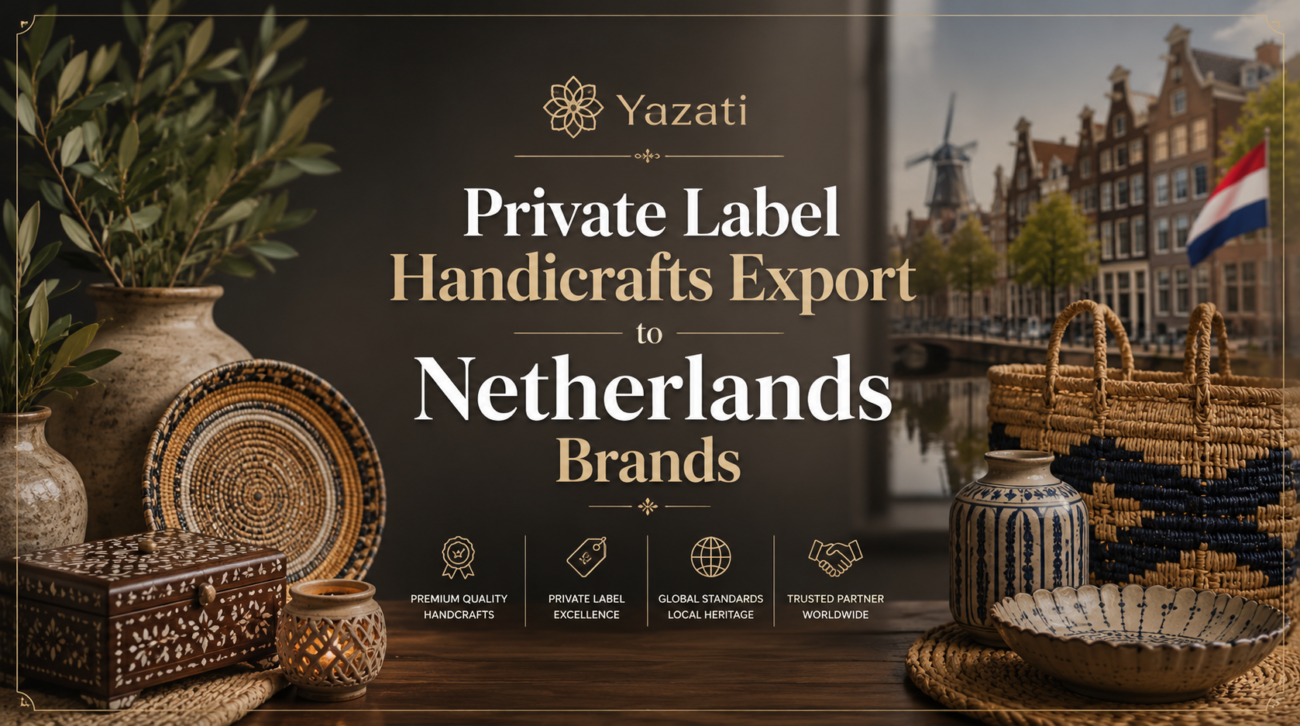
The global handicrafts industry is growing rapidly, and one of the most promising opportunities today is Private Label Handicrafts Export to Netherlands Brands. Dutch buyers are increasingly searching for sustainable, handmade, eco-friendly, and ethically sourced products. This creates an excellent opportunity for handicraft manufacturers and exporters from countries like India, Vietnam, Indonesia, and Morocco.
The Netherlands is known for its strong retail culture, modern home décor market, and growing demand for artisan-made goods. Dutch consumers appreciate authenticity, natural materials, and products with cultural stories behind them. Because of this, private label partnerships are becoming more popular among Netherlands-based brands.
In this detailed guide, you’ll learn everything about exporting private label handicrafts to Dutch brands, including market trends, pricing strategies, compliance requirements, logistics, and proven methods to grow your export business successfully.
Understanding the Netherlands Handicrafts Market
Why Dutch Consumers Love Handmade Products
Consumers in the Netherlands value craftsmanship and sustainability. Many buyers prefer handmade items over mass-produced goods because they offer uniqueness and authenticity.
Popular purchasing motivations include:
- Eco-conscious living
- Supporting artisans
- Minimalist interior design
- Ethical sourcing
- Sustainable materials
Dutch buyers often look for products made from:
- Bamboo
- Recycled wood
- Jute
- Cotton
- Ceramic
- Natural fibers
These preferences make handicrafts highly attractive in the Dutch market.
Current Trends in Sustainable Home Décor
Sustainability is one of the biggest retail trends in Europe. The Netherlands has seen growing demand for:
- Handmade baskets
- Macramé wall art
- Wooden kitchenware
- Organic textile décor
- Recycled metal crafts
- Handmade candles
According to the European market insights platform CBI, sustainable home decoration imports continue to rise steadily in Europe.
For more information about EU trade opportunities, visit the official CBI website: https://www.cbi.eu
What Is Private Label Handicrafts Export to Netherlands Brands?
Private label exporting means producing handicraft products that are sold under another company’s brand name.
For example:
- A Dutch home décor brand designs a candle holder collection.
- An Indian handicraft manufacturer produces the items.
- The Dutch company sells the products under its own label.
This business model helps Netherlands brands reduce manufacturing costs while maintaining exclusive branding.
Difference Between OEM and Private Label
| Feature | Private Label | OEM |
| Branding | Buyer’s brand | Buyer’s design |
| Product Design | Standard customization | Fully customized |
| Production Control | Shared | Buyer-led |
| Market Entry Speed | Faster | Slower |
Benefits for Exporters and Dutch Retailers
For Exporters
- Long-term contracts
- Bulk orders
- Higher production stability
- Better international exposure
For Dutch Brands
- Lower production costs
- Unique product lines
- Faster inventory scaling
- Sustainable sourcing options
Popular Handicraft Categories in the Netherlands
Eco-Friendly Home Décor
Eco-friendly décor is extremely popular in Dutch homes. Buyers prefer earthy tones and natural textures.
Best-selling products include:
- Handmade baskets
- Decorative trays
- Woven lampshades
- Wall hangings
Wooden Handicrafts
Wooden products are highly demanded due to Scandinavian and minimalist design influences.
Popular items:
- Wooden bowls
- Serving trays
- Candle holders
- Kitchen accessories
Ceramic and Pottery Products
Handmade ceramics are becoming premium lifestyle products.
Trending products:
- Rustic mugs
- Handmade planters
- Decorative vases
- Artisan plates
Textile and Macramé Crafts
Dutch interior brands frequently import:
- Cushion covers
- Rugs
- Macramé décor
- Cotton throws
Natural and organic fabrics are preferred.
How to Find Netherlands Brands for Export Partnerships
Online B2B Platforms
Several online marketplaces connect exporters with European buyers.
Popular platforms:
- Alibaba
- Faire
- IndiaMART
- Global Sources
- Europages
These websites help exporters showcase catalogs and attract wholesale buyers.
Trade Fairs and International Exhibitions
Trade fairs remain one of the best ways to meet Netherlands brands.
Top events include:
- Ambiente Frankfurt
- Maison & Objet Paris
- Trade Mart Utrecht
These events attract importers, retailers, and interior design companies from across Europe.
LinkedIn Outreach Strategies
LinkedIn can be a powerful export marketing tool.
Tips:
- Connect with sourcing managers
- Share product catalogs
- Post manufacturing videos
- Highlight sustainability practices
Consistency helps build trust with European buyers.
Product Quality Standards and EU Compliance
CE Marking and Safety Rules
Certain handicraft products require EU compliance checks, especially:
- Electrical décor
- Children’s products
- Candles
- Furniture items
Always confirm import regulations before shipping.
Sustainable Packaging Requirements
European brands increasingly request:
- Recyclable packaging
- Plastic-free materials
- FSC-certified paper
- Eco-friendly inks
Minimal packaging designs are especially popular in the Netherlands.
Ethical and Fair-Trade Certifications
Certifications improve buyer confidence.
Popular certifications:
- Fair Trade
- FSC
- GOTS
- ISO standards
These certifications can help exporters secure premium pricing.
Pricing Strategy for Private Label Handicrafts
Calculating Export Costs
Your export pricing should include:
| Cost Element | Example |
| Raw materials | Wood, cotton, clay |
| Labor | Artisan wages |
| Packaging | Labels and boxes |
| Freight | Sea or air shipping |
| Customs duties | EU import charges |
| Marketing | Catalogs and samples |
Always maintain profit margins while remaining competitive.
Wholesale vs Retail Pricing
Most Dutch brands purchase at wholesale rates and apply retail markups later.
A common pricing structure:
- Manufacturing cost: €10
- Export selling price: €18
- Dutch retail price: €40–€60
Understanding market positioning is important for profitability.
Packaging and Branding for Dutch Buyers
Minimalist Packaging Trends
Dutch consumers often prefer:
- Neutral colors
- Clean typography
- Sustainable materials
- Elegant simplicity
Avoid excessive plastic packaging.
Custom Labels and Barcodes
Private label buyers usually request:
- Product barcodes
- QR codes
- Care instructions
- Country-of-origin labels
Accurate labeling reduces customs problems.
Logistics and Shipping to the Netherlands
Choosing Freight Options
Sea Freight
Best for:
- Bulk shipments
- Lower shipping costs
Air Freight
Best for:
- Urgent deliveries
- Small premium orders
Most exporters use Rotterdam Port for European distribution.
Customs Documentation
Essential export documents:
- Commercial invoice
- Packing list
- Bill of lading
- Certificate of origin
Errors in paperwork can delay shipments significantly.
Managing Delivery Timelines
European buyers value punctuality.
Helpful practices:
- Maintain buffer inventory
- Use reliable freight partners
- Communicate delays early
Strong logistics management improves repeat orders.
Marketing Strategies for Export Growth
Building an Export Website
A professional export website should include:
- Product catalogs
- Factory photos
- Certifications
- MOQ information
- Contact forms
A strong website builds international credibility.
SEO for International Buyers
To rank globally:
- Use export-related keywords
- Optimize product descriptions
- Create blog content
- Add high-quality images
This improves visibility for terms like Private Label Handicrafts Export to Netherlands Brands.
Social Media Marketing
Pinterest and Instagram work especially well for handicrafts.
Post:
- Product videos
- Artisan stories
- Packaging processes
- Sustainability initiatives
Visual storytelling attracts lifestyle brands.
Common Challenges in Handicrafts Export
Managing Product Consistency
Handmade products naturally vary slightly. However, buyers still expect consistency.
Solutions:
- Standardized quality checks
- Artisan training
- Sample approvals
Currency and Payment Risks
Exporters often face:
- Exchange rate fluctuations
- Payment delays
Using secure payment systems like LC (Letter of Credit) can reduce risk.
Handling Returns and Damages
Protect products with:
- Better packaging
- Insurance
- Quality inspections
Pre-shipment inspections help reduce disputes.
Future Opportunities in the Netherlands Handicrafts Market
Sustainable Lifestyle Growth
Eco-conscious living continues to expand across Europe. This creates long-term demand for artisan-made products.
Categories expected to grow:
- Organic textiles
- Recycled décor
- Handmade furniture
- Eco-gifting
Rise of Boutique Interior Brands
Many small Dutch brands now focus on:
- Ethical sourcing
- Artisan partnerships
- Limited-edition collections
This trend creates excellent opportunities for private label exporters.
Frequently Asked Questions
1. What are the best handicrafts to export to the Netherlands?
Eco-friendly home décor, wooden crafts, ceramics, and textile products are among the most popular categories.
2. Do I need certifications for exporting handicrafts to Europe?
Some products may require certifications depending on materials and usage. Sustainable certifications can also improve buyer trust.
3. How can I find Netherlands brands for private label partnerships?
You can use B2B marketplaces, LinkedIn outreach, trade fairs, and export directories.
4. Is sustainable packaging important for Dutch buyers?
Yes. Most Dutch brands prefer recyclable and eco-friendly packaging solutions.
5. What shipping method is best for handicraft exports?
Sea freight is usually best for large shipments, while air freight works for urgent or smaller orders.
6. How can I increase trust with Netherlands buyers?
Professional communication, certifications, quality consistency, and timely deliveries are key trust factors.
Conclusion
The opportunity for Private Label Handicrafts Export to Netherlands Brands is growing rapidly as European consumers increasingly value sustainability, authenticity, and handmade craftsmanship. Exporters who focus on quality, ethical production, modern packaging, and reliable logistics can build long-term partnerships with Dutch brands.
Success in this market requires more than just beautiful products. It involves understanding buyer expectations, maintaining consistent quality, complying with EU regulations, and creating a professional global presence.
With the right strategy, handicraft exporters can turn the Netherlands into a profitable and long-lasting export destination.
✨ Discover Global Sourcing Excellence with Netyex ✨
Netyex is your trusted B2B sourcing partner, connecting international buyers with India’s finest manufacturers and curated product lines—from handicrafts and home décor to kitchenware, textiles, hospitality essentials, and more. With verified suppliers and end-to-end support, we make global procurement seamless, reliable, and efficient.
👉 Elevate your sourcing experience—explore Netyex today.
📦 Bulk orders & customisation | 🌍 Worldwide delivery | 🤝 Trusted by global buyers
Visit Netyex to source premium Indian products with confidence.