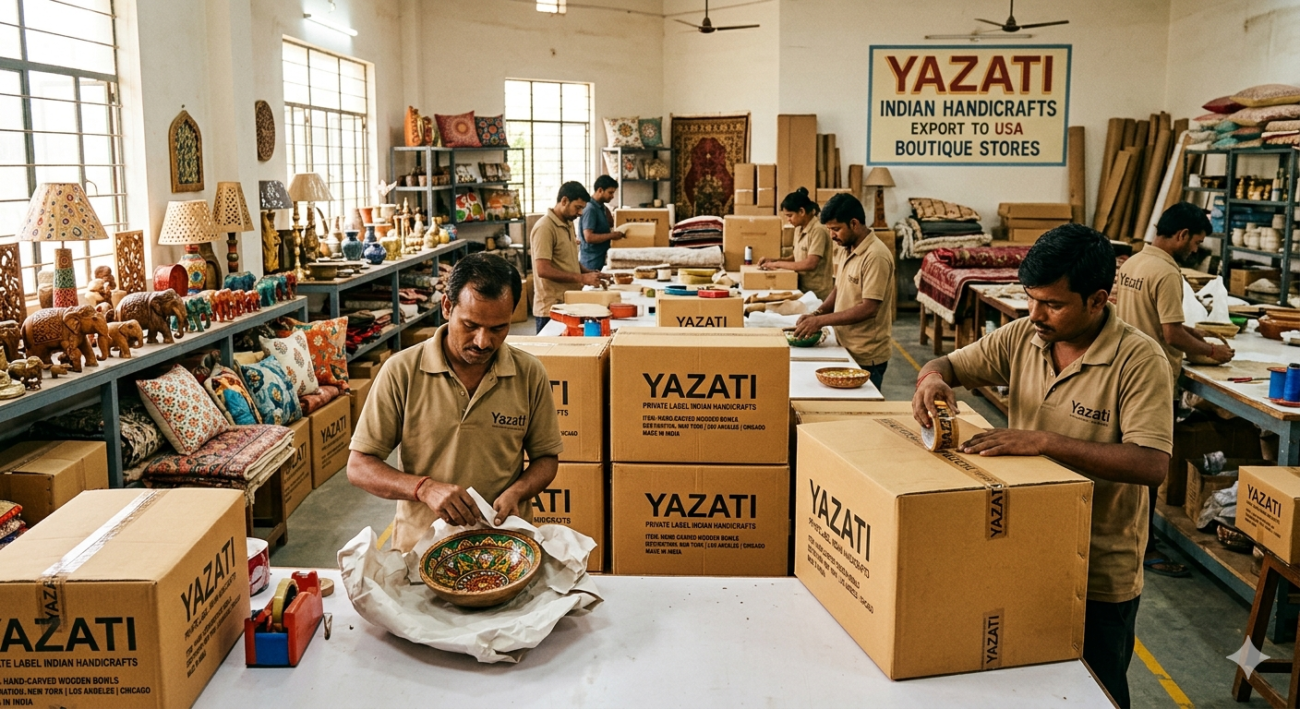
The global demand for handmade and sustainable products is growing rapidly, and Private Label Indian Handicrafts Export to USA Boutique Stores has become one of the most profitable opportunities for exporters, artisans, and manufacturers. Boutique retailers in the United States are constantly searching for unique handmade décor, eco-friendly gifts, artisan textiles, and luxury handicrafts that stand out from mass-produced products.
India has long been known for its rich artistic heritage, skilled craftsmanship, and diverse handicraft traditions. From wooden carvings in Rajasthan to embroidered textiles from Gujarat and brass artifacts from Moradabad, Indian handicrafts attract buyers worldwide.
Today, boutique stores in the USA are increasingly interested in private label partnerships. This allows American retailers to sell Indian handicrafts under their own brand names while benefiting from authentic handmade quality and affordable manufacturing costs.
In this comprehensive guide, you will learn everything about Private Label Indian Handicrafts Export to USA Boutique Stores, including sourcing, branding, export requirements, marketing strategies, pricing, and future business opportunities.
Understanding the Indian Handicrafts Export Industry
India is one of the largest exporters of handicrafts globally. The country exports thousands of handmade products every year to markets like the USA, the UK, Germany, Australia, and Canada.
The Indian handicraft sector supports millions of artisans and small businesses. Government initiatives and export promotion councils have also helped the industry expand internationally.
Why Indian Handicrafts Are Popular in the USA
American consumers appreciate products that tell a story. Handmade Indian products offer authenticity, culture, and craftsmanship that factory-made goods often lack.
Popular reasons for growing demand include:
- Unique artisan-made designs
- Sustainable and eco-friendly production
- Traditional craftsmanship
- High-quality handmade finishing
- Cultural and ethnic appeal
- Affordable luxury products
Boutique store owners especially value products that are not commonly available in large retail chains.
Growth of Boutique Retail Stores in America
Boutique stores have become highly successful because they focus on personalized shopping experiences and exclusive products. Many boutique retailers prefer sourcing from India because they can offer:
- Limited edition collections
- Customized branding
- Handmade luxury items
- Sustainable home décor
- Artisan gift products
This trend has created enormous potential for Private Label Indian Handicrafts Export to USA Boutique Stores.
What Is Private Labeling in Handicrafts?
Private labeling means manufacturing products that are sold under another company’s brand name. In handicraft exports, Indian manufacturers create products for boutique retailers who place their own labels and packaging on the items.
For example, a boutique store in California may source handmade candle holders from India but sell them under its own brand identity.
Benefits of Private Label Manufacturing
Private labeling offers benefits for both exporters and buyers.
Advantages for Indian Exporters
- Long-term buyer relationships
- Higher order volumes
- Better profit margins
- Repeat business opportunities
- Brand collaboration possibilities
Advantages for USA Boutique Stores
- Exclusive product collections
- Lower manufacturing costs
- Unique branding opportunities
- Better customer loyalty
- Customized packaging options
Difference Between Wholesale and Private Label
| Feature | Wholesale | Private Label |
| Branding | Supplier branding | Buyer branding |
| Customization | Limited | High |
| Packaging | Standard | Custom packaging |
| Pricing | Lower margins | Higher margins |
| Product Exclusivity | Shared products | Exclusive collections |
Private labeling usually creates stronger business partnerships compared to traditional wholesale models.
Why USA Boutique Stores Prefer Indian Handicrafts
Handmade Appeal and Artisan Craftsmanship
Consumers in the USA increasingly prefer handmade products over machine-made goods. Handmade products offer individuality and emotional value.
Indian artisans are known for:
- Intricate hand carving
- Traditional weaving
- Hand embroidery
- Brass and metal artistry
- Block printing techniques
Each product carries a human touch that boutique shoppers appreciate.
Sustainable and Eco-Friendly Product Demand
Sustainability is no longer optional. Many American consumers actively search for eco-friendly products made from natural or recycled materials.
Indian handicrafts often use:
- Reclaimed wood
- Natural cotton
- Organic dyes
- Bamboo
- Jute
- Recycled metal
This aligns perfectly with current retail trends in the USA.
Best Indian Handicraft Products for Export
Some handicraft categories perform exceptionally well in boutique stores across America.
Wooden Handicrafts
Wooden products are among the top-selling export categories.
Popular items include:
- Hand-carved trays
- Decorative boxes
- Rustic furniture
- Candle holders
- Wooden wall art
- Kitchen accessories
Metal Artifacts
Indian metalwork is famous worldwide for its detailing and durability.
High-demand products include:
- Brass lanterns
- Aluminum décor
- Copper kitchenware
- Iron wall hangings
- Vintage-style accessories
Textile and Embroidery Products
Textile handicrafts remain highly profitable.
Examples include:
- Handwoven rugs
- Cushion covers
- Quilts
- Embroidered throws
- Table runners
Home Décor and Gift Items
Boutique stores constantly search for unique gift products.
Top-selling categories include:
- Handmade candles
- Ceramic décor
- Bohemian wall hangings
- Decorative mirrors
- Festive ornaments
Key Requirements for Exporting to the USA
Exporting products successfully requires proper compliance and documentation.
Import Regulations and Documentation
Essential export documents include:
- Commercial invoice
- Packing list
- Bill of lading
- Certificate of origin
- Import-export code (IEC)
- Product compliance certificates
Exporters should also understand U.S. Customs regulations.
For official guidance, exporters can visit the website.
Product Labeling Standards
Products exported to the USA must follow labeling requirements.
Labels may include:
- Country of origin
- Material composition
- Safety instructions
- Brand information
Incorrect labeling can cause shipment delays.
Packaging and Shipping Guidelines
Strong packaging is essential because handicrafts are often fragile.
Best practices include:
- Bubble wrapping
- Moisture protection
- Double-wall cartons
- Eco-friendly packaging
- Proper barcode labeling
Finding Boutique Store Buyers in the USA
Finding reliable buyers is one of the biggest challenges for exporters.
Trade Shows and Exhibitions
International trade fairs help exporters connect directly with buyers.
Popular trade events include:
- NY NOW
- Las Vegas Market
- Atlanta Market
- Ambiente Fair
These events provide opportunities to showcase private label collections.
Online B2B Platforms
Several B2B platforms help exporters connect with boutique retailers.
Popular platforms include:
- Alibaba
- IndiaMART
- Faire
- Global Sources
Social Media and Direct Outreach
Instagram and Pinterest are excellent platforms for showcasing handicrafts visually.
Effective outreach strategies include:
- Sending product catalogs
- Offering free samples
- Running targeted ads
- Email marketing campaigns
- Influencer collaborations
How to Build a Successful Private Label Brand
Product Customization
Customization is one of the strongest selling points in private labeling.
Boutique stores often request:
- Exclusive color palettes
- Unique packaging
- Customized sizes
- Seasonal collections
Logo and Packaging Design
Professional packaging improves product value significantly.
Important packaging elements include:
- Brand storytelling
- Premium printing
- Eco-friendly materials
- Minimalist designs
Maintaining Product Quality
Consistency is critical for export success.
Exporters should implement:
- Quality inspections
- Sample approvals
- Production monitoring
- Packaging checks
Reliable quality leads to repeat orders and long-term partnerships.
Pricing Strategies for Higher Profit Margins
Cost Calculation for Export
Export pricing should include:
| Cost Component | Description |
| Manufacturing Cost | Raw materials and labor |
| Packaging Cost | Boxes and branding |
| Shipping Charges | Freight and logistics |
| Customs Duties | Taxes and tariffs |
| Marketing Cost | Promotions and samples |
Competitive Pricing Techniques
To remain competitive:
- Offer bulk discounts
- Use efficient sourcing
- Reduce packaging waste
- Negotiate shipping rates
- Maintain low defect rates
Balanced pricing helps exporters attract boutique buyers while maintaining profitability.
Marketing Strategies for Indian Handicraft Exporters
SEO and Content Marketing
A professional website with SEO optimization can generate international leads.
Useful SEO strategies include:
- Product-focused blog articles
- Keyword optimization
- Buyer guides
- Product photography
- Fast-loading website design
The keyword Private Label Indian Handicrafts Export to USA Boutique Stores should appear naturally throughout website content for better search visibility.
Email Marketing Campaigns
Email outreach remains highly effective.
Successful campaigns include:
- Product launch emails
- Seasonal collections
- Discount offers
- Buyer success stories
Influencer and Boutique Collaborations
Collaborating with home décor influencers helps build trust and visibility.
Boutique stores often respond positively to visual product demonstrations on social media platforms.
Common Challenges in Handicraft Export Business
Shipping Delays
International logistics can face disruptions due to customs inspections or port congestion.
Solutions include:
- Working with experienced freight forwarders
- Maintaining inventory buffers
- Using reliable courier services
Quality Control Issues
Handmade products naturally vary slightly, but consistency remains essential.
Quality checks should happen:
- Before production
- During manufacturing
- Before packaging
- Before shipment
Currency Fluctuations
Exchange rate changes can impact profits.
Exporters can reduce risks by:
- Negotiating stable contracts
- Using forward exchange agreements
- Monitoring currency trends
Future Trends in Private Label Handicrafts
Eco-Conscious Consumer Demand
Sustainable shopping trends will continue growing.
Products made using:
- Recycled materials
- Ethical labor
- Organic fabrics
- Low-waste packaging
will remain highly desirable in the USA market.
Growth of Handmade Luxury Markets
Consumers increasingly value exclusivity and craftsmanship over mass production.
This creates strong long-term opportunities for Private Label Indian Handicrafts Export to USA Boutique Stores.
Luxury boutique stores are willing to pay premium prices for authentic artisan products with compelling stories.
Frequently Asked Questions
1. What are the best handicrafts to export from India to the USA?
Wooden décor, metal artifacts, embroidered textiles, candles, and handmade home accessories are among the top-selling products.
2. Is private labeling profitable in handicraft exports?
Yes. Private labeling usually offers better margins, stronger buyer relationships, and repeat orders.
3. How can I find USA boutique buyers?
You can use trade fairs, B2B marketplaces, LinkedIn outreach, Instagram marketing, and direct email campaigns.
4. Do I need an export license to export handicrafts from India?
Yes. You need an Import Export Code (IEC) and other required export documentation.
5. What packaging is best for handicraft exports?
Durable, eco-friendly, and moisture-resistant packaging works best for international shipping.
6. Why are boutique stores interested in Indian handicrafts?
Boutique stores prefer unique handmade products that provide authenticity, sustainability, and artisan appeal.
Conclusion
The market for Private Label Indian Handicrafts Export to USA Boutique Stores is expanding rapidly as consumers increasingly seek sustainable, handmade, and exclusive products. Indian exporters have a significant advantage due to the country’s rich artisan heritage, affordable manufacturing capabilities, and diverse product range.
Success in this business depends on:
- Consistent quality
- Strong branding
- Reliable shipping
- Buyer relationship management
- Effective digital marketing
Exporters who focus on customization, eco-friendly production, and professional branding can build long-term partnerships with boutique retailers across the United States.
As global demand for artisan-made products continues to rise, private label handicraft exports offer one of the most exciting international business opportunities for Indian manufacturers and entrepreneurs.
✨ Discover Global Sourcing Excellence with Netyex ✨
Netyex is your trusted B2B sourcing partner, connecting international buyers with India’s finest manufacturers and curated product lines—from handicrafts and home décor to kitchenware, textiles, hospitality essentials, and more. With verified suppliers and end-to-end support, we make global procurement seamless, reliable, and efficient.
👉 Elevate your sourcing experience—explore Netyex today.
📦 Bulk orders & customisation | 🌍 Worldwide delivery | 🤝 Trusted by global buyers
Visit Netyex to source premium Indian products with confidence.