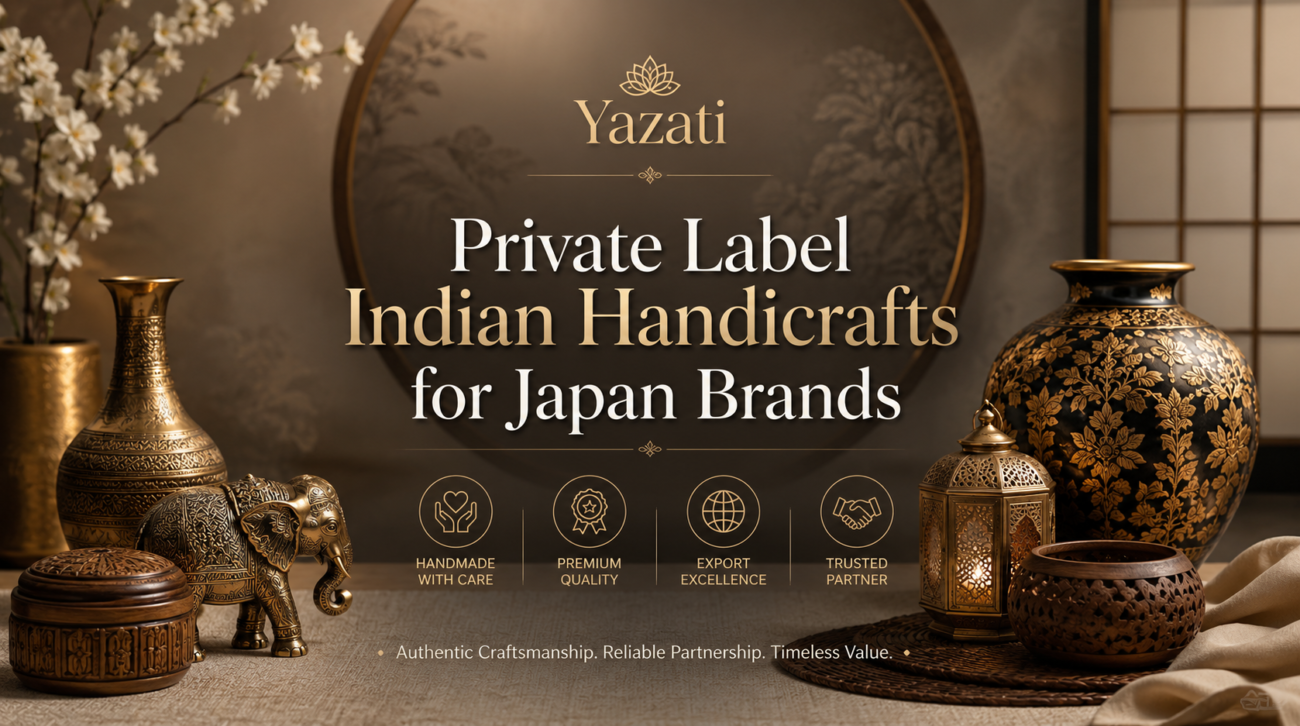
Introduction to Private Label Indian Handicrafts
The market for Private Label Indian Handicrafts for Japan Brands is growing steadily as Japanese consumers increasingly seek authentic, sustainable, and handcrafted products. India’s rich artisan heritage, combined with competitive manufacturing capabilities, creates an excellent opportunity for Japanese brands looking to develop unique product lines under their own labels.
Indian handicrafts have long been admired worldwide for their craftsmanship, cultural value, and artistic appeal. By partnering with Indian manufacturers, Japanese businesses can offer exclusive collections that align with modern consumer preferences while maintaining strong brand differentiation.
Why Japan Is a Promising Market for Indian Handicrafts
Japan is one of the world’s most sophisticated consumer markets. Buyers appreciate quality, precision, aesthetics, and authenticity. These values align closely with the strengths of Indian handicraft production.
Growing Demand for Handmade Products
Consumers in Japan are increasingly moving away from mass-produced goods. Handmade products offer a sense of uniqueness and personal connection that factory-produced items often lack.
Several factors contribute to this trend:
- Rising interest in artisan-made products
- Appreciation for cultural storytelling
- Desire for exclusive home décor items
- Growing support for small-scale producers
Preference for Sustainable and Ethical Goods
Sustainability has become a major purchasing factor in Japan. Many consumers actively seek products made using environmentally responsible materials and ethical labor practices.
Indian handicrafts often meet these expectations through:
- Natural materials
- Traditional low-energy production methods
- Handmade manufacturing processes
- Community-based artisan employment
Understanding the Private Label Business Model
What Is Private Label Manufacturing?
Private label manufacturing allows Japanese brands to sell products under their own brand name while outsourcing production to experienced Indian manufacturers.
In this model:
- The Japanese company develops branding requirements.
- The Indian manufacturer produces customized products.
- Products are packaged according to brand specifications.
- The finished goods are shipped directly to Japan.
Benefits for Japanese Brands
Private labeling offers multiple advantages:
| Benefit | Description |
|---|---|
| Brand Ownership | Full control over brand identity |
| Product Exclusivity | Unique product lines unavailable to competitors |
| Cost Efficiency | Lower manufacturing costs |
| Faster Market Entry | Reduced development time |
| Scalability | Easy expansion into new product categories |
Popular Indian Handicraft Categories for Japan
Wooden Handicrafts
India is famous for handcrafted wooden products made from mango wood, sheesham wood, and teak.
Popular products include:
- Decorative trays
- Jewelry boxes
- Table organizers
- Wall décor
- Wooden sculptures
Japanese consumers appreciate the minimalist aesthetics that can be incorporated into these products through customized designs.
Brass and Metal Artifacts
Indian metal craftsmanship has centuries of history.
Popular private label products include:
- Candle holders
- Decorative bowls
- Lanterns
- Table accessories
- Wall art
These products fit well within contemporary Japanese interior design trends.
Home Décor and Lifestyle Products
Home décor remains one of the strongest categories for export.
Examples include:
- Vases
- Planters
- Decorative baskets
- Storage solutions
- Handmade mirrors
Textiles and Handmade Fabrics
Indian textile artisans produce high-quality handcrafted fabrics suitable for:
- Cushion covers
- Table runners
- Throws
- Curtains
- Lifestyle accessories
Key Advantages of Sourcing from India
Skilled Artisan Networks
India supports millions of artisans specializing in traditional craft techniques. Many skills have been passed down through generations, ensuring exceptional craftsmanship.
Competitive Production Costs
Compared to many alternative sourcing destinations, India offers attractive pricing while maintaining product quality.
This allows Japanese brands to achieve:
- Better profit margins
- Competitive retail pricing
- Increased product variety
Product Customization Capabilities
Customization options include:
- Material selection
- Color variations
- Packaging design
- Product dimensions
- Logo engraving
- Private labeling
Quality Standards for the Japanese Market
Packaging Expectations
Japanese consumers place high value on presentation.
Packaging should be:
- Elegant
- Minimalist
- Protective
- Environmentally friendly
- Clearly labeled
Product Consistency Requirements
Consistency is critical for success in Japan.
Manufacturers should provide:
- Standard operating procedures
- Quality inspections
- Sample approvals
- Batch testing
Product Development and Customization Process
Design Adaptation for Japanese Consumers
Successful products often blend Indian craftsmanship with Japanese design preferences.
Important design principles include:
- Simplicity
- Functionality
- Clean lines
- Neutral color palettes
- Compact dimensions
Branding and Labeling Options
Private label programs typically offer:
- Custom logos
- Hang tags
- Product inserts
- Retail-ready packaging
- QR code integration
Supply Chain and Logistics Considerations
Shipping Methods
Common export options include:
- Sea freight
- Air freight
- Consolidated shipments
The choice depends on:
- Order volume
- Budget
- Delivery timelines
Export Documentation
Essential documents often include:
- Commercial invoice
- Packing list
- Certificate of origin
- Bill of lading
- Product compliance documents
Sustainability and Ethical Sourcing
Eco-Friendly Materials
Many Indian handicraft manufacturers use:
- Reclaimed wood
- Natural fibers
- Recycled metals
- Organic dyes
Fair Trade Practices
Ethical sourcing benefits both brands and consumers by supporting artisan communities and ensuring fair compensation.
Challenges and Solutions
Cultural Preferences
Japanese consumers often have different aesthetic preferences than Western markets.
Solution:
- Conduct market research
- Create localized collections
- Test products through pilot launches
Quality Control Management
Quality issues can damage brand reputation.
Solution:
- Factory audits
- Third-party inspections
- Sample approvals
- Ongoing monitoring
How to Choose the Right Indian Handicraft Manufacturer
Certifications and Experience
Look for manufacturers with:
- Export experience
- Quality certifications
- Established production systems
- Strong client references
Production Capacity
Evaluate:
- Monthly output
- Lead times
- Workforce size
- Expansion capability
Marketing Private Label Handicrafts in Japan
Online Marketplaces
Popular channels include:
- E-commerce stores
- Marketplace platforms
- Social commerce
- Specialty home décor websites
Retail Partnerships
Potential retail opportunities include:
- Lifestyle stores
- Boutique gift shops
- Department stores
- Interior design retailers
Future Trends in the Industry
Emerging trends include:
- Eco-conscious products
- Handmade luxury collections
- Artisan storytelling
- Smart packaging
- Sustainable home décor
Brands that align with these trends are likely to achieve stronger market positioning and customer loyalty.
Frequently Asked Questions
1. Why are Indian handicrafts attractive for Japanese brands?
They combine authenticity, craftsmanship, customization options, and competitive pricing.
2. What minimum order quantities are common?
MOQs vary by manufacturer and product category, typically ranging from small trial orders to larger production runs.
3. Can products be fully customized?
Yes. Most manufacturers offer customization for design, packaging, branding, and materials.
4. Are Indian handicrafts sustainable?
Many are produced using natural materials, traditional methods, and ethical artisan practices.
5. Which handicraft category performs best in Japan?
Home décor, wooden handicrafts, textiles, and premium lifestyle products tend to perform particularly well.
6. How can Japanese brands ensure quality consistency?
Through factory audits, sample approvals, third-party inspections, and long-term supplier partnerships.
Conclusion
The opportunity for Private Label Indian Handicrafts for Japan Brands continues to expand as Japanese consumers seek authentic, sustainable, and beautifully crafted products. India’s extensive artisan network, customization capabilities, and competitive manufacturing environment make it an ideal sourcing destination for private label programs.
By focusing on quality, thoughtful design adaptation, ethical sourcing, and strong supplier relationships, Japanese brands can successfully build distinctive product collections that resonate with modern consumers while supporting traditional craftsmanship.
✨ Discover Global Sourcing Excellence with Netyex ✨
Netyex is your trusted B2B sourcing partner, connecting international buyers with India’s finest manufacturers and curated product lines—from handicrafts and home décor to kitchenware, textiles, hospitality essentials, and more. With verified suppliers and end-to-end support, we make global procurement seamless, reliable, and efficient.
👉 Elevate your sourcing experience—explore Netyex today.
📦 Bulk orders & customisation | 🌍 Worldwide delivery | 🤝 Trusted by global buyers
Visit Netyex to source premium Indian products with confidence.