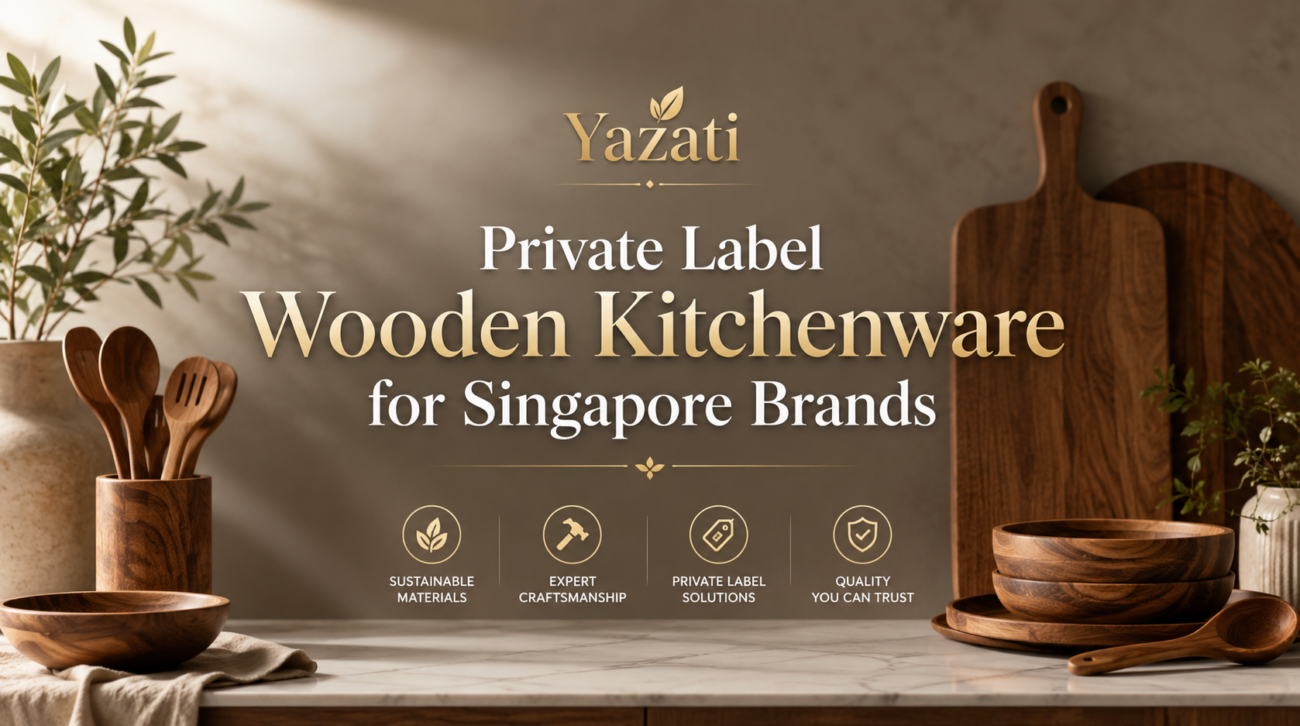
Introduction to Private Label Wooden Kitchenware
The demand for eco-friendly kitchen products has increased significantly across Singapore in recent years. Consumers are becoming more conscious of sustainability, product quality, and the environmental impact of their purchases. As a result, Private Label Wooden Kitchenware for Singapore Brands has emerged as a profitable business opportunity for retailers, distributors, e-commerce sellers, and hospitality companies.
Private labeling allows businesses to sell high-quality wooden kitchen products under their own brand name. Instead of manufacturing products from scratch, companies partner with specialized manufacturers who produce and customize kitchenware according to brand specifications.
This model enables Singapore brands to establish a unique identity while benefiting from cost-effective production and scalable operations.
Understanding Private Label Manufacturing
Private label manufacturing involves producing goods by a third-party manufacturer that are then branded and sold by another company.
Benefits include:
- Faster product launches
- Reduced manufacturing investments
- Custom branding opportunities
- Consistent product quality
- Flexible production volumes
For Singapore businesses seeking growth, private labeling creates opportunities to compete with larger established brands.
Why Wooden Kitchenware Is Growing in Popularity
Wooden kitchenware offers several advantages over plastic and metal alternatives:
| Feature | Wooden Kitchenware | Plastic Kitchenware |
|---|---|---|
| Sustainability | Excellent | Poor |
| Biodegradability | High | Low |
| Heat Resistance | Good | Moderate |
| Eco-Friendly Appeal | Strong | Weak |
| Premium Appearance | High | Moderate |
Consumers increasingly appreciate products that align with environmentally responsible lifestyles, making wooden kitchenware highly attractive.
The Singapore Kitchenware Market Landscape
Singapore’s retail and e-commerce sectors continue to experience strong demand for premium home and kitchen products. Urban consumers are investing in aesthetically pleasing and sustainable household items.
Consumer Trends Driving Demand
Modern Singapore shoppers value:
- Sustainable products
- Minimalist designs
- Natural materials
- Durable kitchen tools
- Premium packaging
Wooden kitchenware aligns perfectly with these preferences.
Sustainability and Eco-Conscious Purchasing
Environmental awareness continues to influence buying decisions. Many customers actively seek alternatives to single-use plastics and synthetic materials.
Brands offering responsibly sourced wooden kitchenware can capitalize on this growing trend.
Benefits of Private Label Wooden Kitchenware for Singapore Brands
Brand Differentiation Opportunities
Private labeling allows brands to create exclusive product collections.
Customization options include:
- Laser engraving
- Unique shapes
- Exclusive packaging
- Custom product sets
- Special finishes
This differentiation helps businesses stand out in competitive marketplaces.
Higher Profit Margins
Private-label products often generate better margins than reselling established brands because businesses control pricing strategies and branding.
Additional benefits include:
- Reduced competition
- Better customer retention
- Enhanced perceived value
Customer Loyalty and Brand Recognition
When customers associate quality products with a brand, repeat purchases become more likely.
Wooden kitchenware can become a signature product category that strengthens brand identity.
Popular Wooden Kitchenware Products
Wooden Cutting Boards
Cutting boards remain one of the highest-selling wooden kitchen products.
Popular options include:
- Acacia cutting boards
- End-grain boards
- Cheese boards
- Serving boards
Wooden Spoons and Spatulas
Wooden utensils remain essential kitchen tools due to their durability and non-scratch properties.
Common products include:
- Cooking spoons
- Salad servers
- Spatulas
- Turners
Wooden Serving Trays
Serving trays combine practicality with decorative appeal.
Premium tray collections are especially popular among gift buyers and hospitality businesses.
Wooden Bowls and Utensils
Natural wooden bowls and serving utensils appeal to customers seeking rustic and organic aesthetics.
Choosing the Right Wood Materials
Selecting appropriate materials is critical for product quality and customer satisfaction.
Acacia Wood
Acacia is one of the most preferred materials because of its:
- Attractive grain patterns
- Durability
- Moisture resistance
- Long lifespan
Bamboo Alternatives
Although technically a grass, bamboo offers:
- Rapid renewability
- Lightweight construction
- Excellent sustainability credentials
Teak and Rubberwood
Teak provides premium durability, while rubberwood offers affordability and environmental benefits by utilizing plantation by-products.
Manufacturing Process for Private Label Kitchenware
Design and Product Development
The process begins with:
- Market research
- Product concept creation
- CAD design development
- Material selection
Prototyping and Sampling
Manufacturers create prototypes for evaluation before mass production.
Sampling allows brands to verify:
- Product dimensions
- Surface finish
- Branding placement
- Overall quality
Production and Quality Control
Strict quality checks ensure:
- Smooth surfaces
- Safe finishes
- Accurate dimensions
- Consistent branding
Customization Options for Singapore Brands
Logo Engraving
Laser engraving offers:
- Long-lasting branding
- Premium appearance
- High customization flexibility
Custom Packaging Solutions
Packaging options may include:
- Kraft boxes
- Gift-ready packaging
- Sustainable wrapping
- Premium presentation cases
Product Size and Shape Customization
Brands can request:
- Unique dimensions
- Custom handle designs
- Specialty serving products
- Exclusive collections
Quality Standards and Compliance Requirements
Food Safety Considerations
Food-contact products must meet strict safety requirements.
Manufacturers should use:
- Food-grade oils
- Non-toxic finishes
- Safe production practices
Export and Import Regulations
Singapore brands should verify compliance with:
- Food-contact material regulations
- Product labeling requirements
- Customs documentation standards
Sustainable Sourcing Practices
FSC-Certified Wood
FSC certification helps ensure responsible forest management and sustainable harvesting practices.
Benefits include:
- Environmental credibility
- Consumer trust
- Brand reputation enhancement
Ethical Manufacturing Standards
Responsible suppliers often provide:
- Fair labor practices
- Transparent sourcing
- Environmental compliance
These factors contribute to stronger brand positioning.
How to Select a Reliable Private Label Supplier
Supplier Evaluation Checklist
Consider the following:
| Criteria | Importance |
|---|---|
| Product Quality | High |
| Manufacturing Experience | High |
| Certifications | High |
| MOQ Flexibility | Medium |
| Lead Time | High |
| Communication | High |
MOQ and Pricing Considerations
Brands should balance:
- Order quantity requirements
- Inventory costs
- Shipping expenses
- Target profit margins
Choosing a supplier with scalable production capabilities supports long-term growth.
Marketing Strategies for Wooden Kitchenware Brands
E-Commerce Growth Opportunities
Online channels offer excellent growth potential through:
- Shopify stores
- Marketplaces
- Social media shops
- Direct-to-consumer sales
For additional market insights, businesses can explore resources from https://www.enterprise-sg.gov.sg.
Retail and Corporate Gift Markets
Wooden kitchenware performs exceptionally well in:
- Corporate gifting
- Hotel supply chains
- Premium retail stores
- Lifestyle boutiques
Gift-focused collections can significantly increase average order values.
Common Challenges and Solutions
Supply Chain Management
Challenges may include:
- Shipping delays
- Raw material shortages
- Seasonal demand fluctuations
Solutions include:
- Multiple supplier relationships
- Inventory forecasting
- Long-term sourcing agreements
Maintaining Consistent Quality
Quality consistency requires:
- Supplier audits
- Detailed specifications
- Regular inspections
- Performance monitoring
Future Trends in Wooden Kitchenware
Smart Eco-Friendly Branding
Future brands will increasingly emphasize:
- Carbon-conscious production
- Sustainable packaging
- Ethical sourcing transparency
Premium Handmade Collections
Consumers continue to value handcrafted products that offer uniqueness and authenticity.
Premium wooden kitchenware collections are expected to grow across both retail and e-commerce channels.
Frequently Asked Questions
1. What is private label wooden kitchenware?
Private label wooden kitchenware refers to kitchen products manufactured by a supplier and sold under another company’s brand name.
2. Why is wooden kitchenware popular in Singapore?
Consumers appreciate its sustainability, durability, natural appearance, and eco-friendly characteristics.
3. Which wood is best for kitchenware products?
Acacia, teak, bamboo, and rubberwood are among the most commonly used materials due to their durability and safety.
4. Can suppliers customize products with my logo?
Yes. Most private label manufacturers offer laser engraving, embossing, custom packaging, and branding services.
5. What certifications should I look for in suppliers?
FSC certification, food-grade safety compliance, and quality management certifications are valuable indicators.
6. Is private label kitchenware profitable?
Yes. Private labeling often provides higher margins, stronger brand recognition, and better customer loyalty compared to generic products.
Conclusion
Private Label Wooden Kitchenware for Singapore Brands presents an excellent opportunity for businesses seeking sustainable growth, product differentiation, and stronger customer engagement. As eco-conscious purchasing continues to rise, wooden kitchenware remains a compelling category with broad consumer appeal.
By partnering with reliable manufacturers, investing in quality materials, and developing distinctive branding strategies, Singapore brands can build successful product lines that meet modern consumer expectations. Whether targeting retail, e-commerce, hospitality, or corporate gifting markets, private label wooden kitchenware offers long-term potential and a competitive advantage in an increasingly sustainability-focused marketplace.
✨ Discover Global Sourcing Excellence with Netyex ✨
Netyex is your trusted B2B sourcing partner, connecting international buyers with India’s finest manufacturers and curated product lines—from handicrafts and home décor to kitchenware, textiles, hospitality essentials, and more. With verified suppliers and end-to-end support, we make global procurement seamless, reliable, and efficient.
👉 Elevate your sourcing experience—explore Netyex today.
📦 Bulk orders & customisation | 🌍 Worldwide delivery | 🤝 Trusted by global buyers
Visit Netyex to source premium Indian products with confidence.