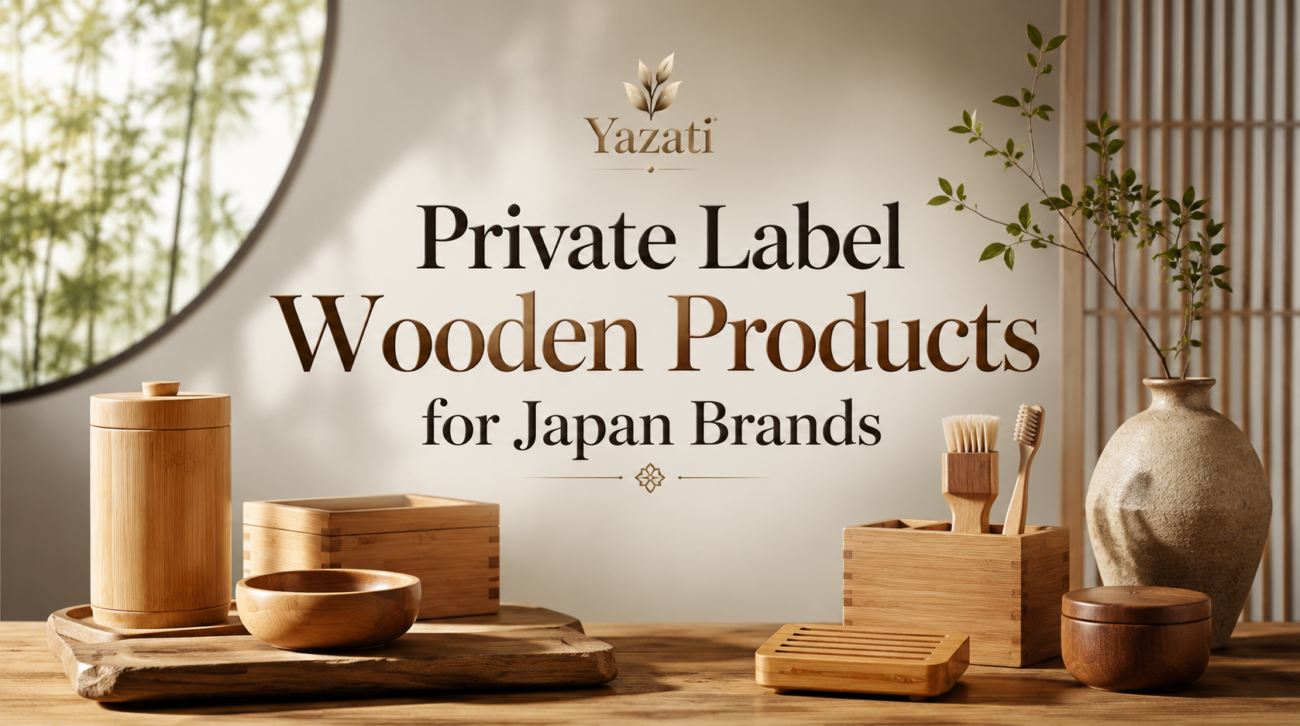
The market for Private Label Wooden Products for Japan Brands continues to expand as consumers increasingly seek sustainable, natural, and aesthetically pleasing alternatives to plastic and synthetic materials. Japan’s appreciation for craftsmanship, minimalism, and environmental responsibility creates an ideal environment for premium wooden products.
Businesses that understand Japanese consumer preferences and deliver exceptional quality can build strong, long-lasting partnerships with Japanese brands. Whether supplying kitchenware, home décor, office accessories, or gift products, manufacturers and exporters have significant opportunities to grow in this niche market.
Introduction to Private Label Wooden Products
Private label manufacturing allows businesses to produce goods that are sold under another company’s brand name. In the wooden products industry, this model enables Japan-based brands to offer exclusive product lines without investing heavily in manufacturing facilities.
Wooden products appeal to consumers because they combine functionality, durability, and visual appeal. With growing environmental awareness, wooden alternatives are increasingly replacing disposable and plastic-based products.
Private label solutions offer:
- Customized product designs
- Exclusive branding opportunities
- Competitive pricing
- Faster market entry
- Greater flexibility in product development
These advantages make private labeling an attractive strategy for Japanese retailers, wholesalers, and eCommerce brands.
Why Japan Brands Prefer Wooden Products
Growing Demand for Eco-Friendly Consumer Goods
Environmental responsibility has become a major purchasing factor in Japan. Consumers increasingly support brands that prioritize sustainability and responsible sourcing.
Wooden products offer several environmental benefits:
- Renewable raw materials
- Biodegradability
- Reduced plastic waste
- Lower carbon footprint
- Long product lifespan
As a result, wooden products align perfectly with Japan’s sustainability goals.
Japanese Consumer Preferences and Craftsmanship
Japanese culture places strong emphasis on quality, detail, and craftsmanship. Products that showcase natural textures and skilled workmanship often attract higher consumer interest.
Consumers appreciate:
- Natural finishes
- Smooth textures
- Functional simplicity
- Durability
- Elegant design
This preference creates strong demand for well-crafted private label wooden products.
Market Trends in Japan’s Wooden Products Industry
Sustainability and Environmental Awareness
Many Japanese brands are incorporating sustainability into their corporate strategies. Wooden products help companies communicate environmental responsibility while maintaining premium positioning.
Current trends include:
- FSC-certified wood sourcing
- Eco-friendly packaging
- Plastic-free product lines
- Carbon-conscious manufacturing
Minimalist Design Influences
Minimalism remains a defining characteristic of Japanese product design.
Popular design elements include:
| Design Feature | Consumer Appeal |
|---|---|
| Clean Lines | Elegant appearance |
| Natural Wood Grain | Authenticity |
| Neutral Colors | Versatility |
| Compact Designs | Space efficiency |
| Multi-functional Features | Practicality |
These principles guide successful product development for Japanese brands.
Benefits of Private Label Wooden Products for Japan Brands
Brand Differentiation
Private label products allow brands to create unique product collections that competitors cannot easily replicate.
Higher Profit Margins
Exclusive products reduce direct price competition and enable premium pricing strategies.
Customization Opportunities
Manufacturers can offer:
- Custom dimensions
- Personalized engraving
- Unique packaging
- Exclusive finishes
- Brand-specific designs
Customization enhances brand value and customer loyalty.
Popular Private Label Wooden Product Categories
Wooden Kitchenware
Kitchen products remain one of the strongest categories in Japan.
Examples include:
- Cutting boards
- Serving trays
- Wooden spoons
- Chopsticks
- Salad bowls
- Coasters
These items combine practicality with aesthetic appeal.
Wooden Home Décor
Home décor products continue to perform well in both retail and online channels.
Popular options include:
- Picture frames
- Decorative shelves
- Candle holders
- Wall art
- Storage boxes
Wooden Office Accessories
As remote work remains common, demand for premium desk accessories has increased.
Examples:
- Pen holders
- Laptop stands
- Monitor risers
- Desk organizers
- Phone docks
Wooden Toys and Educational Products
Parents increasingly prefer wooden toys due to safety and durability concerns.
Popular products include:
- Building blocks
- Puzzles
- Montessori learning tools
- Shape sorters
Wooden Gift Items
Gift products perform particularly well during seasonal celebrations and corporate gifting campaigns.
Examples:
- Customized boxes
- Engraved plaques
- Premium gift sets
- Souvenir products
Materials Commonly Used in Wooden Products
Bamboo
Bamboo offers excellent sustainability credentials and rapid renewability.
Benefits:
- Lightweight
- Durable
- Moisture resistant
- Eco-friendly
Beechwood
Beechwood provides:
- Smooth texture
- Excellent strength
- Fine grain patterns
Acacia Wood
Acacia is popular because of its:
- Rich appearance
- Water resistance
- Long lifespan
Rubberwood
Rubberwood offers a cost-effective solution while maintaining quality standards.
Manufacturing Standards Required for Japan
Quality Control Expectations
Japanese buyers often have rigorous quality requirements.
Manufacturers should implement:
- Dimensional inspections
- Surface finish checks
- Moisture content testing
- Durability testing
- Packaging inspections
Compliance and Safety Certifications
Common requirements may include:
- FSC certification
- Food-contact safety standards
- Chemical compliance testing
- Sustainable sourcing documentation
Meeting these expectations builds buyer confidence.
Product Design Considerations for Japanese Consumers
Simplicity and Functionality
Japanese consumers often prefer products that perform exceptionally well without unnecessary complexity.
Successful designs focus on:
- Ease of use
- Compact storage
- Longevity
- Practical functionality
Packaging Preferences
Packaging should reflect premium quality.
Preferred features include:
- Minimalist presentation
- Recyclable materials
- Clear product information
- Elegant branding
How to Source Reliable Wooden Product Manufacturers
Supplier Evaluation Checklist
Before selecting a supplier, verify:
- Production capacity
- Export experience
- Certifications
- Quality systems
- Communication responsiveness
Factory Audits and Sample Testing
Conducting factory audits helps identify potential issues before large-scale production begins.
Best practices include:
- Reviewing production processes
- Inspecting machinery
- Evaluating quality systems
- Testing product samples
- Assessing packaging capabilities
Branding Strategies for Private Label Success
Logo Placement
Subtle branding often resonates well with Japanese consumers.
Options include:
- Laser engraving
- Embossing
- Custom tags
- Branded packaging
Storytelling and Brand Identity
Consumers increasingly connect with brands that communicate:
- Sustainability efforts
- Artisan craftsmanship
- Ethical sourcing
- Product heritage
Strong storytelling enhances perceived value.
For additional sustainability insights, visit the official FSC website: https://fsc.org
Packaging and Presentation Techniques
Packaging significantly influences purchase decisions.
Effective approaches include:
- Kraft paper packaging
- Reusable gift boxes
- Minimal ink printing
- Eco-friendly inserts
Premium packaging enhances the customer experience and strengthens brand perception.
Logistics and Export Considerations
Exporting wooden products to Japan requires attention to:
- Shipping documentation
- Customs compliance
- Packaging protection
- Delivery timelines
- Inventory planning
Reliable logistics partners help ensure smooth market entry.
Challenges and Solutions in the Wooden Products Market
| Challenge | Solution |
|---|---|
| Raw material costs | Diversify sourcing |
| Quality consistency | Strong QC systems |
| Shipping delays | Multiple logistics options |
| Design competition | Continuous innovation |
| Certification requirements | Early compliance planning |
Businesses that proactively address these challenges can maintain long-term competitiveness.
Future Outlook for Private Label Wooden Products for Japan Brands
The future of Private Label Wooden Products for Japan Brands remains highly promising. Sustainability trends, premium consumer preferences, and growing environmental awareness continue to support market expansion.
Emerging opportunities include:
- Smart wooden accessories
- Sustainable corporate gifts
- Eco-friendly hospitality products
- Premium kitchen collections
- Customized eCommerce product lines
Manufacturers that combine craftsmanship, sustainability, and innovation will be well-positioned for growth.
Frequently Asked Questions
1. Why are wooden products popular in Japan?
Japanese consumers appreciate natural materials, craftsmanship, durability, and minimalist aesthetics, making wooden products highly attractive.
2. What wooden products sell best in Japan?
Kitchenware, home décor, office accessories, toys, and gift items are among the most popular categories.
3. Which wood types are commonly used?
Bamboo, beechwood, acacia wood, and rubberwood are widely used due to their durability and sustainability.
4. Is FSC certification important for Japanese buyers?
Yes. Many Japanese brands prefer responsibly sourced materials and often request FSC certification.
5. What packaging style works best for Japanese consumers?
Minimalist, eco-friendly, and premium-looking packaging typically performs best.
6. Can manufacturers customize products for Japanese brands?
Yes. Most private label manufacturers offer customization options including logos, dimensions, finishes, and packaging.
Conclusion
The market for Private Label Wooden Products for Japan Brands offers substantial opportunities for manufacturers, exporters, and entrepreneurs. Driven by sustainability, quality expectations, and appreciation for natural materials, Japanese consumers continue to embrace premium wooden products across multiple categories.
Companies that focus on exceptional craftsmanship, reliable quality control, eco-friendly sourcing, and thoughtful branding can establish strong relationships with Japanese brands and achieve sustainable long-term growth in this expanding market.
✨ Discover Global Sourcing Excellence with Netyex ✨
Netyex is your trusted B2B sourcing partner, connecting international buyers with India’s finest manufacturers and curated product lines—from handicrafts and home décor to kitchenware, textiles, hospitality essentials, and more. With verified suppliers and end-to-end support, we make global procurement seamless, reliable, and efficient.
👉 Elevate your sourcing experience—explore Netyex today.
📦 Bulk orders & customisation | 🌍 Worldwide delivery | 🤝 Trusted by global buyers
Visit Netyex to source premium Indian products with confidence.