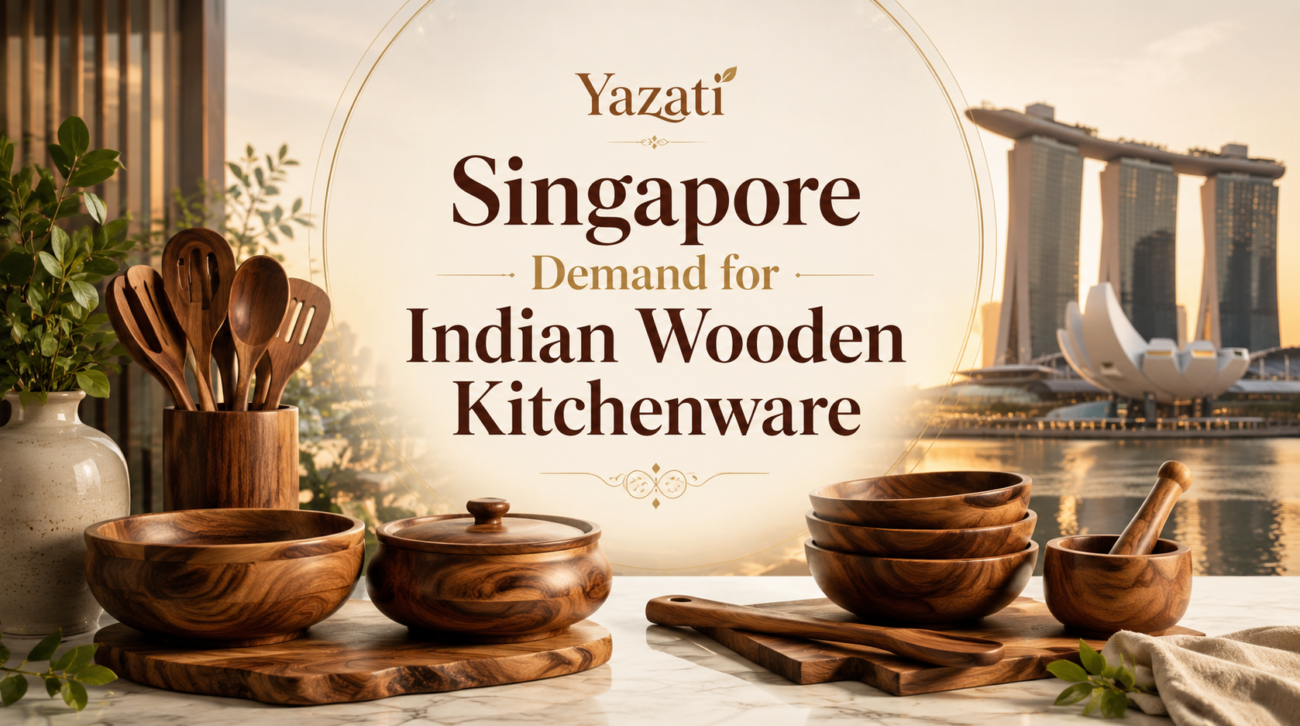
Introduction to the Singapore Wooden Kitchenware Market
Singapore has become one of Asia’s most attractive destinations for premium kitchen and home products. The country’s high-income consumers, strong retail infrastructure, and growing focus on sustainability have created favorable conditions for wooden kitchenware imports.
The Singapore Demand for Indian Wooden Kitchenware continues to rise as consumers seek durable, environmentally friendly alternatives to plastic kitchen tools. Indian manufacturers, known for craftsmanship and diverse wood resources, are well-positioned to meet this demand.
Why Wooden Kitchenware Is Gaining Popularity in Singapore
Sustainability and Eco-Friendly Consumer Preferences
Singapore consumers are becoming increasingly environmentally conscious. Many households are reducing their reliance on plastic products and switching to renewable materials.
Wooden kitchenware offers several sustainability benefits:
- Biodegradable material
- Renewable resource
- Long product lifespan
- Minimal environmental impact
- Natural aesthetic appeal
Government initiatives promoting sustainable living have further accelerated demand for eco-friendly household products.
Growth of Natural and Handmade Products
Modern consumers value authenticity. Handmade wooden kitchenware provides a unique appearance that mass-produced plastic items cannot replicate.
Indian artisans often create products featuring:
- Traditional craftsmanship
- Hand-carved designs
- Natural wood grain patterns
- Cultural aesthetics
These characteristics resonate strongly with Singapore’s premium home décor market.
Overview of Indian Wooden Kitchenware Industry
India is one of the world’s leading producers of handcrafted wooden products. The industry benefits from abundant raw materials, skilled artisans, and competitive manufacturing costs.
Major Production Centers in India
Several regions specialize in wooden kitchenware manufacturing:
| Region | Specialty |
|---|---|
| Saharanpur | Wooden handicrafts |
| Jodhpur | Decorative wooden products |
| Kerala | Coconut wood kitchenware |
| Karnataka | Teak wood products |
| Rajasthan | Handcrafted serving ware |
These production hubs supply both domestic and international markets.
Popular Wood Types Used
Indian manufacturers utilize various wood species:
- Acacia wood
- Teak wood
- Mango wood
- Neem wood
- Sheesham wood
- Coconut wood
Acacia and mango wood products are especially popular due to their durability and attractive grain patterns.
Singapore Demand for Indian Wooden Kitchenware: Current Market Trends
The Singapore Demand for Indian Wooden Kitchenware is influenced by evolving consumer lifestyles and retail trends.
Import Statistics and Market Growth
While Singapore imports kitchenware from multiple countries, eco-friendly product categories have shown consistent growth.
Factors driving imports include:
- Urban lifestyle changes
- Growth in home cooking
- Increased online shopping
- Sustainable consumption trends
- Demand for artisanal products
Indian exporters are benefiting from these shifts by offering differentiated products.
Consumer Buying Behavior
Singapore buyers typically prioritize:
- Product quality
- Food safety
- Sustainable sourcing
- Attractive design
- Brand reputation
Premium consumers are often willing to pay higher prices for handcrafted products with verified sustainability credentials.
Most In-Demand Indian Wooden Kitchenware Products
Wooden Spoons and Spatulas
These remain among the most popular items because they:
- Do not scratch cookware
- Are heat resistant
- Offer a natural appearance
Many consumers prefer wooden utensils for non-stick cookware.
Chopping Boards
Wooden cutting boards continue to perform well in Singapore’s kitchenware market.
Preferred features include:
- Antibacterial properties
- Durable construction
- Attractive design
- Easy maintenance
Serving Trays and Bowls
Wooden serving products combine functionality and aesthetics.
Popular uses include:
- Dining presentation
- Home entertaining
- Decorative displays
Spice Boxes and Storage Containers
Indian wooden spice boxes attract consumers seeking organized and stylish kitchen storage solutions.
Key Distribution Channels in Singapore
Retail Stores
Premium department stores and specialty kitchen retailers serve affluent consumers seeking high-quality kitchenware.
E-Commerce Platforms
Online sales have expanded significantly through platforms such as:
- Amazon Singapore
- Lazada
- Shopee
Digital channels enable Indian exporters to reach customers directly or through local distributors.
Hospitality and Restaurant Sector
Hotels, cafés, and restaurants increasingly use wooden serving ware to create natural dining experiences.
This segment offers substantial business-to-business opportunities.
Competitive Landscape
Local Competitors
Singapore-based brands often focus on:
- Premium branding
- Fast delivery
- Strong customer service
However, many still rely on imported products.
International Suppliers
Key competing countries include:
- China
- Vietnam
- Thailand
- Indonesia
Indian exporters differentiate themselves through craftsmanship, customization, and heritage appeal.
Export Regulations and Compliance Requirements
Food Safety Standards
Exporters must ensure products are:
- Safe for food contact
- Free from harmful chemicals
- Properly treated and finished
Documentation should be maintained to satisfy importer requirements.
Packaging and Labeling Requirements
Recommended packaging information includes:
- Product description
- Country of origin
- Material details
- Care instructions
Sustainable packaging can enhance brand perception.
Pricing Strategy for Singapore Market
Singapore consumers often associate higher prices with superior quality.
Successful exporters typically position products within:
| Segment | Pricing Approach |
|---|---|
| Budget | Volume-focused |
| Mid-range | Value-driven |
| Premium | Craftsmanship-focused |
| Luxury | Exclusive handmade products |
Premium positioning generally produces stronger margins for Indian suppliers.
Opportunities for Indian Manufacturers
Premium Handmade Segment
Demand for artisan-crafted products continues to expand.
Opportunities exist in:
- Boutique retailers
- Lifestyle stores
- Luxury gift shops
- Online premium marketplaces
Corporate Gift Market
Companies increasingly seek sustainable corporate gifts.
Wooden kitchenware products can be customized with:
- Logos
- Brand messages
- Personalized packaging
This creates additional revenue opportunities.
Challenges Facing Exporters
Despite strong prospects, exporters face several challenges:
- Rising shipping costs
- Competitive pricing pressure
- Compliance requirements
- Currency fluctuations
- Inventory management
Addressing these challenges requires strategic planning and reliable distribution partners.
Marketing Strategies for Success
Indian exporters can strengthen their market presence by focusing on:
Digital Marketing
Effective methods include:
- Social media campaigns
- Influencer partnerships
- Product storytelling
- Sustainability-focused messaging
Brand Positioning
Successful brands emphasize:
- Handcrafted quality
- Ethical sourcing
- Traditional craftsmanship
- Environmental responsibility
For additional export resources, exporters can explore information from the International Trade Centre.
Future Outlook of the Market
The outlook for the Singapore Demand for Indian Wooden Kitchenware remains positive through 2026 and beyond.
Key growth drivers include:
- Sustainable living trends
- Rising disposable income
- Premium home décor demand
- Growth of online retail
- Preference for natural materials
Indian manufacturers that invest in quality, certification, and branding are likely to capture increasing market share.
Frequently Asked Questions
1. Why is Singapore importing more wooden kitchenware?
Consumers increasingly prefer eco-friendly and sustainable alternatives to plastic products.
2. Which Indian wooden kitchenware products are most popular in Singapore?
Wooden spoons, spatulas, chopping boards, serving trays, bowls, and spice boxes are among the top-selling products.
3. What wood types are commonly used in Indian kitchenware exports?
Acacia, mango wood, teak, neem, sheesham, and coconut wood are commonly used.
4. Is Singapore a good market for premium wooden kitchenware?
Yes. Singapore’s affluent consumer base supports strong demand for premium and handcrafted products.
5. What certifications help Indian exporters succeed?
Food-contact safety compliance, sustainability certifications, and quality assurance documentation can improve buyer confidence.
6. Which sales channels are most effective?
E-commerce platforms, specialty retailers, department stores, and hospitality distributors are among the most effective channels.
Conclusion
The Singapore Demand for Indian Wooden Kitchenware presents a valuable opportunity for Indian manufacturers and exporters. Growing environmental awareness, increasing appreciation for handcrafted products, and strong purchasing power make Singapore an attractive export destination. Businesses that focus on quality, compliance, sustainability, and brand differentiation can establish a strong foothold in this expanding market. By understanding consumer preferences and leveraging effective distribution channels, Indian exporters can unlock long-term growth and profitability in Singapore’s wooden kitchenware sector.
✨ Discover Global Sourcing Excellence with Netyex ✨
Netyex is your trusted B2B sourcing partner, connecting international buyers with India’s finest manufacturers and curated product lines—from handicrafts and home décor to kitchenware, textiles, hospitality essentials, and more. With verified suppliers and end-to-end support, we make global procurement seamless, reliable, and efficient.
👉 Elevate your sourcing experience—explore Netyex today.
📦 Bulk orders & customisation | 🌍 Worldwide delivery | 🤝 Trusted by global buyers
Visit Netyex to source premium Indian products with confidence.